




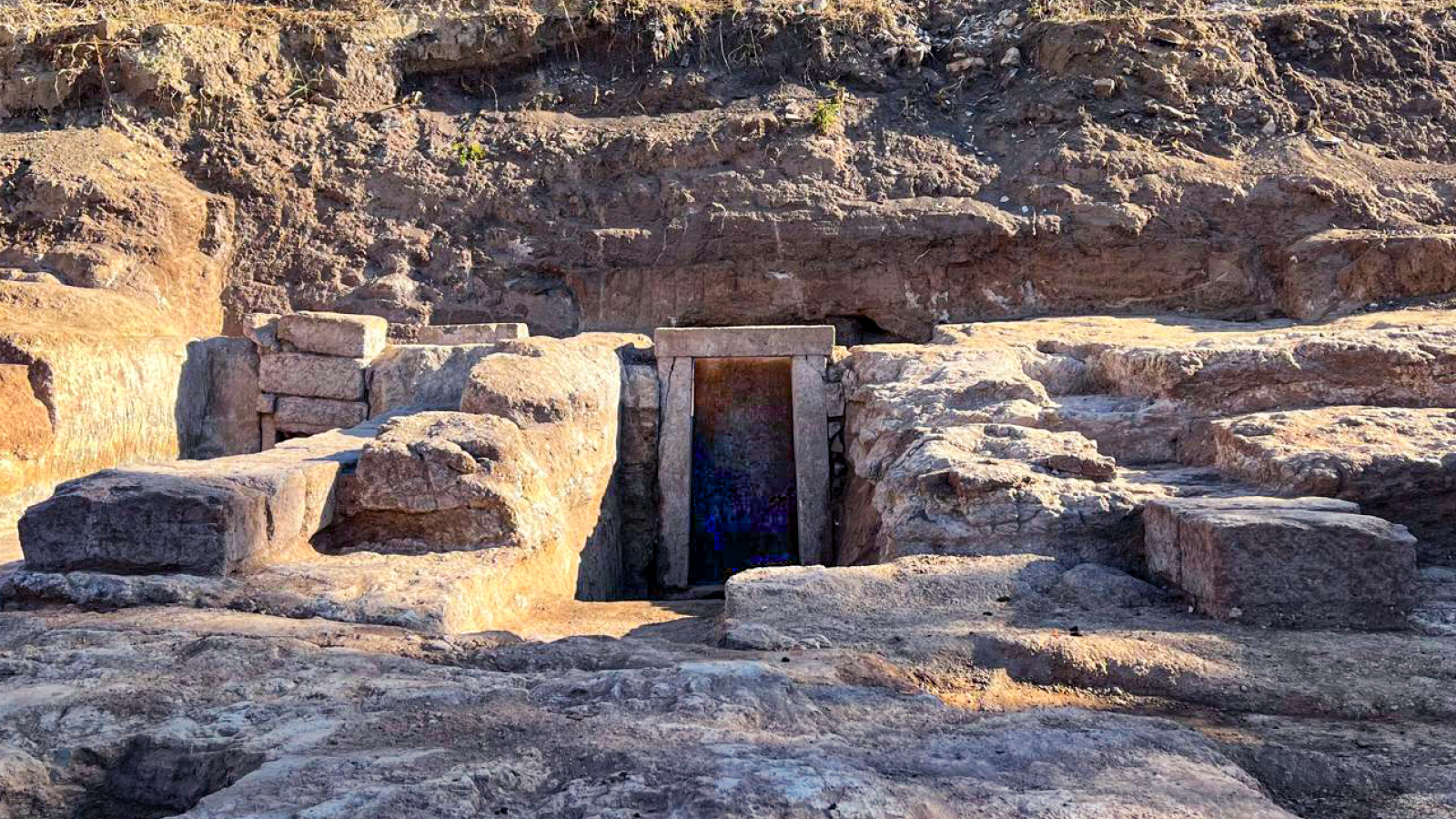
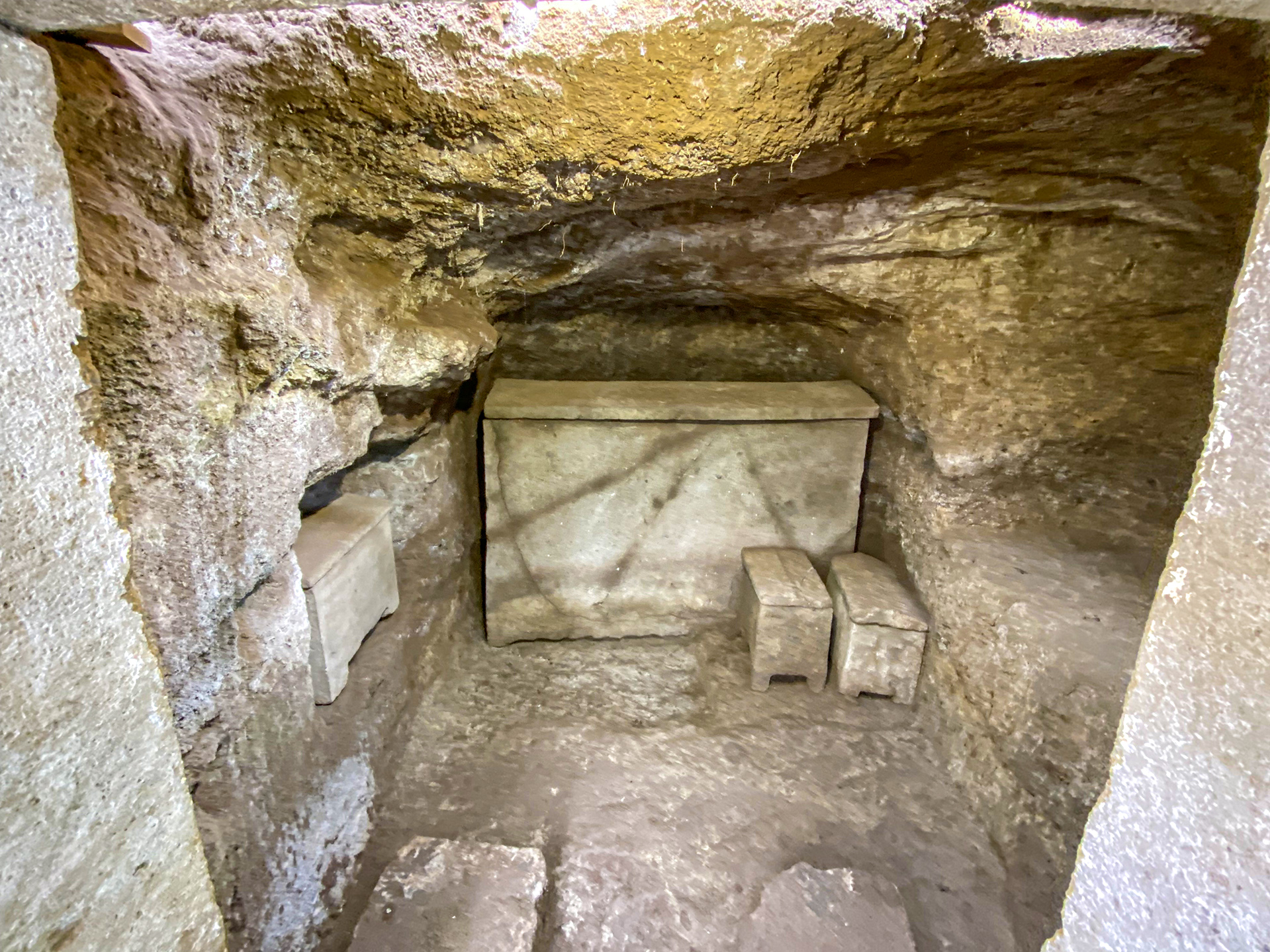
Two elite tombs from the time of the Roman Republic more than 2,400 years ago have been unearthed near Via Pietralata in the northeast of modern Rome.
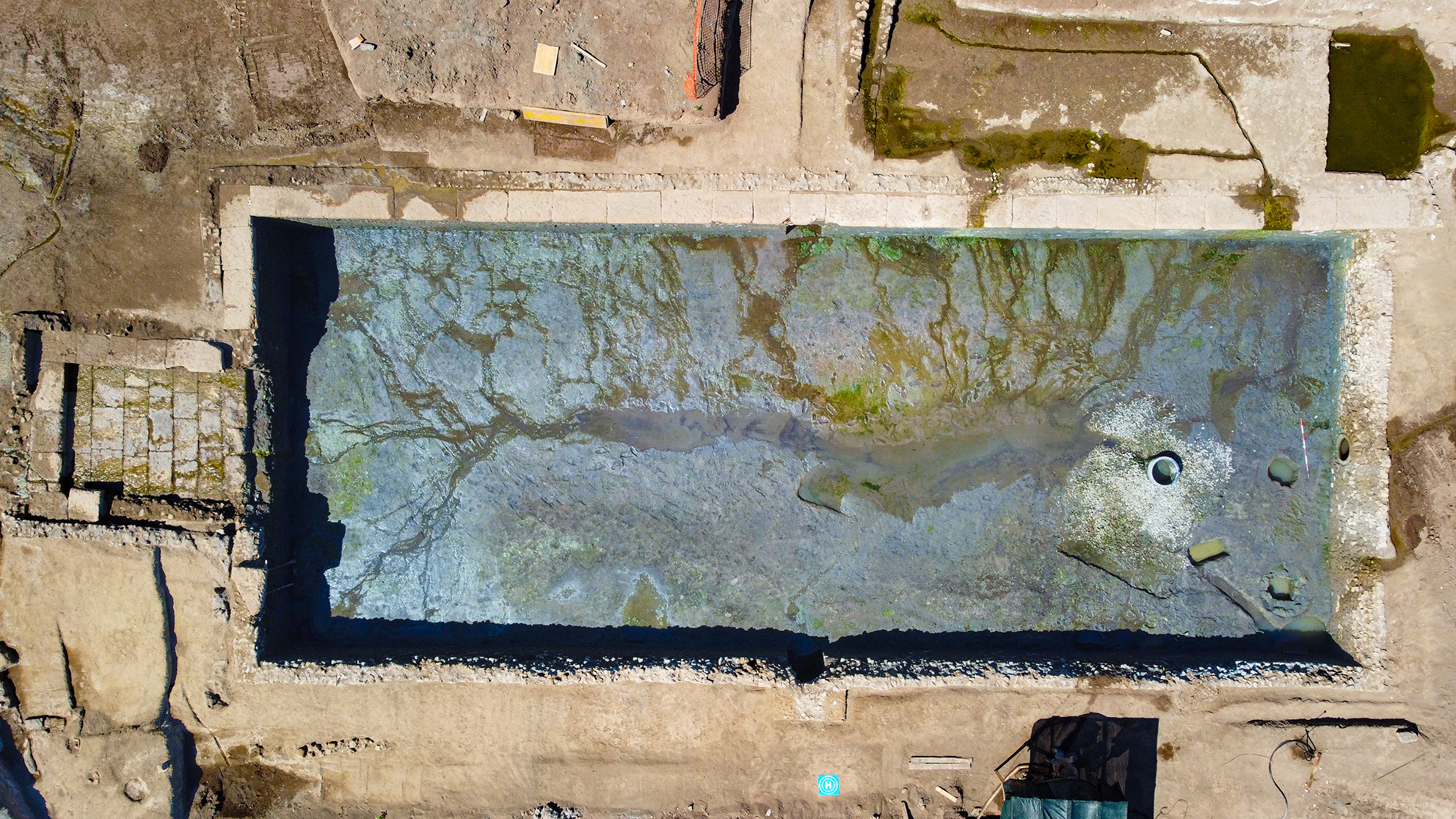
The buried chamber tombs were together in a funerary complex and near what seems to have been a shrine to the Greek demigod Hercules, who was a popular symbol of protection to the Romans. The excavations include a stretch of ancient roadway and two large monumental basins or tanks that were likely used in sacred ceremonies.
Evidence of ancient occupation around Via Pietralata was found in the 1990s, and excavations of the area of the shrine began in 2022 under the direction of government archaeologist Fabrizio Santi. The area was outside the ancient Roman walls but it is now a suburb of the modern city.
The archaeological team has since discovered bronze coins that indicate the shrine was used between the fifth or fourth centuries B.C. — when Rome was supposedly a republic, although archaeologists don’t agree on the dates — and the first century A.D., when Rome had become an empire.
Some media stories have claimed the finds included six bronze figurines of Hercules, but reports from the Italian Ministry of Culture do not mention any such findings. In fact, the shrine once had a central statue, but it is now missing, the statement said.

Ancient occupants
The tombs could be evidence that the area was occupied by a wealthy family group known as a Roman gens, Santi said in another translated statement. One of the newfound tombs contains a stone sarcophagus and three cremation urns, and the other contains an adult male skeleton.
The two stone basins or tanks were built more than 100 years later than the tombs. The largest was over 90 feet (28 meters) long, about 33 feet (10 m) wide, and about 7 feet (2.1 meters) deep, while the other was a little smaller but almost twice as deep.

“They could be structures connected to ritual or, less likely, productive activities or related to water collection,” Santi said. “A thorough scientific study will allow us to contextualize these findings and understand their role within the ancient landscape.”
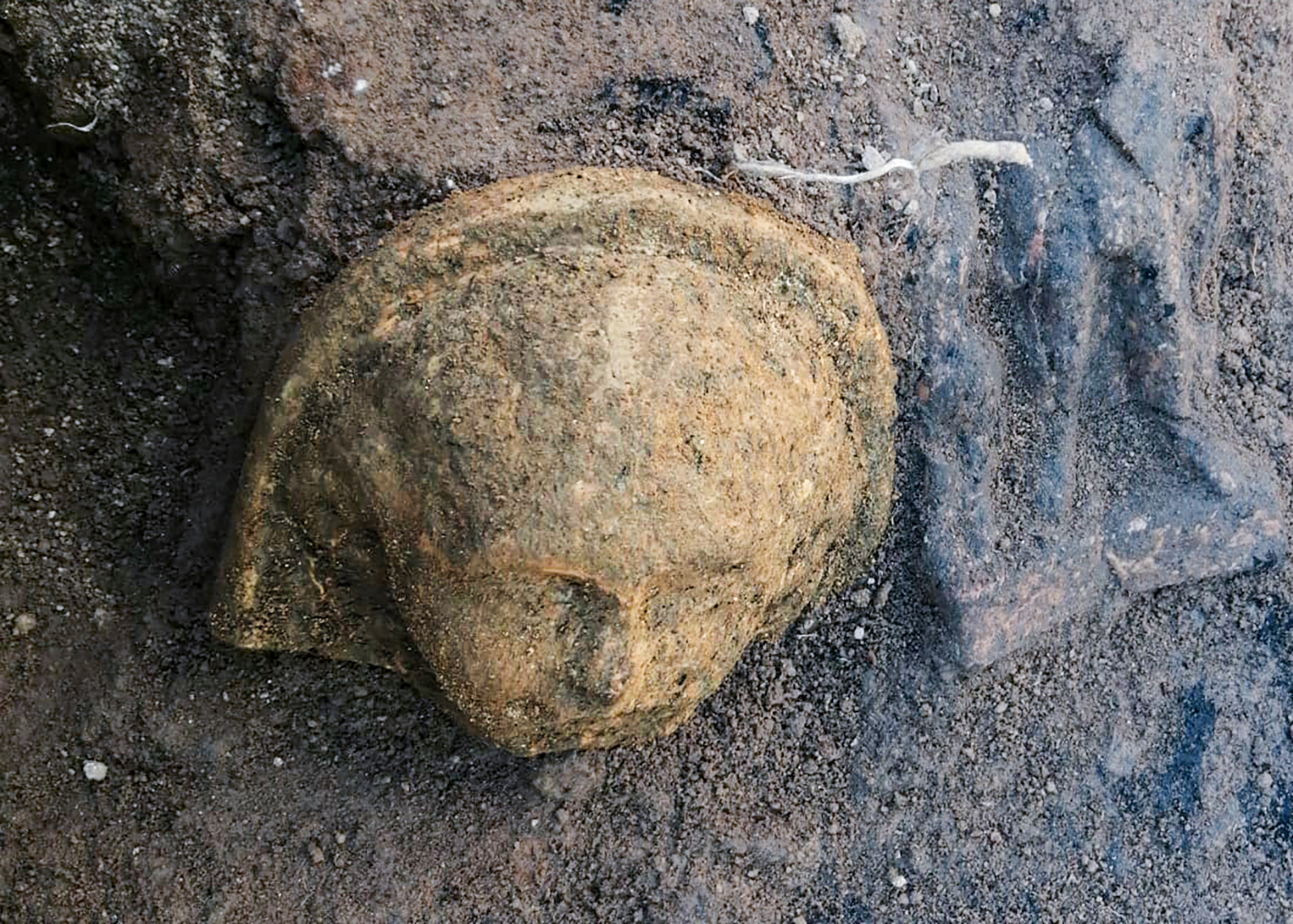

The ancient road was a key element at the site, he said. It had led to a small cult building called a sacellum (Latin for “shrine”) that was devoted to a god — probably the deified hero Hercules, whose worship was popular in that area.
Hercules was the Roman version of the Greek hero Herakles (or Heracles), who was said to be the son of the god Zeus (Jupiter to the Romans) and the mortal Alcmene. He was legendary for his incredible strength, and his worship as a symbol of protection and virtue was widespread in Rome for many centuries.