



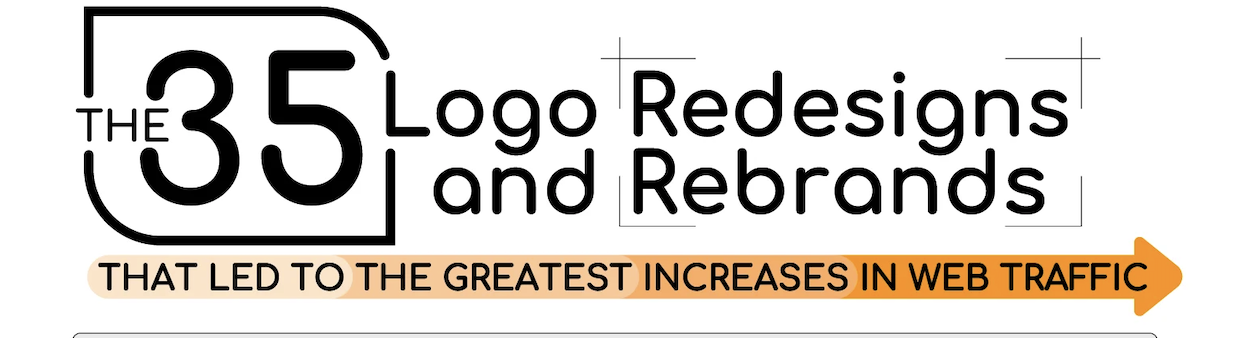
A logo might seem like an aesthetic choice all about catching the eye, but data collected by LogoMaker tells a different story. They analyzed monthly worldwide organic traffic estimates sourced from Semrush and compared the traffic in the months before and after a logo redesign launch. They ranked 35 brands by their traffic increases and across the board, every brand saw a meaningful, and in some cases, dramatic spike in their organic web traffic after the release of their rebrand. The study makes it clear that a strategic logo redesign does more than refreshing a look. It can also supercharge a brand’s online visibility.
The team’s methodology involved these data sources and analyses:
-
Data was sourced from Semrush organic traffic estimates.
-
Average organic traffic was tracked 3 months before the new logo launch and 2 months following the launch.
-
Brands were ranked by their percentage of increase in organic traffic during the post-launch time.
Note that some of the brands on the list have redesigned a logo multiple times since 2012, so earlier redesigns might have generated more web traffic than the most recent one.
The Top Performing Brands with the Biggest Traffic Surges
These are the brands at the top of the ranking with the most dramatic increase in web traffic:
Pfizer – A 69.77% traffic increase in January 2021.
-
Pre-launch traffic was 1.12 million and 1.79 million post-launch.
-
Pfizer is a reminder that context is important to considering a brand’s impact. 2021 was the midst of the COVID-19 pandemic, drawing attention to big pharmaceutical companies like Pfizer who carried the world’s hope for a vaccine.
Men’s League Soccer (MLS) – 47.94% traffic increase in September 2014.
-
Traffic made a big leap from .95 million to 1.41 million in organic traffic.
-
A new bold, modernized crest resembling a club emblem helped position the sport for a new era of rapid growth.
Premier League – 12.57% traffic increase in February 2016.
-
Traffic rose from 7.73 million to 10.51 million, a huge increase to an already impressive amount of web traffic.
-
This jump proves that even a global powerhouse of a brand can benefit from a refreshing logo change.
The Guardian – 17.04% increase in January 2018.
-
The brand lost traffic from 131.88 million to 96.96 million before the logo launch, then regained their footing at 103.43 million after the redesign logo launched.
-
The Guardian has to compete in the digital news space, and it seems a cleaner, more modern design helped their efforts.
Big Brands with Surprising Results
There were plenty of other recognizable brands on the chart with data that tells an interesting story. For example, the ride-share company, Uber, had a massive 27.44 million web traffic baseline, and still managed a 7.46% traffic increase after their logo got a sleek facelift. The social media platform, Instagram, also had massive traffic and still managed a respectable 2.17% increase in traffic, representing millions of extra website visits after they simplified their logo. The decision to simplify the camera image into a more abstract image was controversial but proved itself through traffic.
Netflix, the popular streaming platform showed a modest 1.05% increase after a bolder, more legible logo redesign. Car company Kia’s logo redesign in 2021 inspired the Internet outrage of the week. People hated the logo’s new look and said they couldn’t read what it said. Despite, or perhaps because of the online chatter, Kia saw a 3.98% increase in traffic. Yahoo proved that even a legacy web giant can have a successful traffic increase after a logo redesign. Their traffic increased by 4.57% in 2013. While not every leap in the middle of the list looks as impressive as the chart’s leaders, it’s important to remember that even a 2 or 3% traffic increase to a website represents millions of new visitors for these big-name brands.
More Brands with Notable Gains
The rebrand traffic effect isn’t just for luxury brands and tech giants. We see a huge variety of industries represented on the list. Southwest Airlines wanted to create a customer-forward new logo emphasizing their commitment to loyal customers with a small heart beside their name instead of the old image of the plane overtaking the text. It earned them an impressive 18.93% increase in traffic. The luxury fashion house, Burberry, created a stir that drove search interest when they removed their charging knight from the logo in favor of bold, modern, minimalist text, earning a 12.45% traffic increase. AirBnb made waves when they launched their “belo” image, a symbol meant to represent their motto of, “belong anywhere.” It created a 7.16% increase in traffic and became an iconic representation of the company. Taco Bell had a small 2.3% traffic increase after a visual refresh to the bell logo, but for a massive fast food chain with many website visitors that figure represents millions of new potential customers.
What These 35 Brands Have in Common
We can see many trends among the brands on the list. Pfizer and Kia launched their redesigns during major cultural moments for their business that boosted attention they were already getting. Media coverage social media debate can drive people to search up a brand as we’ve seen several times on this list. We can also observe that nearly every brand on the list focused their new design on cleaner lines, bolder fonts, minimalism, and scaled visuals built for smartphone apps and Google searches. Baseline traffic wasn’t an indicator of success on this list either. We see both small and large traffic sites with proportional gains after a logo redesign across 35 brands that span sports, media, retail, tech, fashion, finance, and more.
The data from these brands confirms that a thoughtfully created logo redesign can get real-world business results beyond reflecting a modern aesthetic. In a world where consumer perception drives online behavior and clicks, a fresh visual identity can literally drive traffic to your site. The team’s work here proves that a logo is more than what people see. It inspires curiosity and drives search traffic.