An artificial intelligence (AI) tool has uncovered more than 1,000 strange cosmic objects in the Hubble Space Telescope’s image archive, including some that cannot be explained by science.
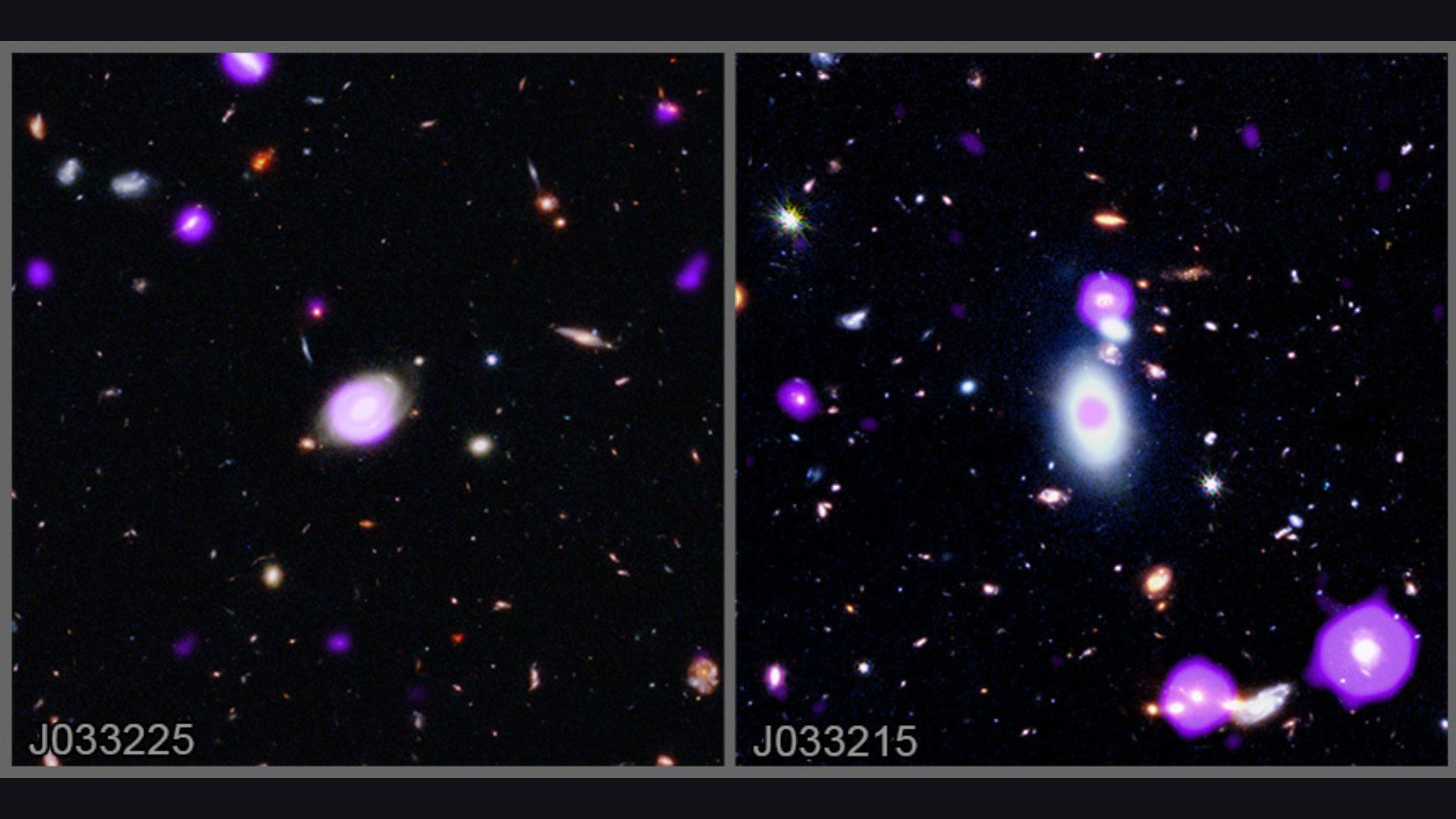
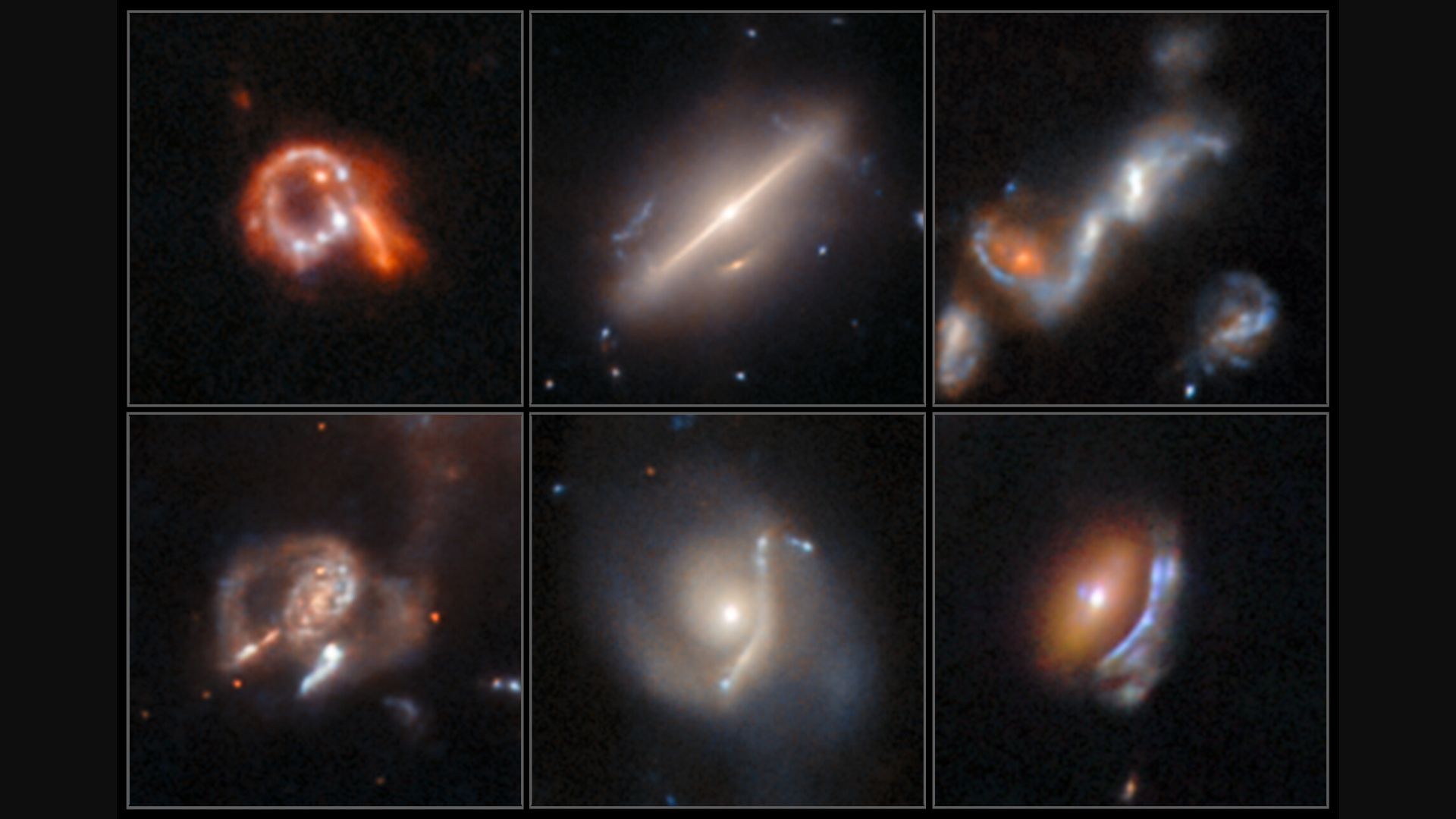
After searching with the tool for just two days, researchers found 1,300 oddball objects, including chaotic merging galaxies, stars trailing gas, and even some objects that haven’t been classified yet. Of these, 800 had never been spotted before, European Space Agency (ESA) officials said in a Jan. 27 statement. The findings were published Dec. 16, 2025, in the journal Astronomy & Astrophysics.
Space jellies and sky burgers
For the new study, ESA research fellows David O’Ryan and Pablo Gómez developed an AI tool to examine 100 million image cutouts from the Hubble Legacy Archive, which covers the telescope’s observations following its 1990 launch. Each of the images was only a few dozen pixels per side, representing a narrow slice of sky barely a thousandth of a degree wide.
“Archival observations from the Hubble Space Telescope now stretch back 35 years, providing a treasure trove of data in which astrophysical anomalies might be found,” O’Ryan wrote in the paper.
In addition to the “jellyfish galaxies” and cosmic “hamburgers,” the search uncovered a range of other phenomena. “Most of the anomalies were galaxies undergoing mergers or interactions, which exhibit unusual morphologies or trailing, elongated streams of stars and gas,” according to the NASA statement. “Others were gravitational lenses, where the gravity of a foreground galaxy distorts spacetime and bends light from a background galaxy into arcs or rings.”
The researchers’ AI tool, called AnomalyMatch, picked up these features after learning patterns from a training dataset. Using tools like this speeds up the traditional means of discovering strange things in the sky, which usually requires manual inspection or a lucky observation.
“While expert astronomers excel at identifying unusual features, the sheer volume of Hubble data makes comprehensive manual review impractical,” NASA officials said in a statement. “Citizen science initiatives have helped expand the scope of data analysis, but even these efforts fall short when faced with archives as extensive as Hubble’s.”
“This is a powerful demonstration of how AI can enhance the scientific return of archival datasets,” Gómez added. “The discovery of so many previously undocumented anomalies in Hubble data underscores the tool’s potential for future surveys.”
More datasets where AI may be useful include those from the Euclid space telescope, which is surveying billions of galaxies to create the largest 3D map of the universe ever, and the forthcoming Nancy Grace Roman Telescope and the Vera C. Rubin Observatory, which will hunt for exoplanets and moving objects across vast stretches of the night sky. AI could help researchers sort through the “data deluge” from these large surveys, perhaps allowing for faster pickups of new objects than ever before, according to the NASA statement.
O’Ryan, D., & Gómez, P. (2025). Identifying astrophysical anomalies in 99.6 million source cutouts from the Hubble legacy archive using AnomalyMatch. Astronomy and Astrophysics, 704, A227. https://doi.org/10.1051/0004-6361/202555512