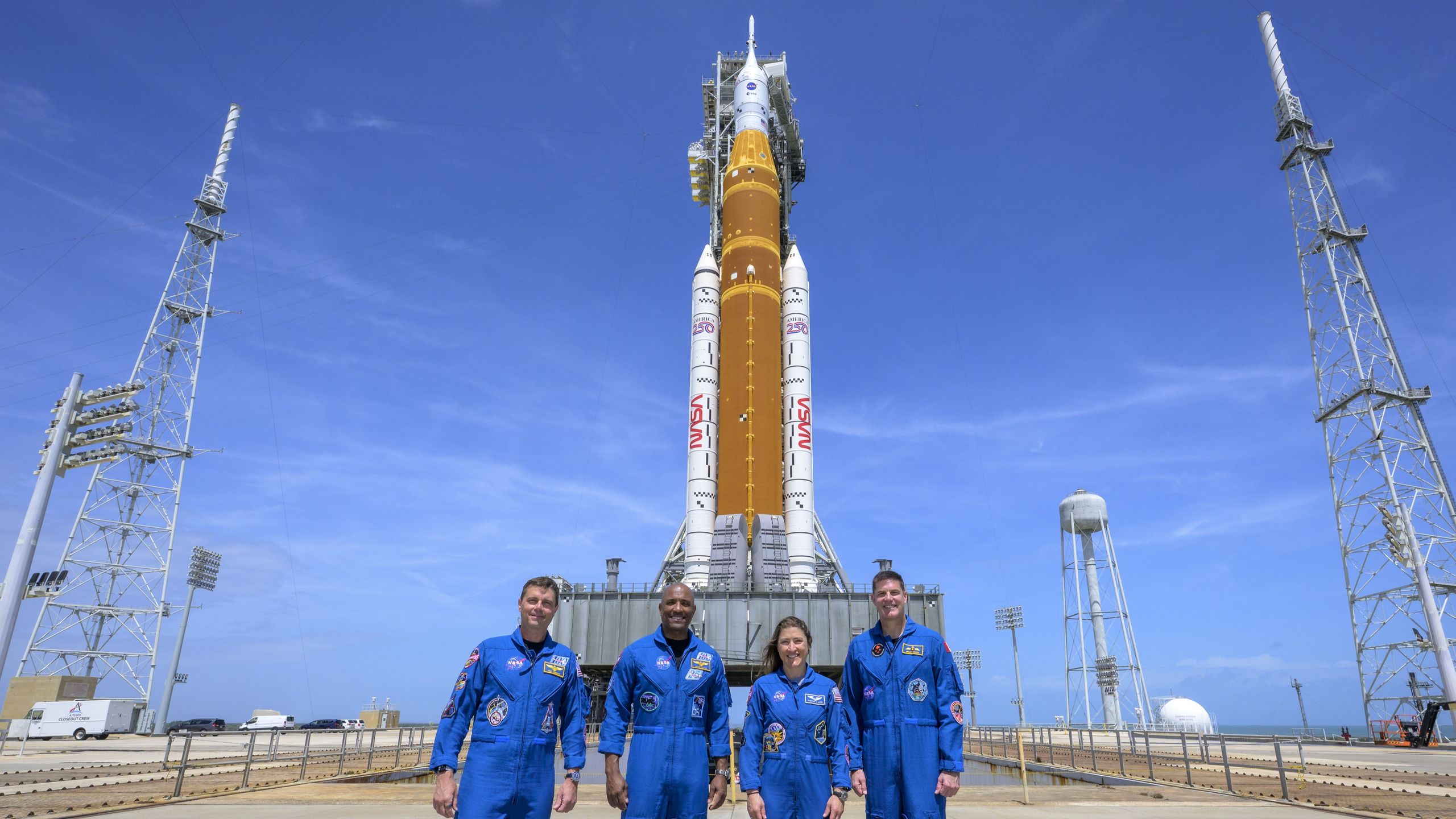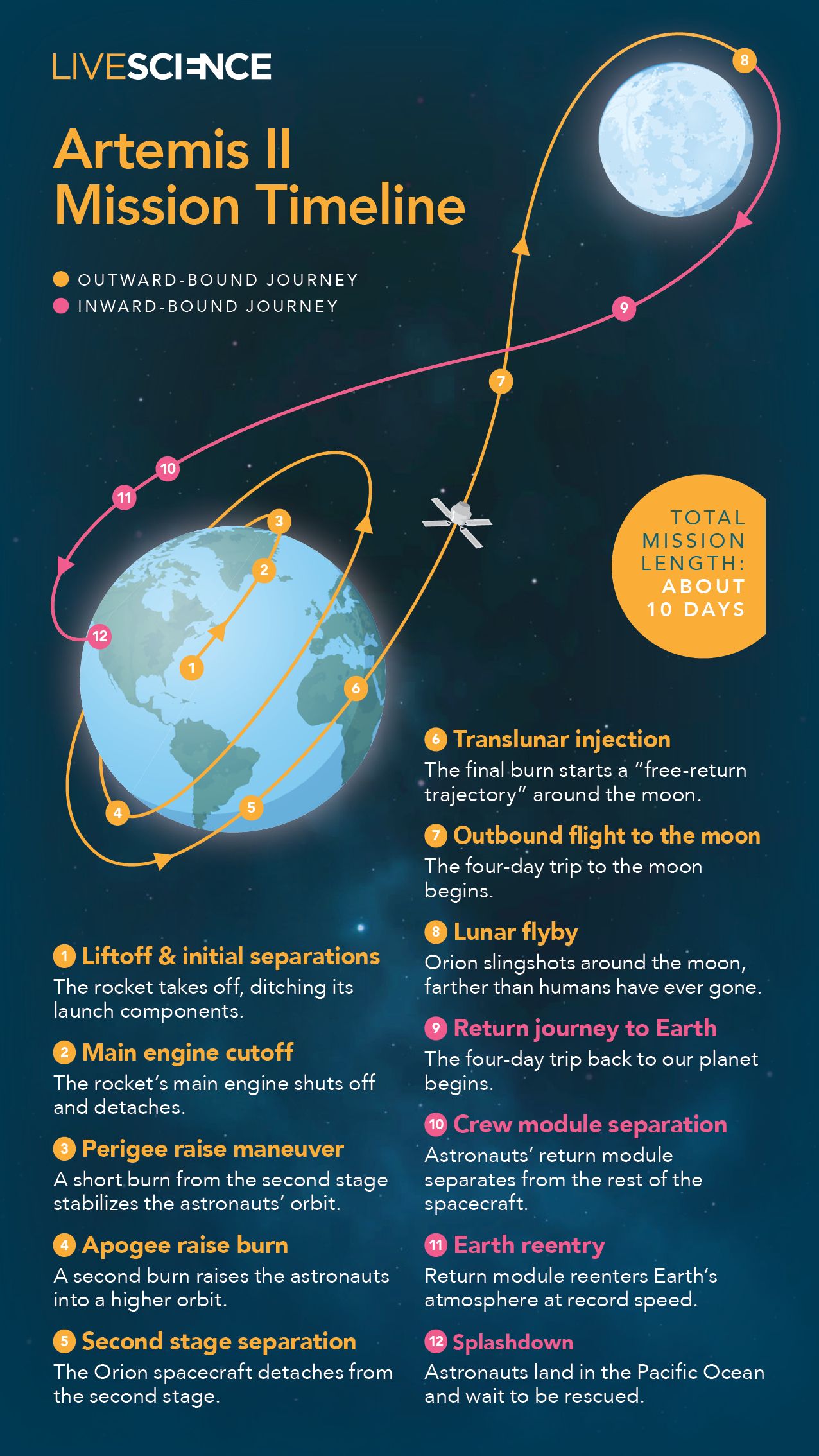
Artemis II’s astronauts are about to take off for a record-breaking flight around the moon, giving NASA a rare opportunity to study how deep spaceflight affects the human body.
After leaving Earth’s protective magnetic field, the four-person crew will be more exposed to space weather — which includes high-energy eruptions of radiation from the sun, known as solar flares.
Live Science spoke with Patricia Reiff, a professor of physics and astronomy at Rice University in Houston, Texas, to discuss space weather and how it could impact the Artemis II mission.
Reiff has more than fifty years of experience studying space plasma physics and received her doctorate analyzing data from NASA’s first trips to the moon during the Apollo era. Here’s what she said about the radiation risks Artemis II’s crew will be exposed to during their historic return to the moon.
Patrick Pester: What is space weather, and how can it affect astronaut health?
Patricia Reiff: Space weather comes in several flavors. A solar flare can emit very energetic particles that come at nearly the speed of light, and those are ones that can harm astronauts on their way to the moon because they’re so energetic that they can penetrate the hulls of spacecraft.
The longer-term forms of space weather are the result of a coronal mass ejection (CME). When that hits the Earth, it can create beautiful auroras. A CME can affect power transmission lines, but it won’t affect the astronauts in space because it’s low energy and it’s not directly harmful.
PP: Of the sources of radiation that the astronauts are exposed to, which ones are the most dangerous?
PR: There are two forms of radiation that affect astronauts who are outside of Earth’s orbit. One is the solar energetic particles. These are the ones that come as a result of solar flares. They can be very intense, but they’re generally relatively short-lived. When a storm like that occurs, the astronauts know where to go in the capsule that offers the most protection.
It’s kind of like taking a chest X-Ray every day. You don’t want to do it for too long.
Patricia Reiff
The other form of radiation that is a danger to astronauts in deep space is the galactic cosmic rays. Those are much more energetic, but there are a lot fewer of them, and they’re a constant background. It’s kind of like taking a chest X-Ray every day. You don’t want to do it for too long. Those are very difficult to shield against because they are so energetic that when they hit the spacecraft, they just create [secondary rays] that can be almost as bad as the primaries.
One of the nice things about solar maximum, which is what we are in now, is that the solar wind is stronger, and it helps keep those galactic cosmic rays from coming into the inner solar system. So, if I were going to do a long-term mission to the moon or to Mars, I would definitely go at solar maximum rather than solar minimum.
PP: That’s interesting because you’d think it would be the opposite with the sun being more active.
PR: The sun helps clear out our neck of the woods when the solar wind is strong, but you do have to worry about these individual events from solar flares. And you don’t get a lot of warning because they’re coming at the speed of light. When we see it on the sun, it’s here. On the other hand, they only last a few hours, so even if you don’t get a lot of advance warning, you can still protect yourself by hiding in a good, solid place.
One of the things they did for Artemis I was to put sensors in the various parts of the Orion spacecraft to find where the safest places were. The very first paper I ever published, back when I was working on Apollo, was the solar flare that occurred in August of 1972. That one was so intense that if any astronaut had been either in the command module or the lunar module, they would have had a nearly lethal dose. [Fortunately, no astronauts were in space at the time.] So, it is something we have to take care of, and the nice thing about the Orion spacecraft is it’s much better shielded than the original Apollo spacecraft were.
PP: A recent study found that the likelihood of superflares is greater during solar maximum, with the lead author recommending that NASA delay Artemis II until the end of the year. Are they right or wrong?
PR: The sun has an 11-year cycle, and generally speaking, the biggest flares occur at the highest sunspot number. But not every sunspot cycle is the same. The sunspot cycle we are in now is stronger than the one we had 11 years ago, but it is less strong than others. So, I don’t necessarily see a particular additional risk of a superflare now than we would have had 20 years ago.
That said, it’s still possible. That’s why we keep our eyes on the sun. We see those sunspot groups and look at the magnetic field structure on the sun. When that magnetic field structure gets very tangled up, very torsioned, energy is building up in the magnetic field, kind of like winding up a rubber band on a paper airplane. And when a solar flare comes, that energy gets released. That’s the energy that powers the big solar flares.
PP: One of Artemis II’s mission goals is to study the impact of space radiation on astronaut health. How do we do that?
PR: Every astronaut keeps a monitor on their person to measure how much radiation they have absorbed. And there’s both an annual maximum and a lifetime maximum. So, if an astronaut receives their lifetime maximum dose of radiation, then they’re done; they retire from going into space. Interestingly, the maximum allowable lifetime dose for an astronaut is higher than the maximum allowable lifetime dose for an airplane pilot because it’s by its very nature a much more dangerous job, and it’s a risk that they sign up for.
Editor’s note: This interview has been edited and condensed for clarity.