Why you can trust Live Science
Our expert reviewers spend hours testing and comparing products and services so you can choose the best ones for you. Find out more about how we test.
There are two things we recommend looking for when eyeing up your next pair of the best binoculars for stargazing: large magnification to bring the cosmos closer and wide objective lenses to drink all that distant starlight in. Can things get better for astronomy binoculars? Yes, they can; the Canon 18×50 IS UD proves that adding image stabilization to the two aforementioned prerequisites takes things to a whole new level.
Canon 18×50 IS UD binoculars specs:
Design: Porro prism
Magnification: 18x
Objective lens aperture: 50mm
Angular field of view: 3.7 degrees
Eye relief: 15mm (0.59-inches)
Weight: 1.18 kg (41.6 oz)
Dimensions: 7.6 x 6 x 3.2-in (193 x 152 x 81 mm)
Part of the trouble with high magnification (12x and up) binoculars is that it’s hard to keep them steady when handholding. Most of the time, you have to fix them to a tripod through an adapter in order to keep them steady enough to observe your favorite constellations or favorite wildlife subjects. But, with the inclusion of image stabilization in the 18×50 IS UD’s, that requirement (though still possible with the 1/4-inch tripod thread) is now more of an option, rather than a necessity, as it balances unsteady views from hand and body movements. We think these binoculars are fantastic and may be considered as one of the best binoculars. If you’re happy to put up with the size and weight, those who love stargazing and wildlife spotting should seriously consider these as your next buy.
Canon 18×50 IS UD binocular: Design
- Great enhanced optics
- Not strictly all-weather as they’re not fully waterproof or fogproof
- Good grip even in light showers
A porro prism design makes these binoculars larger and wider than a comparable pair of roof prism design, but that also means they benefit from the improved optical characteristics inherent from this style of binoculars.
Advertised (and slapped on the side of the binoculars in giant red letters) as all-weather and marketed as “comfortable view in harsh conditions or marine environments”, potential buyers should know going in that they are not fully waterproof and, from the literature we could find, are not fogproof, either. They are, however, water-resistant (JIS-4, a Japanese rating system for waterproofness, which means they can be splashed from any direction) and there are optional anti-fog eyepieces (AE-B1) to prevent fogging externally.
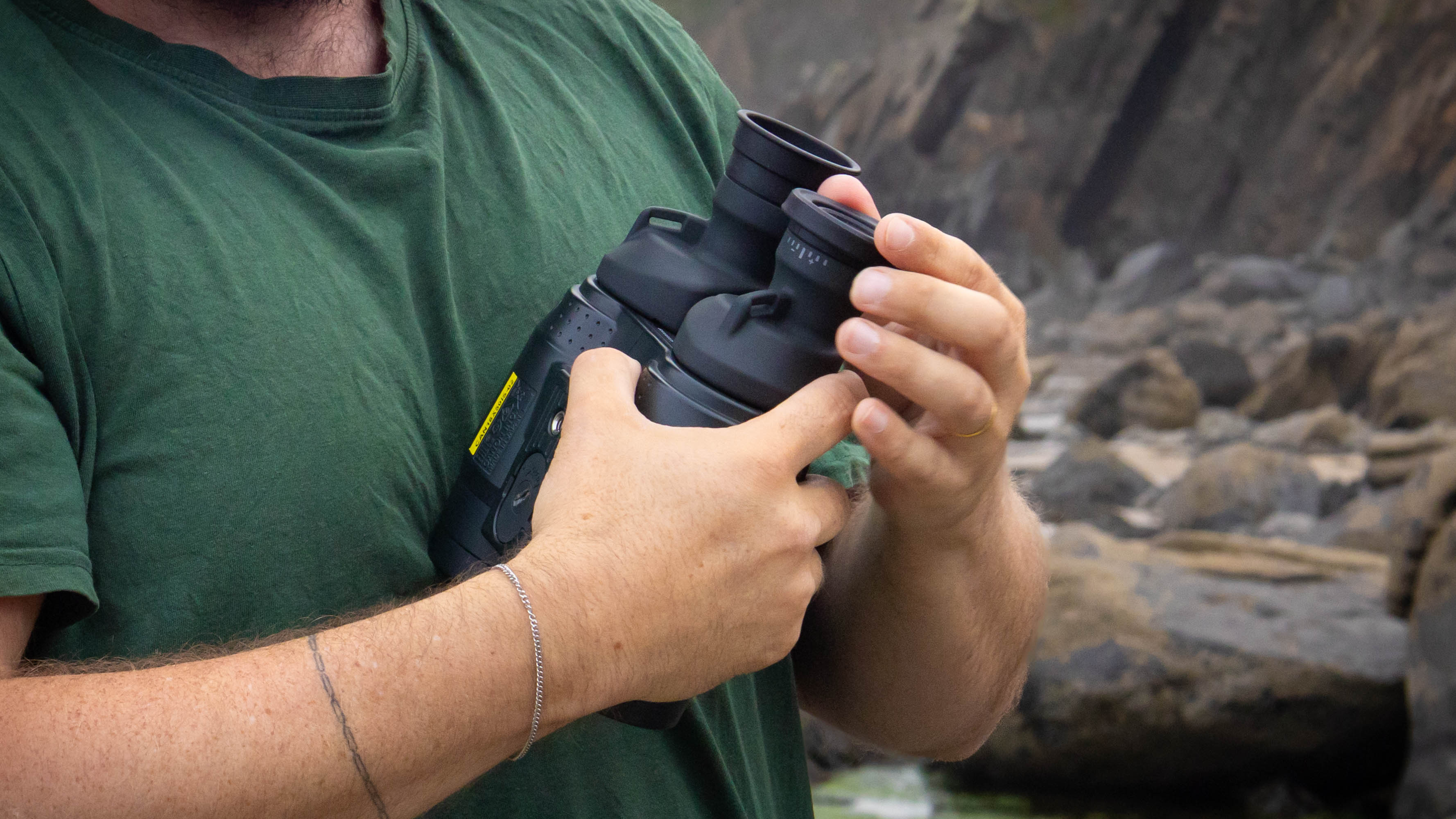

The eyepieces can be adjusted to provide up to 15mm of eye relief, which is perfect for those who wear eyeglasses or even when wearing sunglasses, if out in sunny conditions. Overall, the binoculars are enveloped in a rubberized armor that protects them from knocks and bumps. We found it easy to grip them even during occasional rain showers, especially with the additional indented texture on the hand placement areas of the binoculars.
Canon 18×50 IS UD binocular: Performance
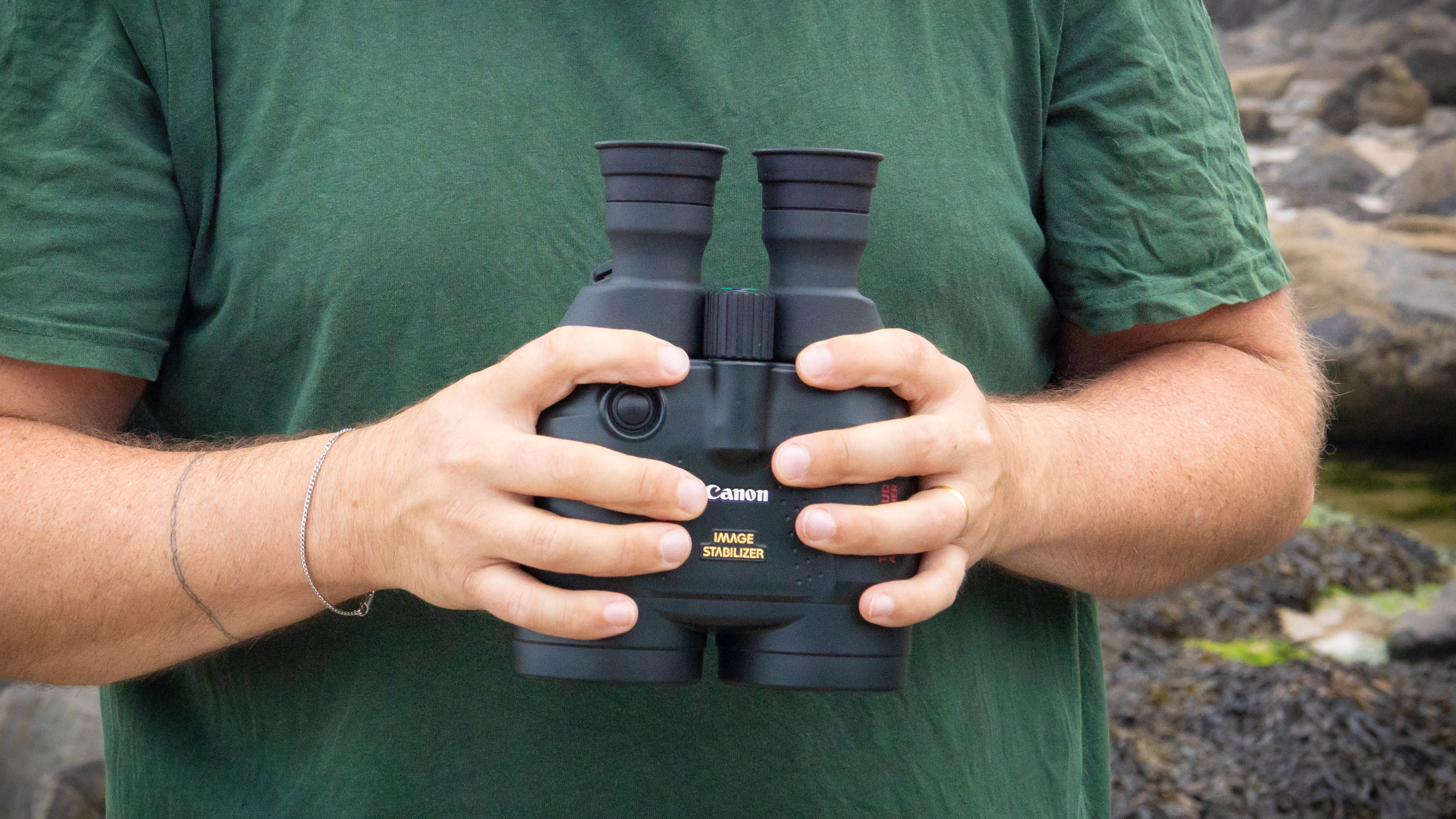
- Ultra-low Dispersion lens element with Super Spectra coating gives vivid views
- Image stabilization helps when viewing stars and reduces need for a tripod
- Field of view allowed us to feel like we were in the binos looking out
Having big pieces of glass in these mammoth binoculars, one would expect some kind of corrective lenses to help provide clear, sharp views that are color fringe-free and that’s exactly what Canon has done with the inclusion of an Ultra-low Dispersion (UD) lens element. Combine that with its proprietary Super Spectra lens coating and we could see realistic, vivid colors bringing birds, mammals and even stars and planets to life.
Image stabilization is really what makes these big binoculars sing. Even during normal, daytime use, engaging image stabilization (IS) was useful for almost every single observation. Without them, they were usable, too, so if you find yourself having used up the two AA batteries that power this feature (like I did) you need not worry. But with 18x magnification, it does make it hard to keep the stars steady at night without the use of a tripod.
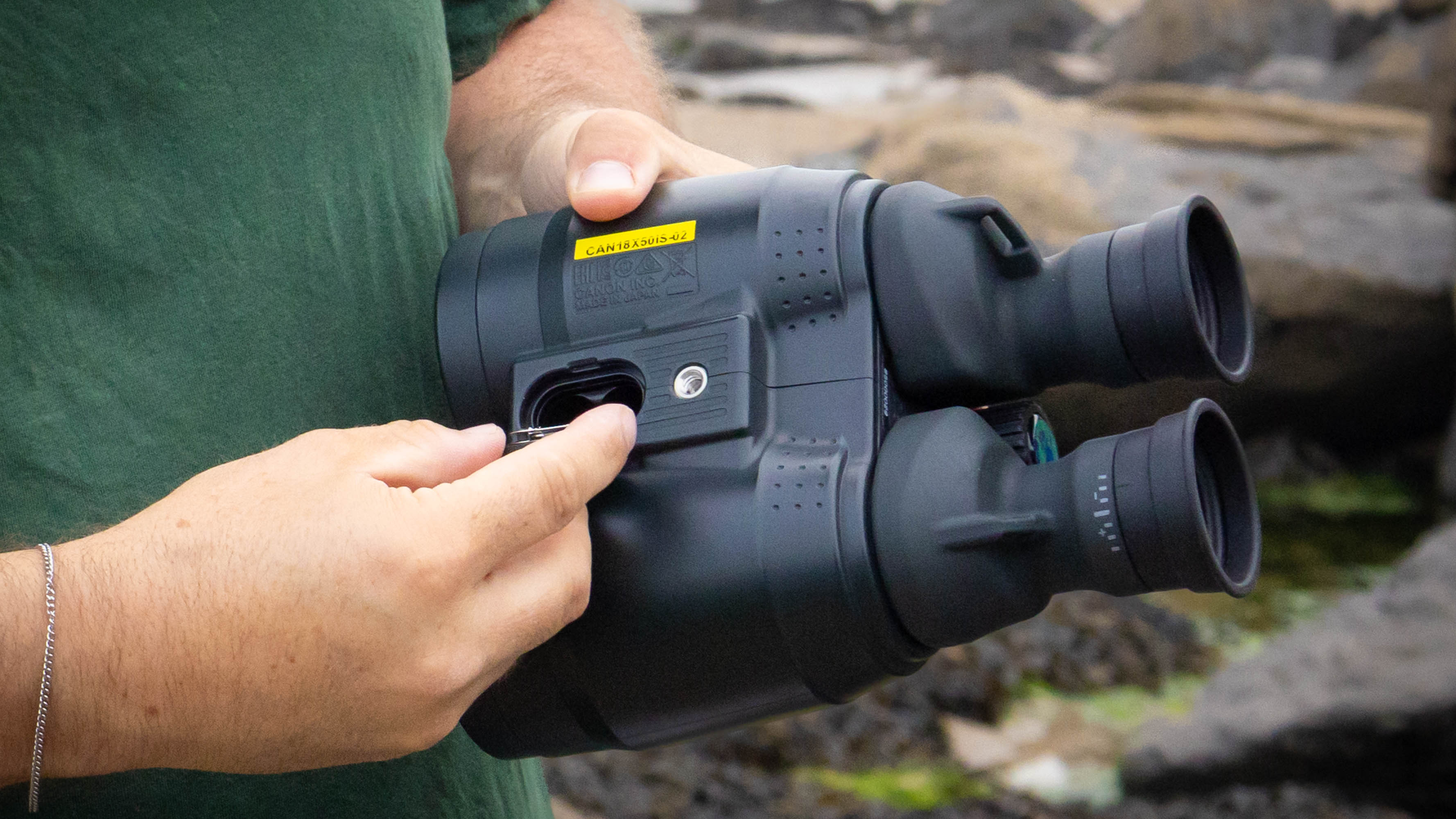
Field of view (60.3-degrees, apparent) was plentiful and it almost felt like stepping inside the binoculars and looking out, instead of the occluded feeling binos sometimes give us when observing. They felt ‘just right’ and did not seem to drop any brightness thanks to superior light transmission, owed in-part to the Super Spectra coating.
Canon 18×50 IS UD binocular: Functionality
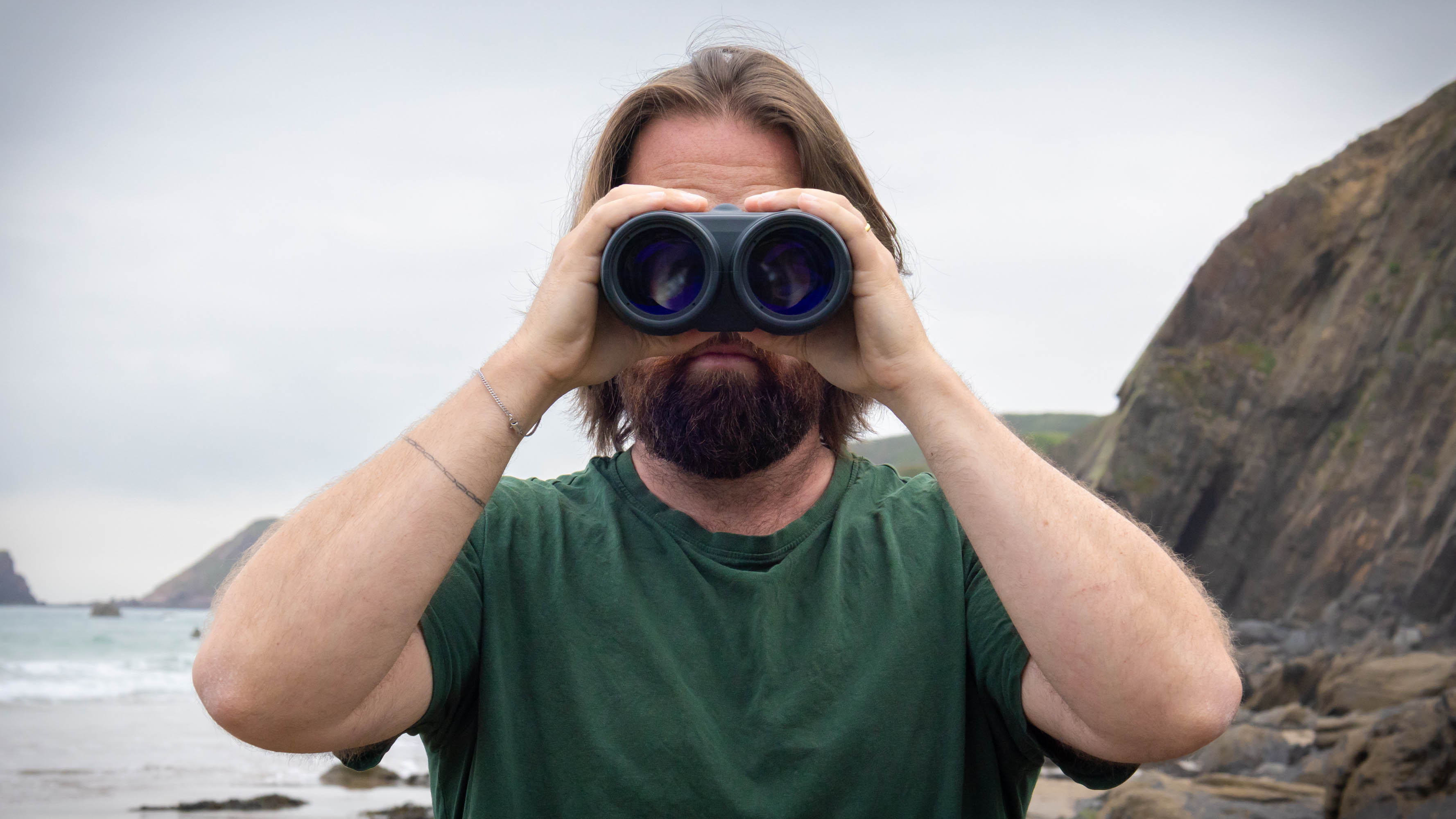
- Rubber eyepieces are comfortable and block sufficient light at night for stargazing
- Image stabilization is easy to engage with a single button press
- No locking diopter ring
We’ve never been a huge fan of the flip-up and flip-down covers on binocular eyepieces because it restricts the amount of adjustable options for eyeglasses wearers, so we won’t hold that against Canon for featuring them in these ‘all-weather’ binoculars. However, the rubber eyepiece covers on these binoculars are comfortable because they are soft on the skin. They also do a good job of shielding the eyes from distracting glare from sunlight and light pollution, especially when stargazing near urban areas.
Operating the image stabilization (IS) is nice and simple; a single button press engages the IS and this is denoting with the illumination of the green LED lamp on the top of the binoculars, right next to the button. That lamp is a real battery-saver when you’re in a wildlife hide or at night when flitting between binos and telescopes.
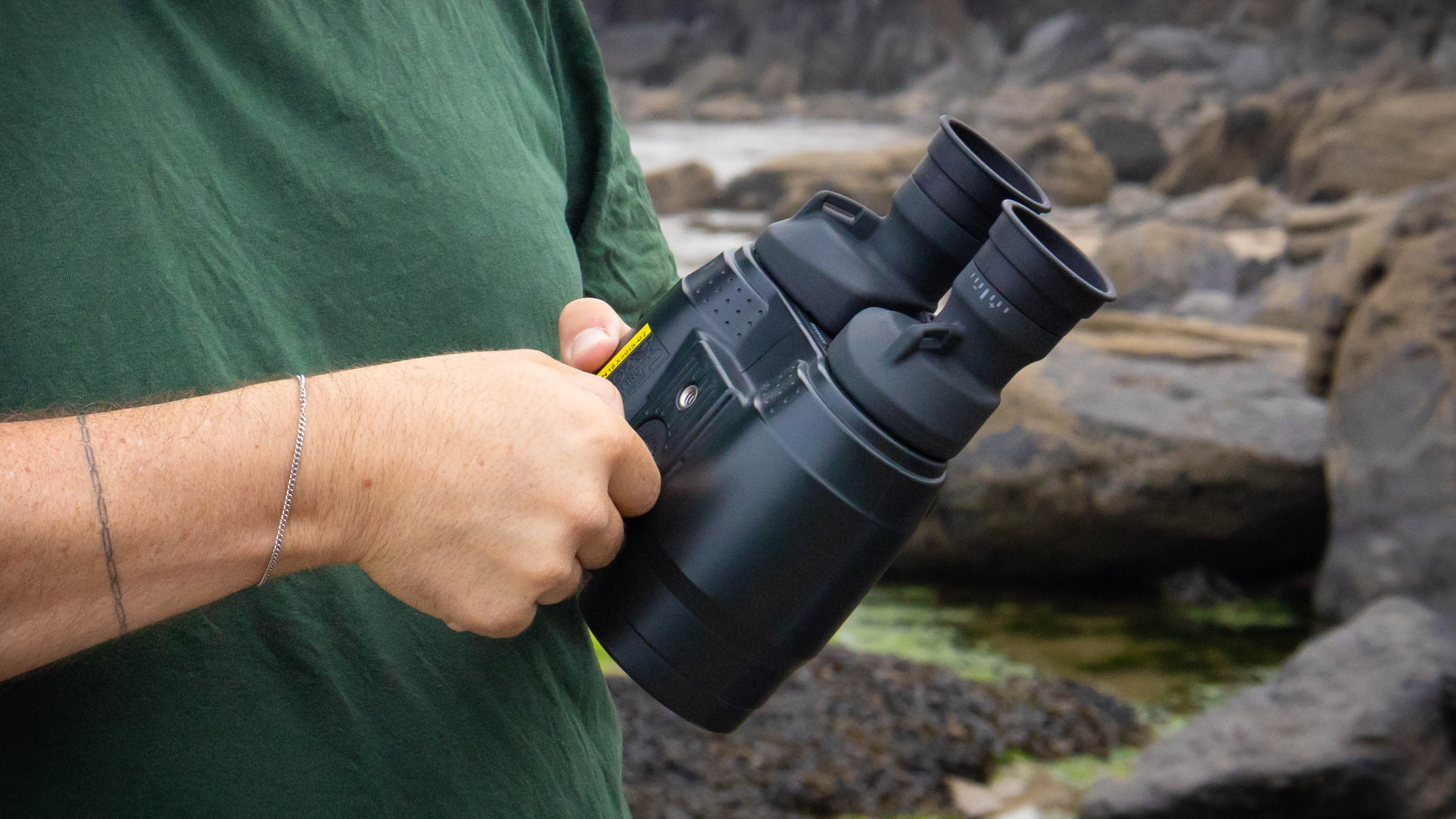
The diopter adjustment on the right eyepiece is easy to use and provides a good amount of friction without being too stiff. A simple twisting motion of the rubberized eyepiece brings sharpness into view without a problem. However, if the binoculars had a locking diopter, then it would be the ultimate in feature-rich astronomy binoculars (in lieu of some kind of ‘smart’ Augmented Reality inclusion).
The neck strap is padded and felt comfortable around our neck for extended periods, plus it attaches to points underneath the eyepieces, similarly found on other image-stabilized Canon binoculars. This meant that, even though the porro prism design kept the overall shape of the binoculars quite wide and bulky, they sat nicely and flat on our chest when using the neck strap, making it all look quite neat and tucked away.
User reviews
Online the Canon 18×50 IS UD all-weather binoculars are regarded as a good pair of image stabilized binoculars with star ratings sitting from 4.2 out of 5 to 4.5 out of 5. They are largely praised for their optical quality and clarity and are an excellent choice when weight is not an issue. But users also acknowledge that they are not the ideal option if you are looking for a smaller, more portable pair.
How we tested the Canon 18×50 IS UD all-weather binoculars
Over a series of weeks, we used the binoculars to observe wildlife both from the land and the sea on small ferries and also larger ships. On land, the image stabilization helped to spot detail on birds that were further away and also spy small animals much further afield that would otherwise be lost to hand shake with traditional binoculars.
Stargazing took place under predominantly urban skies with Bortle Class 3-6. The weather was mixed and some nights had good seeing with night sky objects like M42, the Orion nebula, visible with averted vision even from the rim of a large town with lots of on-street lighting. They got a list misting of rain at times, but were never taken out during heavy rainfall because they are not waterproof.
Should I buy the Canon 18×50 IS UD binoculars?
If you are into wildlife observing or stargazing these are fantastic binoculars with strong magnification and bright, sharp views. They are ideal for those who have the budget and want to get some serious detail in their constellations and wildlife. We could see the fainter nebulas (M42) and galaxies (M31) even in urban areas with ease and without a tripod. When birdspotting, we could see details in and around the eyes and wing feathers that we hadn’t seen before, especially on waterfowl that we spotted whilst in a wildlife hide.
If this product isn’t for you
These binoculars are good quality but come at a premium price which some beginners, and those only interested in occasional observing, might not want to budget for. They are also large and bulky so those who want to travel unencumbered might prefer a smaller, lighter pair. In which case, we would recommend either sticking with Canon and opting for the Canon 10×20 IS which are Canon’s second-lightest image stabilized binoculars. They still produce decent wide-field views for stargazers, and are more affordable. Or, the Nikon 12×25 S image stabilized binoculars which are about $30-40 more, depending on the retailer, but give sharp views with outstandingly stable performance and are even smaller and lighter again.