



Scientists have identified a tipping point that has amplified El Niño’s effect on sea ice loss in the Arctic.
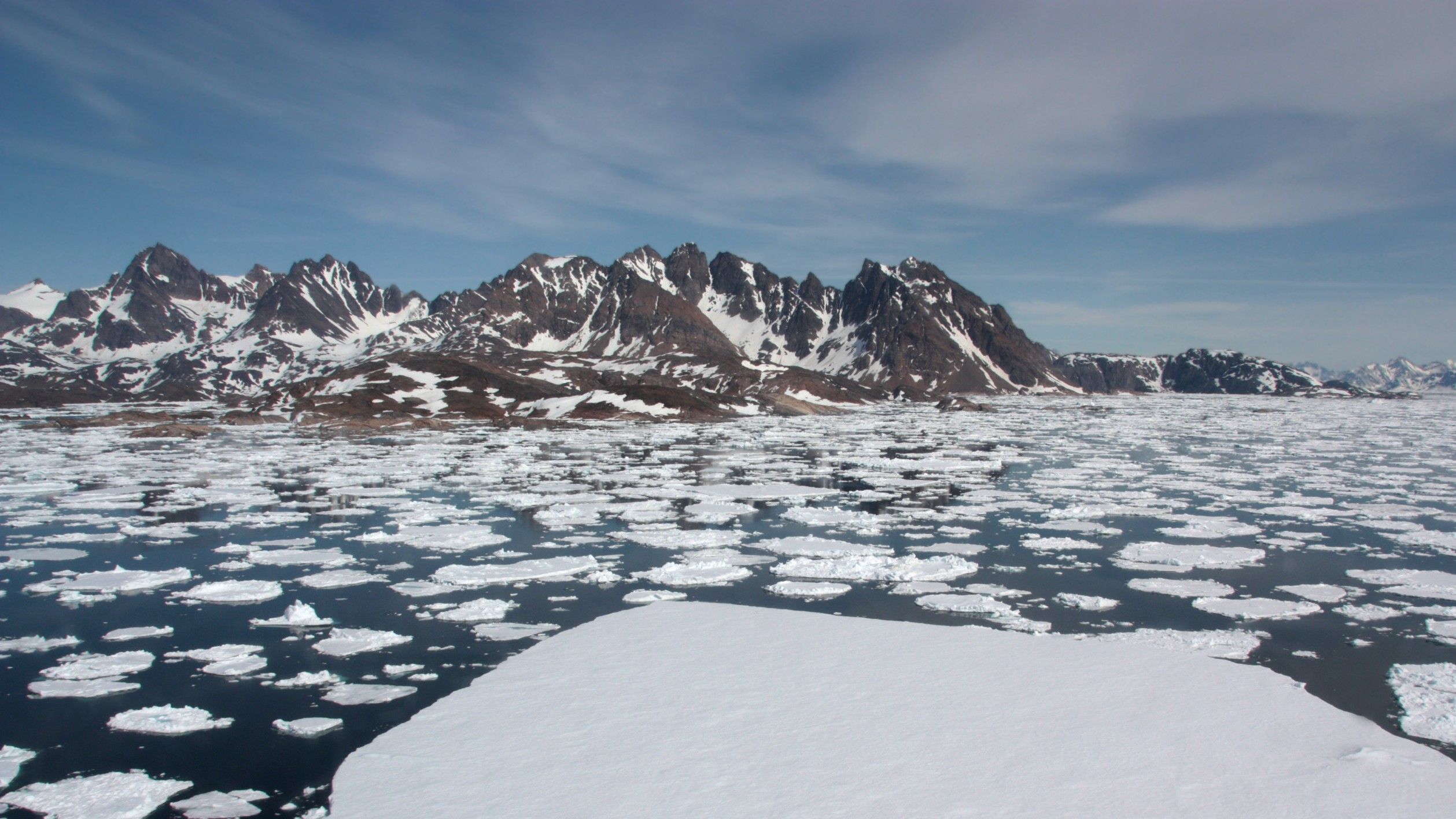
For years, researchers have known of a feedback loop linking the El Niño-Southern Oscillation (ENSO) and sea ice coverage at high latitudes. But in a new study, researchers found that since around the year 2000, faster transitions between phases of ENSO have a stronger influence on ice loss northeast of Russia. These changes lead to warmer, wetter weather in the region and less sea ice coverage during the fall following the transition.
ENSO is a climate phenomenon involving variations in air pressure and sea surface temperatures in the tropical Pacific over multiple years. These variations can affect climate and weather patterns across the world, including the frequency of hurricanes, tropical cyclones and droughts.
In the new study, published Jan. 14 in the journal Science Advances, researchers explored how ENSO affects Arctic sea ice, focusing specifically on the Laptev and East Siberian seas northeast of Russia. The team combed through monthly data on sea surface temperatures and sea ice concentration that were collected between 1979 and 2023 to find patterns between ENSO transitions and sea ice coverage the following year.
The results showed that shifting out of the El Niño phase forms areas of cold surface waters in the central and eastern Pacific near the tropics during the following fall. After the year 2000, the transitions out of El Niño started to speed up, possibly due to interactions with the Pacific Decadal Oscillation, another long-term climate cycle that affects temperatures in the Pacific Ocean.
Those fast transitions made the cold patches even colder. And those cold areas pushed a high-pressure system known as the Western North Pacific Anticyclone (WNPAC) northward towards the Arctic. Pushing the WNPAC north causes another anticyclone to form above the Laptev and East Siberian seas. Together, these connected processes pull heat and moisture from the north Pacific into the Arctic, melting ice along the way.
Prior to 2000, the connection between the cold areas and the WNPAC wasn’t strong enough to affect sea ice coverage in the Arctic, the team found.
The changes that have occurred since 2000 are due to natural cycles in Earth’s climate, not human activities, the researchers said. But anthropogenic climate change “is putting a big uncertainty on how we predict those multi-decade ice changes,” said Xiaojun Yuan, a physical oceanographer at the Columbia University Lamont-Doherty Earth Observatory who was not involved in the study.
Human-caused climate change could override some of the natural patterns observed in these long-term oscillations, Yuan told Live Science.
In future work, the team will investigate the effects of anthropogenic climate change on sea ice in the region, Wang said.