









There’s a reason George W. Bush was the last governor to win the White House: In the 25-plus years since, governors have proven incapable of weathering the intense public scrutiny and navigating the media barrage of gotcha questions that accompany running for president.
There are reasons for that.
As local television news divisions have shrunk and as local and regional newspapers have done the same — or ceased operations entirely — the press corps devoted to covering governors (and state legislatures) in America’s 50 capital cities has followed suit.
Governors might enjoy the freedom to maneuver, politically and legislatively, without the biblical flood of questions from reporters. But it’s cost them valuable experience dealing with pressure from an often-hostile media that picks apart every nook and cranny of a candidate’s personal life, political service and private-sector career.
From 1976 to 2000, voters chose current or former governors for president: Georgia’s Jimmy Carter was followed by California’s Ronald Reagan in 1980. Arkansas’s Bill Clinton, elected in 1992, was followed by Texas’ Bush. The only exception during that period was then-Vice President George H.W. Bush’s victory over then-Massachusetts Gov. Michael Dukakis in 1988. Since 2000, governors have mostly struck out, save for Mitt Romney. The former Massachusetts governor received the GOP presidential nod in 2012, then lost.
Otherwise, senators have been the most competitive candidates.
That includes John Kerry of Massachusetts, the Democratic nominee in 2004; President Obama, who won the Democratic nomination in 2008 while in his first term as an Illinois senator; and 2016 nominee Hillary Clinton, a former senator from New York. In 2020, the Democratic nominee was former Vice President Joe Biden, who had spent decades in the Senate. Yes, President Donald Trump broke the mold. But he was a creature of the national media and adept at handling the press.
But some political observers I’ve talked to about this phenomenon believe the pendulum could swing back toward the governors in 2028, at least on the left side of the aisle. That’s in part because the Democrats could field a collection of nationally prominent governors, at least some of whom are savvy social media warriors, compensating for any inexperience with an unforgiving national media ecosystem.
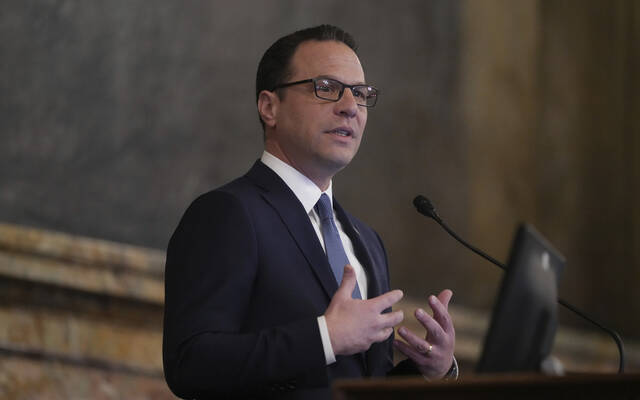
The other counter to my theory of governors’ White House curse is that Democrats, at least, are on the cusp of seeing three charismatic and combat-ready chief executives run for president in the next election. They are governors who have tasted the national media spotlight by getting into public spats with Trump and have positioned themselves as foils to the term-limited president’s agenda. They are California Gov. Gavin Newsom; Illinois Gov. JB Pritzker; and Pennsylvania Gov. Josh Shapiro.
Michael Kryzanek, professor emeritus of political science at Bridgewater State University in Bridgewater, Mass., pointed to Newsom and Pritzker in particular.
“These are individuals that know how to respond in a way that is effective in today’s environment. They’re willing to go after the president of the United States, and they have a capability to express themselves in a way that the American people are looking for, in terms of the Democratic Party,” Kryzanek told me. “We can’t ignore the role that a governor can play.”


