Roman soldiers defending Hadrian’s Wall in Britain were well acquainted with diarrhea and stomachaches, according to a new study that found evidence of at least three different intestinal parasites in the soil near centuries-old toilets.
The finding shows that Roman guts suffered greatly, in spite of the wall having what was then a state-of-the-art sewer system.
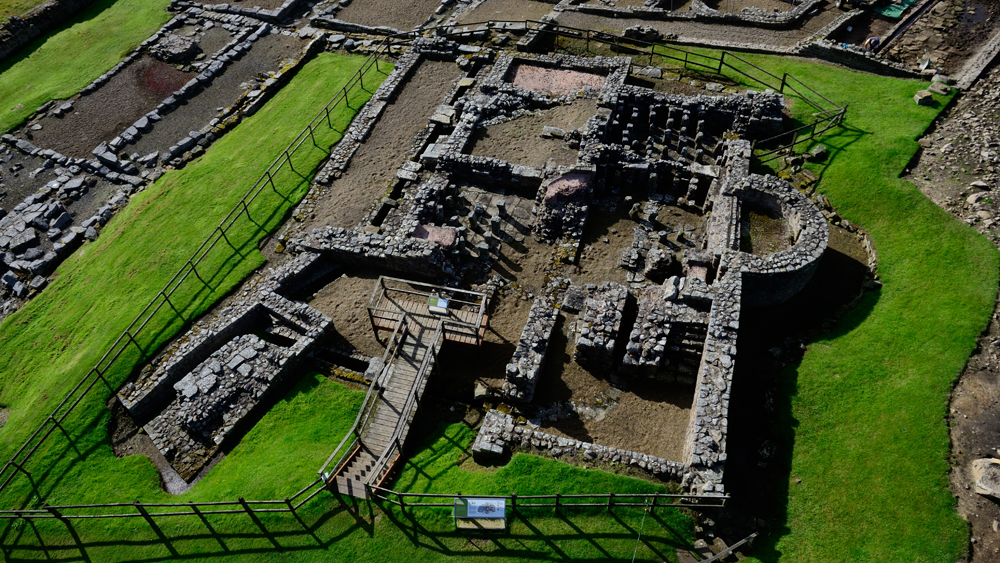
In a study published Friday (Dec. 19) in the journal Parasitology, a team of researchers investigated a new line of evidence at Vindolanda — soil preserved in the drain pipes of the fort’s third-century latrines.
Researchers collected 58 samples from along the length of the latrine drain, some of which contained animal bones, Roman beads and pottery. They then micro-sieved the soil samples to look for the eggs of parasitic worms.
Within the latrine samples, the researchers discovered eggs from roundworms (Ascaris sp.) and whipworms (Trichuris sp.). Both roundworms and whipworms are microscopic parasites that live in human intestines, often causing stomachaches, fever and diarrhea. These fecal-oral parasites are typically passed along when a person ingests unsanitary food or dirt contaminated with the parasites’ eggs.
Additionally, in one sample, the researchers detected Giardia duodenalis, a parasite that also infects the small intestines and causes giardiasis or giardia infections.
The presence of all three parasites suggests fecal contamination of water or food sources at Vindolanda, the researchers wrote in the study. But while whipworms and roundworms have been identified before in Roman Britain, this is the first evidence for G. duodenalis.
“Archaeological sites in Britain dating to before the arrival of the Romans have not been systematically tested for Giardia,” study co-author Piers Mitchell, a paleoparasitologist at the University of Cambridge, told Live Science in an email, so “it remains unknown whether this parasite was in the U.K. prior to the Roman period.”
But Giardia is an important clue to the health of the people living along the Roman frontier.
“Of the three parasites we found, Giardia is the most likely to cause serious health problems,” Mitchell said. While short-term infection results in diarrhea and dehydration, long-term side-effects of giardia infection can include irritable bowel, eye damage, arthritis, allergies and muscle pain.
Although Roman soldiers were not legally allowed to marry, myriad forms of archaeological evidence, including preserved children’s shoes, point to men, women and children all living at Vindolanda. And the new parasite evidence may point to a major health concern for soldiers’ kids.
“Diarrhea can lead to dehydration in all age groups, but it is young children who are most likely to die from it,” Mitchell said. “Chronic infection in children with Giardia, roundworm or whipworm can all lead to stunted growth and reduced intelligence.”
Gastrointestinal issues from parasites were likely quite common in most parts of the Roman Empire, the researchers noted in the study, but the new analysis does not reveal exactly how many people suffered from these infections.
“As the sewer drain contains the mixed feces of all those who used the latrine, we cannot tell what proportion of those at Vindolanda were infected by parasites,” Mitchell said. Given data from past studies, though, it’s thought likely that “between 10 and 40% of people in Roman times were infected by intestinal worms.”