Why you can trust Live Science
Our expert reviewers spend hours testing and comparing products and services so you can choose the best ones for you. Find out more about how we test.
It’s not always easy to tell what Garmin’s series names are about. What separates a Fenix from a Forerunner, from an Epix? But with the Garmin Enduro 3, you may be able to guess! The Enduro family is all about class-leading stamina. And as a high-end range, you also get most of the key features of a watch like the Fenix 8.
Friendly smartwatch fluff is what the Enduro 3 lacks. There’s no mic and speaker combo, no OLED screen option. However, this might just be the best buy of all Garmin’s watches for the veteran Garmin fan. It’s a chunk cheaper than either the last Enduro or the new Fenix 8, with only fairly minor concessions involved.
Garmin Enduro 3 smartwatch review
Garmin Enduro 3: Price and availability
The Garmin Enduro 3 launched alongside the Fenix 8 in August 2024. In an unusual move for a Garmin watch, the Enduro 3 actually costs less than its predecessor. But it’s still not exactly cheap.
A Garmin Enduro 3 costs $899/£769 — down from $1,099/£929 in the previous generation. This makes it slightly more affordable than the Fenix 8, the 51mm version of which costs £1,039.
Garmin Enduro 3: Design and screen
- Surprisingly light and comfortable to wear
- Lackluster transflective screen
- No option for an AMOLED screen
Key specs
Screen tech: MIP
Resolution: 280 x 280 pixels
Water resistance: 10ATM
Dimensions (in): 2 x 2 x 0.6
Dimensions (mm): 51 x 51 x 15.7
Connectivity: Wi-Fi, Bluetooth, ANT+
Sensors: Dual-band GPS, ECG, optical HR
Storage: 32 GB
Weight: 2 oz (57g) (minus strap)
Battery life: Up to 36 days (90 with solar charging)
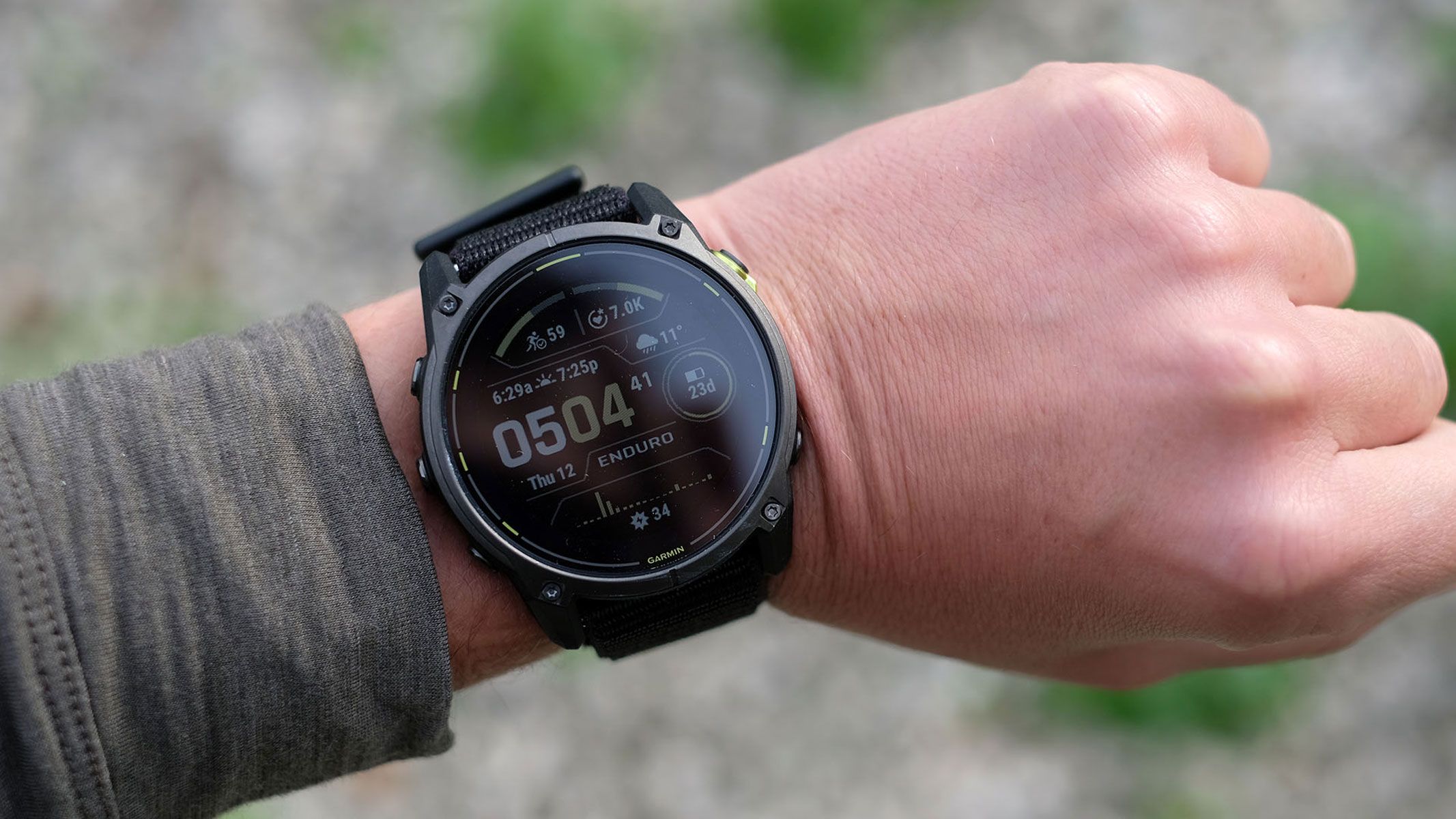
The Garmin Enduro 3 is a big watch. It has a 51mm face and is a wrist-dominator. This will, and should, put off some potential buyers. It’s big because it needs a big battery, and there is no smaller option here.
For such a giant watch, though, the Enduro 3 will seem surprisingly light. It weighs 2 ounces (57 grams) case-only, which is also lighter than the Enduro 2 (2.25 oz/ 64 g).
Is it a watch to wear to bed? Probably not, but it avoids the sense the Enduro 3 is trying to escape from your wrist during runs, which can happen with heavier watches.
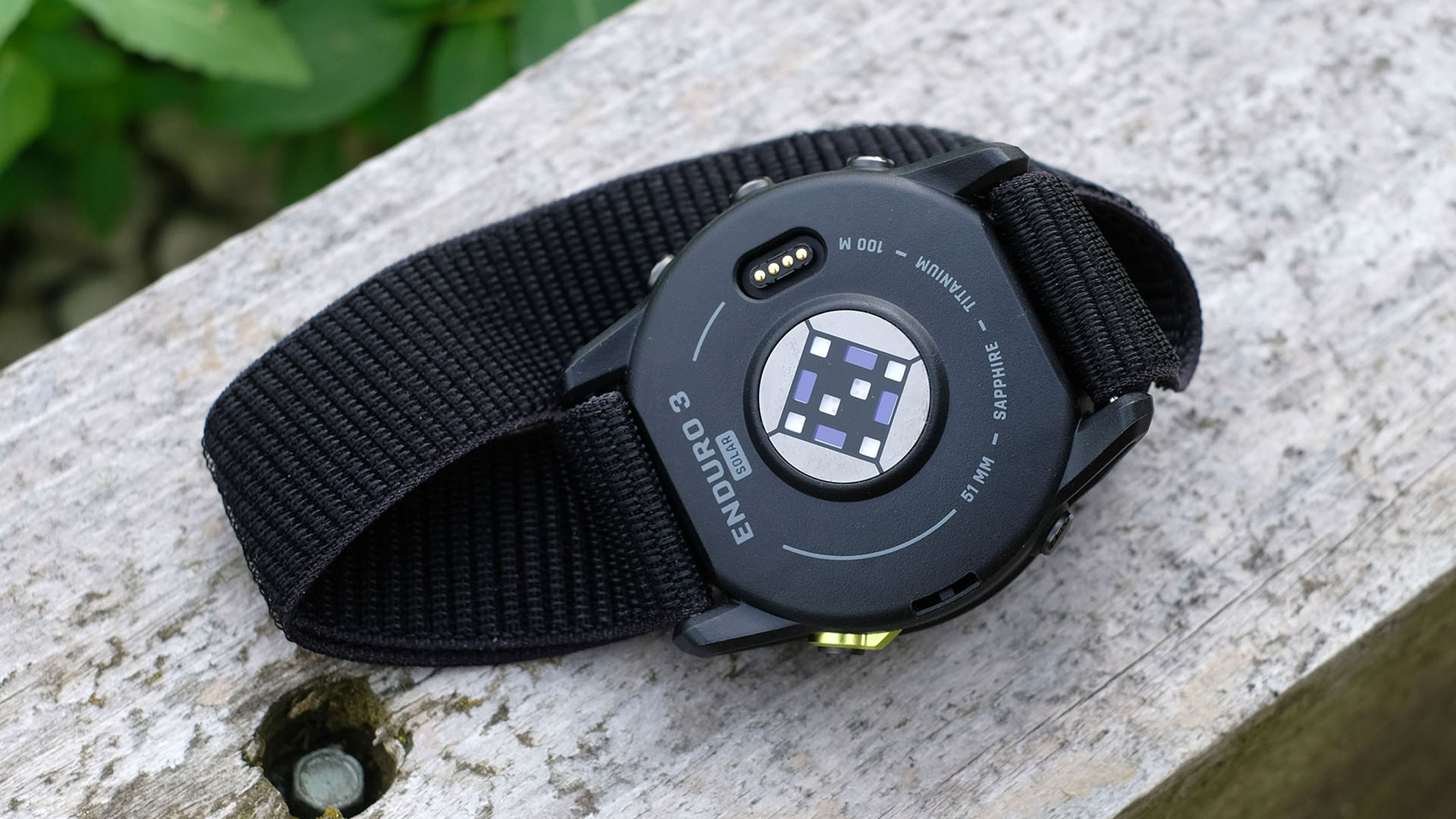
This low weight is no mystery. The Enduro 3 casing is largely made from Garmin’s ultra-hard plastic resin, with a titanium bezel on top. There are no stainless steel plates to dramatically bump up the weight. We also lose the titanium back panel of the Enduro 2, which may be a cost-saving measure. But it makes no real difference when this part sits on your wrist all day anyway.
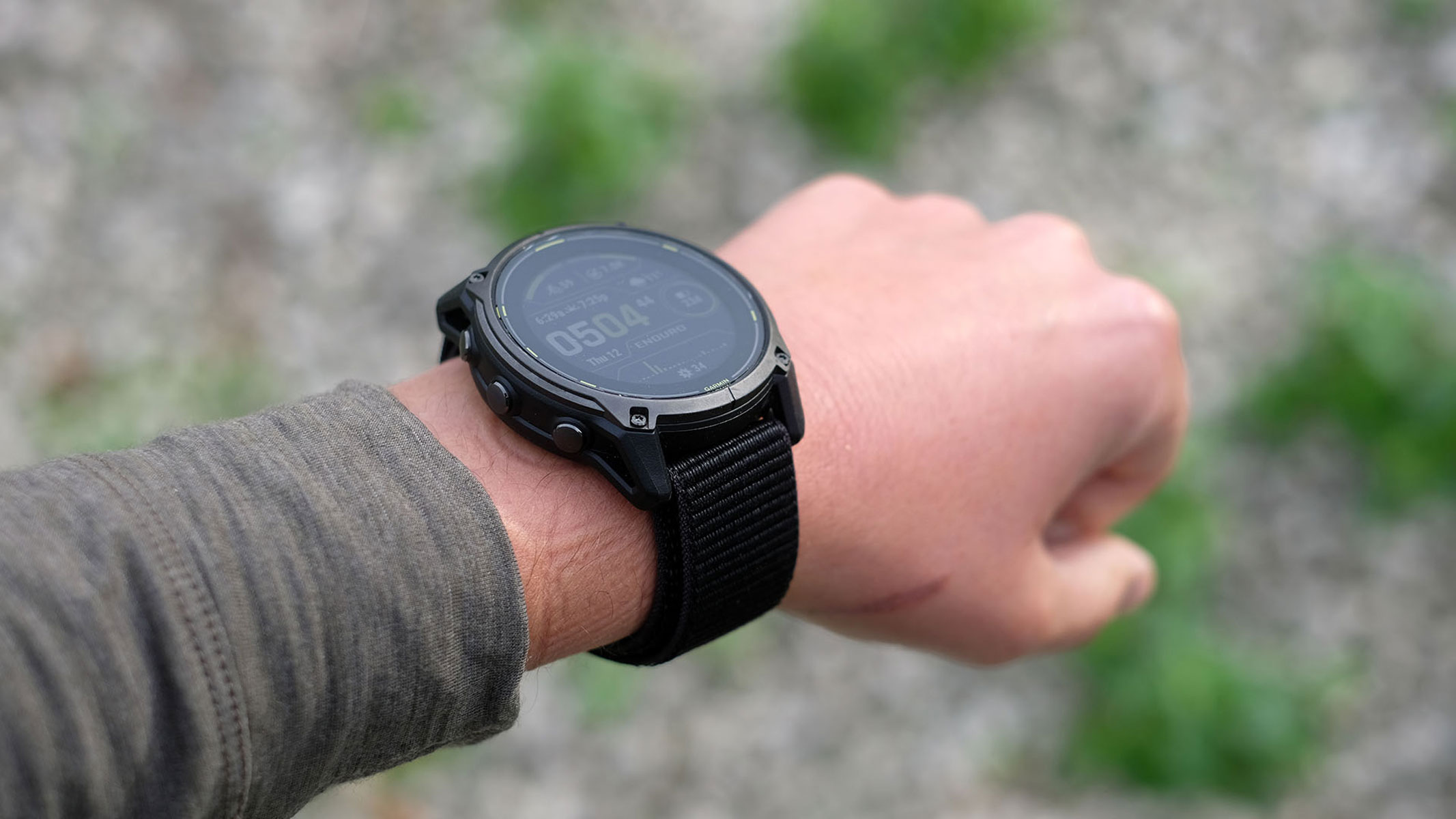

In the flesh, the Enduro 3 doesn’t seem like a huge stylistic or build downgrade from a Fenix 8. There’s no option of an AMOLED screen here, though. The Garmin Enduro 3 is a classic transflective screen watch. This means it requires ambient light to be seen, or the basic front light, like an old digital watch.
These displays barely use any power, feeding into the Enduro 3’s “long-lasting” angle. But they don’t look as sharp, as colorful or anywhere near as bright as a rival AMOLED.
Unlike an AMOLED watch, though, the Enduro 3 displays its clock face all day as standard. If you value smartwatch sheen over a purely practical approach, you probably don’t want this watch.
The screen hides a special skill, though: an invisible solar-charging panel. In earlier generations, Garmin’s solar panels had a slight grey-red appearance, but there’s zero sign of it here — it’s hidden in the black screen surround.
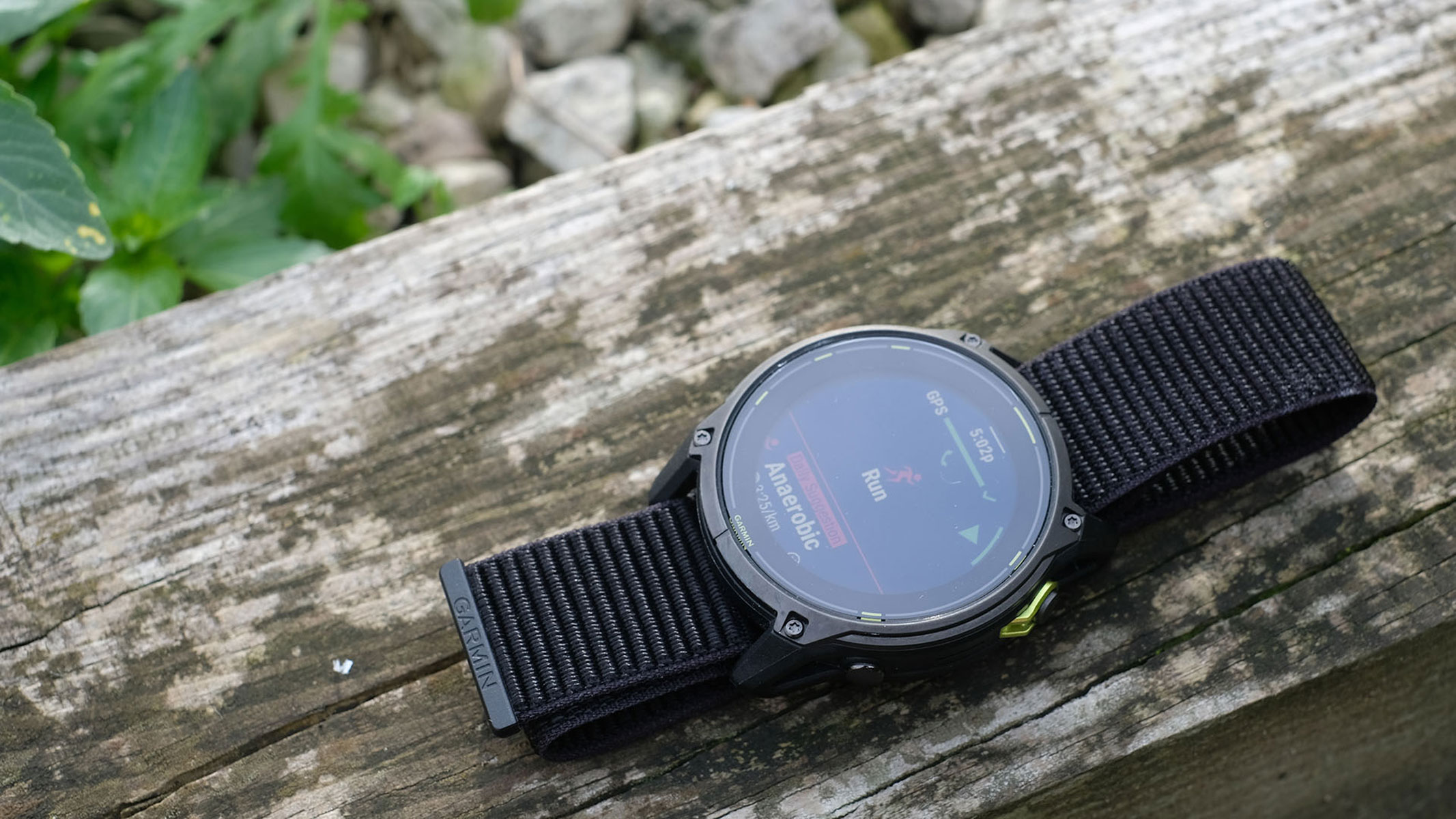
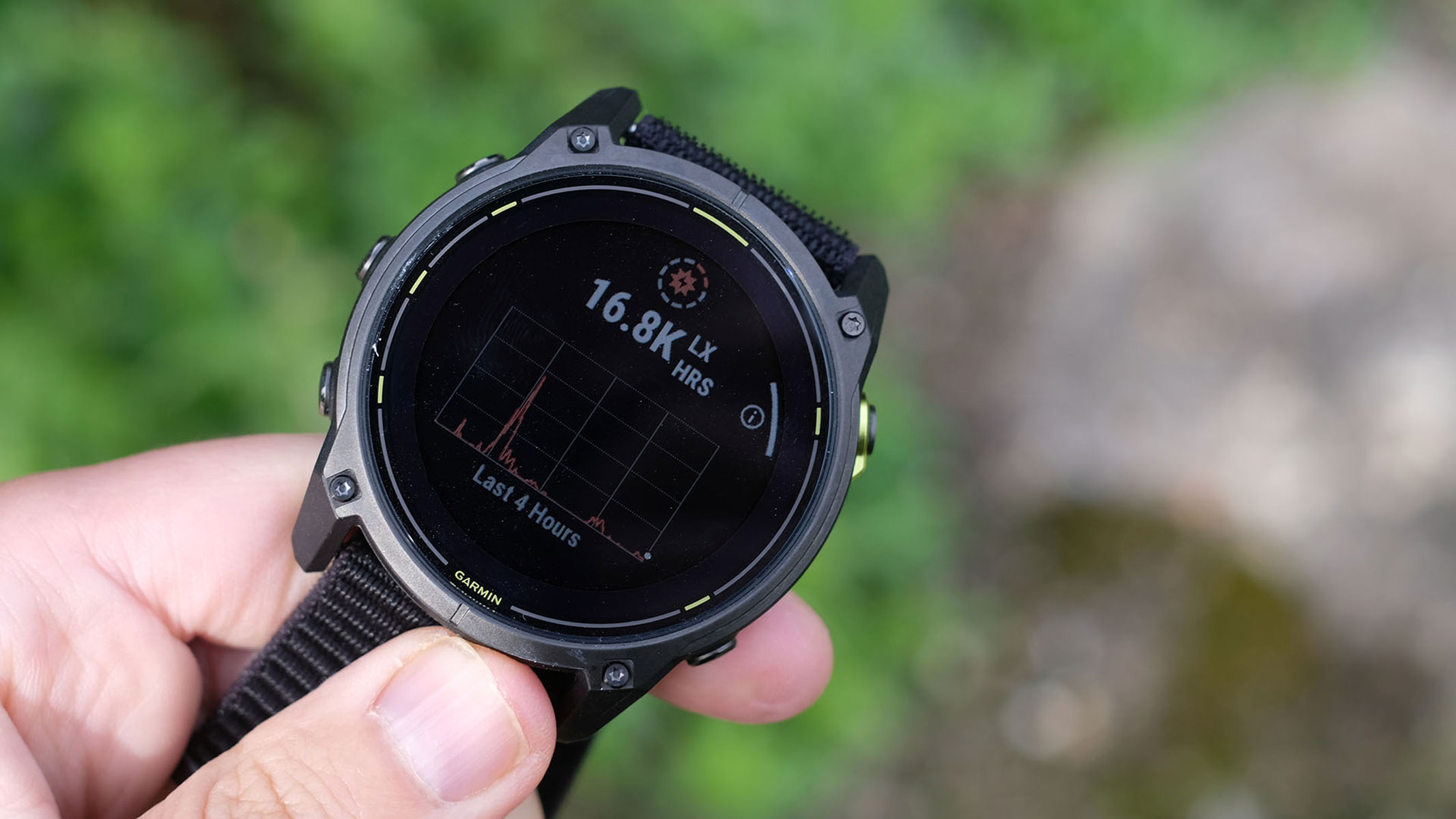
It’s also reportedly far more effective, and doesn’t affect the reflectivity of the screen like some older iterations. We can’t give a full account of how well the solar charging works as the Enduro 3 was reviewed mostly in a not-all-that-sunny London. But we can confirm it’s fun to check out how many “K Lux” the watch recorded on those sunny days — you can see a graph throughout the day on the watch itself.
Garmin Enduro 3: Battery life
- Approximately a month of battery life in smartwatch mode
- Approximately 60 hours of battery life in the multi-band GPS mode
- Up to 90 days of battery life in solar-charging mode
Now seems a good time to talk about how long the Enduro 3 really lasts. In a word: ages.
The figure quoted by Garmin is 36 days of general use, which can be upped to 90 days with sufficient sunlight exposure. In 16 days, the watch lost 61% of its battery, suggesting a total usage time of around 26 days based on our experiences.
Sure, that’s not quite Garmin’s figure. But then reviewing a watch generally involves fiddling about with it more than you might ordinarily. It’s this, where you actually ask the Enduro 3 to do some work, that will make an Enduro 3 fall away from its maximum potential stamina a bit.
Battery loss from GPS-tracked runs is quite significant, too. I saw a 4% loss from an hour of running, which is more than you might expect going by Garmin’s own numbers, which suggest 60 hours of use even when using the most demanding Multi-Band mode.
This wasn’t a one-off either. One of my last long runs was a three-hour effort, or 3.5 hours including time spent doing some shopping mid-way through. That saw the battery drop from 27% to 13% — again, at least a 4% per hour loss of charge. Those training for an ultramarathon should take note to avoid disappointment.
But almost a full month of use between charges? It’s still strong. And this is still a top pick for the ultramarathon crowd.
Like other Garmins, the Enduro 3 uses a four-pin physical socket to charge. Nothing new there.
Garmin Enduro 3: Features
- Comprehensive tracking features
- 10ATM water resistance
One of the key questions for prospective Enduro 3 owners is what this watch lacks that the non-OLED screen Fenix 8 has?
The answer amounts to a handful of “cherries on top.” The Enduro 3 has 10ATM water resistance but is not dive-ready like the Fenix. You shouldn’t submit it to more than ordinary swimming.
There’s no speaker or microphone, meaning it can’t play music without being connected to wireless headphones and it can’t interact with a digital assistant. That’s largely useful for setting kitchen timers, though, so it’s not the greatest loss.
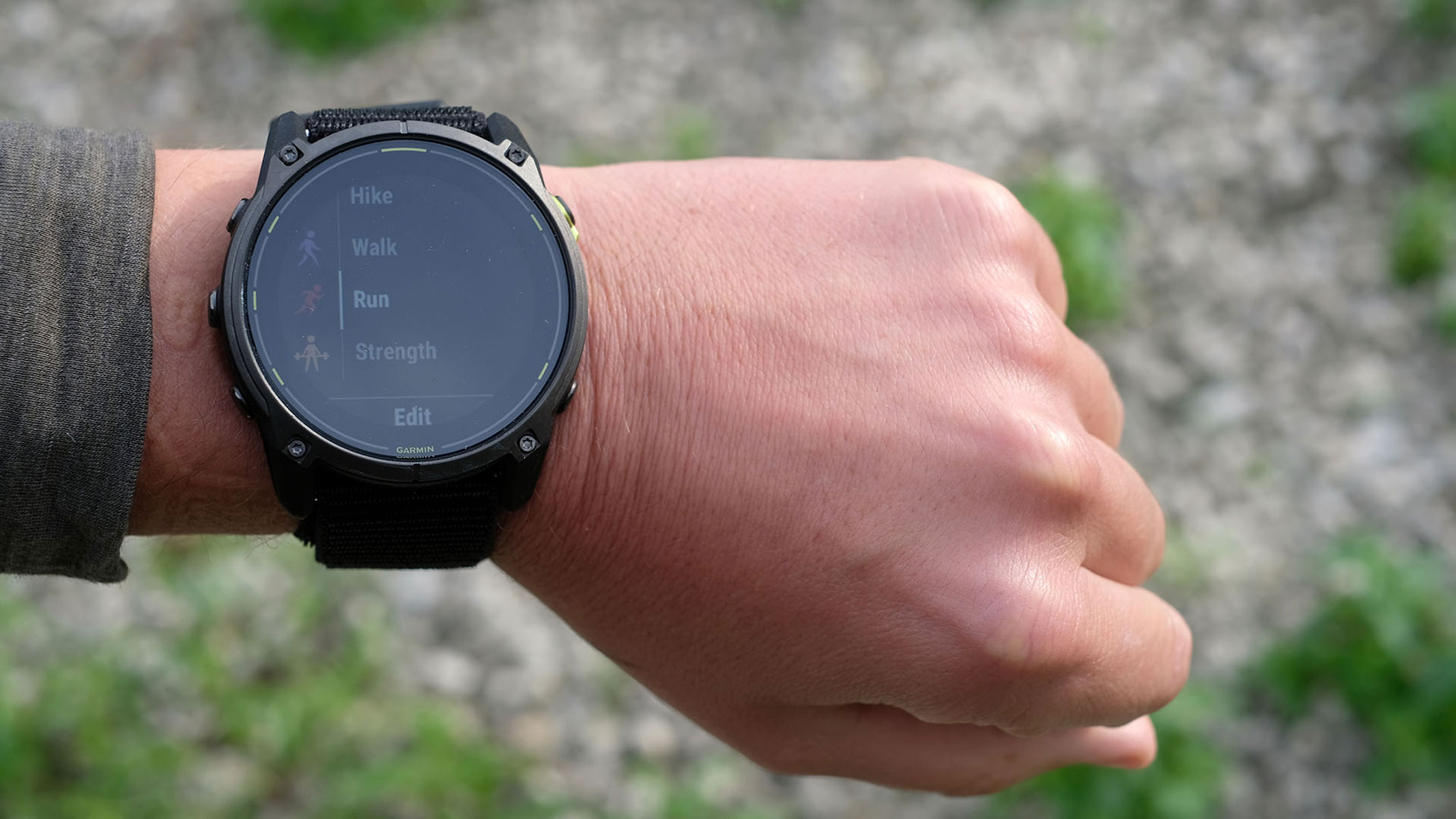
The Enduro 3’s actual fitness feature chops are, like other top-end Garmins, impeccable and encyclopedic. And the attention to detail in the various activity modes is an order of magnitude greater than that of cheap fitness watches that boast of their 100+ modes.
For example, the Climbing mode lets you set the grading system and difficulty for each session. And, of course, it has an altimeter for judging altitude and, in lighter style, how many flights of stairs you climb each day.
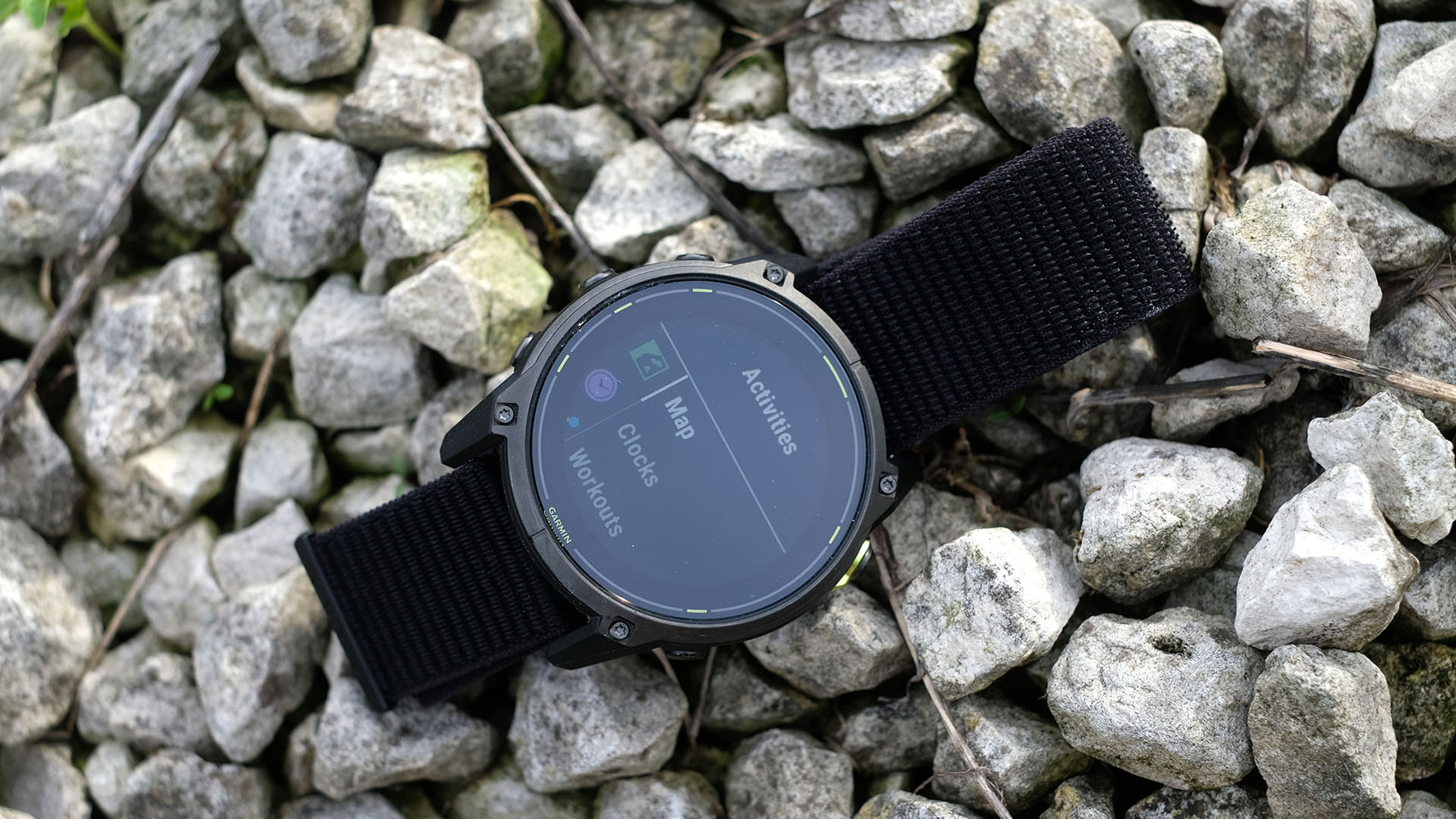
At the hardcore end, you can download countries’ worth of map data (for free) and use the Garmin Connect app to calculate a decent run route of whatever distance you like. And on the lighter side, the Enduro 3 has loads of workouts built in, including little animations to remind you of the moves.
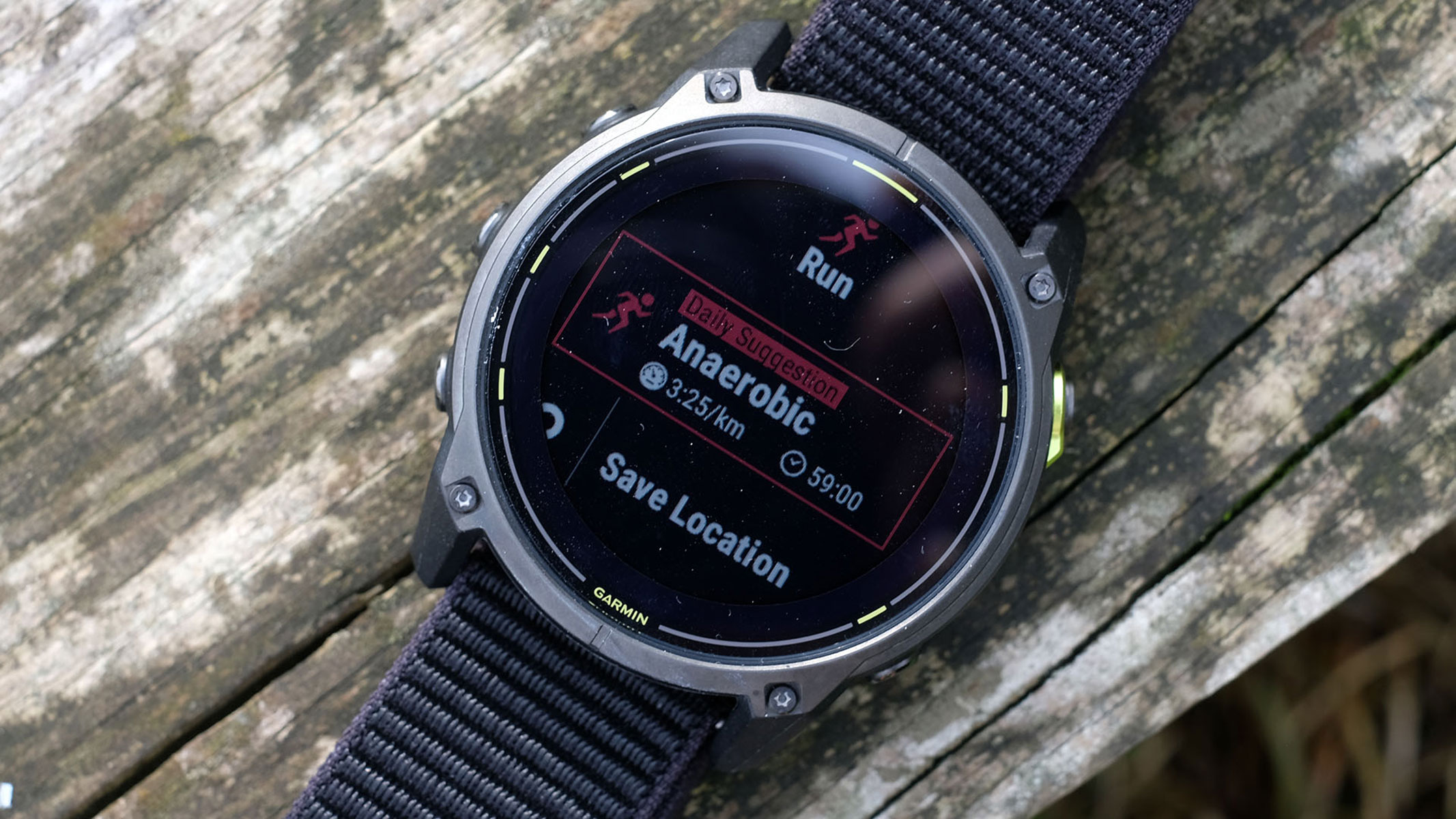
This is a hardcore exercise watch, but it’s not just about the hardcore stuff. You can use it like a personal trainer, too. As well as offering daily suggested workouts for running and cycling, you can let Garmin make a dedicated training plan, including one based on an event like a marathon, on a specific date. It will also fiddle with the plan based on how well-rested the Enduro 3 thinks you are.
All of this is included with a top-tier Garmin watch. Sure, it doesn’t come with hundreds of presenter-led workouts, but it is still extremely valuable.
The Garmin Enduro 3 is a solid watch for general wellness, too. Its sleep tracking is solid, and measures heart rate variability as well as classic sleep stages (light, REM, deep, awake). You get to see this data each morning as part of your Morning Report — a multi-page pop-up of vitals. And if you want to lean on your Enduro 3 even more, the Sleep Coach in the Garmin Connect app suggests how much sleep it thinks you need each night.
Garmin has been quite late to a health feature seen in other watch series, like the Samsung Galaxy Watch, though — ECG. The Enduro 3 does support the ECG app, but it’s only available in the U.S. and a handful of other countries, thanks to the way these features need to be assessed by the relevant health authority. Those in the UK and Europe are out of luck, for now.
Garmin Enduro 3: Performance
- Accurate heart rate measurements
- Reliable GPS tracking
The Garmin Enduro 3 shares its core fitness-tracking tech with the other flagship Garmin models, including the Fenix 8.
This means an Elevate 5 heart rate array and a Multi-Band GPS. The Elevate 5 was introduced in the Fenix 7 Pro generation, and has four additional green LEDs that fire up during tracked exercise to improve accuracy.
The only significant issues I had were when wearing, for the first time of the season, a long-sleeved base layer that kept trying to work its way under the watch body. It’s otherwise reliable enough for stat fiends to be able to seriously consider retiring their chest strap HR monitors.
As in the Fenix 8, it was a little less hot at the only moderate, but frequent, spikes of gym workouts, but heart rate data is arguably less interesting in that context anyway.
GPS reliability is great, and as ever, the Garmin Enduro 3 has an auto mode that switches up to the most effective (but most battery-sapping) Multi-Band mode automatically when needed. This can really help out when in tricky environments like skyscraper-packed cities, under dense, soaked tree canopies, or steep valleys.
As with the Fenix 8, I found triangulating GPS takes longer than some watches of the previous generation. This does seem to have calmed down a bit with software updates, though, and at last check took just over 10 seconds to do the job. It could be faster, but it is not a deal-breaker.
Should you buy the Garmin Enduro 3 smartwatch?
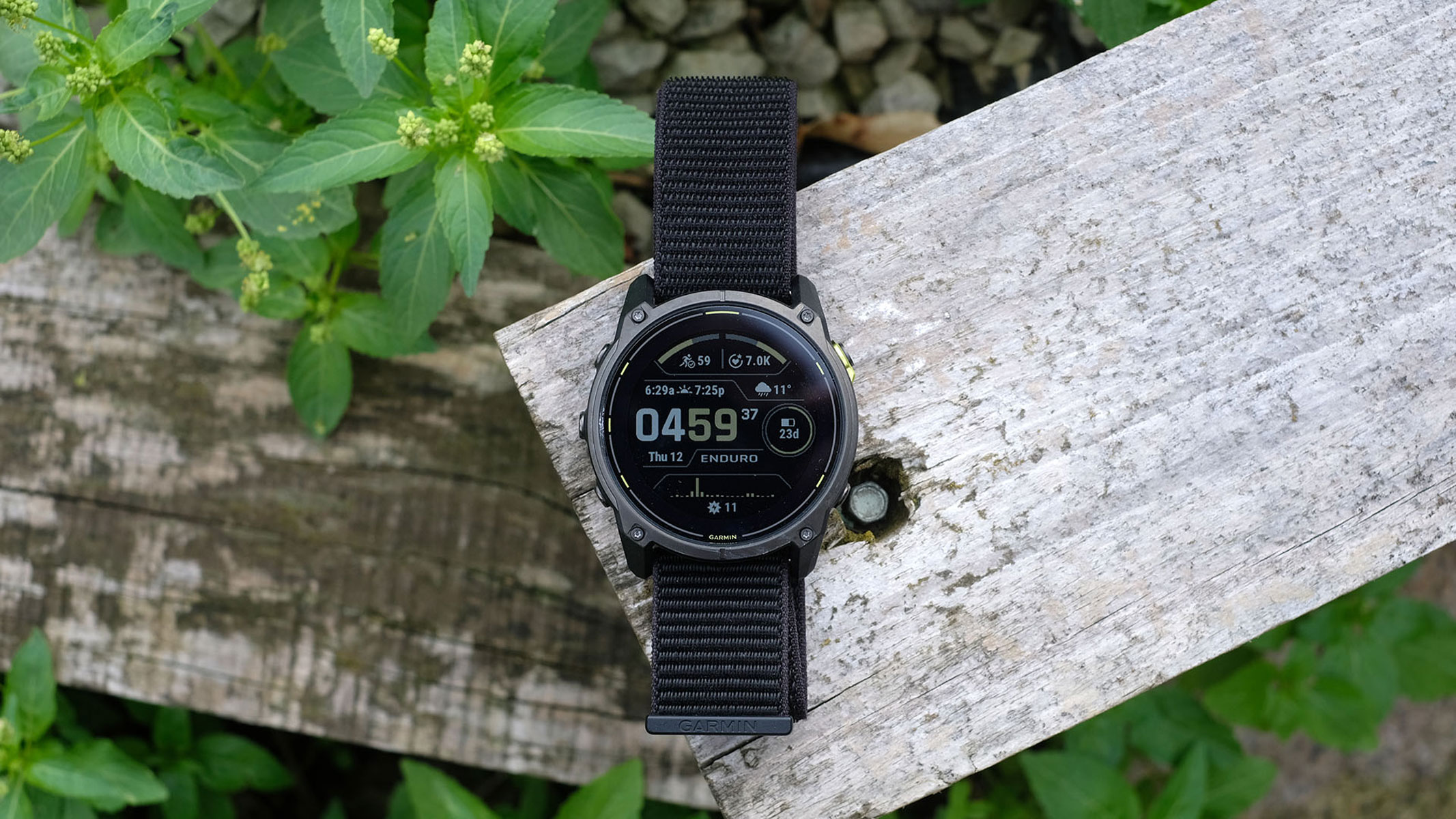
The Garmin Enduro 3 is one of the ultimate low-maintenance fitness watches. You can use it for around a month before needing a charge, and possibly a while longer if you live somewhere nice and sunny.
Like other high-end Garmin watches, the Enduro 3 is positively feature-packed. And unlike most, the Enduro series actually became cheaper this year.
Watches with transflective MIP screens like this one are getting less appealing to many, though, as rivals like the Forerunner 965 and Fenix 8 prove you don’t necessarily lose that much by opting for the glossier style. But some will prefer the low-key screen of the Enduro 3, especially given its battery life benefits — at least when not actively tracking outdoor exercise.
✅ Buy it if: You need a sports watch with ultra-long battery life and excellent tracking accuracy.
❌ Don’t buy it if: You want something glossier or more budget-friendly.
Garmin Enduro 3: Related products
If you like the basic Enduro 3 premise but want to spend less, consider the Garmin Forerunner 955. It has shorter battery life and no solar charging, but similar features, including downloadable maps.
Or you can strip back some of the higher-end stuff and get up to “unlimited” battery life with the Garmin Instinct 2X Solar.
Alternatively, take a look at the Coros range. Its top-end Vertix 2S watch offers stellar battery life of up to 38 days. It’s significantly cheaper, too, although we find Garmin’s latest designs tend to provide better stat accuracy than Coros’s best.
Garmin Enduro 3: How we tested
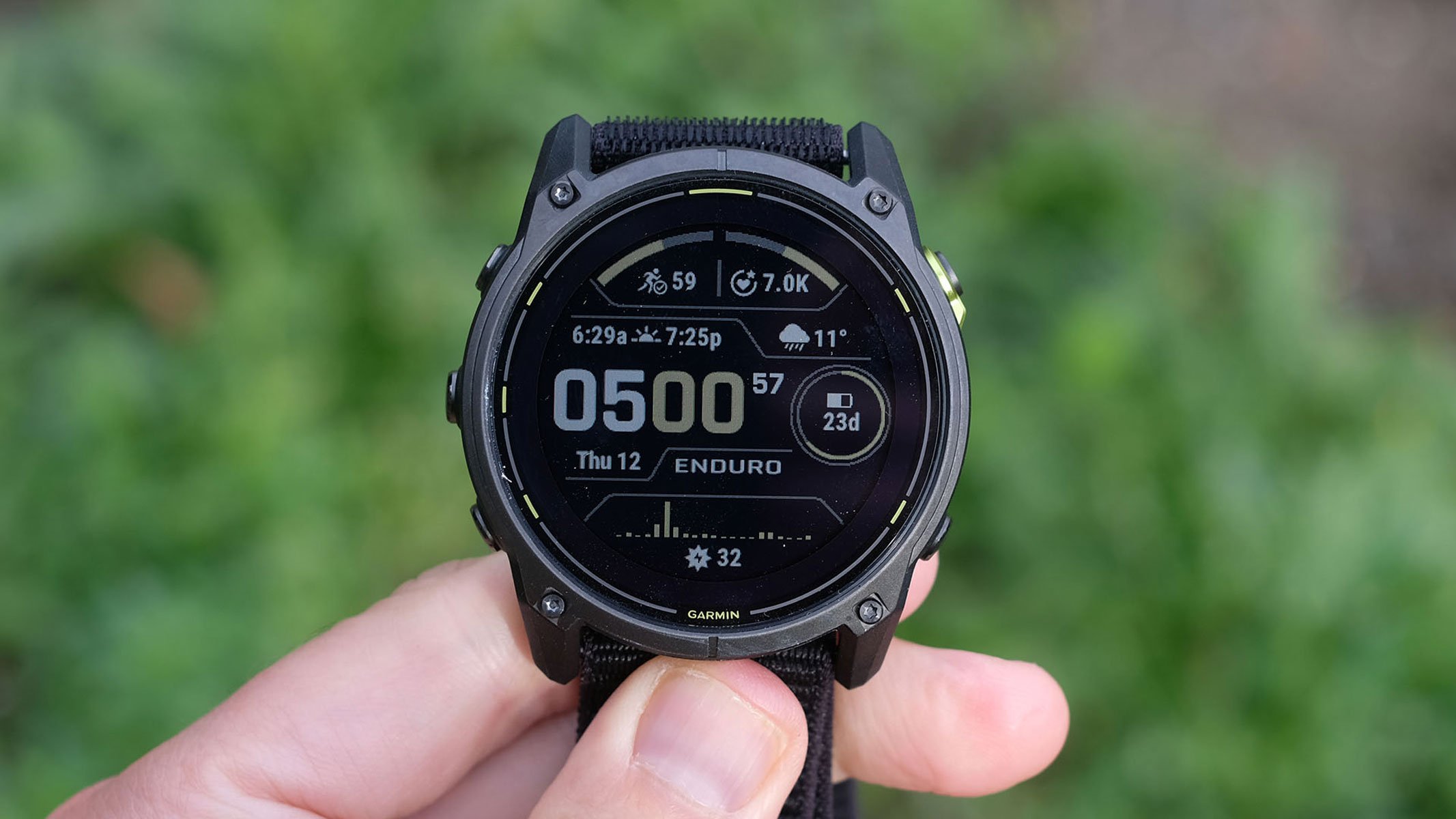
The Garmin Enduro 3 was worn for several months, almost constantly for much of that time. It was mostly used as our primary watch and employed extensively for fitness tracking.
This mostly consisted of running, hiking, indoor cycling and gym workouts. We used the suggested workouts on and off, and also used the Enduro 3 for sleep tracking, if not every single day (as mentioned earlier, many folks will find it a little bulky for 24/7 wear).