Scientists have converted waste cooking oil into various recyclable plastics with exceptional strength — and some were even durable enough to tow a car.
Turning nonedible waste into useful polymers is a sustainable way to create new materials, the researchers said in a new study published Nov. 28 in the Journal of the American Chemical Society.
“Waste streams offer a potentially attractive alternative to biomass-derived feedstocks [to make plastics],” the researchers wrote in the study.
One such waste stream is used cooking oil, where nearly 3.7 billion gallons is generated each year. This waste oil has so far found uses in lubricants, nonstick coatings and fuel, but much of it still gets thrown away. In the new research, the scientists found a way to convert the waste oil into useful plastic materials that are strongly adhesive and recyclable.
Oil consists of long chains of fatty acids bound to molecules of glycerol (also known as glycerin). The researchers chemically broke the oil molecules apart and then transformed the products into simpler molecules through a series of reactions.
Combining the final alcohol and ester molecules in various ways allowed the researchers to synthesize a range of polyester plastics. (Ester molecules have a carbon atom doubly bonded to an oxygen atom and also to a single oxygen atom with a carbon side chain.)
Testing the plastics’ properties, including their melting points and crystallinity, revealed that these polymers are similar to low-density polyethylene (LDPE), a plastic that is commonly used in packaging and plastic bags.
Get the world’s most fascinating discoveries delivered straight to your inbox.
The polyesters were also sticky, due to oxygen atoms in the polymer that form strong bonds with a range of materials. This is unlike LDPE, which is a hydrocarbon with only carbon and hydrogen atoms.
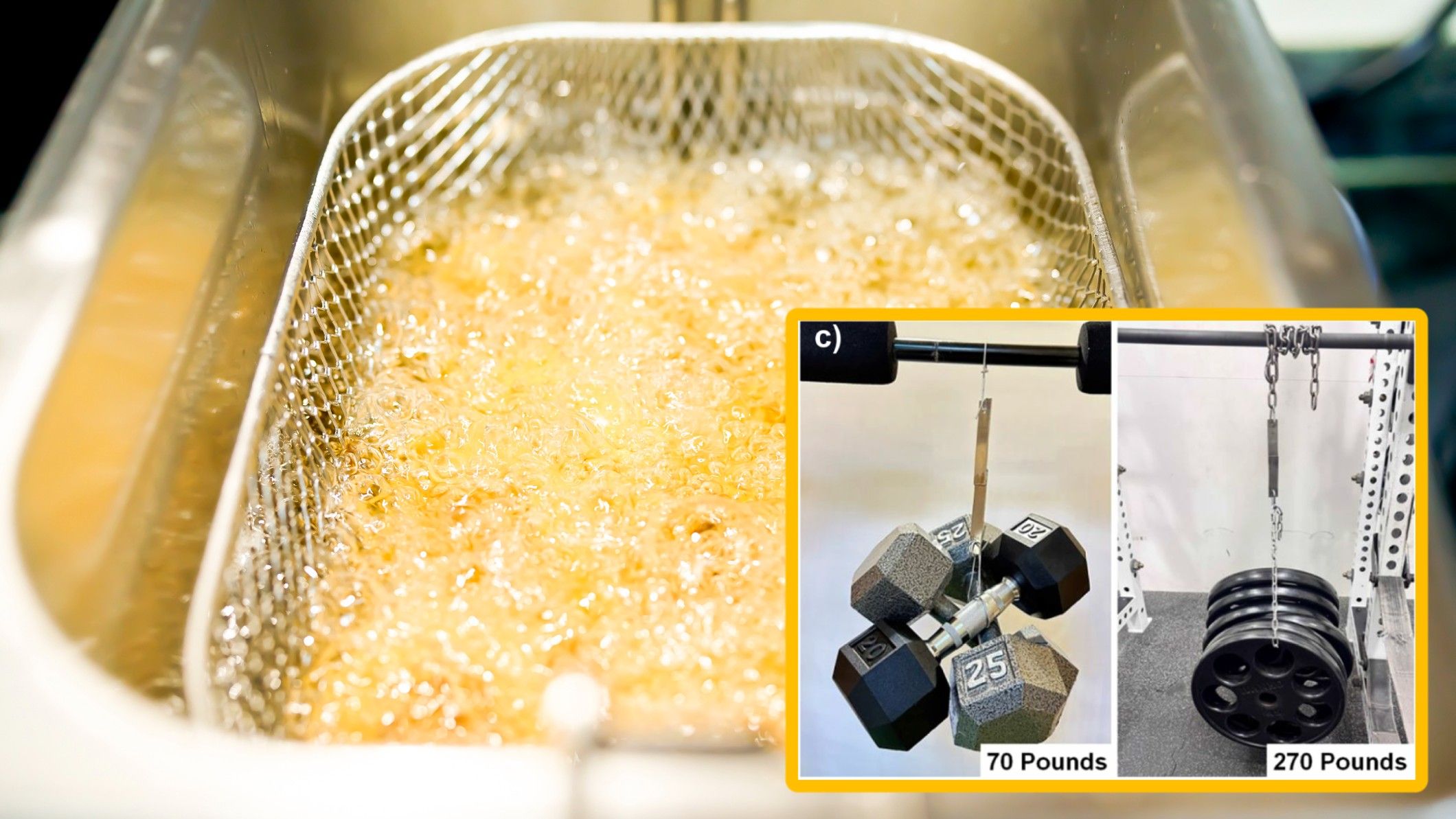
Two metal plates stuck together with the cooking oil adhesive proved strong enough to hold up hundreds of pounds of weight (left) as well as tow a car (right). (Image credit: Mahadas et al.)
The researchers tested the polymer’s adhesive strength by sticking two stainless-steel plates together. The plates remained tightly glued, even when up to 270 pounds (123 kilograms) of weight was attached. Towing a four-door sedan on a slightly uphill slope with these glued steel pieces also proved no trouble. This makes these polymers equal to or stronger than the commercially available adhesives that the team also tested.
These properties make these adhesives “ideal for applications in laminates and glues used in packaging, automotive components, medical devices, and electronics,” the researchers wrote.
The polyester plastics were easily recycled into their original components and later remade back into plastic. Several cycles of recycling showed little impact on the plastics’ properties. Some plastics could also be recycled along with other common plastics, like high-density polyethylene and polypropylene.
“This work highlights the potential of nonedible biomass waste as a renewable feedstock for…environmentally friendly alternatives to petroleum-based plastics,” the researchers wrote.