The human body is extraordinarily complex, with several openings and a few exits. But exactly how many holes does each person have?
It sounds like a simple enough question to answer — list the openings and add them up. But it’s not quite that easy once you start considering questions like: “What exactly is a hole?” “Does any opening count?” And “why don’t mathematicians know the difference between a straw and a doughnut?”
But if you dig a “hole” at the beach, your aim is probably not to dig right through to the other side of the world. Many people would think of a hole as a depression in a solid object. But “this isn’t a true hole, as it has an end,” Steckles said.
Similarly, mathematical communicator James Arthur, who is based in the U.K., told Live Science that “in topology, a ‘hole’ is a through hole, that is you can put your finger through the object.”
When digging a tunnel under the sea, like the Channel Tunnel that connects the U.K. and France, engineers started off by digging two openings. But as soon as those two digging projects joined up, the Channel Tunnel became a fundamentally different object (what Arthur and engineers would call a “through hole”) — like a straw, or a tube with an opening at either end.
And if you ask people how many holes a straw has you will get a range of different answers: one, two and even zero. This is a result of our colloquial understanding of what constitutes a hole.
To find a consistent answer, we can turn to mathematics. And the problem of classifying how many holes there are in an object falls squarely within the realm of topology.
To a topologist, the actual shapes of objects are not important. Instead, “topology is more concerned with the fundamental properties of shapes and how things connect together in space,” Steckles said.
In topology, objects can be grouped together by the number of holes they possess. For example, a topologist sees no difference between a golf ball, a baseball or even a Frisbee. If they were all made of plasticine, or putty, they could theoretically be squashed, stretched or otherwise manipulated to look like each other without making or closing any holes in the plasticine or sticking different parts together, Steckles argued.
However, to a topologist, these objects are fundamentally different to a bagel, a doughnut or a basketball hoop, which each have a hole through the middle of them. A figure of eight with two holes and a pretzel with three are different topological objects again.
A useful way to get into the mathematicians’ way of thinking about the straw problem is to “imagine our straw is made of play dough,” Arthur said. “Let’s take this straw and slowly squish the top down and down and down towards the bottom, making sure the hole in the middle stays open. We will squish it until we are in a shape that looks like a doughnut.” Mathematicians, Arthur said, would say that “the straw is homeomorphic to a doughnut.”
The long, thin aspect ratio of the straw, and the fact that the two openings are relatively far apart, are perhaps what gives rise to the suggestion of two holes. But to a topologist, bagels, basketball hoops and doughnuts are all topologically equivalent to a straw with a single hole. “The hole in a straw goes all the way through it, and the opening at the other end is just the back of that same hole,” Steckles said.
Back to the human body
Armed with the topologists’ definition of a hole, we can tackle the original question: How many holes does the human body have? Let’s first try to list all the openings we have. The obvious ones are probably our mouths, our urethras (the ones we pee out of) and our anuses, as well as the openings in our nostrils and our ears. For some of us, there are also milk ducts in nipples and vaginas.
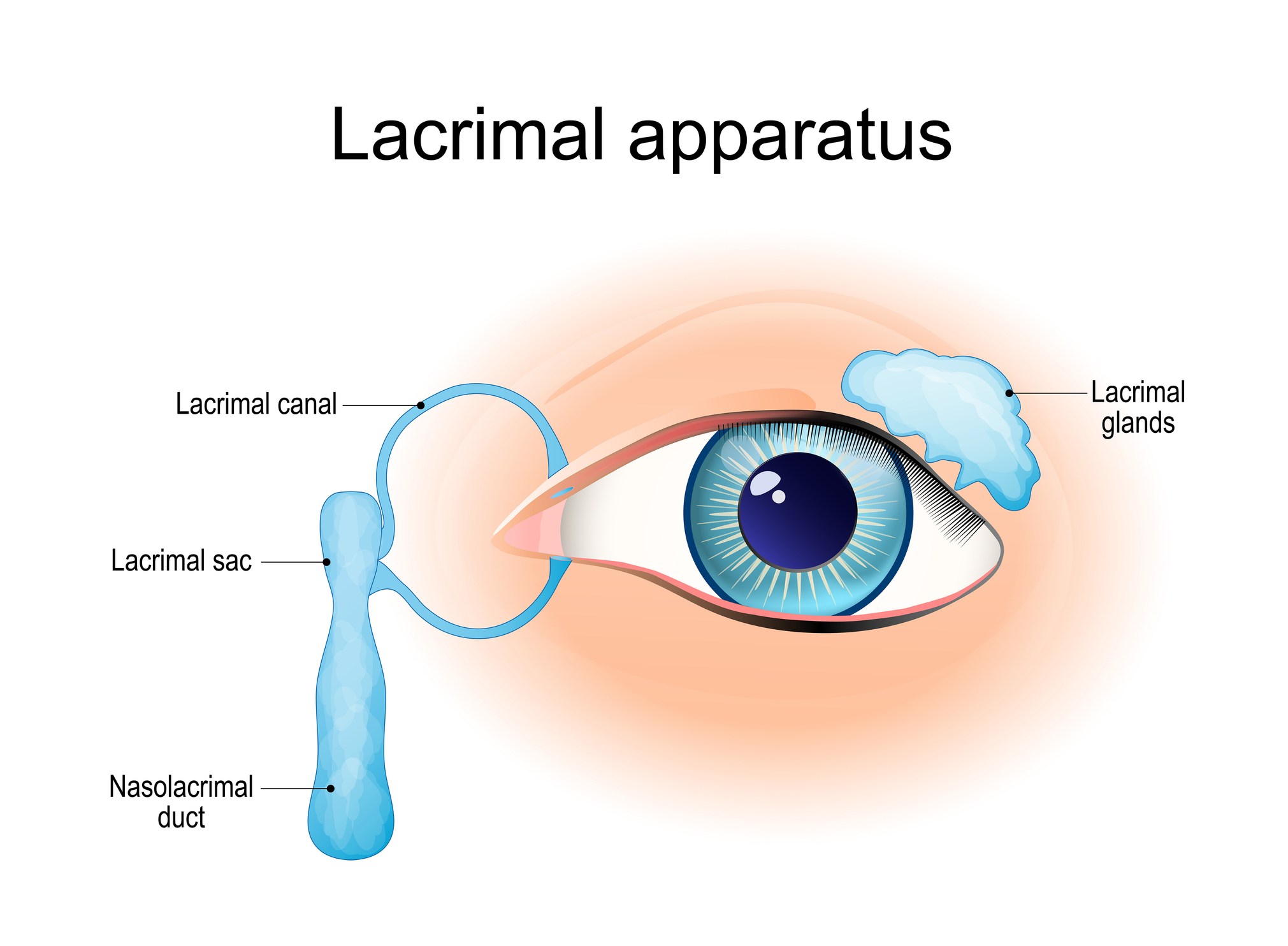
There are also four less-obvious openings that we all have in the corners of eyelids closest to our nose — the four lacrimal puncta, which drain tears from our eyes into our nasal cavities. At an even smaller scale there are the pores that enable sweat to escape our bodies and sebum to lubricate our skin. In total there are potentially millions of these openings in our bodies, but do they all count as holes?

To make the question interesting, think about whether we could pass a very thin string into one hole and out of another. If we set the size of this string to be about 60 microns (60 millionths of a meter) then it’s possible that the string could enter an opening as small as a pore. However — and this is key — it wouldn’t be able to leave. It wouldn’t be able to come out the other end. It would be blocked by the cells at the bottom of the pore — too thick to pass through into the vasculature that supplies the pore.
“They’re not actually holes in the topological sense, as they don’t go all the way through,” Steckles said. “They’re just blind pits.”
By this definition we can rule out all the pores, milk ducts and urethras. We couldn’t thread a string in one of these openings and out of another. Even the ears canals have to go as they are separated from the rest of the sinuses by the ear drums.
“We have our mouth, our anus, and then our nostrils. They are four of the … openings that form a hole,” Arthur said. “But we actually have eight. The remaining four come from the tear ducts, we each have two in each eye, an upper and a lower.”
But this doesn’t mean eight holes. Steckles pointed out .”When the holes that pass through a shape connect together inside the shape, it makes it harder to count how many there are.”
Looking at underwear
A pair of underwear, for example, has three openings (one for the waist and one for each of the two legs), but it’s not immediately clear how many holes a topologist would say it has. “A useful trick is to think about flattening it out,” Steckles said. — “If we were to stretch the waistband of the pants out onto a big hula hoop, we’d see the two trouser legs sticking down, each being one hole.”
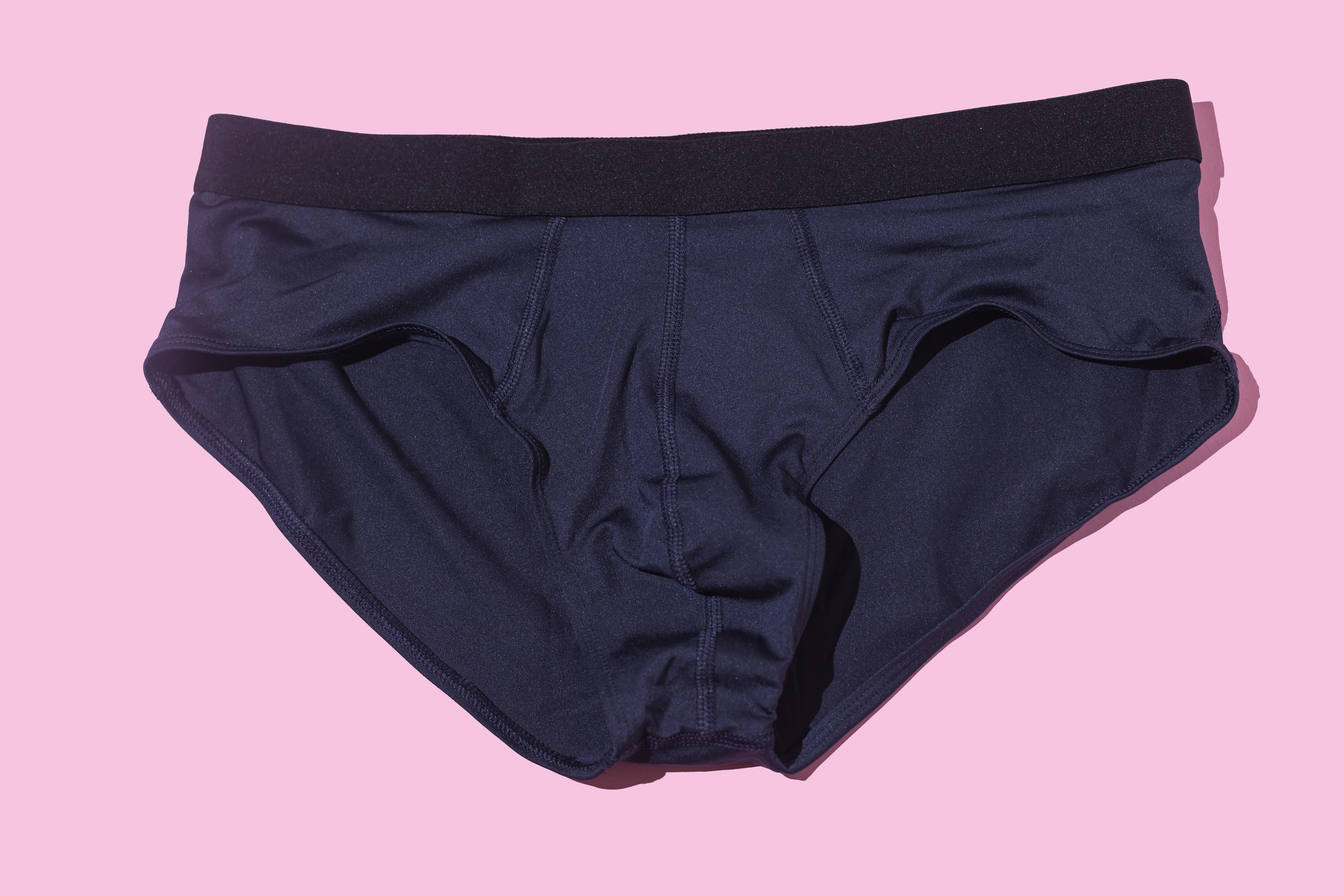

So despite having three openings, the pair of underwear has only two holes. “So when the holes connect together in the middle, there’s one fewer hole than there are openings,” Steckles argued. Correspondingly, topology tells us that, despite eight interconnected openings, the human body has seven different holes.
But there might be one more. Although often counted as a blind hole, the vagina leads to the uterus, which then leads to one of two fallopian tubes. These tubes are open at the far end and lead to the peritoneal cavity near the ovary. It is the job of the finger-like projections of the funnel-shaped infundibulum at the end of the fallopian tube to catch the egg when it is released from the nearest ovary. However, it has been demonstrated that eggs released from one ovary can be captured by the fallopian tube on the other side, so that passage between the two open ends of the fallopian tubes is possible. Our tiny string could therefore be threaded all the way through the female reproductive tract and back out, counting as one more hole.
So the mathematician’s answer is that humans have either seven or eight holes.
In the end, the question is not just about counting openings but about understanding connections. Topologically speaking, our bodies are less like Swiss cheese and more like a carefully constructed onesie for an octopus.