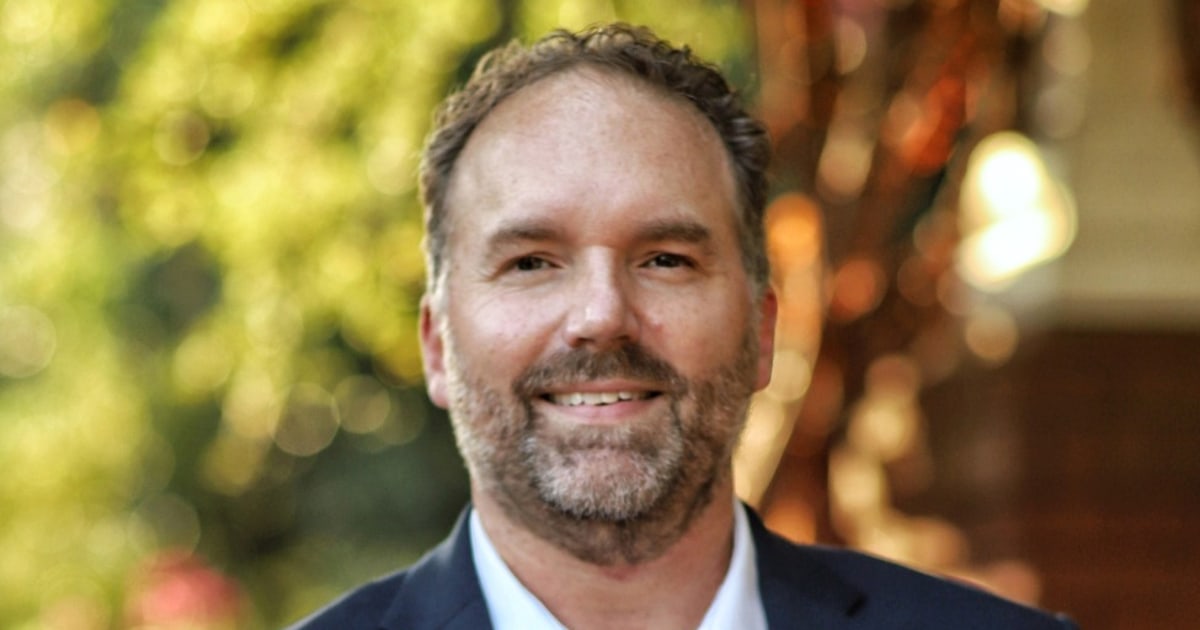
After President Donald Trump shared another message of endorsement for Emilio González Sunday and Arizona Democratic Sen. Ruben Gallego came to Miami to campaign with Eileen Higgins, Miami’s mayoral runoff between the two candidates could become the latest indicator of Republicans’ ability to hold their grip on Congress ahead of next year’s midterms.
González, a Republican and former Miami city manager, and Higgins, a Democrat and former Miami-Dade County commissioner, will face off Tuesday in the race for Miami mayor, a position that is technically nonpartisan.
Trump’s first endorsement of González three weeks ago supercharged national attention on the race, with the Democratic National Committee later jumping in with phone banking and organizing resources for Higgins.
“The DNC is laser focused on the critical mayoral election in Miami,” DNC Chair Ken Martin said in a statement Monday, calling the race a chance for Miami to “put a check on Trump’s radical, inflation-driving agenda.”
Now, both national political parties are hoping they can point to the race as a win: either as a rejection of Trump for Democrats, or for Republicans, a reversal of the Democratic momentum in New Jersey, Virginia and New York City last month.
“This race, rarely has it ever been covered by the national news, but yet Fox News is covering it every day now,” Miami Republican Executive Committeewoman Angie Wong told the Herald. “This one may be a bellwether to predict what’s going to happen in the midterms.”
State-level Republicans started expectation-setting ahead of the polls opening Tuesday, shrugging off Democratic attempts to make the race a referendum on Trump, despite his involvement in the race.
“It’s an ongoing saga of ‘This special election meant something’ and every year when we go back to the regular elections, they get trounced by a larger and larger number each election,” Florida Republican Party Chair Evan Power told the Herald Monday.
Joannia Estrada, a volunteer for mayoral candidate Emilio González, campaigns outside of Miami City Hall on Saturday, Nov. 1, 2025.
He pointed to the fact that Kamala Harris won the city of Miami by one percentage point in 2024 as Trump flipped Miami-Dade County red for the first time in decades as evidence that a Higgins win wouldn’t be indicative of a larger rejection of Republicans.
“It is a Kamala district. We’re fighting there because we’re fighting everywhere, but the reality is that Florida is going to be a ruby-red state for the foreseeable future,” Power said. “Democrats are dead, basically, in our state — except for some small little places.”
Miami’s Republican Party Chair Kevin Cooper also tried to minimize the national implications of a possible Higgins win. “If they manage to get their one win, they’re going to try to make a mountain out of a molehill,” he said Monday.
As the second-largest city in Florida, however, Miami could be harder to write off as a “small little place” than smaller Florida House special elections, like the wins Florida Democrats have pointed to in the past as evidence they’re not a lifeless party as the state has become solidly red.
On Monday, Florida Democratic Party Chair Nikki Fried toed the line between emphasizing the race as local and leaving the possibility open for it to symbolize a larger rejection of Trump.
“People are seeing the grift that’s coming from this administration, at the same time they’re seeing their bills go through the roof,” Fried added. “Even though Eileen and her campaign have kept us a very Miami-centric campaign, certainly there are going to be undercurrents about what is happening in Washington.”
Fried spent the day in Miami Monday helping campaign for Higgins. Former Chicago Mayor Rahm Emanuel also joined Higgins’ campaign to call Miami voters on Monday — the latest national Democratic figure to stop in Miami after Gallego’s visit over the weekend.


Former Chicago Mayor Rahm Emanuel joined Eileen Higgins’ campaign on Monday, Dec. 8, 2025, to kick off phone-banking efforts. Miami-Dade County Mayor Daniella Levine Cava is pictured on the far left.
In the mayor’s race, Democrats are also looking to reverse the tide in communities Trump managed to pull away to win in 2024 — including the Hispanic and Latin American diaspora voters in Miami. Citywide, 58% of registered voters are Hispanic.
“We have to blunt the gains Republicans have made with Hispanics and start to reverse those to numbers that look more like Obama in 2008,” Democratic strategist Steve Schale told the Herald Monday. If elected, Higgins would be the first Democrat and non-Cuban to win the mayoral seat in decades and would be the city’s first female mayor.
“The fact that a city that’s been run by Cuban Republicans … that a white woman who’s a Democrat could win the mayor’s race — that says that Hispanics are maybe open to doing something that they didn’t do in 2024,” Schale said of Tuesday’s election.
Former mayors weigh in
Outgoing City Commissioner Joe Carollo, who was first elected in 1979, said that in his 46 years in Miami politics, he’s never seen such a partisan divide in the mayor’s race — not even when Carollo, a self-described conservative Republican, faced off against Manny Diaz, who later became the Florida Democratic Party chair, in the competitive 2001 mayoral race.
Carollo served as mayor from 1996 to 1997 and again from 1998 to 2001. He ran for mayor again this year but finished in fourth place, a few points behind Democrat Ken Russell, the third-place finisher to González and Higgins. Carollo said that in his opinion, it’s “extremely bad” for the race to turn so partisan.
“It is extremely important for a mayor of the city of Miami, or any major city, frankly, to work with both parties,” Carollo said. “The next mayor of the city, if they’re serious about resolving the two major issues that we have — which is housing and transportation — has to work with whomever is in the White House.”
Carollo, who’s termed out of his City Commission seat this month, said it’s possible that the focus on party politics isn’t just a one-off.
“This might be part of the trend of the future,” he said.
Carollo declined to say which of the two candidates he’s voting for: “The lesser of the two evils,” he said.
Carollo, however, predicted a Higgins victory based on the Democratic turnout as of midday Monday. According to unofficial results showing early voting and vote-by-mail turnout, over 9,500 Democrats had cast ballots in the city’s election compared to nearly 7,700 Republicans. More than 5,300 independents had also cast ballots — a demographic that Carollo predicted would lean in Higgins’ favor.
Asked how he would feel if she wins, Carollo said: “I wish her well. Because if she does well, then it will help Miami to do well.”
Tomás Regalado, who was a Miami commissioner from 1996 to 2009 and mayor from 2009 to 2017, said that in the various elections he’s campaigned in, “the partisan issue was not an issue.”
“It’s something new,” he said Monday. “I don’t know if it’s good or bad in terms of mobilizing the people.”
Despite the national focus and a presidential endorsement, Regalado, a Republican who is now the Miami-Dade County property appraiser, described this year’s mayoral election as lacking energy and excitement on the ground level.
“It’s like having a Christmas without Santa Claus,” Regalado said.
“I think that people are kind of fatigued with what is going on in Miami for the last few years,” he added. “They are disenchanted, and they are kind of, ‘Well, why vote, it’s gonna be the same thing.’ I don’t think that the national spotlight makes the people turn up.”
While the positions of Miami mayor and commissioner are officially nonpartisan, Regalado said it might not be such a bad thing for the city to change that in the future. “Why not?” he said.
Xavier Suarez was elected as the city’s first Cuban-born mayor 40 years ago in 1985 — an era when the “Cuban American community was beginning to flex its muscles,” he said.
During that time, Suarez said there was an undercurrent of party politics and a need for candidates to “show credentials as anti-communist” and fiscally conservative.
But unlike the city’s 2025 election, “Neither party got all that involved.”
Last month, Suarez, an independent, attempted a political comeback, running in the crowded race of 13 mayoral candidates. He finished sixth with 5% of the vote.
“People are going to the extremes,” Suarez said, “and the middle is getting lonely.”