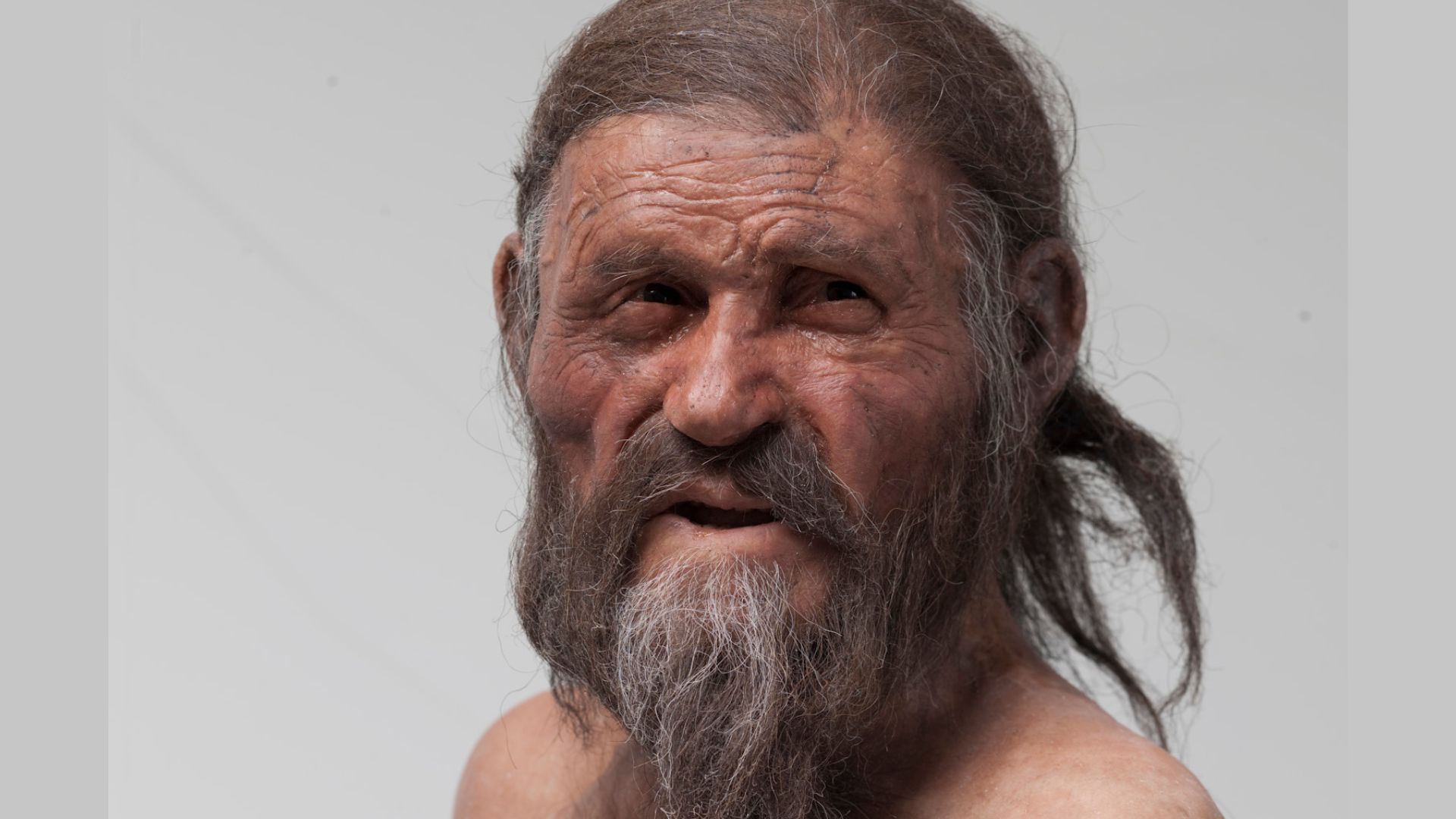
Ötzi the Iceman‘s skin and stomach are teeming with yeasts that infiltrated his remains shortly after his murder 5,300 years ago — and some may still be active, a new study reveals.
The yeast strains covering his body are adapted to cold environments, having stemmed from the Alpine glaciers Ötzi once called home. This means the spores have continued colonizing his mummified remains despite being stored in a refrigeration chamber at 21 degrees Fahrenheit (minus 6 degrees Celsius) following his discovery in 1991. Scientists revealed their findings in a study published June 3 in the journal Microbiome.
Intriguingly, some of these yeasts might be just right for baking bread. Preliminary testing demonstrated the yeasts’ potential for making sourdough.
“It worked,” study first author Mohamed Sarhan, a microbiologist at the Eurac Research Institute for Mummy Studies in Italy, told Live Science. “As a dough, it was very very good.”
These yeasts could be cultivated by fermentation industries in the future, such as for making bread or beer, Sarhan said.
Ötzi is also covered in modern microbes that have been inadvertently introduced during conservation efforts. However, it is currently unclear whether these microbes and the ancient yeasts are harming the preservation of his remains. Research is now needed to investigate this, Sarhan said.
The Iceman’s microbiome
Research into Ötzi’s naturally mummified remains has been ongoing since his discovery by German hikers in the Ötztal Alps of Italy in September 1991. Ötzi stood at approximately 5 feet, 3 inches (1.6 meters) tall, and was in his 40s when he died, likely by murder. An inspection of his stomach contents revealed he ate ibex, red deer and wheat just before his death.
The iceman mummy is sprayed with water constantly to prevent moisture loss.
(Image credit: South Tyrol Museum of Archaeology/Eurac Research/Marion Lafogler.)
Scientists have previously identified some aspects of the microbiome in Ötzi’s mouth and intestines, including the discovery of gut microbes most commonly found in today’s non-Westernized communities, such as the Hadza hunter-gatherers in Tanzania and people living in rainforests in north-eastern Madagascar. But no study has investigated whether any microbes were capable of growing under the current storage conditions, the authors wrote in the study.
So, in 2019, Sarhan and his colleagues began studying swab and water samples of Ötzi’s internal and external microbiome, soil from the site where he was found and his immediate storage environment. From there, the team pieced together the genetic material to discover which microbes were present.
Ötzi’s gut microbiome looked very different to the microbial makeup of his skin, which has been “directly and dominantly shaped” by preservation techniques used during conservation efforts, the authors wrote in the study.
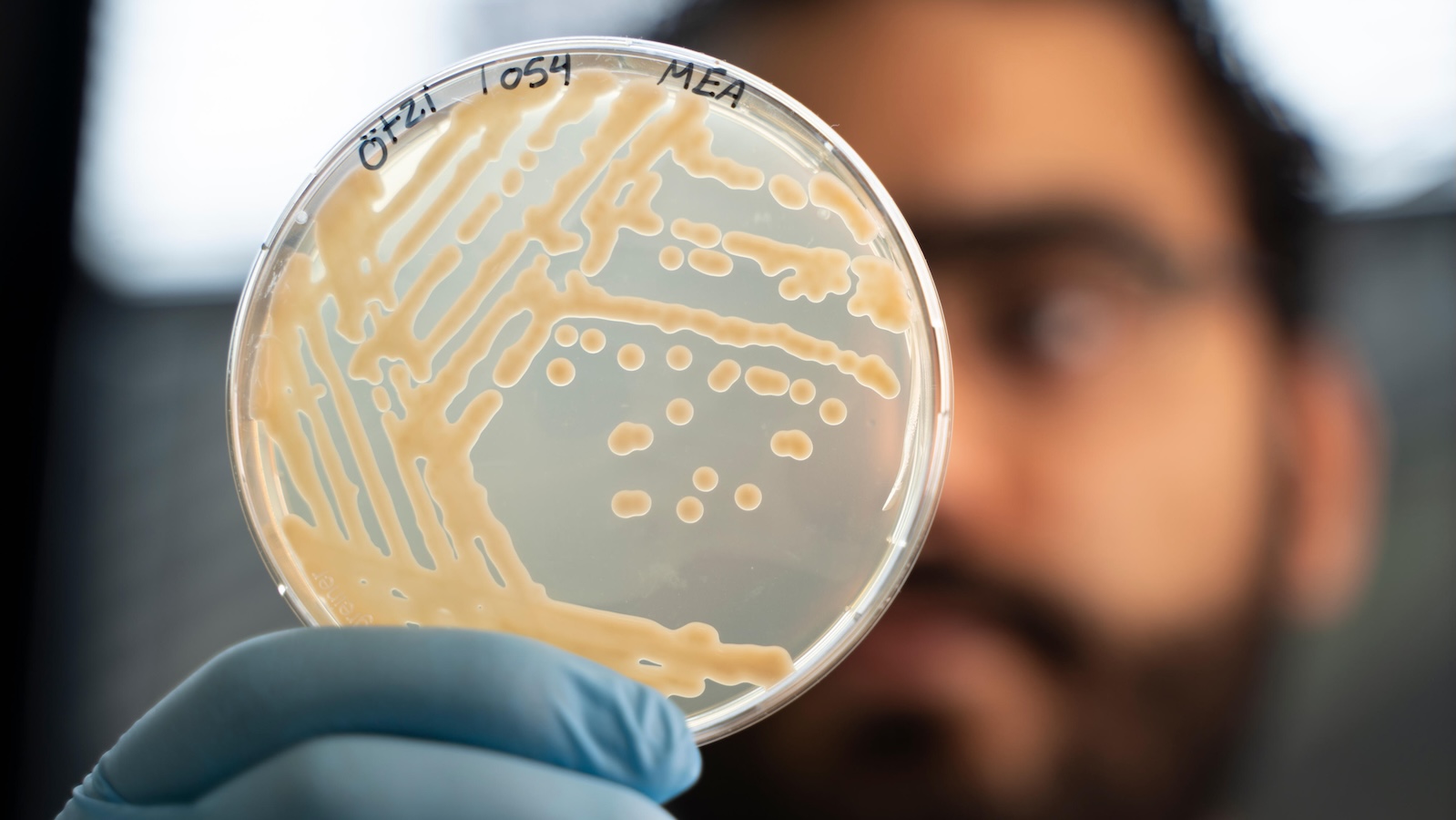
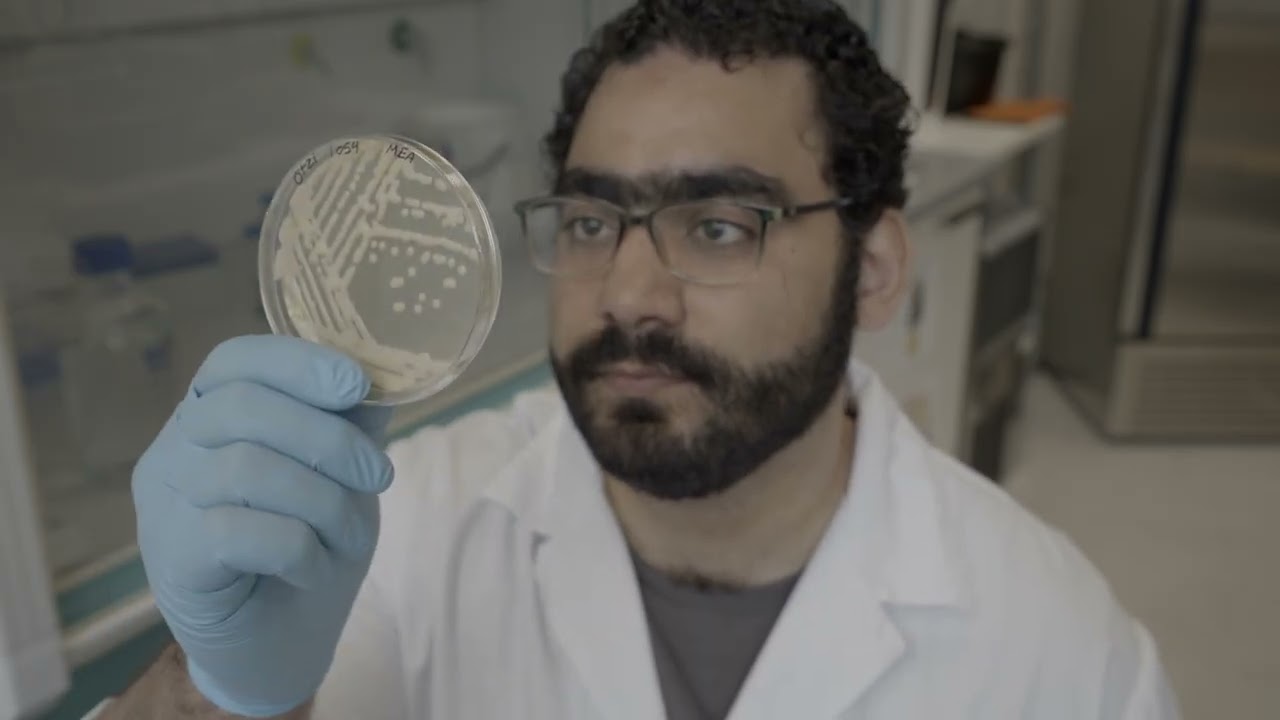
Microbiologist Mohamed Sarhan looks at yeast cells cultivated from the stomach of Ötzi the Iceman.
(Image credit: Eurac Research/Andrea De Giovanni)
Unexpectedly, the team was able to cultivate four cold-adapted yeasts in samples taken from Ötzi’s skin and thawed water from his insides. Evidence of ancient DNA damage in these yeasts strongly suggests they either laid dormant for 5,300 years, or were descendants from the original yeast colonizers, the authors wrote in the study.
Comparing the 2019 skin samples to those taken in 2010 revealed that one yeast strain — the cold-loving Glaciozyma — had transitioned to being the dominant strain in the intervening years. This suggests the glacier-derived Glaciozyma yeast had been slowly but actively proliferating.
“These yeasts have accompanied Ötzi on his long journey through the millennia,” study co-author Frank Maixner, director of the Eurac Research Institute for Mummy Studies, said in a statement. The Iceman is “not a static relic, but a dynamic biological system.”
This study offers a rare glimpse into Copper Age gut microbiomes, but Sarhan stressed Ötzi is not necessarily representative of all people from the period. Rather, it’s just “a snapshot [of] one individual,” he said.
Ötzi Yeasts Sarhan Mohamed Lab – YouTube
Watch On
What do you know about the Iceman mummy who was murdered 5,300 years ago in the Alps? Find out with our Ötzi quiz!