QUICK FACTS
Name: Lady of Elche
What it is: A limestone bust
Where it is from: Elche, Spain
When it was made: Circa 400 to 350 B.C.
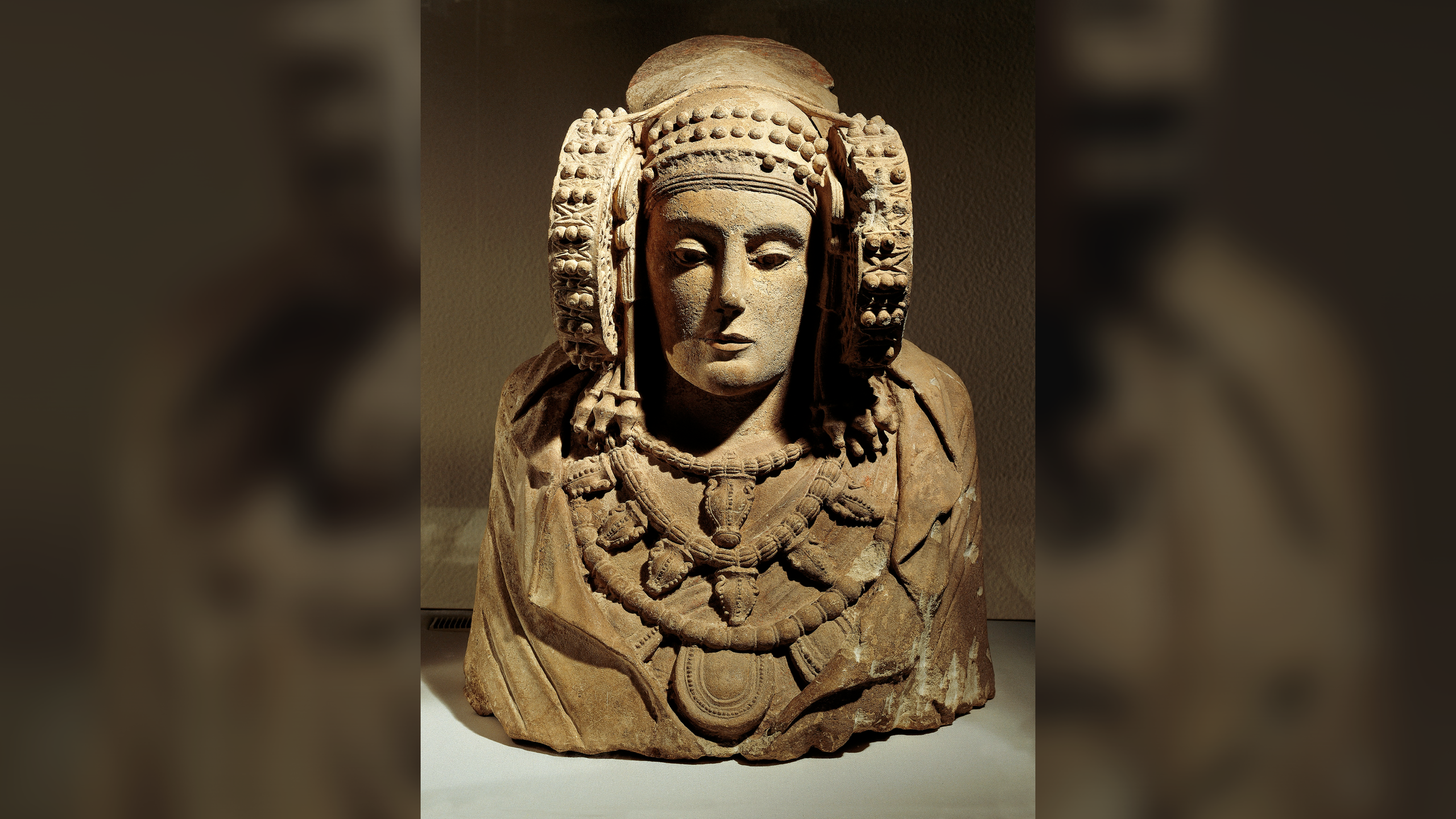
On a hot summer day in 1897, a farmer in Elche, a city on Spain’s Mediterranean coast, discovered a life-size painted limestone bust of a mysterious-looking woman among a pile of seemingly discarded stones. The statue — now known as La Dama de Elche or the Lady of Elche — is a mishmash of ancient artistic styles and may represent a goddess or priestess.
The Lady of Elche is 22 inches (56 centimeters) tall and weighs just over 143 pounds (65 kilograms). Carved from a block of limestone, the bust depicts a woman richly adorned with a pointed tiara and a forehead diadem covered by a veil. The strap of the headdress ends in giant rosettes at her ears.
The woman wears a cape-like cloak secured by a small pin; it opens in the front to reveal three necklaces with amulets. Earrings and ribbons bedeck the sides of her face. Traces of paint remain on her lips and parts of her face and clothing. On the back of the bust is a large hole, which suggests it may have been used as a funerary vessel to hold cremated remains.
The unique appearance of the Lady of Elche — which blends Iberian, Greek and North African styles — contributed to accusations that the bust was a fake. In a 1995 book, art historian John F. Moffitt suggested that the bust may have been made in the late 19th century by well-known Spanish art forger Francisco Pallas y Puig. However, subsequent scientific analyses revealed that the pigments on the Lady of Elche were indeed antique and that ashes remaining in the back of the bust were from an ancient cremation.
MORE ASTONISHING ARTIFACTS
While the Lady of Elche has been proved to be more than 2,400 years old, experts still debate whether the sculpture was originally a bust or a part of a standing figure. It is also unclear whom the Lady of Elche was meant to depict. One suggestion is that she was associated with Tanit, the chief deity of ancient Carthage, showcasing religious similarities between Iberian and Punic people.
The National Archaeological Museum, however, says “the figure’s identity is a mystery.” The Lady of Elche is thought to have both human and divine attributes and “has most recently been interpreted as a highborn Iberian lady who was deified by her descendants.”
For more stunning archaeological discoveries, check out our Astonishing Artifacts archives.