




A clandestine excavation on the outskirts of Rome has brought to light a “splendid villa” that may have belonged to a member of the Antonine imperial family, according to archaeologists with the Special Superintendency of Rome. The remains of the first-century villa, which was previously unknown to archaeologists, include frescoed walls and mosaic floors that showcase the elite social status of the owners.
The villa was discovered at Castel di Guido, a village about 12 miles (19 kilometers) west of the ancient city walls of Rome. In ancient times, the area was known as Lorium, and it was frequented by prestigious Roman families, including the Roman emperors Hadrian, Antoninus Pius and Marcus Aurelius.
In February, the local police were alerted to illegal excavations at Castel di Guido on government-owned land, according to a June 15 translated statement from the Italian Ministry of Culture’s Special Superintendency of Rome. The unauthorized excavations had been undertaken with a backhoe, which made deep cuts into the villa and left huge piles of dirt.
Superintendency archaeologists led by Alessia Contino carried out emergency excavations to document and stabilize the architecture at the site.
“Thanks to the local report and prompt intervention, it was possible to identify part of a large, previously unknown Imperial-period villa and uncover a splendid array of decorations, as well as the discovery of a statue in fine white marble,” Contino said in the statement.
The excavation revealed the atrium at the entrance of the villa, two rooms decorated with frescoes and mosaics, and several other spaces related to the agricultural activities of the large, rural house. The villa was likely built in the early first century and abandoned in the third century.
Image 1 of 12
An archaeologist cleans a floor mosaic with a Greek key or meander design at an ancient villa outside of Rome.

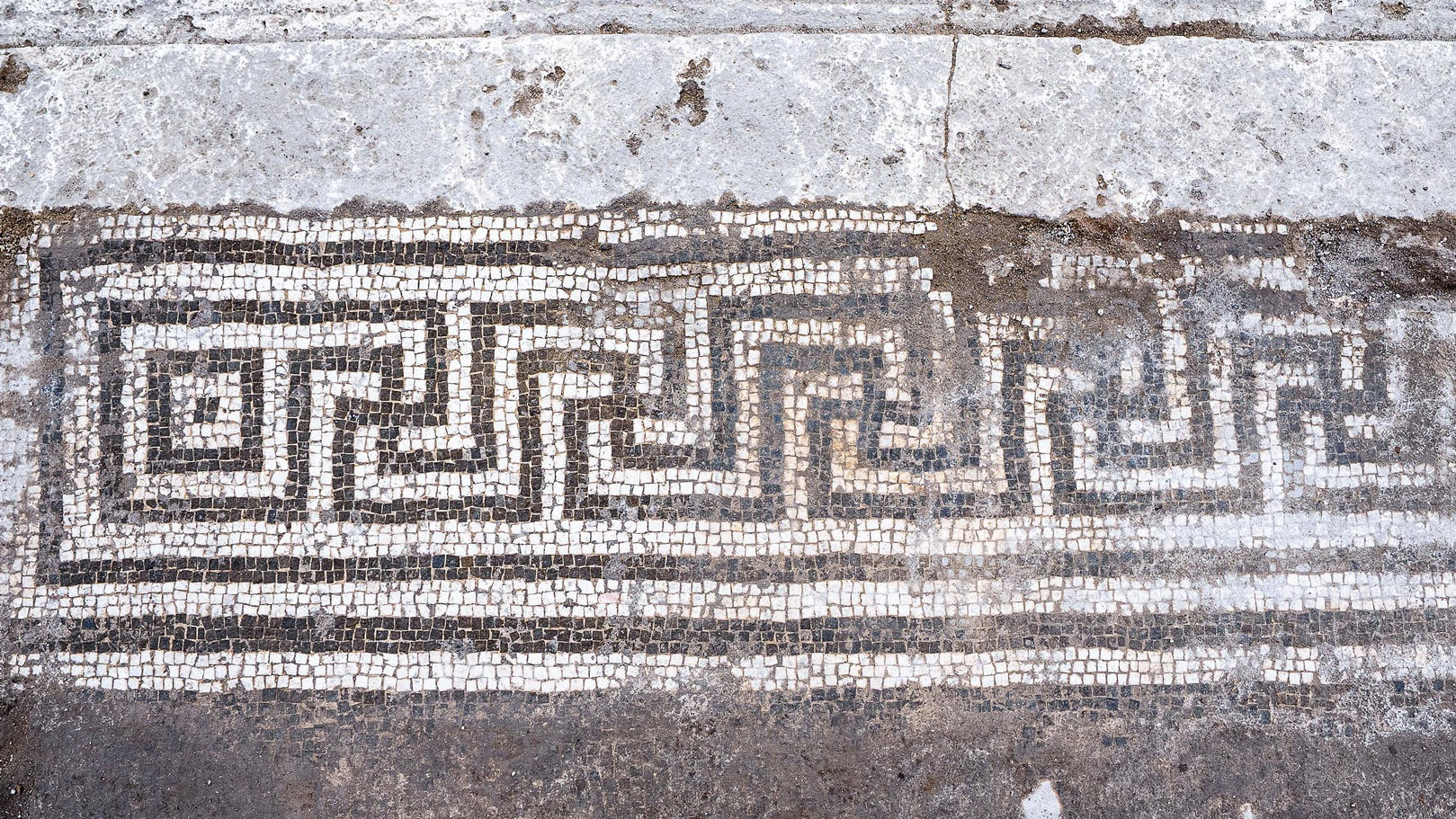
Archaeologists found a floor mosaic with a Greek key or meander design at an ancient villa outside of Rome.

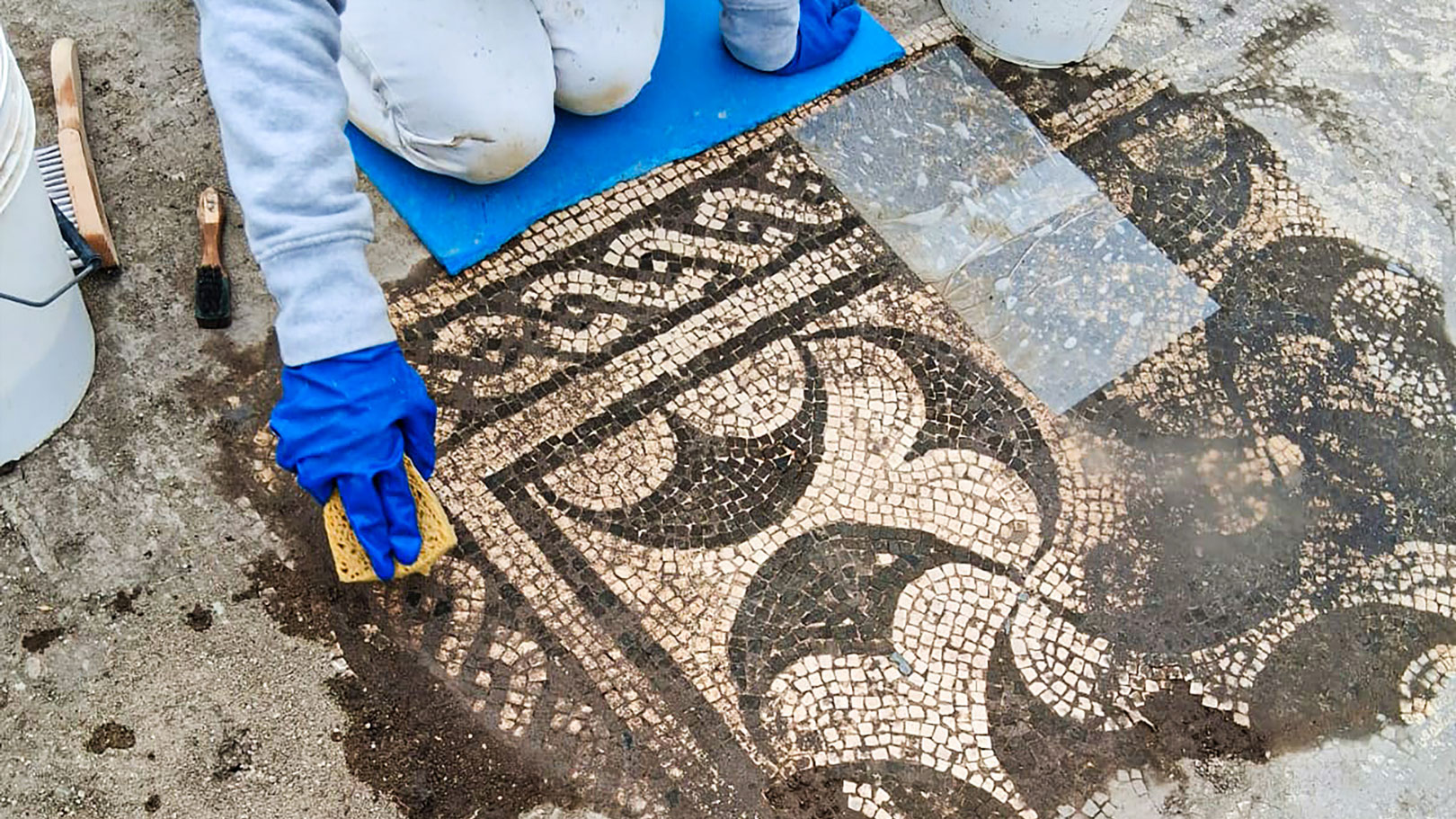
An archaeologist cleans a floor mosaic with a shield design at an ancient villa outside of Rome.

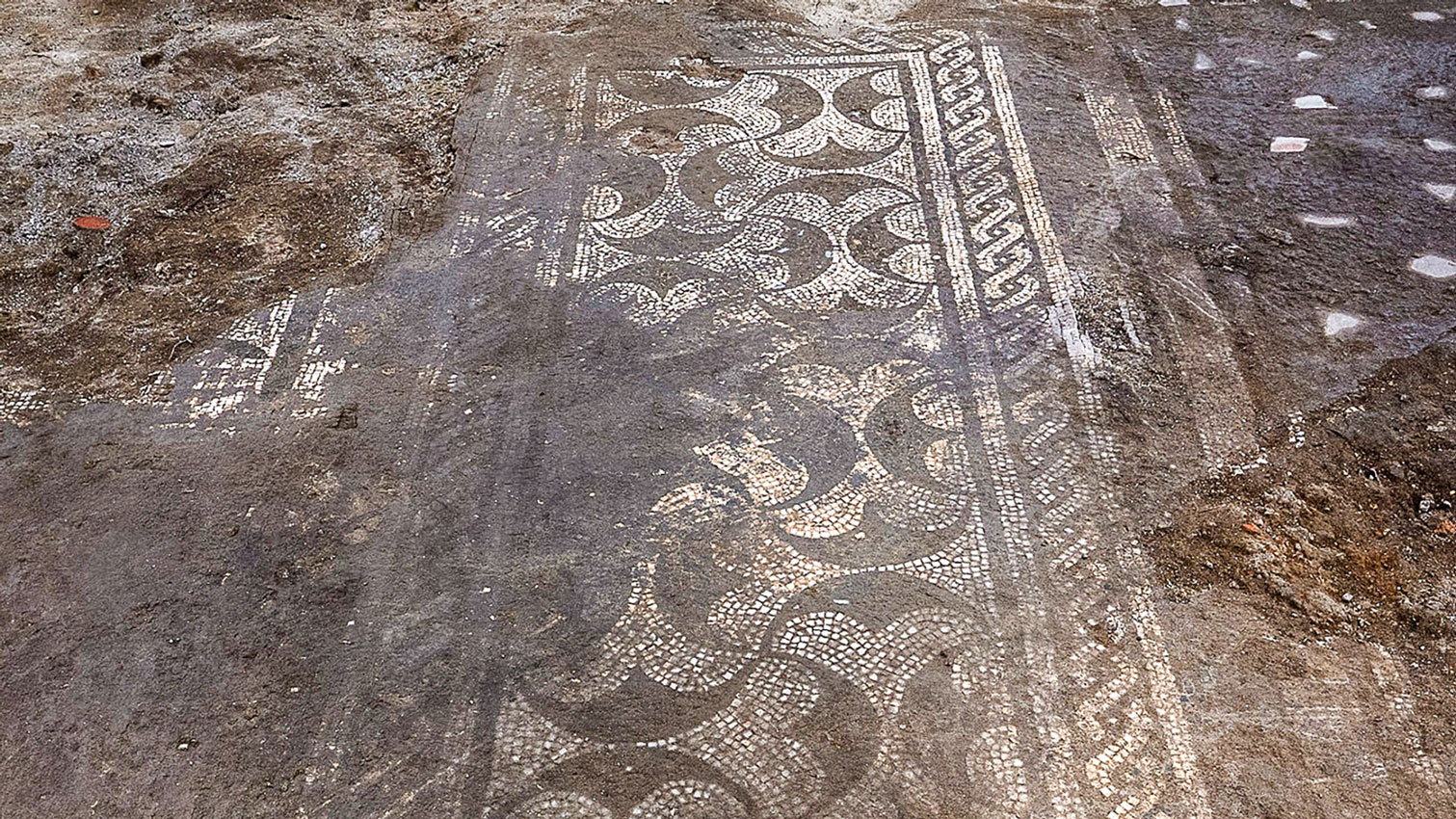
Archaeologists found a floor mosaic with a shield design at an ancient villa outside of Rome.
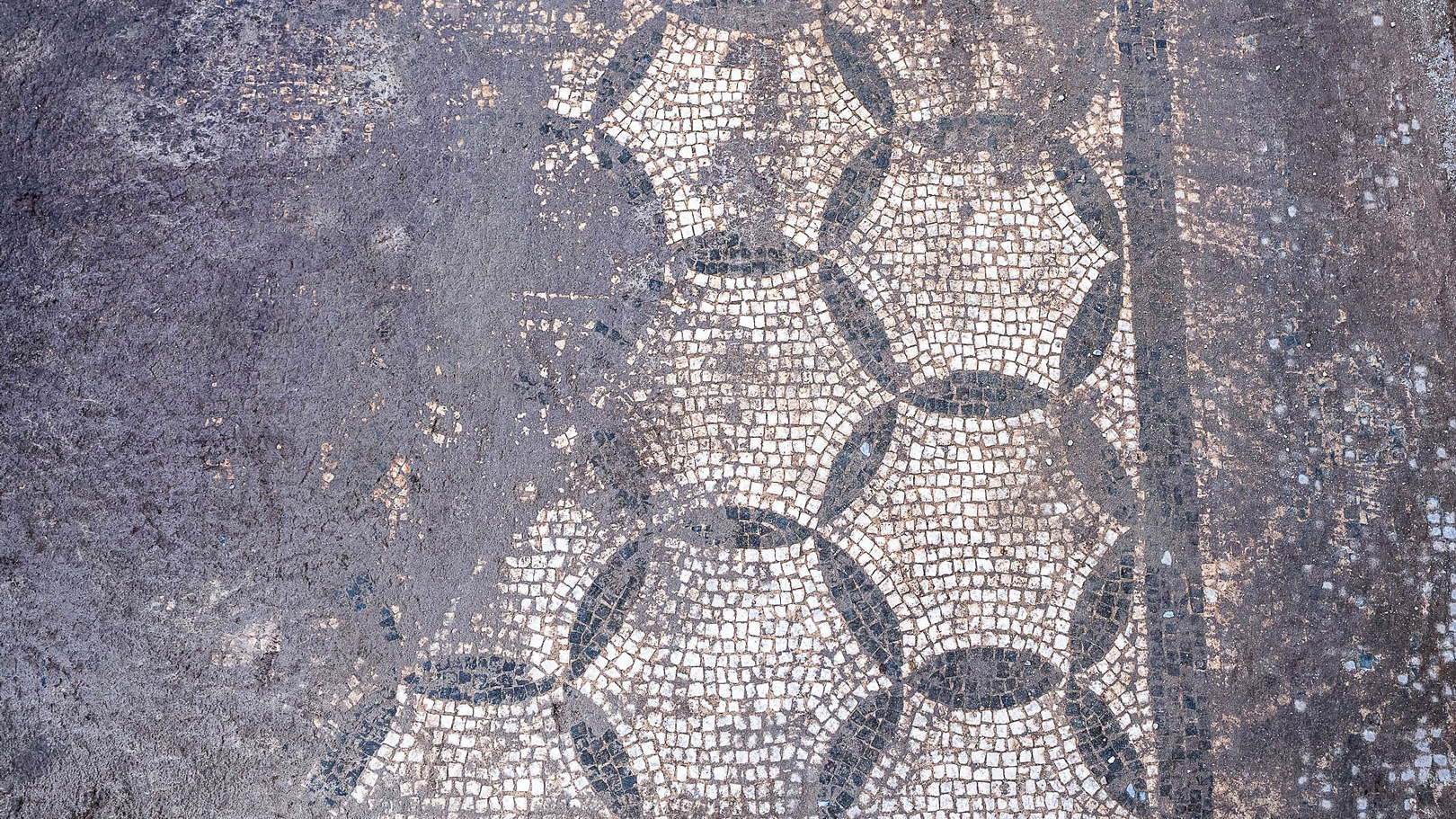
Archaeologists found a geometric floor mosaic at an ancient villa outside of Rome.
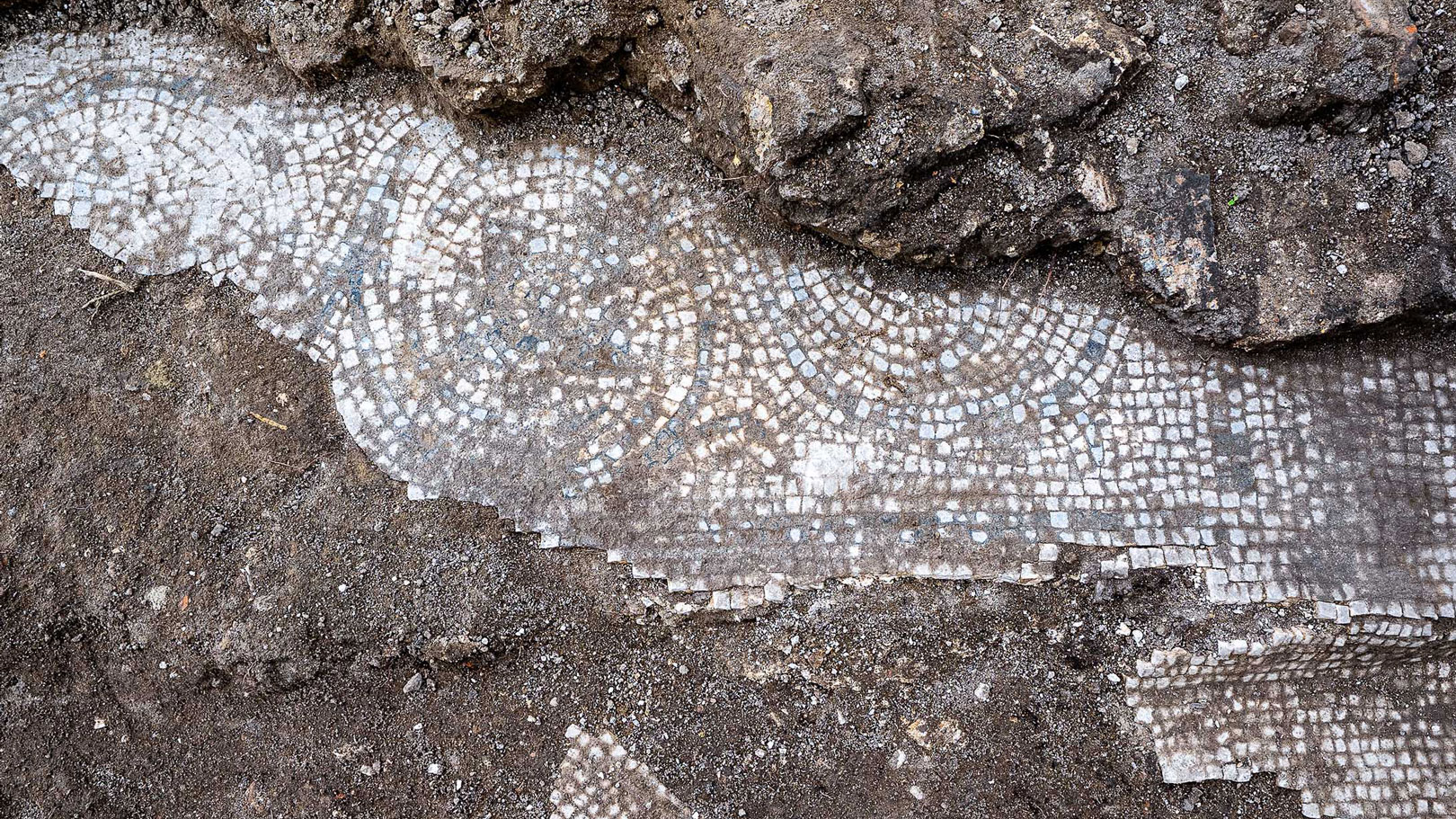
Archaeologists found a geometric floor mosaic at an ancient villa outside of Rome.
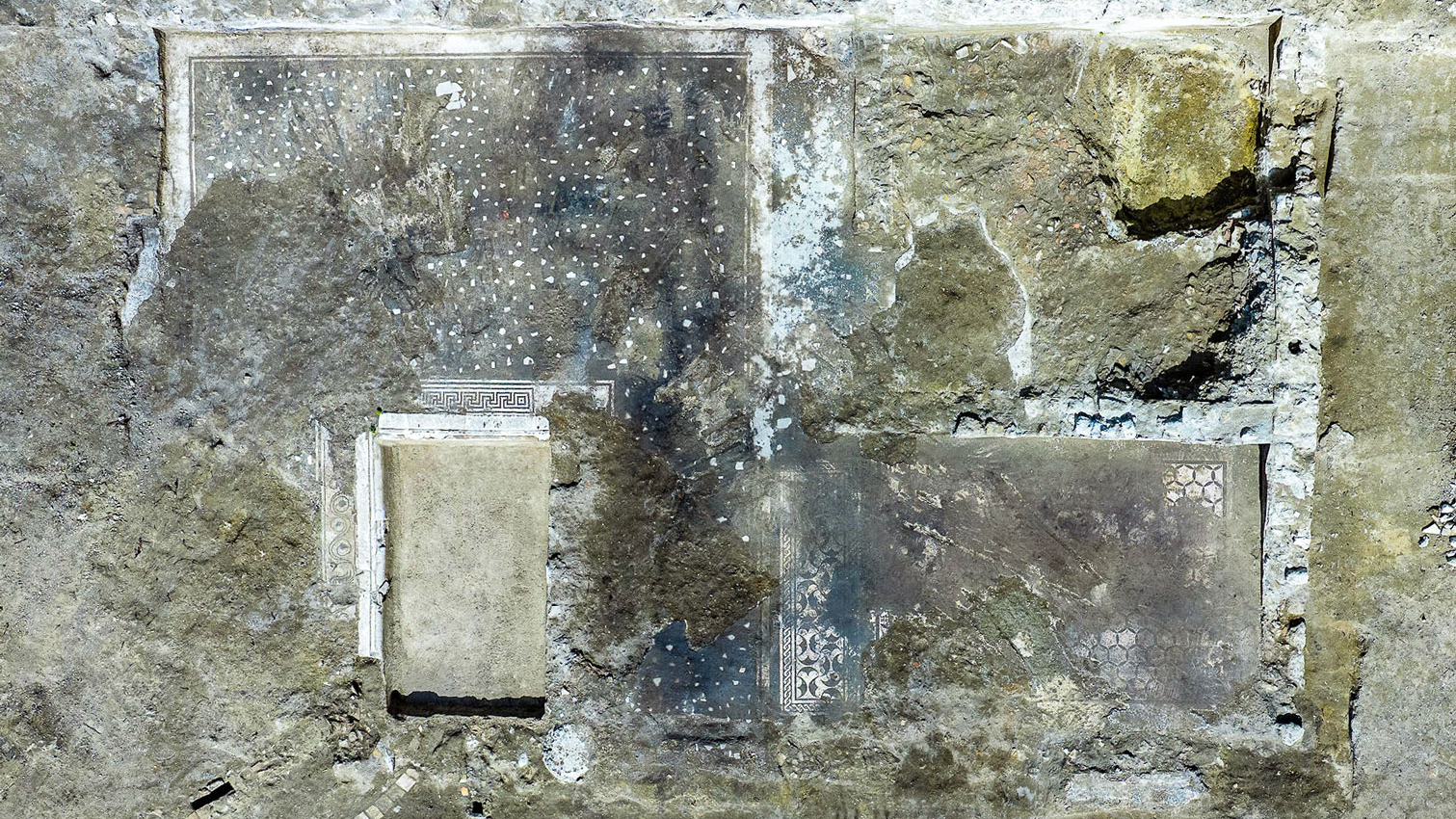
Aerial photograph of an ancient Roman villa discovered at Castel di Guido near Rome.

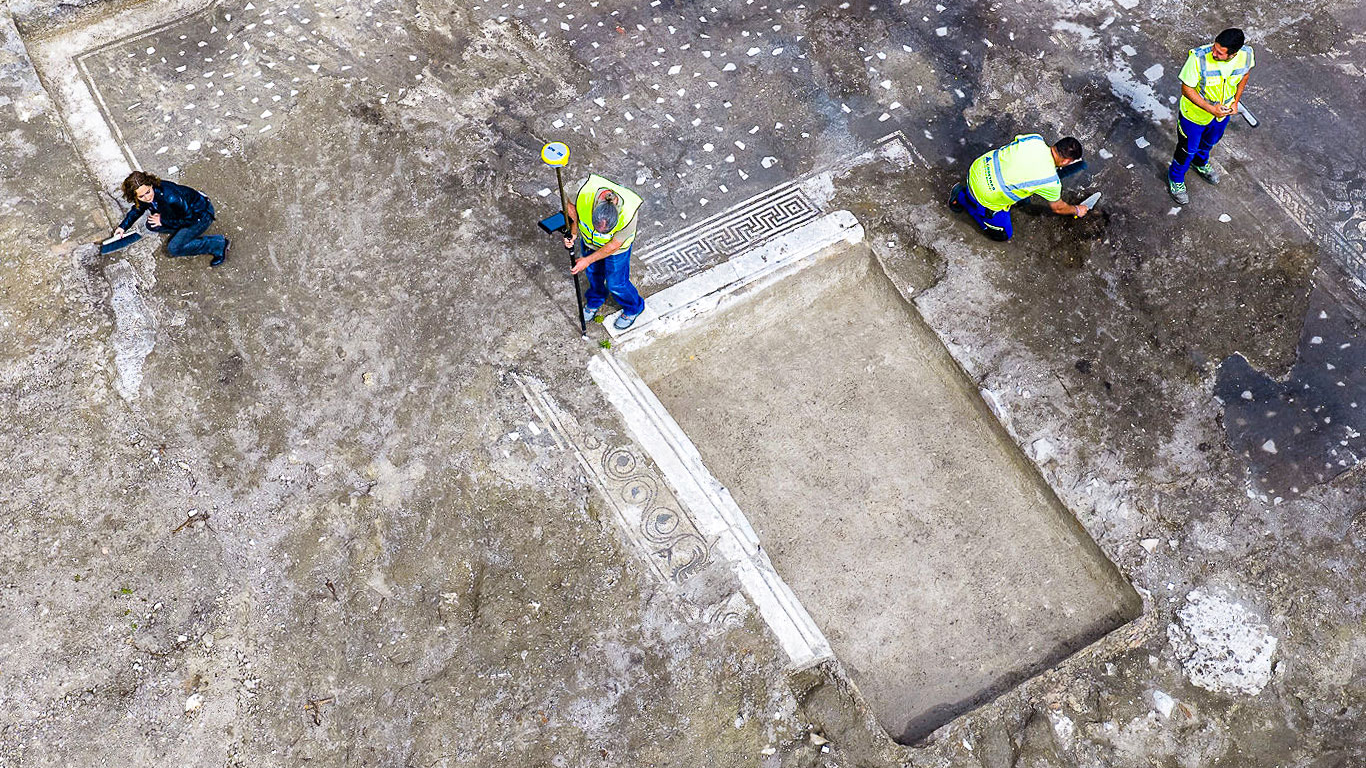
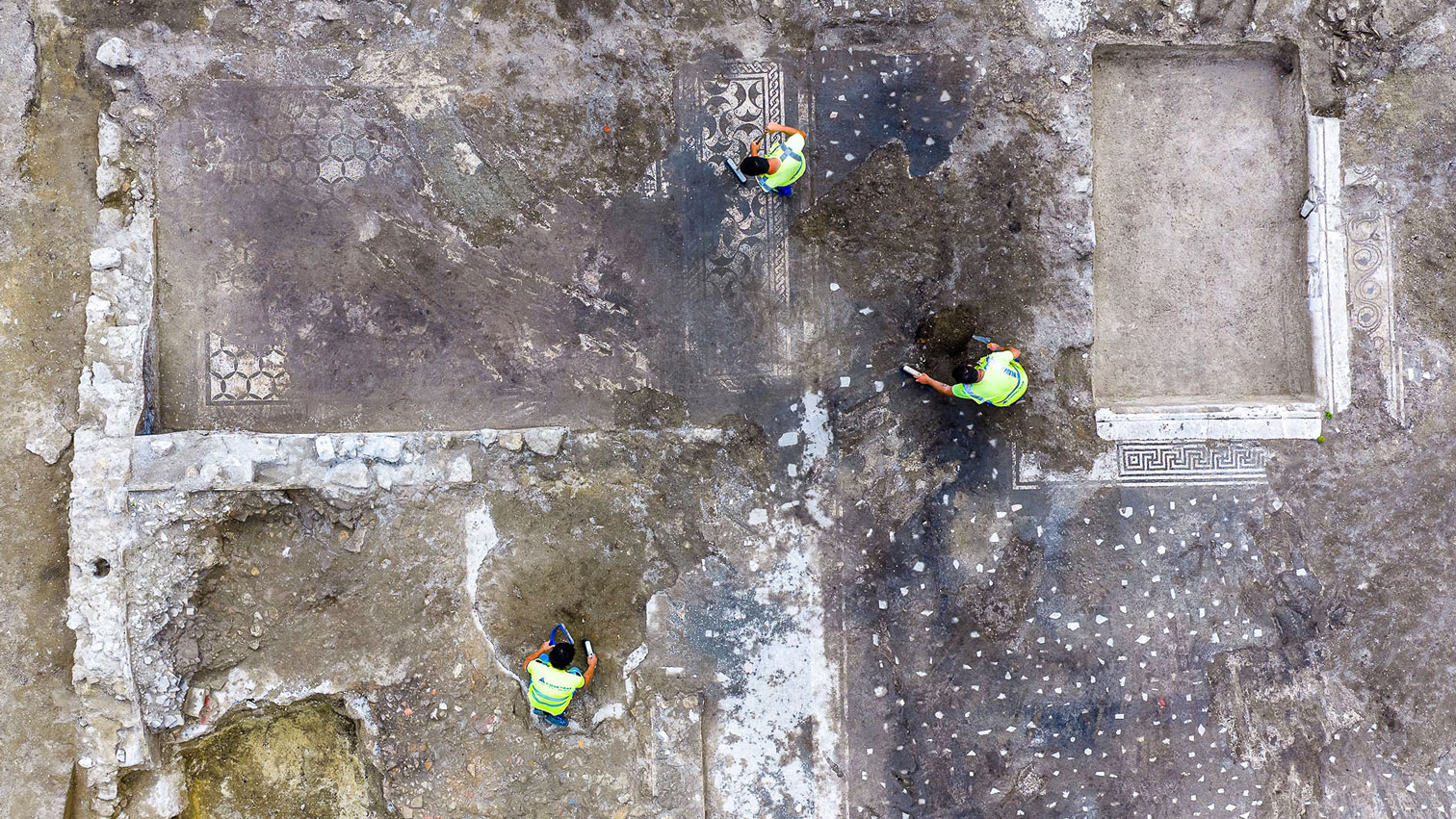
Aerial photograph of archaeologists working near the impluvium of an ancient Roman villa discovered at Castel di Guido near Rome.
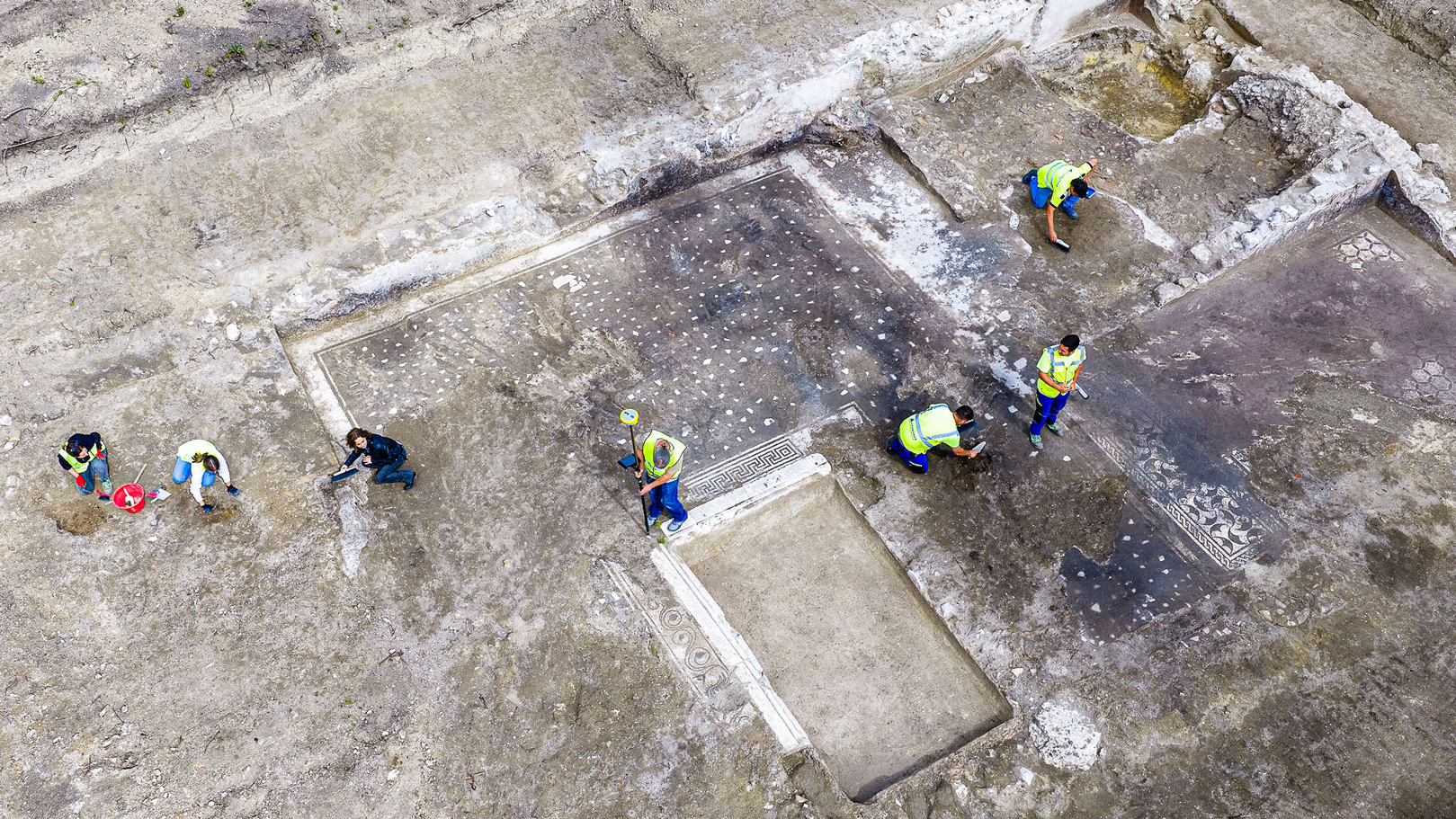
Aerial photograph of archaeologists excavating an ancient Roman villa discovered at Castel di Guido near Rome.

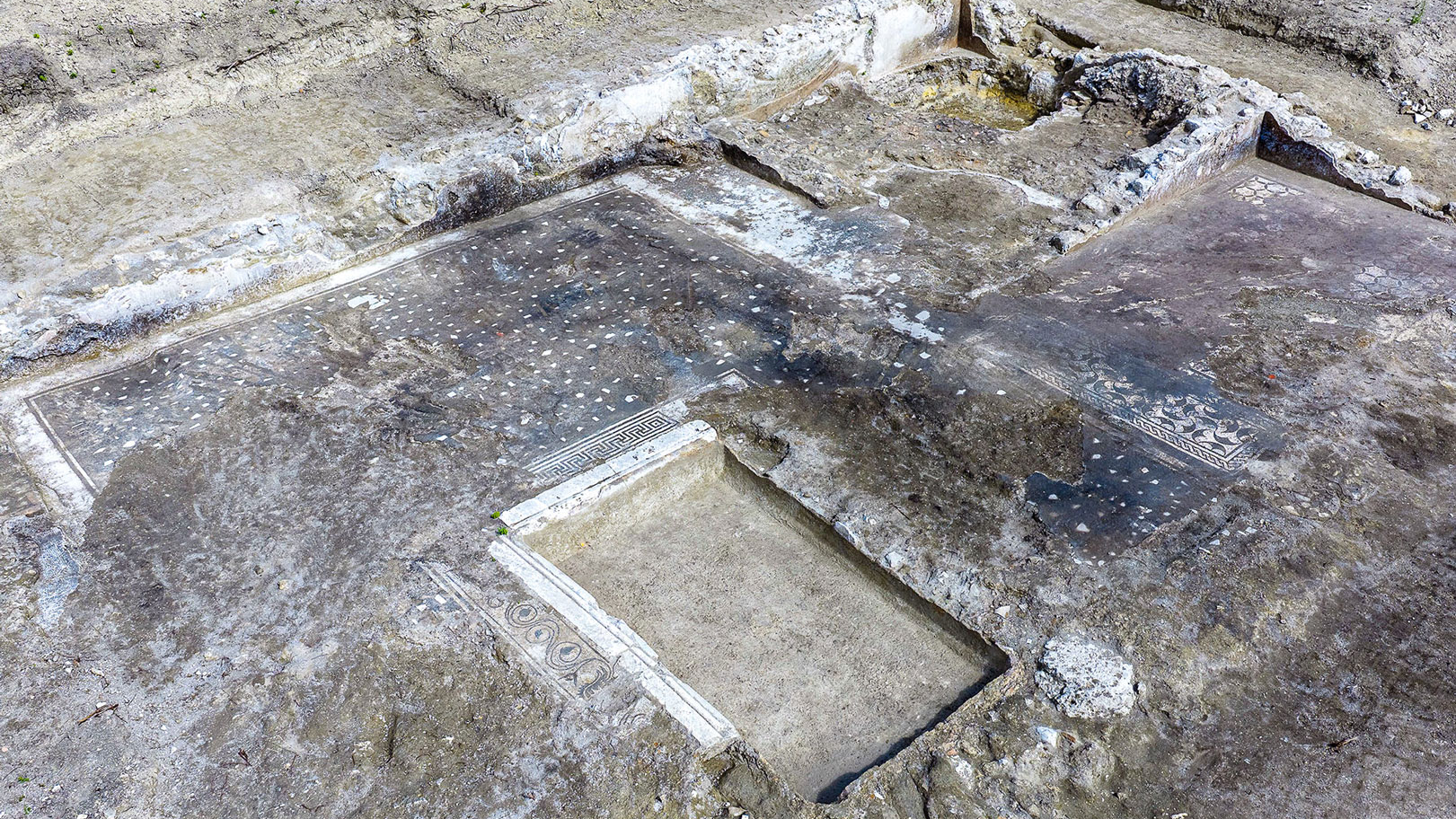
Aerial photograph of the newly discovered ancient Roman villa at Castel di Guido near Rome.
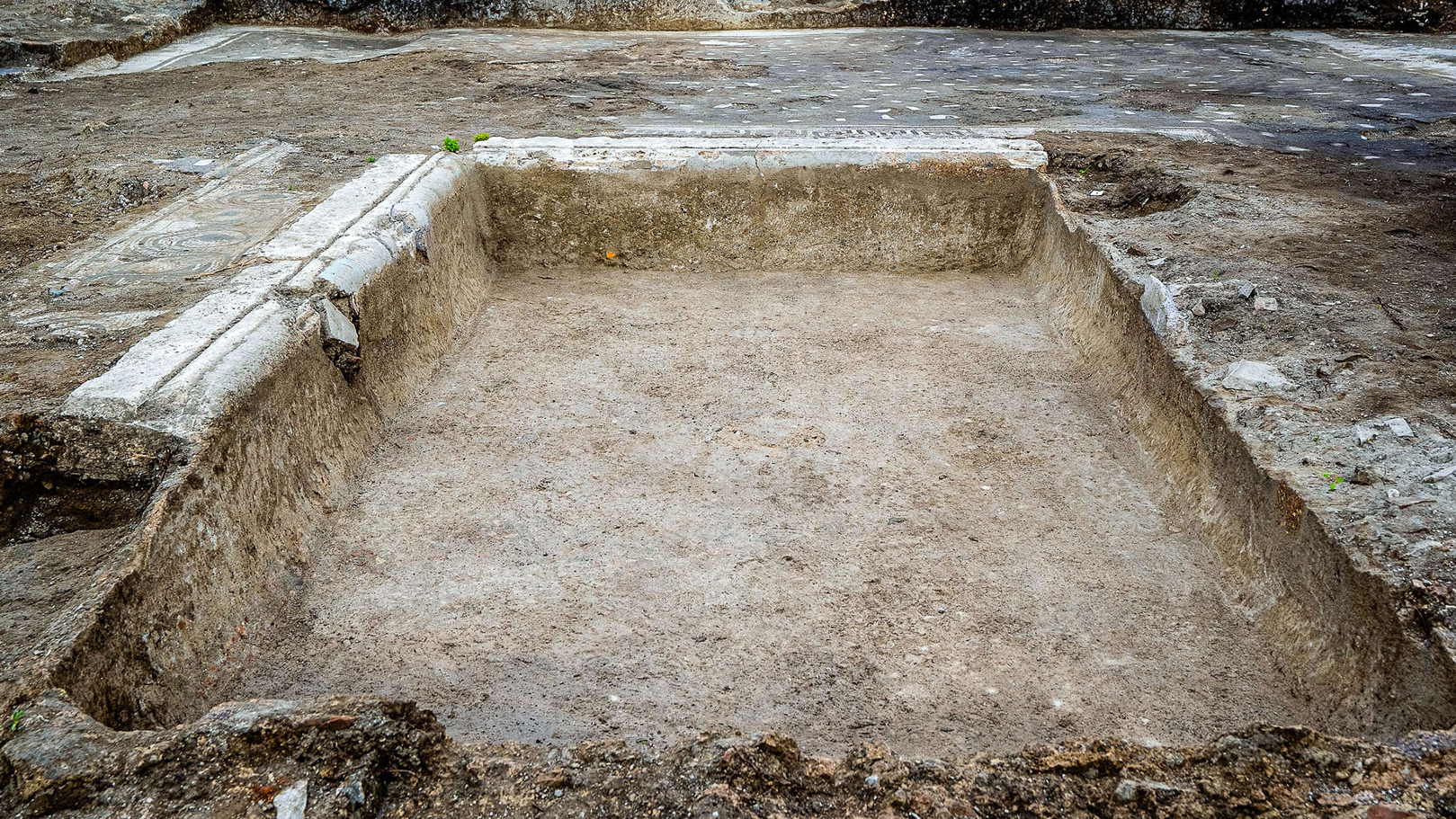
A view of the impluvium (rainwater basin) discovered at an ancient Roman villa west of Rome.

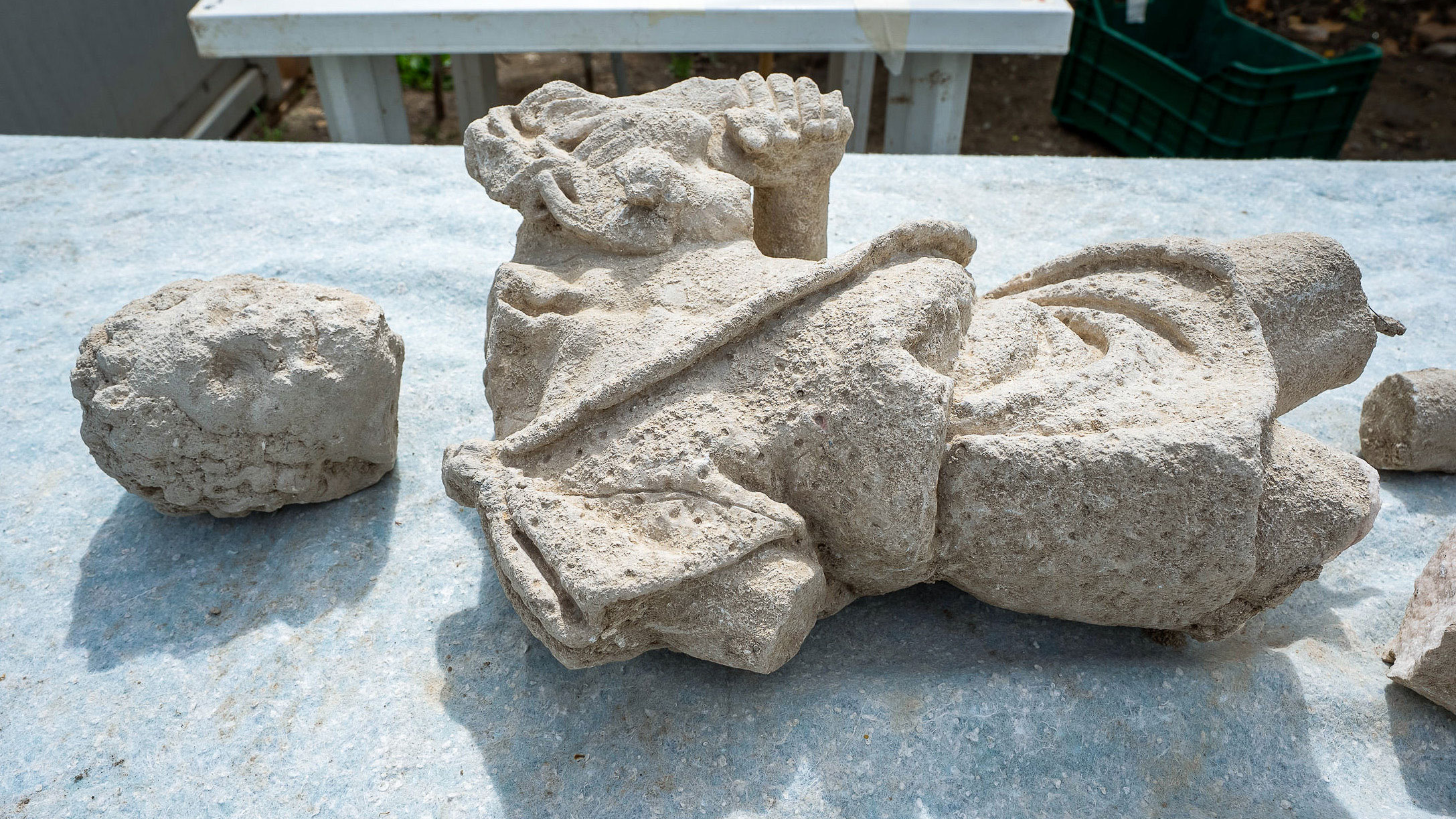
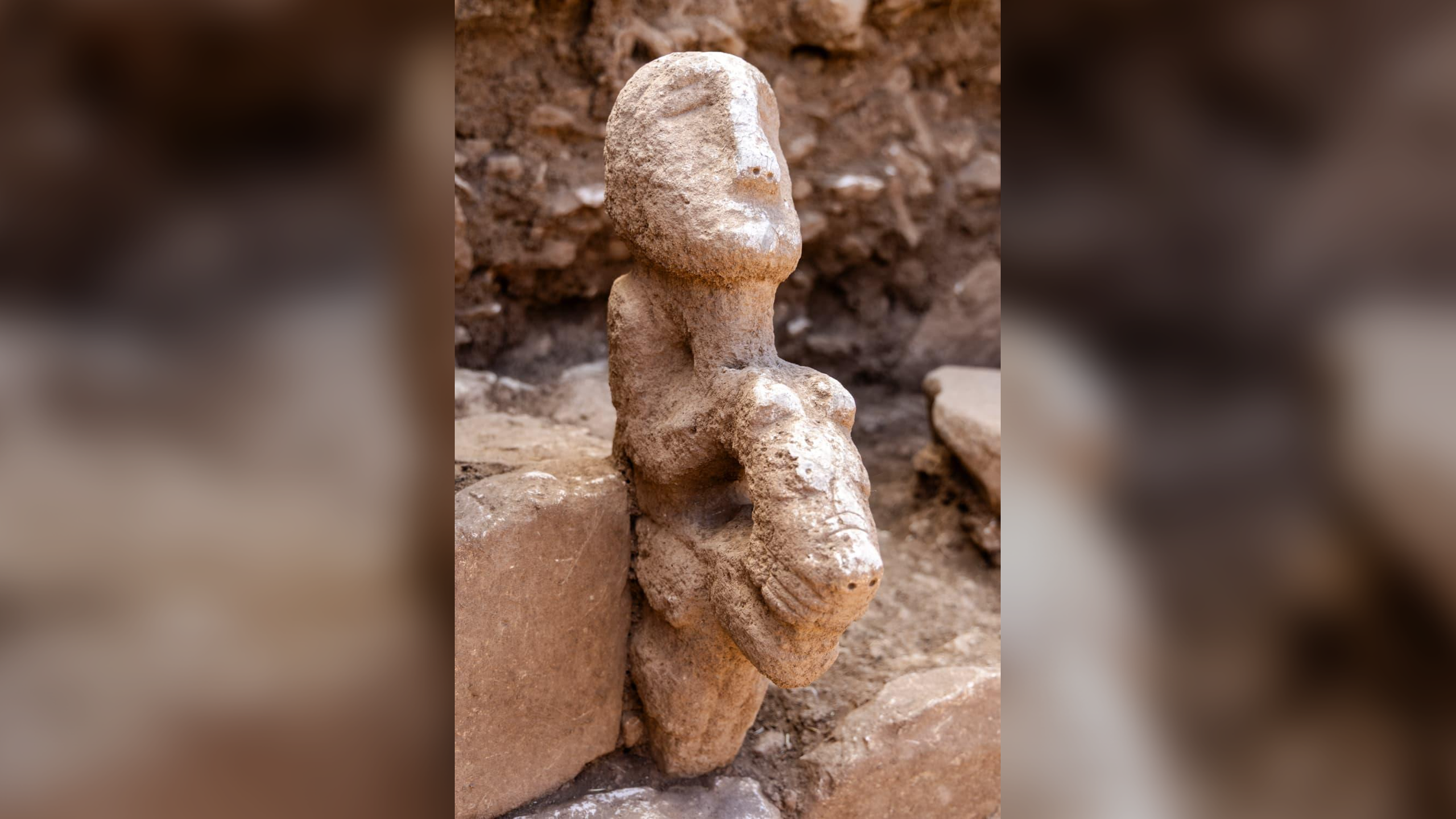
Archaeologists discovered a broken statue of the Roman deity Silvanus in the villa.
The atrium’s central impluvium — a marble basin in the center of many ancient Roman houses that collected rainwater from an opening in the roof — was surrounded by a floor decorated with bands of black-and-white botanical and geometric mosaics. The rear wall of the room, about 5 feet (1.5 meters) of which was still preserved, was painted red as part of a fresco that featured multicolor panels with human figures and botanical elements.
Get the world’s most fascinating discoveries delivered straight to your inbox.
Surrounding the large room were four smaller ones, three of which still have preserved mosaic floors. One room includes nine black-and-white geometric panels, another includes black octagons on a white background, and the third has black rectangles.
Within the villa’s central basin, archaeologists found a broken statue, about 31 inches (80 centimeters) tall, depicting a bearded man wearing a short tunic and carrying a basket with birds and fruit. The statue may represent Silvanus, the Roman deity of woods and other uncultivated lands, who watched over domesticated flocks of animals. Silvanus was also a companion of Bacchus (known in Greek as Dionysus), the god of wine and ecstasy.

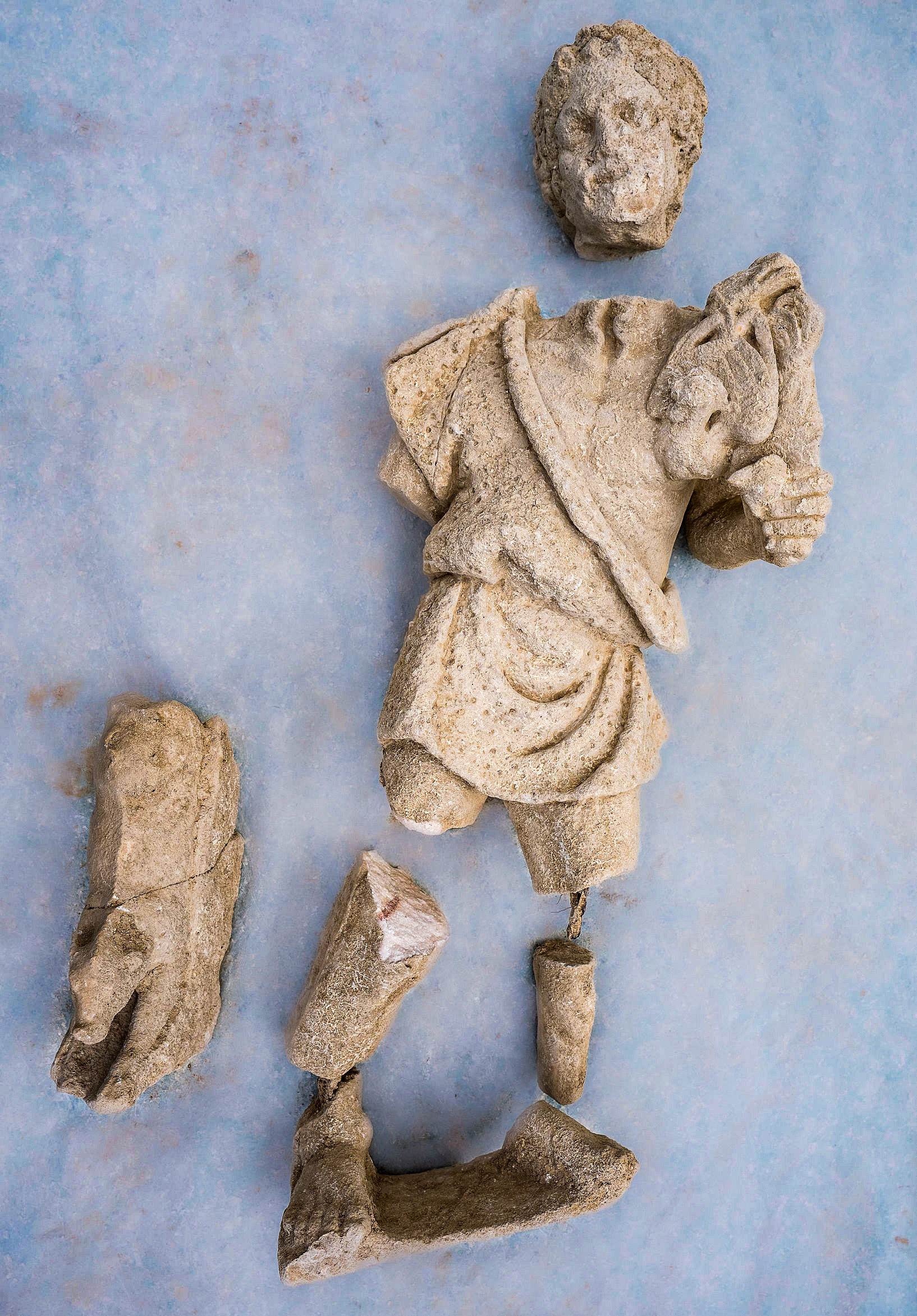
Archaeologists discovered a statue of the ancient Roman deity Silvanus, guardian of the flocks.
(Image credit: Italian Ministry of Culture / Special Superintendency of Rome)
The scale of the villa and the quality of the mosaics and frescoes suggest that the villa’s owners were Roman aristocrats and may have even been members of the imperial family, according to the statement. In the Roman Empire, elite families like the Aurelii and the Arrii — the paternal and maternal families of Antoninus Pius, who reigned from A.D. 138 to 161 — lived in Lorium. Ancient sources suggest that Antoninus Pius spent his childhood in Lorium, built his imperial palace there, and died there at age 74.
Lorium was also frequented by Emperor Hadrian, who adopted Antoninus Pius to make him his heir, and by Marcus Aurelius, who was Antoninus Pius’ nephew, adopted son and son-in-law. Because of Lorium’s strong connection to the Antonine imperial dynasty, numerous villas and ancient estates have previously been discovered in the region.
But the newly uncovered villa “is another important piece of the puzzle,” Contino said, “opening up new perspectives for understanding and preserving our history-rich territory.”
Further work on the villa and its artifacts will help archaeologists date the building more accurately and work out whether it was abandoned when the imperial household was relocated out of Lorium, according to the statement.
Although work on the villa has not been completed, the public has a chance to visit the newly excavated villa and its mosaics on June 20 through a free archaeological hike and guided tour organized by the Special Superintendency of Rome.
From Augustus to Nero, see how much you know about ancient Rome’s famous leaders with our Roman emperor quiz!