Follow us
Add us as a preferred source on Google
Subscribe to our newsletter
In Netflix’s new series “Below,” an ancient, squid-like creature known as “Mudder” threatens a small coastal community in Newfoundland, Canada, arriving around the same time as a mysterious iceberg that starts causing dangerous hallucinations in the town’s residents.
The series blends marine science, horror and environmental themes, harking back to Newfoundland’s long-standing connections with giant squid (Architeuthis dux), with the first sightings going back to the 1870s.
Annie Mercier, a marine biologist in the Department of Ocean Sciences at Memorial University in Newfoundland and Labrador, was brought on as a science adviser in 2025 just before Netflix began shooting “Below.” Mercier’s research focuses on deep sea organisms, studying their behavior, interactions and how they respond to environmental stressors like climate change.
Mercier’s lab at the Ocean Sciences Center was used as a filming location, and she met with actor Mackenzie Davis, who plays the research scientist Dr. Fonda Howander to guide the character. Live Science spoke with Mercier about how she helped bring Mudder — and the scientific endeavour to unravel its mystery — to life.
Annie Mercier
Annie Mercier is a professor in the Department of Ocean Sciences at Memorial University inNewfoundland and Labrador, Canada. She studies marine animals and their response to environmental conditions, conducting research on the behaviors and interactions of diverse invertebrate species from Arctic and deep-sea environments.
Kenna Hughes-Castleberry: How did you end up getting involved with “Below” as a scientific adviser?
Annie Mercier: Early in 2025, when they were just about to start filming or were finalizing the scripts, I heard that Jesse Mckeown [the director] was looking for a scientific adviser, preferably someone here in Newfoundland. We heard about it through Memorial University’s communications team. They mentioned that there would be something about an ancient cephalopod in the series.
I’m not an expert in cephalopods … But I do have a broad background in marine biology, and I’m here at the Ocean Sciences Centre. I sent back my reply, and they eventually contacted me to ask more about what I was doing and what I’d worked on in the past. My research is centered around strange creatures and trying to understand them through curiosity-driven research, so I guess that resonated with them.
Another factor was that I’d previously worked as a consultant on documentaries and television series. I’d done a little work with the BBC, helping explain video sequences, as well as fiction series back in Quebec. I also write popular articles and books for general audiences, so I’m familiar with navigating between science and fiction and with trying to convey something wonderful about science in language that general audiences can understand. I guess that played a role as well, and they eventually asked me to be the adviser.

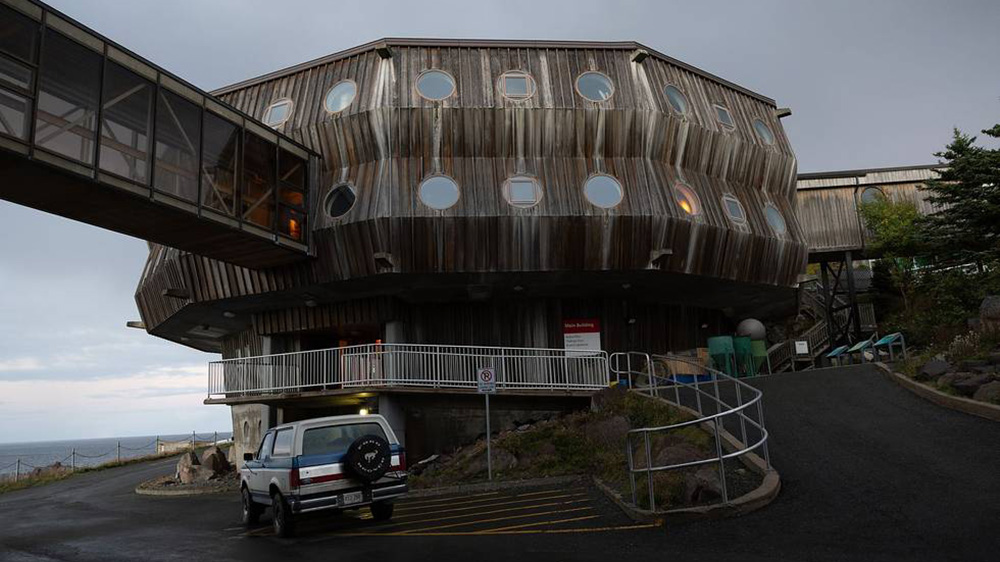
A view of the Ocean Sciences Center where Mercier works.
(Image credit: Jan Thijs/Netflix)
KHC: What did the advising process look like?
AM: There were two phases. The main thing was that they wanted to share the scripts early on. That’s when I was brought in.
Jesse told me they would send scripts at regular intervals, in sequence, starting with the first episode, then the second, and so forth. They would securely send me each script. We had some preliminary discussions to establish exactly what they wanted, because that was my question: How much detail or what kind of feedback were they looking for?
They told me that whatever came to mind, I should suggest it. Of course, I knew they couldn’t take everything into account, but I think they wanted to know how far-fetched or how close to reality some of the things were. They asked me to focus mostly on the scientific aspects.
That included the squid, but also how they portrayed the scientific work and the character involved in it. They had climate change, icebergs, ocean currents and a number of other scientific elements in the story.
I went through every script and provided feedback on all sorts of things. Sometimes it was something as simple as the timing of an event. I pointed out things related to the migrations of marine animals and other details that I knew were a little different from reality.
I provided written feedback and sometimes links to additional information. I’d send it back, and occasionally there would be a follow-up meeting or a remote conversation about certain elements. It depended on the situation.
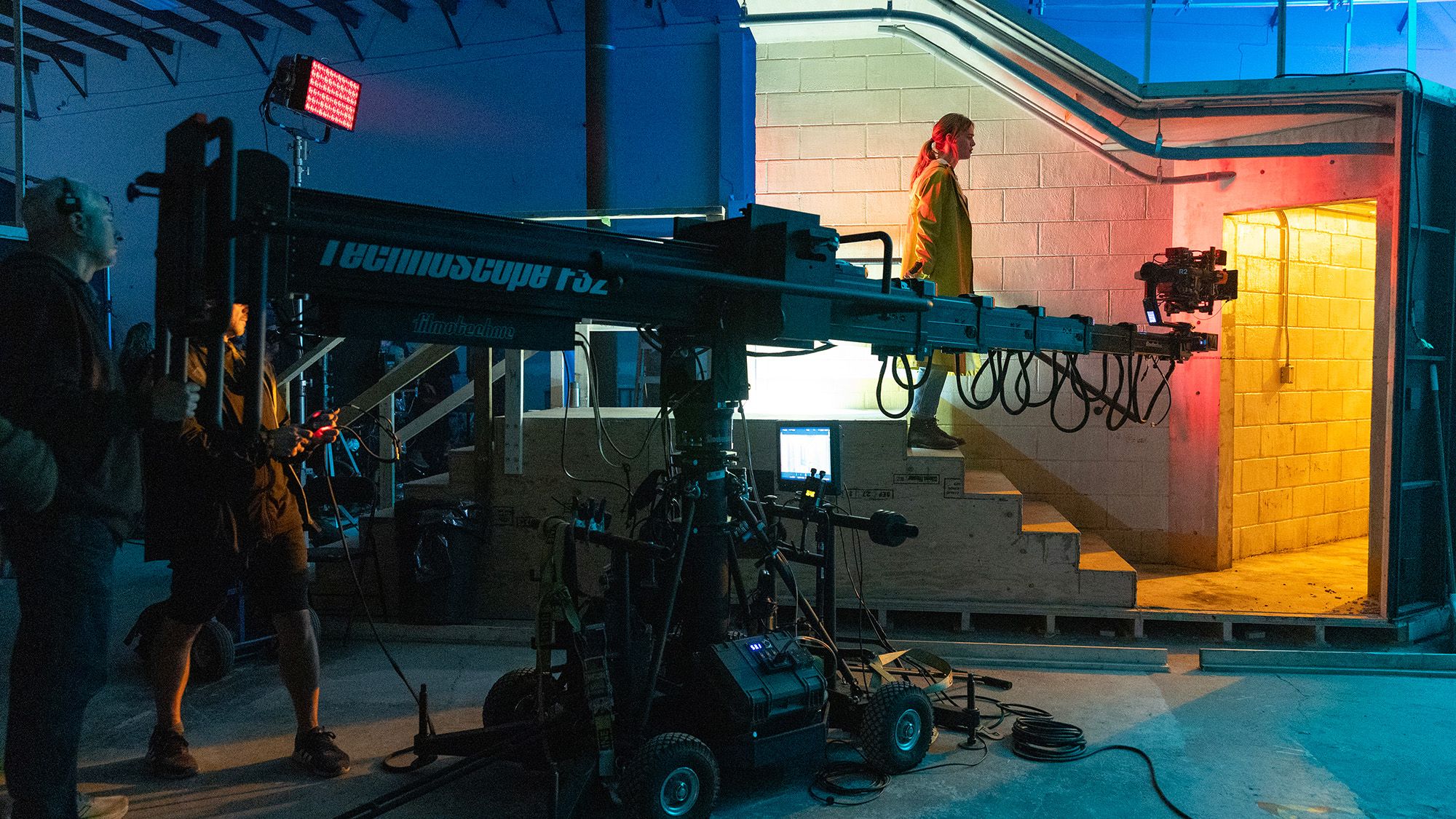
When they started filming, Jesse wanted to schedule a time for me to go behind the scenes and chat with the crew. It was difficult to coordinate because they were filming on three or more sets around Newfoundland, and I was working. Eventually, I managed to visit on a Saturday when they were filming at the Ocean Sciences Centre. I spent some time in the control room, met Mackenzie [Davis] and got to see what they were doing on-site.
Of course, when you’re asked about giant squids and you know it’s a fictional show, all sorts of things come to mind.
Annie Mercier
KHC: How much feedback did you end up giving on Mudder, the giant, squid-like creature? What aspects did you think were accurate, and where did the show take creative liberties?
AM: Of course, when you’re asked about giant squids and you know it’s a fictional show, all sorts of things come to mind. I was hoping they wouldn’t go the route of having the arms come out and a giant squid jump onto a boat, or something like “20,000 Leagues Under the Sea.” You see those kinds of things in some of the drawings from the 1800s, too. So I had some fears about that.
But when I read the scripts, I could see they were trying to make it as close to reality as possible. Obviously, they had some freedom because it’s portrayed as an ancient, social type of cephalopod — more like a squid but with some octopus-like behaviors as well.
I focused my feedback on biology. For example, the eye was very large. It’s well known that existing giant squids have one of the biggest, if not the biggest, eyes in the animal kingdom. So that was definitely something that made sense.

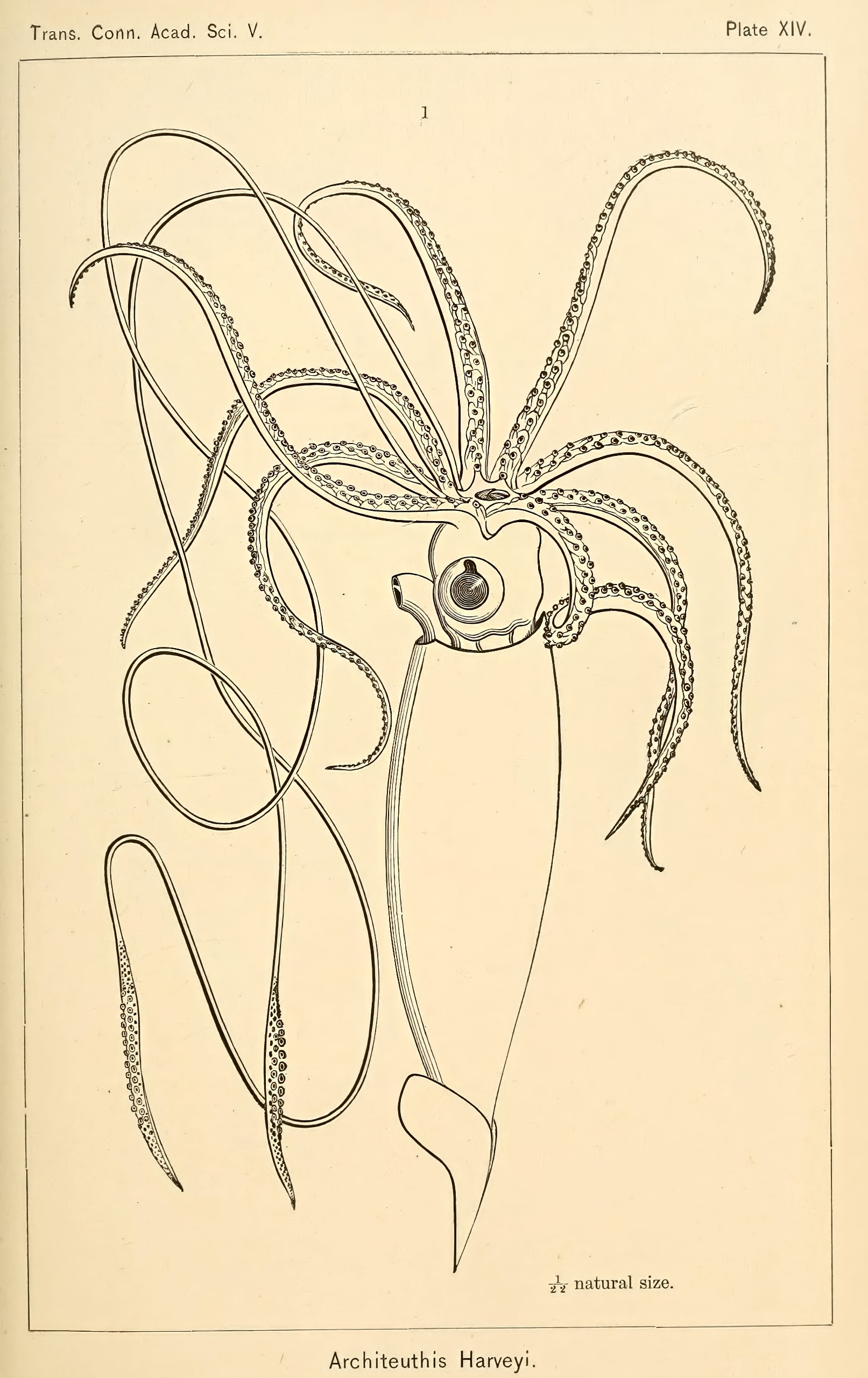
A drawing of a giant squid from the Connecticut Academy of Sciences dating to between 1879 and 1881. The drawing shows the large eye of the giant squid.
(Image credit: Sepia Times via Getty Images)
I also cautioned them about how giant squids move. Sometimes, in movies, you see their arms portrayed as very muscular, reaching far out of the water. These are mollusks [cephalopods belong to the phylum Mollusca], and in the water, they have quite a bit of strength. But outside the water, they don’t have bones that attach muscles to support that kind of movement. It’s a very different type of movement.
I drew their attention to the very few cephalopods that actually go out of the water. There’s an octopus you can see on certain reefs, and I sent them some images of it. I explained that its movement is very fluid, the way it’s able to advance across reefs outside the water.
I also mentioned the kinds of scars they could leave when interacting with sperm whales, for example.
I was quite happy to see that they kept the creature rather mysterious instead of trying to show too much. I was worried it might look completely funny, but I thought they made good use of keeping the mystery alive for a long time.
I also explained that cephalopods in the ocean have no way of detecting prey on the shore. They can’t see it or sense it. So if you’re going in that direction, you need to be a little careful. Obviously, that’s where we’re getting into fiction.
But I think they handled it pretty well. An audience expects some fearsome interactions, and if you don’t include those at all, you’ll disappoint people. Overall, I thought it was pretty good.
There’s a lot of lore surrounding giant squids in Newfoundland. They definitely go together — not just in fiction but also because there have been remains, sightings and other encounters. I think this physical place played a role in the inspiration for the show’s topic.
KHC: Did you advise on the hallucinogenic properties of the creature’s mucus?
AM: No, we didn’t specifically exchange information about that. A lot of marine animals have toxins. That’s well known, and it’s not just cephalopods; all sorts of marine animals have them. Now, how something like that could become airborne, or how it could be associated with melting icebergs and then ingested through the ice, is definitely fictional.
I’m aware of toxic substances, but I’m not aware of any that produce hallucinations, per se. And again, I’m no expert in that area.
KHC: Overall, do you think the series did a good job portraying science? Was there anything you would have changed?
AM: As I said, I had some fears at first. One downside of being an adviser was that I knew everything about the show before watching it, which was a first for me. It was a little different because I would watch and think, “Oh, OK; they did that. They adjusted this. Oh, they went all out with this one.”
I discovered what they had taken into consideration and what they had discarded. It was fun to watch, and I think they did a pretty good job overall.
I always think about this when I watch series about different professions. When you see lawyers or police officers portrayed, I imagine they’re probably laughing about how simple things seem. Maybe everything is compressed in time, or maybe it’s not quite how it happens in reality. This time, it was my turn to see how they would portray my profession.

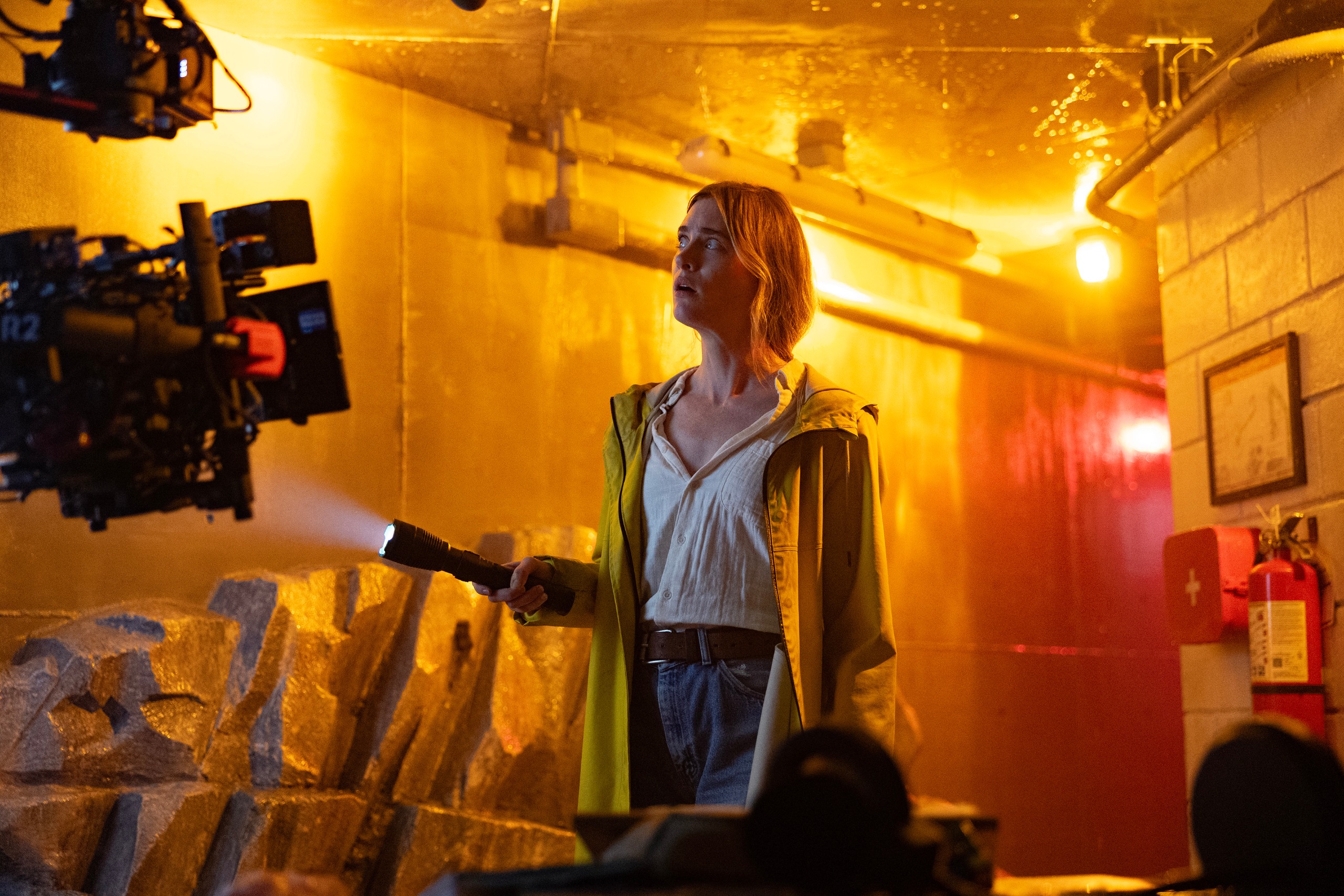
Mackenzie Davis, as Dr. Fonda Howander, conveys much of the science around giant squids in “Below.”
(Image credit: Jan Thijs/Netflix)
I think they avoided some of the common clichés. In movies and television, when you go into a laboratory, you often see colorful tubes and bubbling Erlenmeyer flasks just to tell you that you’re in a lab. The fact that they filmed here at the Ocean Sciences Centre, in real laboratories, contributed to the sense of reality. Our labs are eclectic. You have nets, tanks, microscopes and all sorts of things around. They’re not perfectly ordered, and I think that helped.
I also appreciated that they were careful about how they portrayed scientists. When you’re a marine scientist, you’re a marine scientist. You’re not all-knowing about everything in science. Sometimes shows portray scientists as knowing everything about everything.
For example, when it came to the substance in the show and its effects on health, I explained that a marine scientist might know how to make a diagnosis about something, but that doesn’t mean they can necessarily provide a medical assessment. I think the character even says, “I’m not a medical doctor.”
I also thought they did a good job portraying scientific uncertainty. In science, you follow lines of inquiry, but you’re not necessarily sure what the answer is. You need confirmation and further investigation.
They also did what they could with the squid to make it fearsome but also lovable, without going too far from what a squid might actually do. And when they took creative liberties, they kept things mysterious enough that everything wasn’t spelled out exactly.
I also thought they did a great job portraying Newfoundland. They captured the landscapes, the environments and the spirit of the people. The atmosphere was really well done. I think they aimed to make Newfoundland almost a character in the series, and they did that quite well.
Altogether, I thought the Ocean Sciences Centre and the labs were portrayed very nicely. Some of the students here were around during filming in 2025, and they’ve had showings of the episodes at the university. It’s nice for them to see the labs where they work every day portrayed on screen.

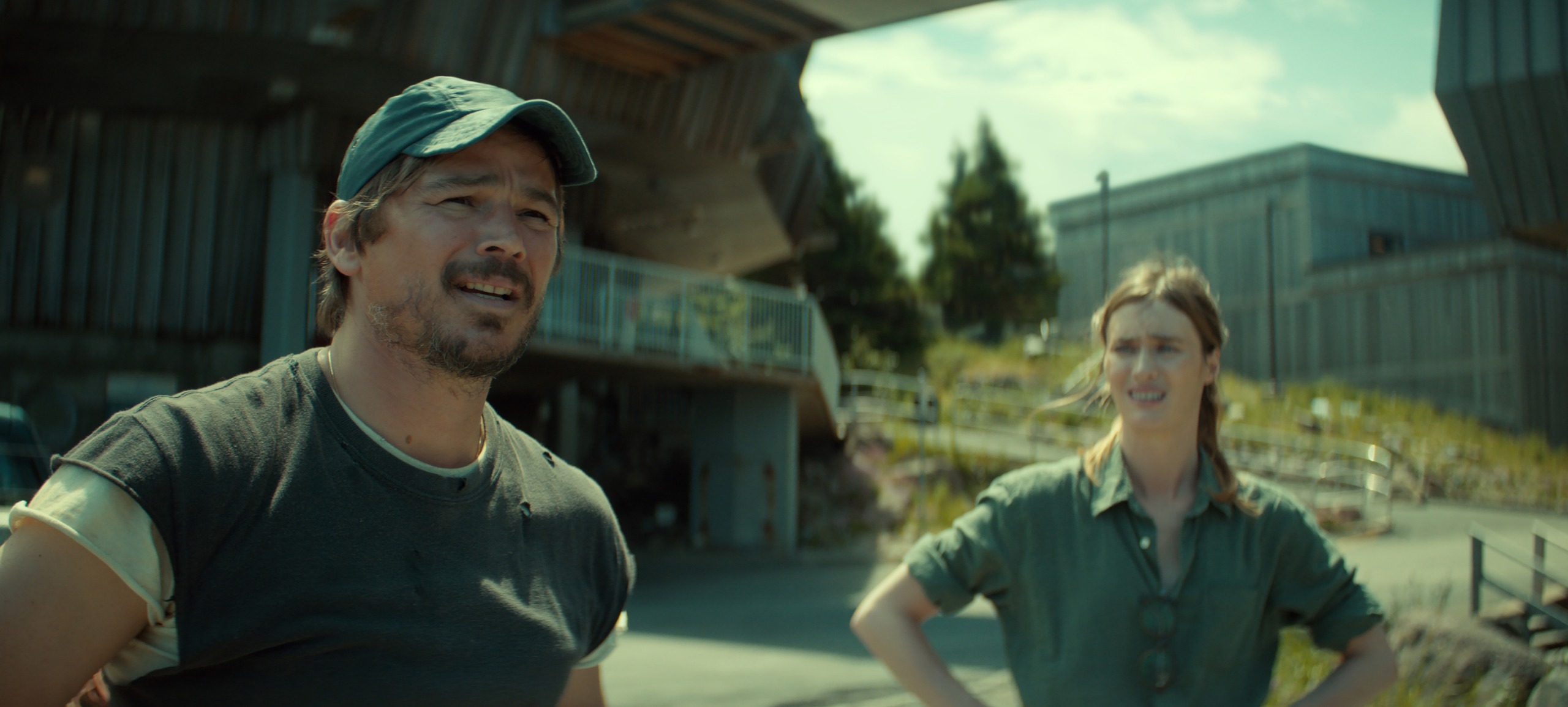
Josh Harnett’s character Calvin Penney relies on Mackenzie Davis’s character Dr. Fonda Howander to learn more about the science of giant squids.
(Image credit: Neftlix)
KHC: Beyond the creature itself, were there other scientific details in the scripts that you helped the writers get right?
AM: Yes. I provided feedback on a lot of smaller issues, including the use of scientific tools and how different analyses work.
For example, they were trying to date a block of ice. The process was a little different in the original script, and I explained that these analyses take time. You don’t just do something in a lab and immediately get an answer. You sometimes have to collaborate with other people to establish things.
I also cautioned against making one microscope tell you everything about something you’re looking at. A microscope is there to provide good magnification. It doesn’t give you chemical signatures or anything like that. So I tried to caution them against making one instrument do more than it actually does in reality.
I thought they treated the laboratory work quite well overall. One thing they kept — and I can’t blame them for it — was the very nice, almost magical tool they use to check the quality of icebergs. You just stick it into the iceberg, get a reading, and it tells you whether it’s a good-quality iceberg.
Obviously, when I saw that, I thought it would be nice if it worked that way! But when you want to know the quality of ice or water, there are a number of different analyses you need to do, and you need to know what you’re looking for.
Exclusive to Live Science Pro
In movies and television, it’s often the case that you put something into a machine and it spits out exactly what you want to know. But in real science, you have to ask the right question. You have to know what you’re looking for so the instrument can tell you whether something has a particular property or not.
I understood that they sometimes needed to take creative liberties to move the plot along. There were a number of comments I made about basic science and what was or wasn’t realistic.
One feature of the Ocean Sciences Centre that they took into the fictional realm was the basement, where you go through a door and there’s an ocean or water behind it. Obviously, don’t look for that here! That’s just about the only thing that isn’t real. The rest is pretty close to reality.
Editor’s note: This interview has been condensed and edited for clarity.
Help us improve Live Science Pro: We’re always trying to make our content better. Leave us feedback about Pro here.