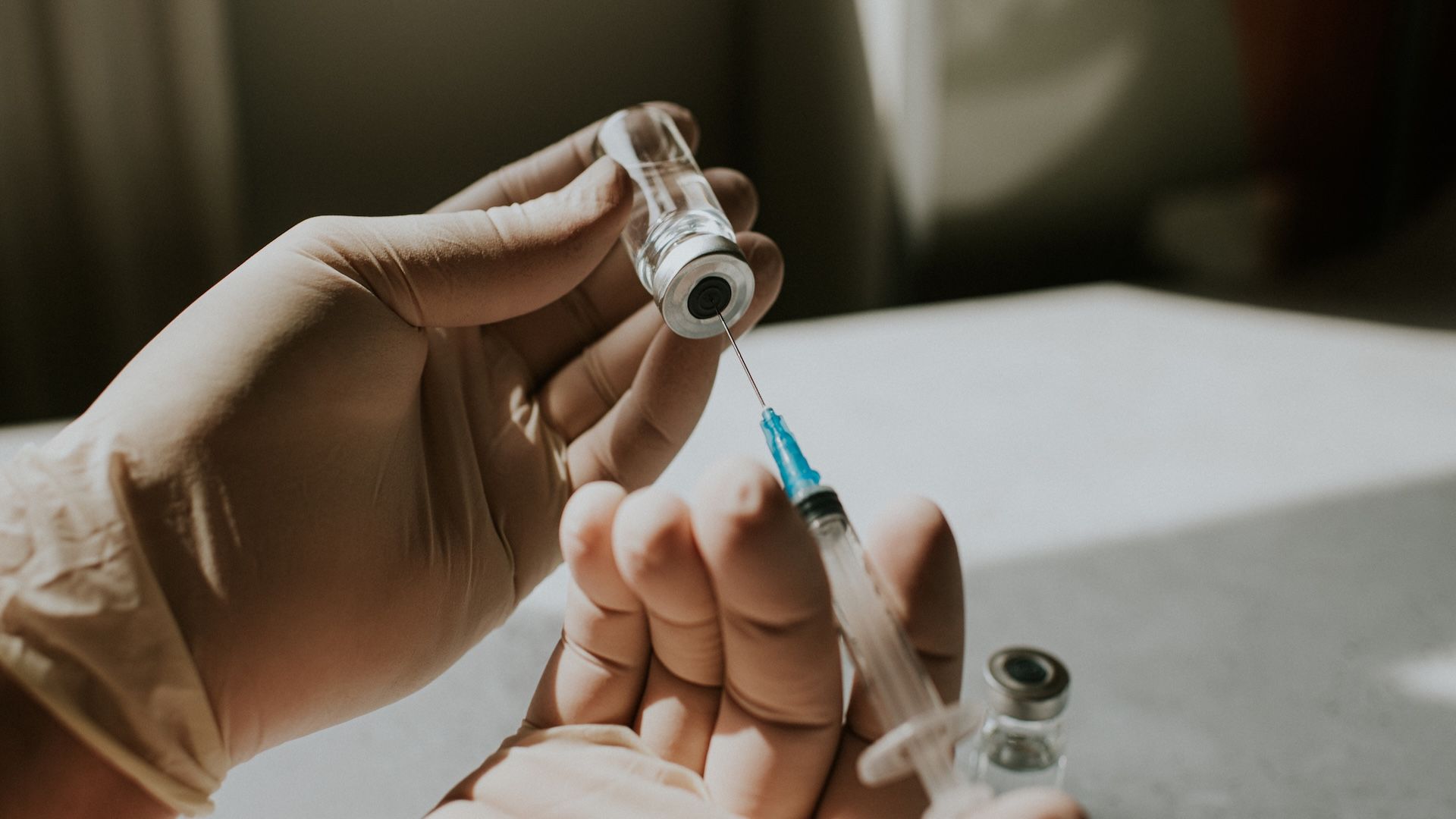
A vaccine that blocks the effects of fentanyl — including overdose — will enter human trials in the coming months, perhaps leading the way to the first-ever proactive treatment for opioid use disorder.
The initial trials will focus on assessing the safety of the vaccine, which was initially developed with funding from the U.S. Department of Defense. The shot was previously tested in rats and showed promising results. Now, it’s been licensed by startup ARMR Sciences, which will begin enrolling patients for Phase I clinical trials in the Netherlands in 2026, starting in either January or February.
How does the vaccine work?
The vaccine works by keeping fentanyl out of the brain, which it does by making the molecule a target of the immune system.
Fentanyl is a synthetic opioid with effects 50 times stronger than heroin. Opioids, also called narcotics, broadly work by binding to opioid receptors in the brain and spinal cord, triggering changes in nerve cell signaling that prevent pain and can create a euphoric high.
But these opioid receptors are also found in the part of the brain that controls breathing, so fentanyl can also reduce respiration to a deadly degree if used in excess. A 2-milligram dose of fentanyl — similar in volume to about a dozen grains of salt — can be fatal, according to the Drug Enforcement Agency (DEA).
If a person overdosing on fentanyl is treated with naloxone (better known by the brand name Narcan), quickly enough, these effects can be reversed. This antidote also binds to opioid receptors, thus blocking the effects of fentanyl.
ARMR’s vaccine takes a different approach: It works in the circulatory system, before the drug can reach the brain.
“This would be the first-ever treatment that does not work on the [opioid] receptor,” Gage told Live Science.
What’s in the vaccine?
To keep fentanyl from reaching the brain, the immune system must first recognize the drug. But fentanyl is a tiny molecule, not a pathogen like a virus, and immune cells don’t naturally react to its presence.
To spur an immune response to fentanyl, the University of Houston’s Colin Haile, an ARMR co-founder and scientific adviser, and his colleagues had to tie the opioid to something else.
They chose a deactivated diphtheria toxin called CRM197, a compound already used in vaccines on the market; once deactivated, the toxin is no longer toxic and instead helps rouse an immune response. To boost this immune response even further, they also added dmLT, a compound distilled from toxins produced by the Escherichia coli bacterium. This modified compound is not toxic itself, and it has also been tested in humans in trials of other, not-yet-approved, vaccines.
These two components are attached to a synthetic piece of the fentanyl molecule, which in and of itself cannot cause a high or pain relief.
When the immune system meets this combo of fentanyl fragments, CRM197 and dmLT, it builds antibodies that react to real fentanyl. These antibodies bind to the opioid, keeping it from crossing the brain’s protective membrane — the blood-brain barrier — and then clearing it from the body.
In rat studies, the vaccine blocked fentanyl from entering the rodents’ brain and also blocked the drug from depressing respiration and causing overdose.
How is the vaccine being tested?
So far, the studies on the vaccine have been in rodents, though dmLT and CRM197 have respectively been tested to some extent and are already used in other vaccines in humans. The protocol in rats is to give an initial dose of the fentanyl vaccine and then boosters three and six weeks out from the first dose, Haile told Live Science.
“The longest we’ve followed the animals in our studies is about six months and we saw complete blockade of fentanyl effects at six months post the initial vaccination,” Haile said. It remains to be seen how that will translate to “human years,” he noted, but lab rats live a couple of years in total, so the researchers think the vaccine will work for a long time in humans.
The initial human trials that will begin in early 2026 will enroll 40 people and will focus on detecting any safety issues with the vaccines, such as unwanted or dangerous side effects. Researchers will also draw blood samples from participants to make sure that the vaccine is spurring the creation of anti-fentanyl antibodies.
If these Phase I trials are successful, the next step will be Phase II trials to test the vaccine’s efficacy — how well the vaccine blocks fentanyl’s effects. In these trials, not only will antibody levels be tracked over time, but some participants will also be dosed with safe levels of fentanyl used for pain relief in medical procedures. This will be done under close supervision, to check that the vaccine works in the presence of the drug.
Are there potential drawbacks to the vaccine?
Fentanyl has legitimate medical uses as a painkiller, especially in emergency situations. One concern about the vaccine is that people who take it will lose this option for pain relief.
However, the antibodies created by vaccination do not bind to other opioids — such as morphine, oxycodone or methadone — or to other pain-relief options, Haile said. That means there are alternatives if people who get the vaccine need pain relief down the line.
The drug also does not interfere with buprenorphine, a drug used to treat opioid use disorder by reducing withdrawal symptoms and cravings. Haile said he and his team are currently testing the vaccine in combination with naltrexone, a non-opioid medication also used to block the effects of opioids in treatment of substance use.
In theory, it might be possible to take enough fentanyl to override the body’s supply of anti-fentanyl antibodies, Haile said. However, given that the vaccine blocks fentanyl’s euphoric effects, he expects people who want to quit will not be motivated to try to work around it.
“We want people who want to quit, want to not use the drug,” he said. “That will give them a chance to realize that they won’t get high from this drug and there is no use in taking it any longer.”
Who might benefit from the fentanyl vaccine?
Gage suggested that one market for the vaccine could be first responders concerned about accidental fentanyl exposure. (That concern has risen in recent years with the spread of misinformation about fentanyl.)
For clarity: if fentanyl gets on your skin via casual exposure — for example, if you touch an object that’s been exposed to the drug — it will not absorb through the skin. Meaningful absorption through the skin requires direct contact to the drug over hours or days. That said, if an EMT or police officer gets the drug on their hands and then touches their mouth or eyes, they could feel some of the drug’s analgesic, or pain-relieving, effects, Haile said.
The vaccine could also be “an extra tool in the toolset” for people with opioid use disorder, Gage said. Combining the vaccine with “robust” cognitive behavioral therapy, a type of talk therapy, and communal support could be “incredibly beneficial to people who are just looking for another lifeline to help themselves get better,” he said.
Finally, the vaccine could be beneficial for people who use less-deadly drugs — such as cocaine, stimulants or painkillers — that they buy on the black market. That’s because these drugs are increasingly cut with fentanyl, meaning people may overdose without even knowing they are taking the opioid.
“I had two close childhood friends who passed away from fentanyl overdose,” Gage said. “Neither of them were seeking it out.”
Over 48,000 people are estimated to have died of opioid overdoses in 2024 in the U.S., according to provisional data. Perhaps due to this high death toll, early research suggests that people with personal experience with opioid use disorder and the general public alike view a possible anti-fentanyl vaccine positively. Time will tell how the new vaccine will perform in human trials, but if eventually approved, it could be a first-of-its-kind tool against overdose deaths.
This article is for informational purposes only and is not meant to offer medical advice.