




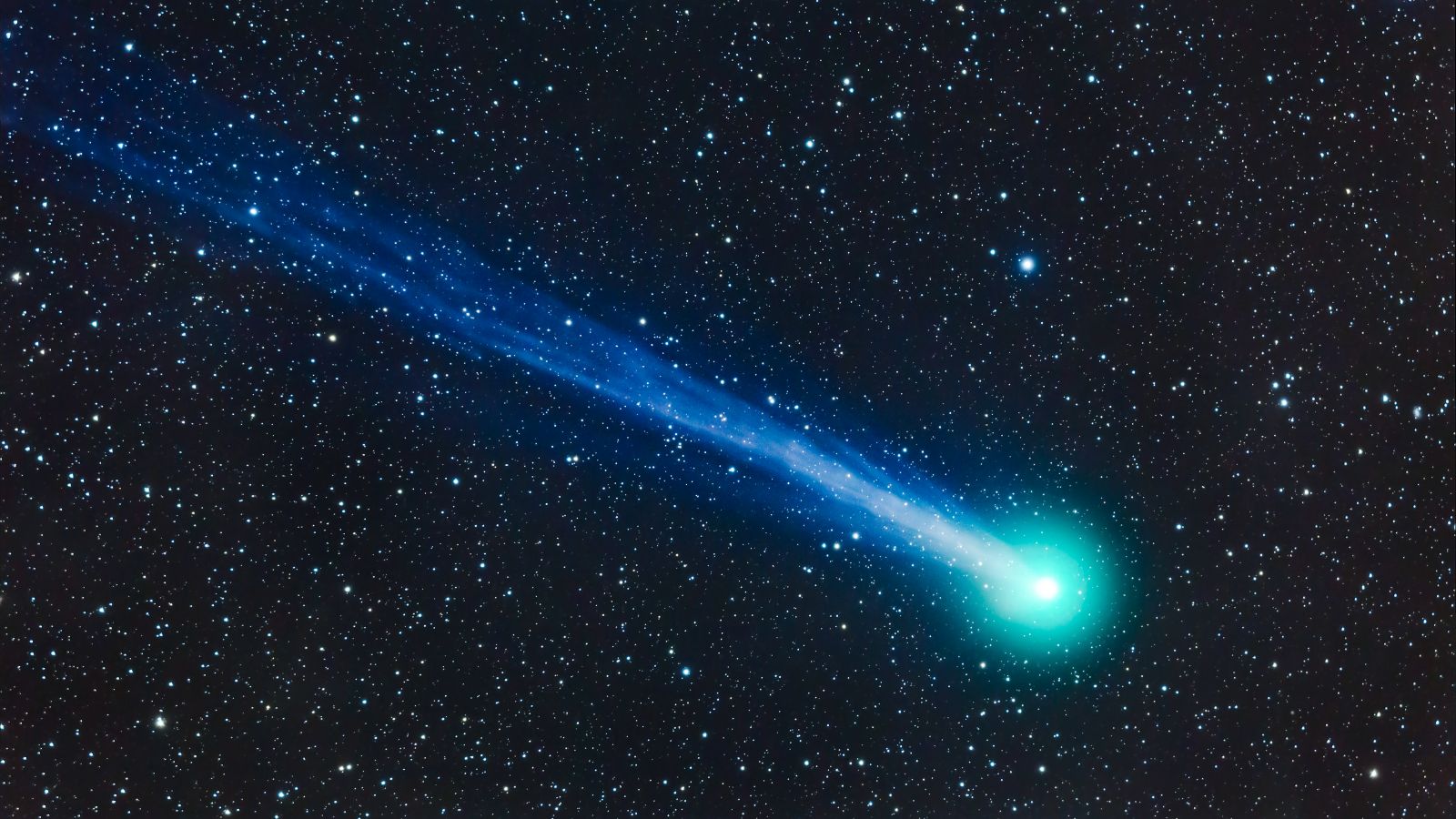
Astronomers have discovered an exciting new “sungrazing” comet that will have a perilously close encounter with our home star in less than two months. Some experts predict the hefty ice ball could become bright enough to be visible to the naked eye, even in daylight — but only if the comet survives its deadly solar slingshot.
The newfound comet, dubbed C/2026 A1 (MAPS), was discovered Jan. 13 by a team of French astronomers at the AMACS1 Observatory in Chile’s Atacama Desert. It is likely around 1.5 miles (2.4 kilometers) wide and, when it was first spotted, was just over twice as far from the sun as Earth is, according to Sky & Telescope magazine.
C/2026 A1 belongs to the Kreutz family of “sungrazing” comets — a group of at least 3,500 comets with orbits that take them within 850,000 miles (1.4 million km) of our home star. The Kreutz sungrazers are suspected to be fragments of a single massive comet that was ripped apart by the sun around 1,700 years ago, according to Live Science’s sister site Space.com.
The icy ball of rock and gas will reach its closest point to the sun, called perihelion, on April 4, when it will come within around 500,000 miles (800,000 km) of our home star — or roughly 70 times closer to the sun than Mercury is. At such proximity, the comet will whip around the sun at more than 2 million mph (3.2 million km/h), causing it to experience intense gravitational pressure, high temperatures, and a hefty dose of solar radiation.
This immense strain may end up ripping the comet apart, which happens to most other sungrazing comets. But if it survives its perilous perihelion, C/2026 A1 will be so changed by the event that it will shine like an incredibly bright star — potentially even during the daytime.
How bright will it get?
C/2026 A1 comes from a particularly noteworthy subgroup of Kreutz sungrazers that are thought to be fragments of the “Great Comet of 1106,” which was itself a remnant of the family’s massive progenitor. Previous alumni of this subgroup include Comet Ikeya-Seki, which shined brighter than the full moon in 1965, and Comet Lovejoy, which became a “headless wonder” after being largely ripped apart in 2011.
As these comets made their own solar flybys, they became uncommonly bright, largely due to the significant amounts of gas that were released as they soaked up solar radiation. This has also caused several sungrazers to grow spectacular “broom-like” tails as they neared the sun, which could also happen to C/2026 A1, according to Sky & Telescope.
It is too early to accurately predict how bright C/2026 A1 will become. However, some researchers speculate that it could get several times brighter than the full moon, which would make it visible to the naked eye in the daytime sky, according to an article in The Conversation. But this will happen only if it survives perihelion; if not, it won’t get anywhere near its max brightness.
Most sungrazing comets are small and are discovered mere days before they reach perihelion. Usually, they also get ripped apart by the encounter. For example, during the total solar eclipse of April 2024, researchers discovered a tiny sungrazer just hours before it disappeared forever.
How to see C/2026 A1 (MAPS)
If C/2026 A1 survives its deadly dance with the sun, it will likely reach its max brightness a few days later as it nears its closest point to Earth later in the month.
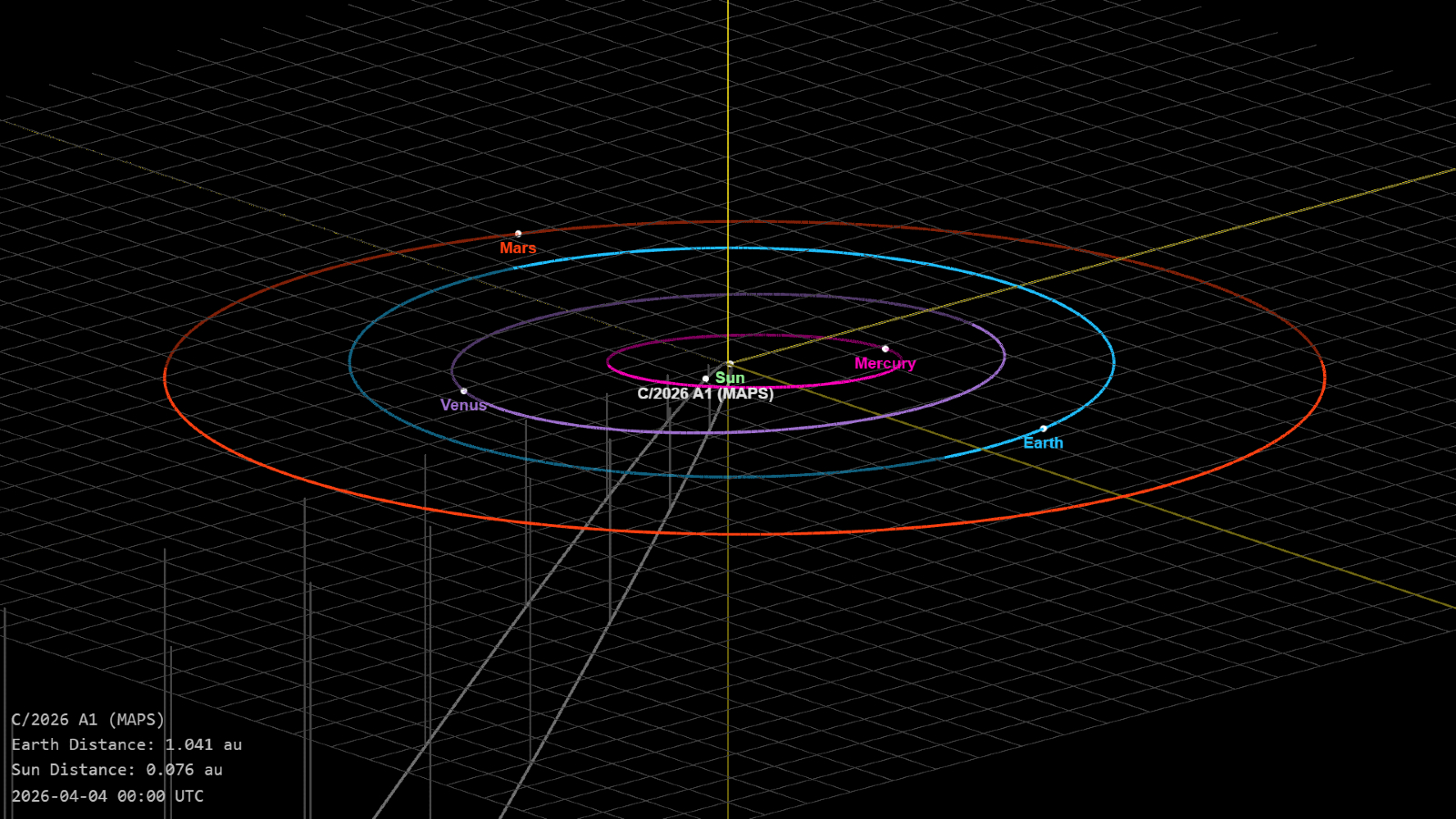

Observers in the Southern Hemisphere will get the best views of the comet, according to Sky & Telescope. However, people in the global north will still be able to see the object low above the southwestern horizon just before sunset.
But even if the comet falls apart, it will still be visible from late March with a decent telescope or pair of stargazing binoculars.
Later in April, another potentially spectacular comet, C/2025 R3 (PanSTARRS), could also become visible to the naked eye as it nears its own perihelion on April 20. This ice ball was previously (and perhaps prematurely) dubbed the “Great Comet of 2026.”
Time will tell if C/2026 A1 can wrestle that title for itself.