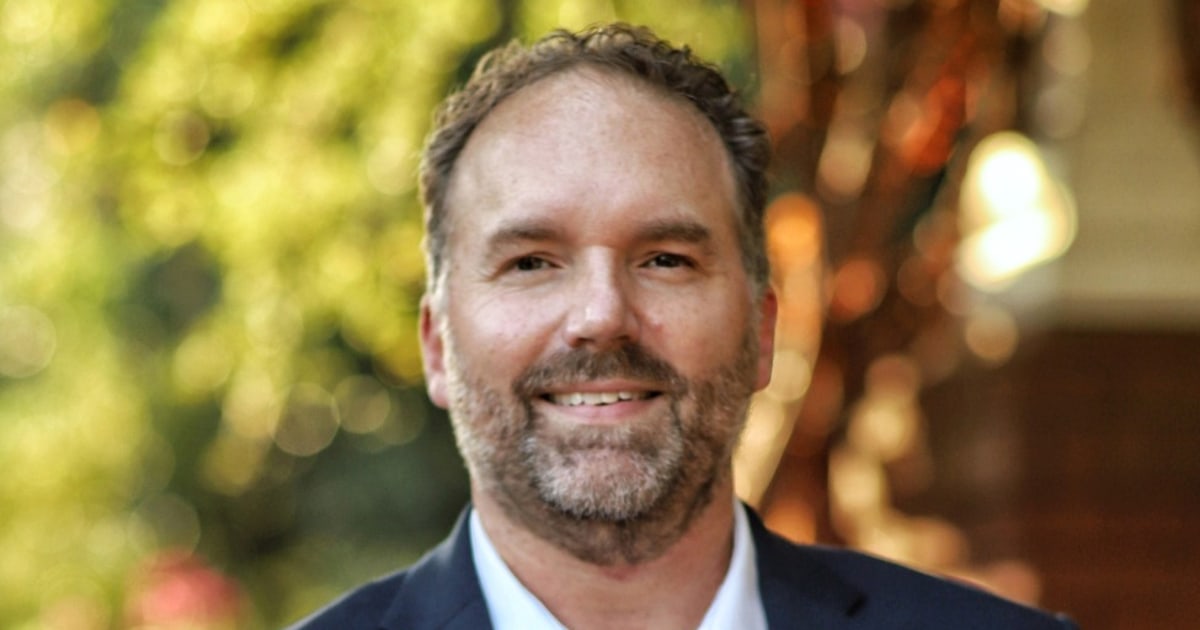
Makai Jones lives a life well removed from many other San Franciscans – geographically, economically and politically.
Jones, 33, lives in Sunnydale, an area largely consisting of public housing developments in the Visitacion Valley neighborhood. It’s a part of the city that often gets overlooked: Located west of highway 101 just above Daly City, Visitacion Valley is relatively isolated from the city’s hustle and bustle.
The rhythm of life here can look very different than elsewhere. San Francisco has become renowned for the world-bending ambitions of its highest-flying denizens. Jones, for his part, fights to care for his five children and, since his mother died recently, to look out for his two younger brothers.
But he still makes time to follow the news and vote. He supported Joe Biden in 2020, but soured on the president over time. In 2024, he chose what he called the “evil that I know:” Donald Trump.
Jones also knew there was an election this year for Prop 50. He heard arguments on both sides of the issue but, ultimately, felt as if both parties were just looking out for their own self interest. In the end, he didn’t vote.
Sunnydale resident Makai Jones, 33, voted for current Republican leader Donald Trump in 2024 after voting for former president Joe Biden in the 2020 presidential election in San Francisco on Friday, November 21, 2025. “When they get to the podium, they tell you what you want to hear,” Jones said. “I wish people would do the things they say they’re going to do. We have to live through this.” Sunnydale is in an area largely consisting of public housing developments in the Visitacion Valley neighborhood. (Yalonda M. James/S.F. Chronicle)
Most likely, Jones wasn’t the only one in his neighborhood to change his vote in 2024 and then stay home in 2025. Visitacion Valley has a unique political distinction: It’s home to the S.F. voting precinct that not only nearly swung furthest from Biden in 2020 to Trump in 2024, but that also swung most sharply back leftward this year to supporting Prop 50, Gov. Gavin Newsom’s push to redraw California’s congressional lines to favor Democrats.
That might have been because many converts to Trump just didn’t participate in the Prop 50 vote.
In 2020, San Francisco precinct 7039, which in 2025 covered all but the northeastern corner of Visitacion Valley, gave about 74% of its vote to Joe Biden. Four years later, it gave just 65% to Kamala Harris, one of the sharpest drops in the city. But this November, it gave 76% of its vote to ‘Yes’ on Prop 50, the biggest jump in favor of the measure citywide.
{ “__type”: “devHubFreeformEmbed”, “__id”: “AIHTML”, “__fallbackImage”: “https://files.sfchronicle.com/embed-bot/2025/prop50visvalley/prop50visvalley-fallback.png”, “__data”: { “html_url”: “https://files.sfchronicle.com/embed-bot/2025/prop50visvalley/prop50visvalley.html” } }
Though it may not be immediately obvious why, that pattern is not so different from other places in California like it.
Tucked away behind the hill that makes up John McLaren Park, and mostly inaccessible but by car, Visitacion Valley is a relic of a San Francisco that now barely exists: A working-class enclave in an increasingly elite global city.
And equally unlike the rest of San Francisco, it votes like a working class place.
The Chronicle previously reported that the parts of the state that swung most towards Prop 50 were heavily Latino, largely working class counties in Southern and Central California that had previously swung towards President Donald Trump in 2024.
Visitacion Valley saw the same pattern. It’s not clear if the snapback there was because some 2024 Trump voters, chastened by the president’s performance, then supported Prop 50 as a way to oppose Republican power – or whether the kinds of voters who went for Trump last year simply stayed home this time. Or a bit of both. In any case, only 60% as many voters participated this year as in last year’s presidential election – the second-lowest rate in the city.


Sunnydale resident Bryan Sogelau, 30, voted for former vice president Kamala Harris in 2024 after voting for former president Joe Biden in the 2020 presidential election in San Francisco on Friday, November 21, 2025. “I’m not a big politics guy; it depends on the person,” Sogelau said. “In my point of view it’s not going well. Families are still struggling to get by. I’ve seen families on the streets.” Sunnydale is in an area largely consisting of public housing developments in the Visitacion Valley neighborhood. (Yalonda M. James/S.F. Chronicle)
The size of that decline meant it wasn’t just Trump supporters who stayed away this year. Bryan Sogelau, 30, who builds drawers for a closet company, also lives in the neighborhood and voted for both Biden in 2020 and Harris in 2024. But when it came to Prop 50, he said, he “skipped it.”
“I’m more in the middle because everything is so divided now,” he said. It wasn’t clear to him how Prop 50 would help or hurt that.
{ “__type”: “devHubFreeformEmbed”, “__id”: “Datawrapper”, “__fallbackImage”: “https://datawrapper.dwcdn.net/UIeFA/mobile.png”, “__data”: { “datawrapper_id”: “UIeFA” } }
Those who did show up may have been the most partisan – or simply the most frustrated.
“These voters are mashing the change button,” said Jason McDaniel, a political scientist at San Francisco State University. “They’re blaming the incumbents for the cost of living. That hurt Biden and Harris in 2024, and now Trump in 2025.”
Like the Latino-heavy counties that snapped back in a liberal direction, Visitacion Valley is decidedly working class: Census data show that while it doesn’t have a particularly high poverty rate, the precinct has the city’s second-lowest share of adults who went to college and its second-lowest average household income. More than half were born abroad, and nearly three quarters don’t speak English at home.

Mission Blue cafe employee Alina J. busses a table during closing time in downtown Visitation Valley in San Francisco on Friday, November 21, 2025. (Yalonda M. James/S.F. Chronicle)
But in one respect, this precinct is quite different from places like San Bernardino and Riverside counties: Most voters here aren’t Latino. Rather, 60% of voting-age adults are Asian: People who identify as having Chinese ancestry are most common, but there are also large numbers of Filipino and Vietnamese residents. Another 22% are Latino and 12% are Black. That may suggest that the findings about Latino voters statewide apply more generally to nonwhite, working class and immigrant-heavy communities.
{ “__type”: “devHubFreeformEmbed”, “__id”: “Datawrapper”, “__fallbackImage”: “https://datawrapper.dwcdn.net/lWfMU/mobile.png”, “__data”: { “datawrapper_id”: “lWfMU” } }
“There are similarities in these voters across ethnic groups,” said McDaniel. “We should obviously think about differences too, but in some ways they are similar in their ideas and their experiences. They are less upwardly mobile. Many of them are younger and less college educated. They care about jobs, employment and affordability. They may be newer citizens, so they haven’t yet formed their attachments to the parties.”
If that’s true, the Prop 50 results don’t necessarily suggest these voters are becoming more liberal, but just that they’re dissatisfied and see upward mobility as harder to come by. At the ballot box, they could keep protesting the status quo until things change.
In the future, said McDaniel, that electoral feistiness could have implications for more local races, too.


People stand outside the Sunnydale Community Center in San Francisco on Friday, November 21, 2025. Sunnydale is in an area largely consisting of public housing developments in the Visitacion Valley neighborhood. (Yalonda M. James/S.F. Chronicle)
“If things don’t improve before the next election, (this precinct) might swing away from Lurie, and reward someone who’s more populist,” he said. “They might also vote for (Supervisor) Connie Chan rather than (State Sen.) Scott Wiener for Congress next year.” Precinct 7039 gave a plurality of its vote to former San Francisco Mayor London Breed in 2024, and current Mayor Daniel Lurie came in second.
“In many ways,” said McDaniel, “(voters) like these have become San Francisco’s core swing voters.”
This article originally published at ‘Mashing the change button’: One S.F. neighborhood stands apart in its voting trends.