QUICK FACTS
Name: Holy Crib
What it is: Five pieces of sycamore wood
Where it is from: Jerusalem
When it was made: Circa 4 to 6 B.C.
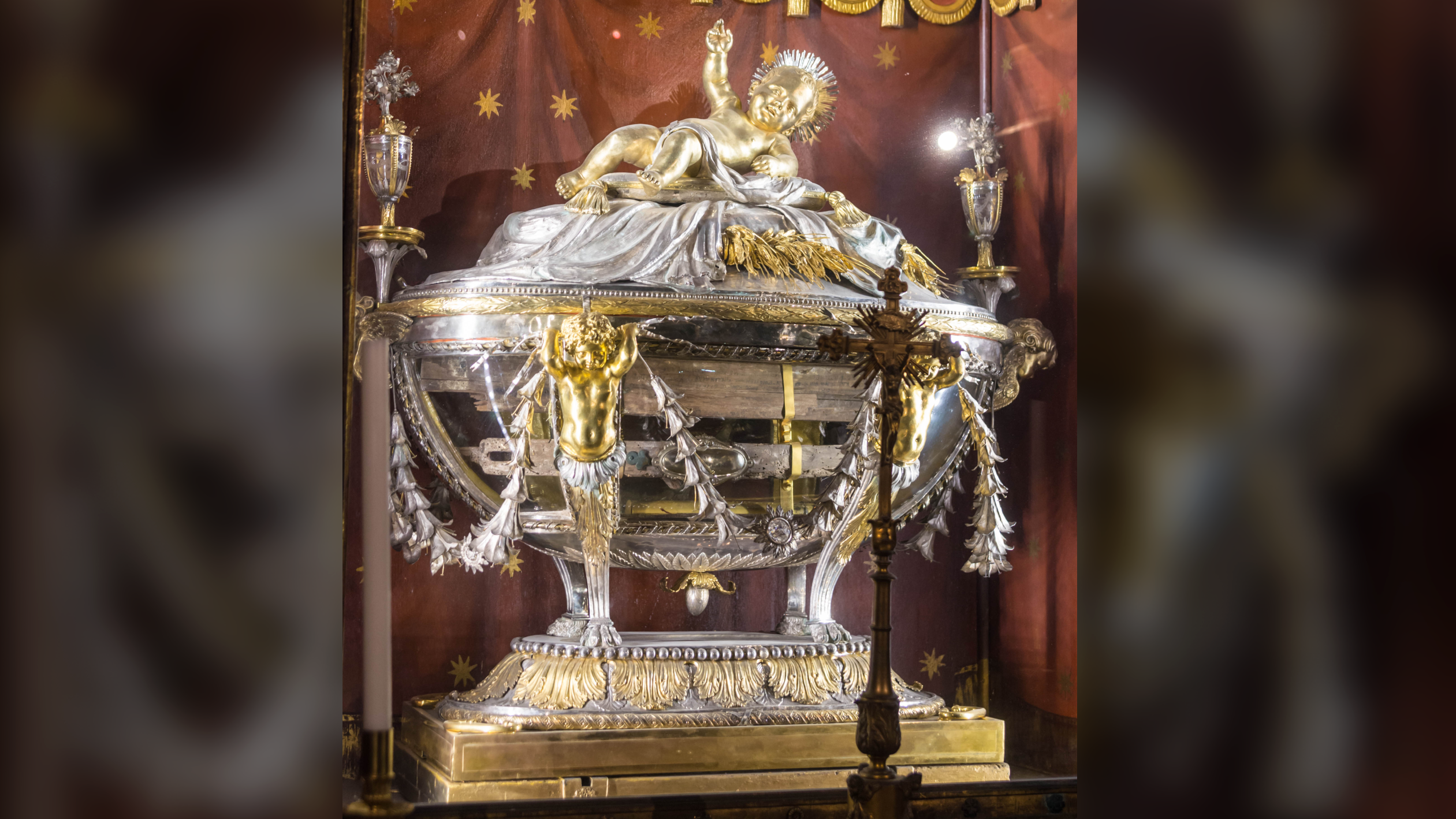
In the 640s, Sophronius, the patriarch of Jerusalem, sent several unassuming wooden slats to Rome for safekeeping after the Muslim conquest of Jerusalem. Sophronius asked Pope Theodore I to protect the pieces of wood, which he said were the remains of the Holy Crib — Jesus’ manger.
According to Monsignor Piero Marini, who is the guardian of the Holy Crib, four of the wooden slats once formed two X’s, while the fifth slat ran down the middle to hold them together. Wooden mangers in the late first century B.C. would have been topped with straw for animals to eat. But this particular manger is much more significant: It is said to have once held the baby Jesus.
The Gospel of Luke mentions that Jesus was born in Bethlehem. Because there was nowhere for Mary and Joseph to stay in town, the newborn Jesus was laid in a manger. Many biblical scholars believe that Jesus was born between 6 and 4 B.C. And while his birth is celebrated on Dec. 25 every year, scholars are unsure of his exact birth date.
The first historical mention of the manger pieces comes from Origen, an early Christian scholar, who wrote in A.D. 220 that the crib was preserved in Bethlehem, according to Marini. Then, around A.D. 400, St. Jerome discussed the Holy Crib and many people’s pilgrimages to it in the Grotto of the Nativity in Bethlehem. Ever since the wood pieces made their way to Rome in the seventh century, the manger has remained in Santa Maria Maggiore.
In 1894, abbot Giuseppe Cozza-Luzi was the first to study the remains of the Holy Crib. His examination revealed that there are two longer pieces of wood and three shorter pieces — ranging from about 25 to 33.5 inches (64 to 85 centimeters) in length — and that all of them had been damaged over time. Several of the wooden pieces also had holes and traces of metal, suggesting they had once been constructed into a manger.
MORE ASTONISHING ARTIFACTS
Based on a microscopic analysis of a small piece of wood that had been removed in the 1600s, Cozza-Luzi concluded that the wood was a kind of hard maple, possibly sycamore. The type of wood, the form of the slats, and the evidence of construction — along with historical references — all suggested to him that the Holy Crib remains were part of an authentic ancient manger from the Jerusalem area.
In 2019, experts restored the wooden slats, and Pope Francis took the opportunity to give a small piece of the crib back to the Holy Land, with a plaque that read “Ex cunis Iesu Infantis,” meaning “From the crib of the Infant Jesus.”
Each year, many Christians visit the Holy Crib during the annual Christmas Eve mass at midnight at Santa Maria Maggiore, which is also called Santa Maria ad Praesepe (St. Mary of the Crib) and the “Bethlehem of the West” for its association with Mary and her baby’s manger.
For more stunning archaeological discoveries, check out our Astonishing Artifacts archives.