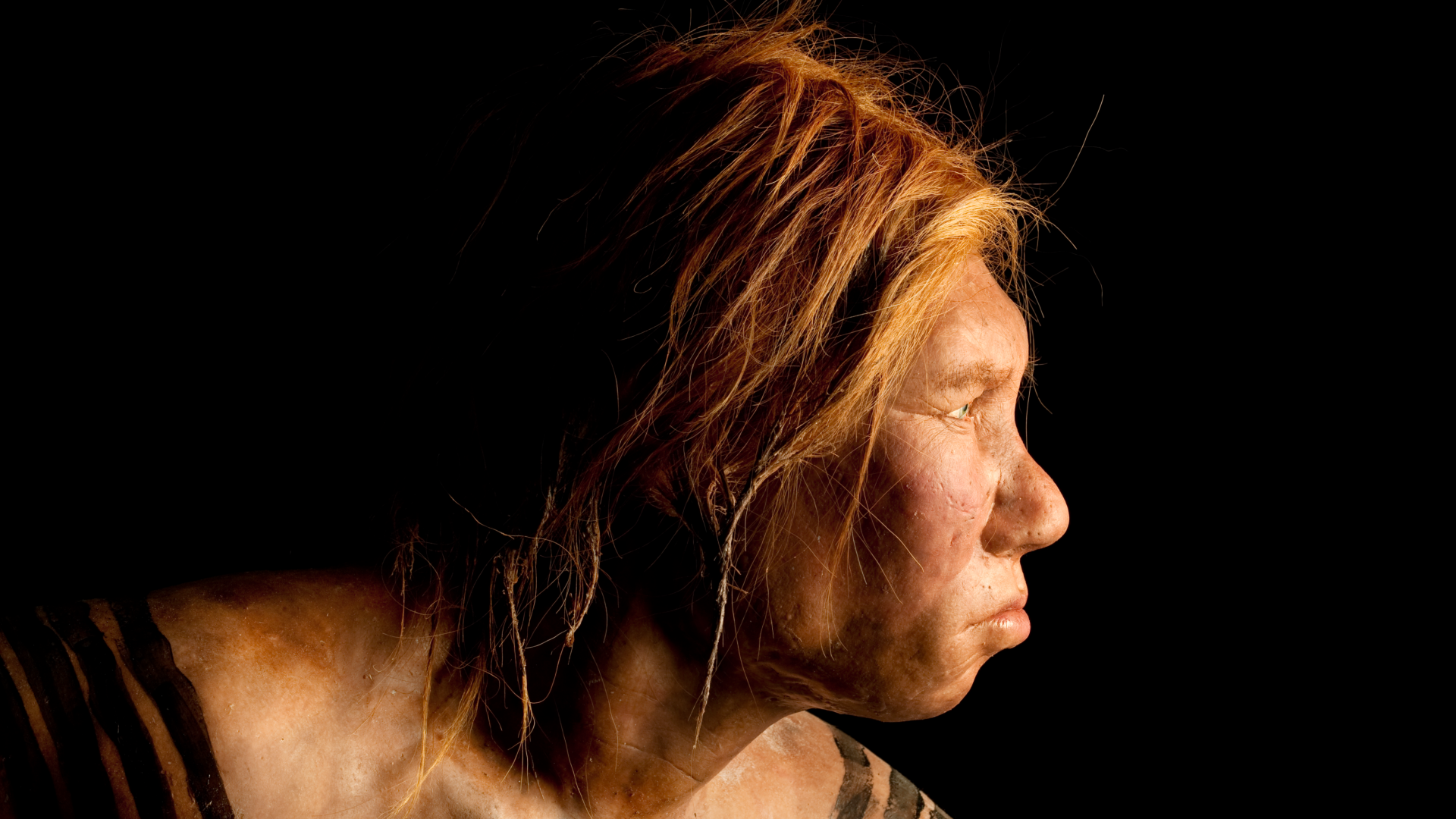
The mysterious disappearance of our Neanderthal cousins may have been related to preeclampsia, a life-threatening complication of pregnancy and/or the postpartum period, doctors propose in a new study. But experts in paleoanthropology are not convinced.
In a paper published Jan. 30 in the Journal of Reproductive Immunology, an international team of neonatologists and OB-GYNs argued that preeclampsia and eclampsia — a related disorder that involves one or more seizures during pregnancy or the postpartum period — have “never been seriously considered in hypotheses concerning Neanderthal reproductive biology and their eventual extinction.”
These conditions are not fully understood by medical experts, but they appear to be related to an evolutionary quirk of the human placenta — which, given the number of genes we share with our extinct relatives, also may have affected the Neanderthal placenta. (However, the researchers did not investigate any such genes in the new study.)
Preeclampsia in human species
Preeclampsia involves dangerously elevated blood pressure and can put strain on the pregnant person’s heart and other organs, including the kidneys and liver. The condition affects up to 8% of pregnancies today, and it can also occur during the postpartum period. It can also progress to eclampsia, which involves seizures and, sometimes, brain damage. If not treated, both conditions can be life-threatening for the pregnant person and the fetus.
Research into preeclampsia has shown that abnormal, shallow implantation of the placenta in the uterus may be one possible cause of the condition. The exceptional metabolic demands of babies of large-brained human species were likely responsible for the deep implantation of the placenta to ensure sufficient maternal-fetal nutrient transfer, the researchers wrote.
An inadequately placed placenta’s efforts to acquire adequate nutrients for the fetus can lead to a rise in maternal blood pressure, particularly in the third trimester, when the fetus’s brain is rapidly developing, according to this hypothesis. This can lead to preeclampsia, eclampsia and fetal growth restriction, all of which complicate pregnancy and threaten the survival of mothers and babies.
Given this insight into preeclampsia, the study authors wrote that the condition “may have constituted an additional, underappreciated selective pressure on Neanderthals, contributing to their extinction.” They hypothesized that Neanderthals “may have lacked a key protective mechanism” against preeclampsia that some of the study authors previously suggested modern humans have. This idea, however, is still speculative and such a mechanism has yet to be found.
If Neanderthals lacked a “maternal safety mechanism” to avoid preeclampsia, this may have led to reproductive loss and maternal mortality, thus hastening their extinction as a group, the team proposed.
Anthropologists respond
But experts in Neanderthal archaeology and genetics are not convinced, particularly since the new study does not provide any evidence that Neanderthals dealt with preeclampsia.
“The ‘preeclampsia doomed Neanderthals’ framing goes well beyond the available evidence,” Patrick Eppenberger, co-head of the Evolutionary Pathophysiology and Mummy Studies Group at the Institute of Evolutionary Medicine in Zurich who was not involved in the study, told Live Science in an email.
While Eppenberger agreed that preeclampsia is uniquely human and linked to the evolution of the human placenta, he said that “what is much harder to support is the claim that it was more frequent or more lethal in Neanderthals than in early Homo sapiens or that it played a primary role in their disappearance, especially given Neanderthals’ long persistence” over more than 300,000 years.
In his own research, Eppenberger discovered that a red blood cell gene variant between Neanderthals and modern humans may have caused some hybrid babies to fail to survive, which could have hastened their extinction.
“Why Neanderthals went extinct is a question that has captured the imagination of the public and researchers,” April Nowell, a Paleolithic archaeologist at the University of Victoria in Canada who was not involved in the study, told Live Science in an email, and “everyone is looking for a smoking gun.”
But the reasons for Neanderthals’ disappearance are complicated. “I have long argued that differential survivorship of the littlest Neanderthals is key to understanding the Neanderthal story, but I am not particularly persuaded by this study,” Nowell said.
If the researchers are correct that H. sapiens evolved a mechanism to mitigate preeclampsia, Nowell said, the condition could have contributed to Neanderthals’ extinction. But given the widespread evidence of gene sharing among groups of humans, “to my mind, it is equally possible that Neanderthals, Denisovans and Homo sapiens shared this mitigating mechanism,” Nowell said.
“I think the paper is an interesting evolutionary-medicine thought experiment,” Eppenberger said. Although there is no direct evidence currently that Neanderthals had higher rates of preeclampsia or eclampsia than modern humans do, Eppenberger said, there may be ways to test the researchers’ theory, including investigating genes involved in maternal-fetal immune interactions and in the regulation of placental and fetal growth. But we might not get a clear answer.
“Genetics can provide clues about plausibility and population differences, but it likely won’t ‘confirm’ preeclampsia in Neanderthals the way clinical data would,” Eppenberger said.
The study authors did not respond to a request for comment by the time of publication.
Robillard, P.-Y., S. Saito & G. Dekker. (2026). Why reproduction has probably been very problematic in Neanderthals: The fabulous history of (pre)eclampsia. Journal of Reproductive Immunology 174. https://doi.org/10.1016/j.jri.2026.104852