QUICK FACTS
Where is it? Laguna Colorada, Altiplano, Bolivia [-22.19489413, -67.77420764]
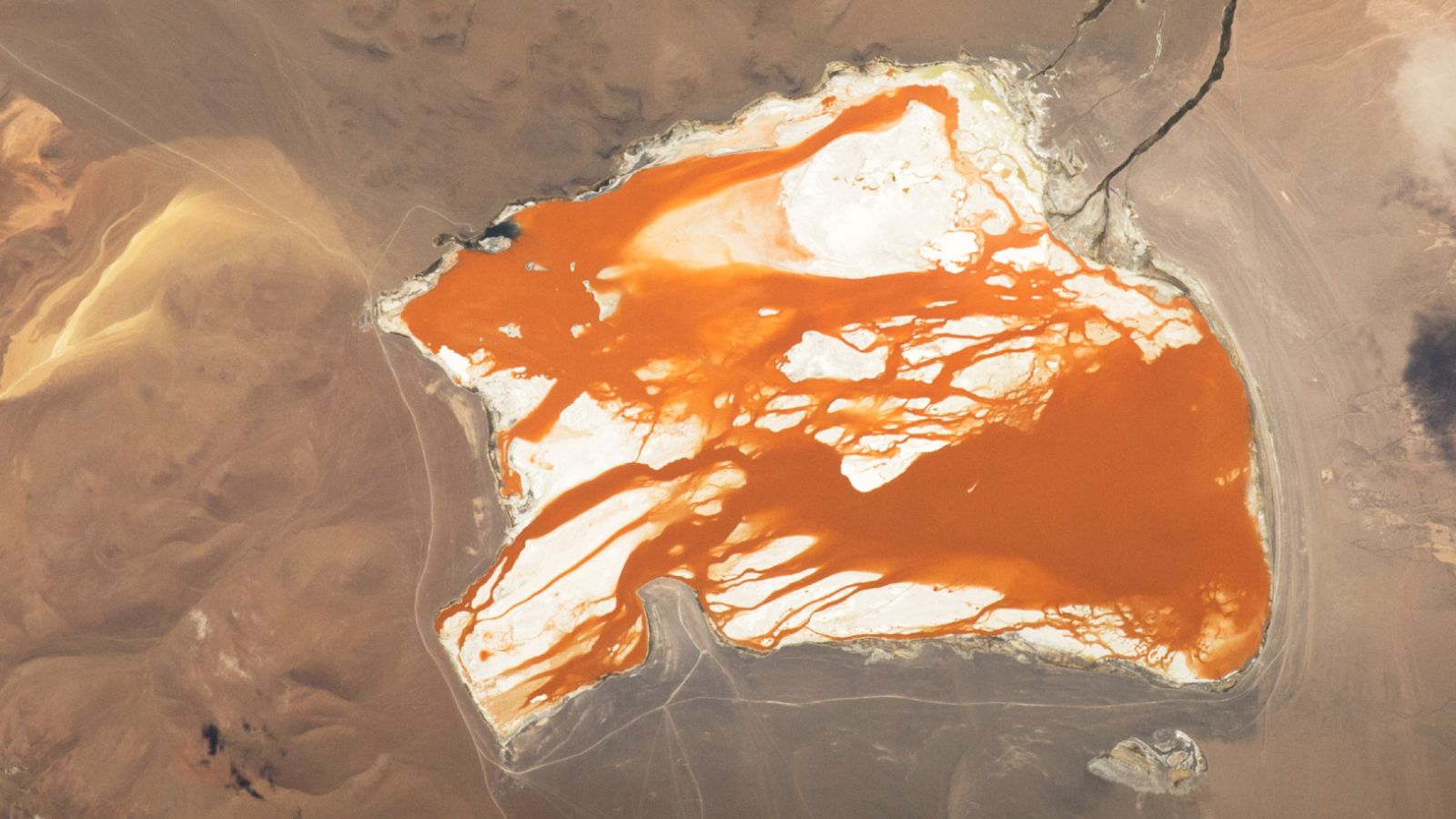
What’s in the photo? Rust-colored water appears to bleed across a salt bed
Who took the photo? An unnamed astronaut on board the International Space Station
When was it taken? April 16, 2015
In this striking satellite photo, rusty-orange water appears to bleed across the salty white floor of a high-altitude lagoon in Bolivia.
Laguna Colorada (“Red Lagoon” in Spanish) is a hypersaline, or extremely salty, lake in Bolivia’s Altiplano — the world’s second-highest plateau, which stretches across the Andes. It sits around 14,100 feet (4,300 meters) above sea level.
The lagoon was once much larger, which is evident thanks to the striations of an ancient shoreline visible along its right edge. As it eventually dried out, an uneven layer of borax salt (sodium tetraborate) was left behind. These salty crystals often rise above the water level, creating bright-white islands and causing the “bleeding” effect when viewed from above.
The water’s reddish hues come from algae, predominantly Dunaliella salina. This salt-loving species is rich in red pigments known as carotenoids, and is responsible for creating similarly reddish waters across the globe.
The lake is often much redder. However, the water’s hue changes based on its temperature and salinity, which determine the growth of various alga species, according to NASA’s Earth Observatory. At some points in the year, the color is greenish.
The area surrounding the lagoon is home to a number of animals, including llamas.
(Image credit: Getty Images)
Laguna Colorada has been listed as a “wetland of international importance” since 1990 under the Ramsar Convention. Its surroundings are home to a number of animals, including mountain cats, foxes and llamas. However, its most famous residents are flamingos.
At least three species of the bright-pink birds — the Andean flamingo (Phoenicoparrus andinus), the Chilean flamingo (Phoenicopterus chilensis) and the James’s flamingo (Phoenicoparrus jamesi) — frequent the lagoon and get their vibrant coloration from eating the carotenoid-rich algae. (Flamingos are born gray; their iconic hue comes from their diet.)
Get the world’s most fascinating discoveries delivered straight to your inbox.
The lagoon sometimes draws comparisons to Tanzania’s Lake Natron, which often has blood-red water and is home to 2.5 million of the pink birds — the largest flamingo colony on Earth.

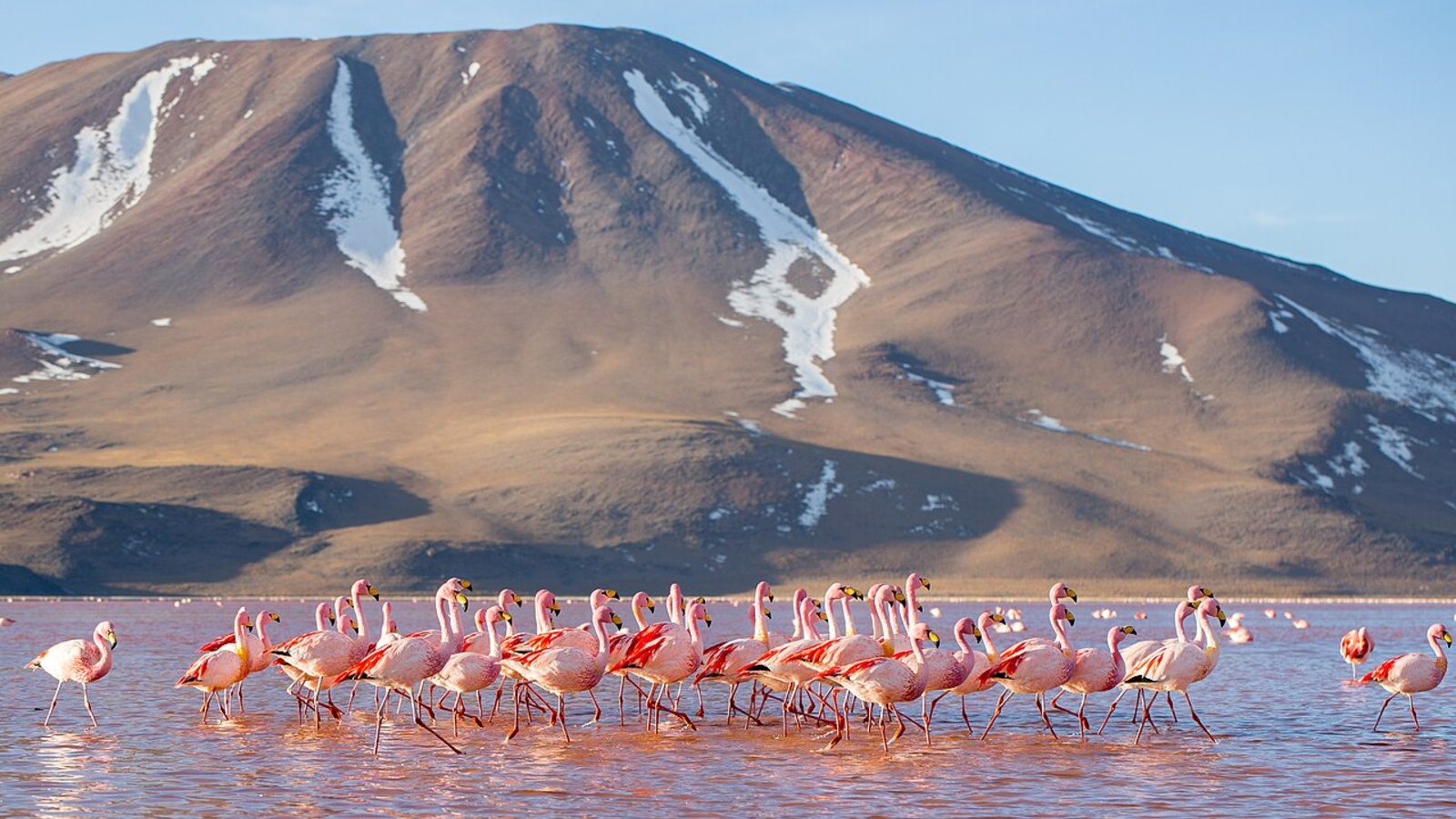
The lagoon is frequented by at least three different species of flamingo, which get their vibrant pink hues from the algae in its waters.
(Image credit: Havardtl/Wikimedia)
Laguna Colorada is sandwiched between two volcanoes, just out of view at the top and bottom of this photo.
Several other colorful salt lakes are nearby, including Laguna Verde (“Green Lagoon) and Laguna Blanca (“White Lagoon”), which sit side by side around 40 miles (65 kilometers) south of Laguna Colorada.
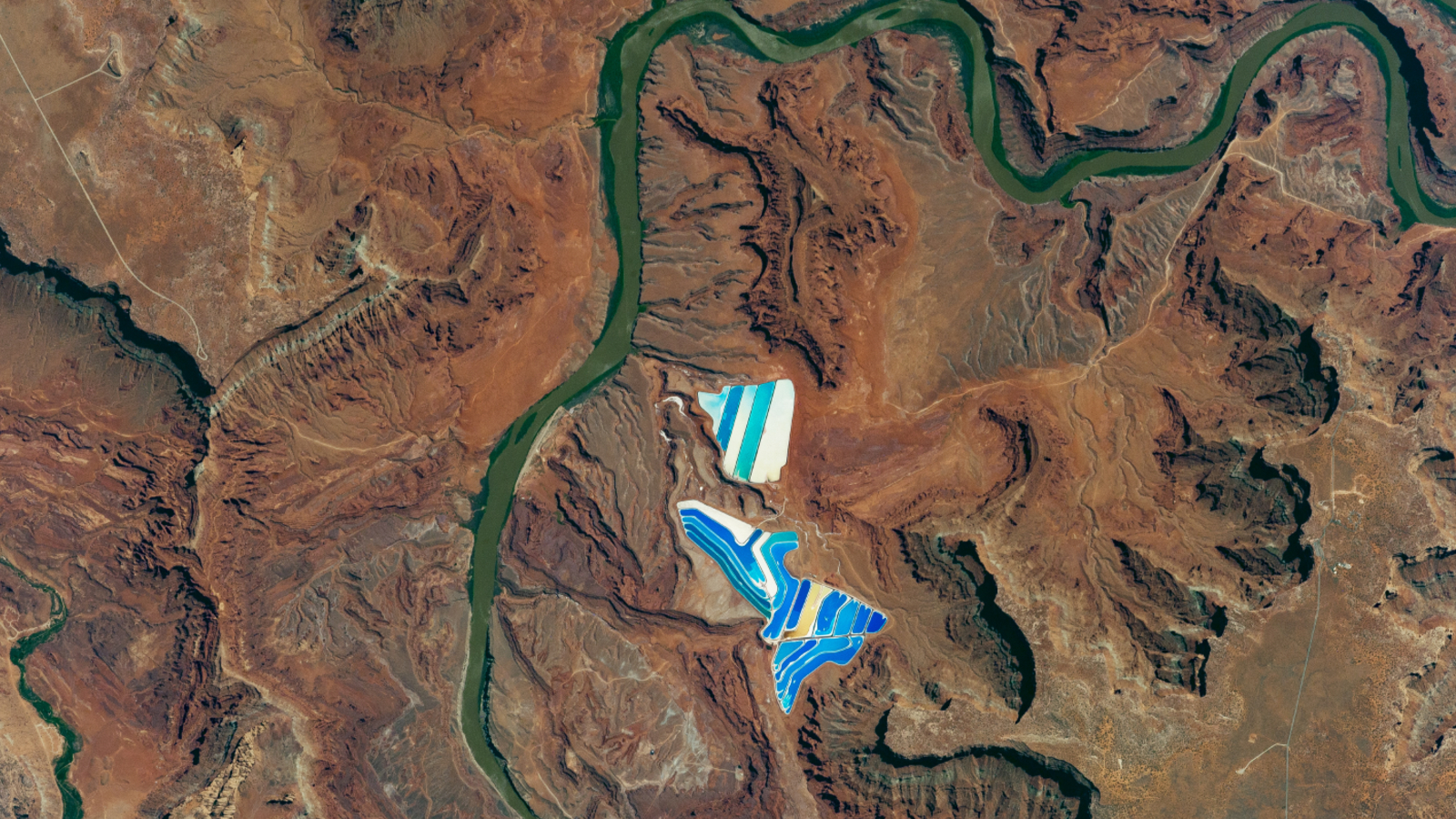
A 2017 astronaut photo shows two sets of solar evaporation ponds alongside the Colorado River. The stripy structures are used to refine potassium chloride, or “potash,” which is mined nearby.
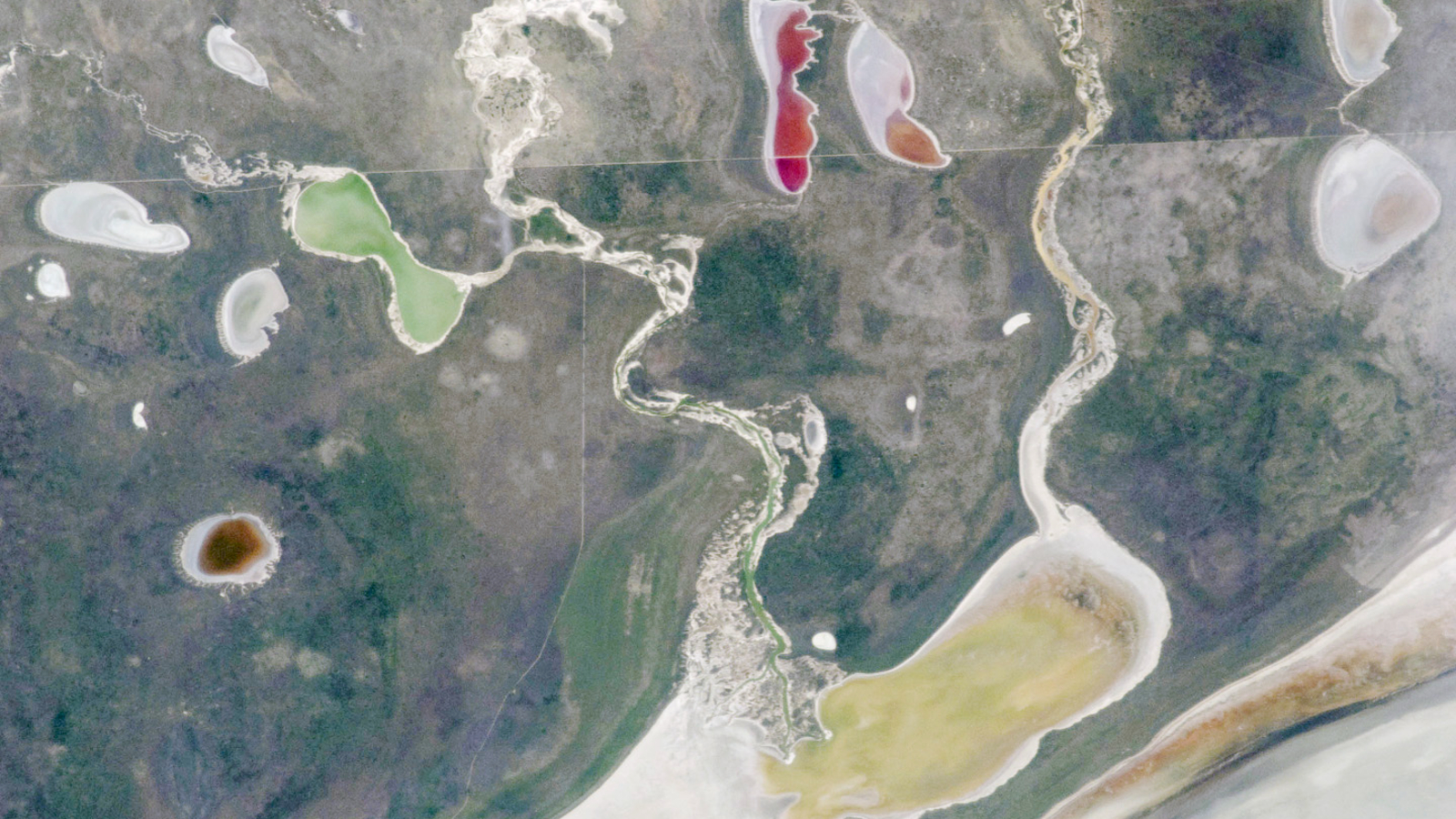
A 2011 astronaut photo shows off a series of colorful mini-lakes that appeared around the edge of a giant salt flat, known as the Etosha Pan, following a major flooding event.
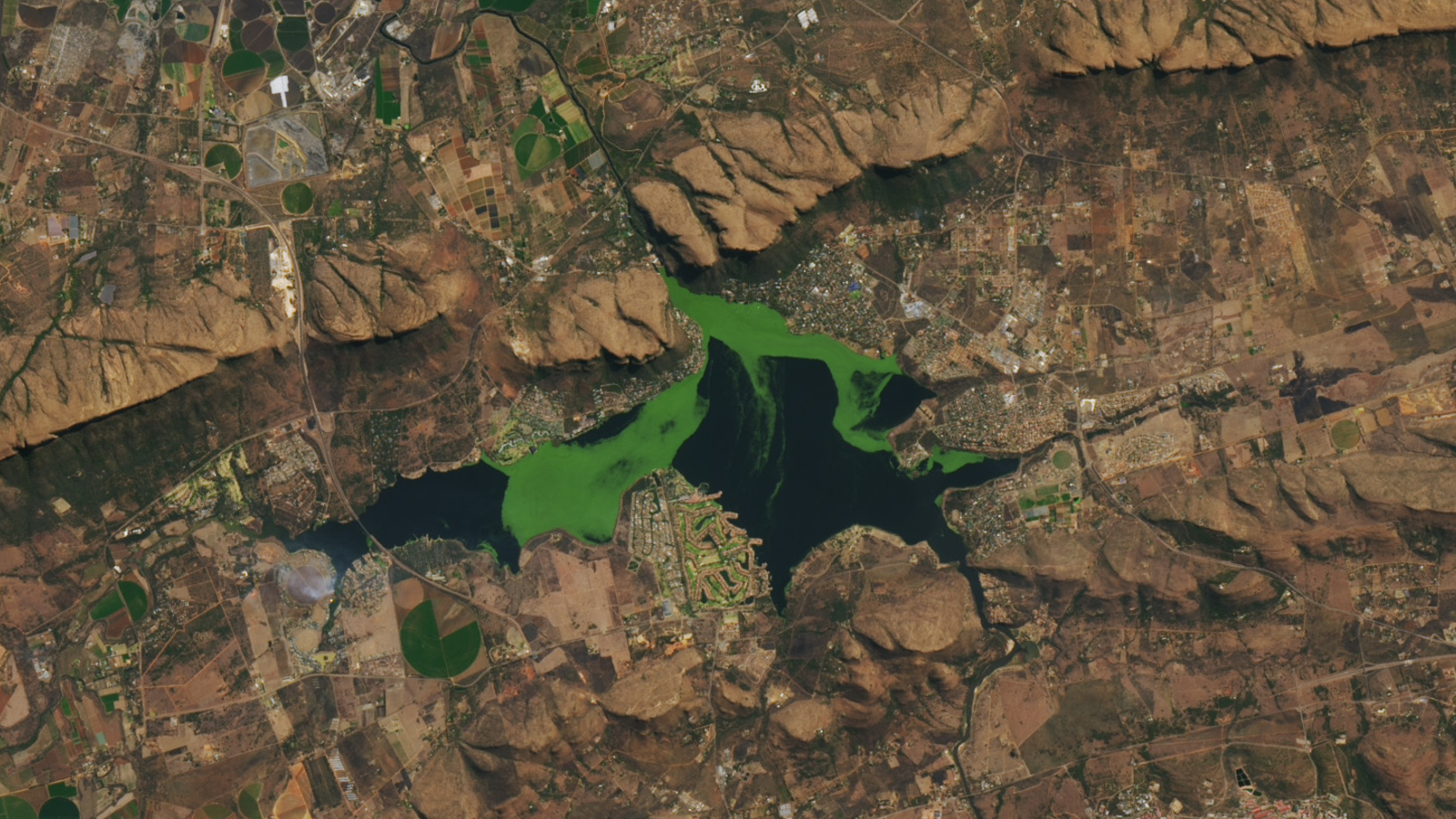
A 2022 satellite photo shows a thick mat of blooming algae and invasive aquatic plants spreading across the surface of the reservoir at South Africa’s Hartebeespoort Dam. The verdant mass is both toxic and capable of depleting the water’s oxygen levels.