





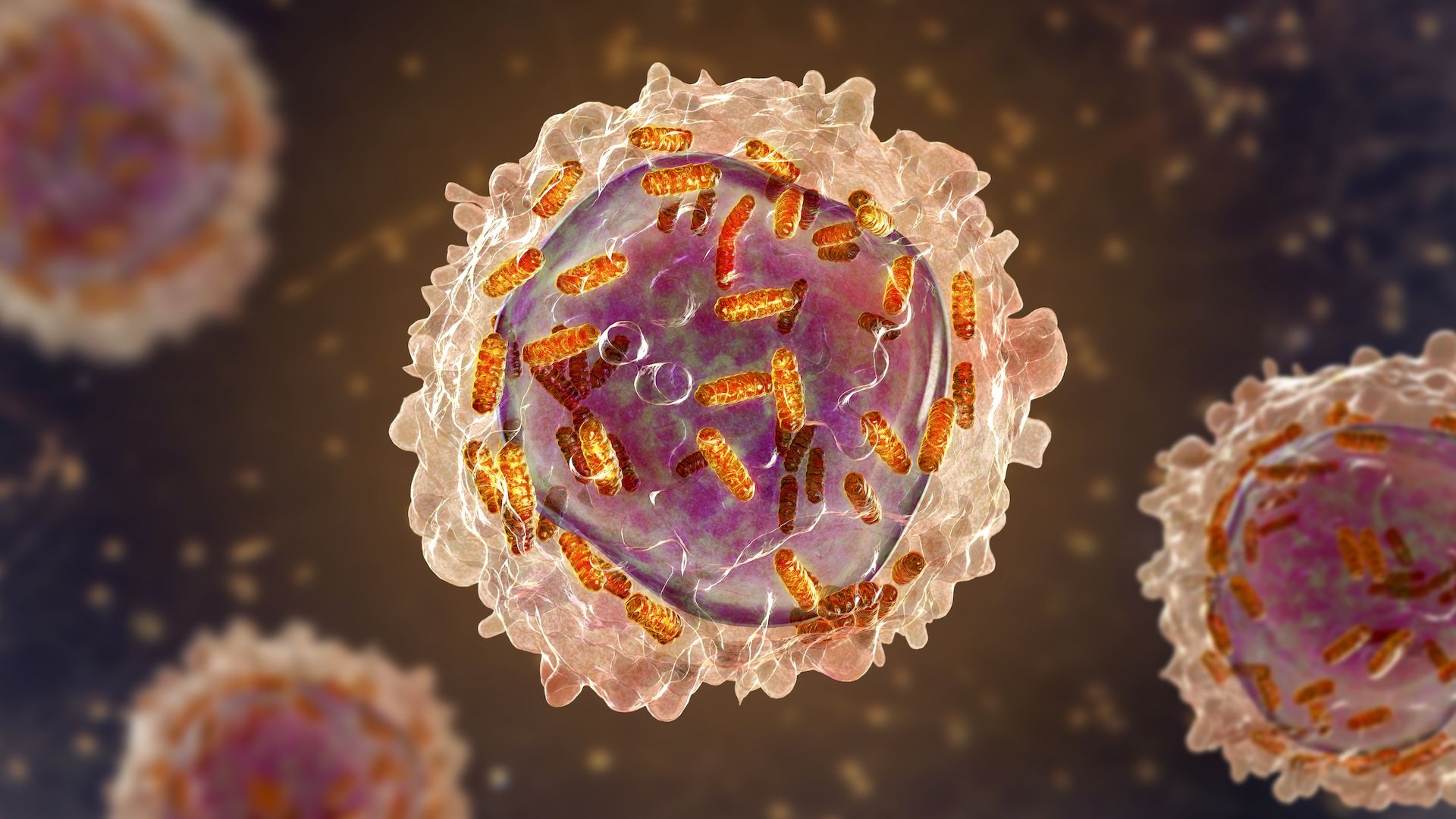
Milestone: Chemotherapy agent sends leukemia into remission
Date: Dec. 6, 1954
Where: Sloan Kettering Institute and Weill Cornell Medical College in New York
Who: Gertrude Elion and colleagues
In 1954, researchers described a new drug that sent children with acute leukemia into remission. It would become one of the first chemotherapy drugs and would later form the basis for a new, “rational” approach to designing drugs.
But by 1944, she had found a job in the lab of George Hitchings at the Burroughs-Wellcome pharmaceutical company (now GSK). Hitchings was developing a novel way to make new drugs that eschewed the trial-and-error approach that had previously dominated drug design.
“One of the deciding factors may have been that my grandfather, whom I loved dearly, died of cancer when I was 15. I was highly motivated to do something that might eventually lead to a cure for this terrible disease,” Elion wrote in 1988.
Hitchings and Elion reasoned that, because all living cells need nucleic acids, which make up DNA, to reproduce, then fast-growing cells, like invasive bacteria and tumor cells, would need even more of these compounds to fuel their insatiable growth. So, they rationalized, finding compounds that inhibit the synthesis of nucleic acids could squelch cancer growth.
In 1950, when Elion was 32, the team discovered a compound derived from purine, called 6-mercaptopurine (6-MP), which could inhibit the growth of both bacterial cells and leukemia cells in a lab dish. Over the next two years, they tested the drug in tumors in animals, finding that it slowed tumor growth. In 1952, researchers began trials in 107 patients with various types of cancer, including 45 children and 18 adults with acute leukemia. Prior to this, there was no good treatment for these children, who would usually die months after their diagnosis.
There had been a few earlier chemotherapy drugs, but many were based on highly toxic compounds, such as war gases. By contrast, the children who took 6-MP seemed to tolerate it fairly well, and 15 children went into complete remission for a few weeks to a few months. It wasn’t a huge increase, but it was more than had been possible before. Elion was elated when the children got better, and crushed when they got sick again.
Hitchings and Elion were determined to pursue other, related compounds that could create a more durable remission. In the late 1950s, they hit upon a regimen that combined methotrexate — another chemotherapy drug, developed by Dr. Jane Wright and colleagues — with 6-MP to create a longer-lasting, stable remission in some kids with acute leukemia.
Over a decades-long career, Elion would go on to develop many more drugs, including azathioprine, a rheumatoid arthritis and transplant anti-rejection drug; acyclovir, an antiviral that treats genital herpes, chickenpox and shingles; and AZT, the first drug that worked against HIV/AIDS. In 1988, she earned the Nobel Prize in physiology or medicine, along with Hitchings and James Black for her work on “important principles in drug design,” including her work on 6-MP.