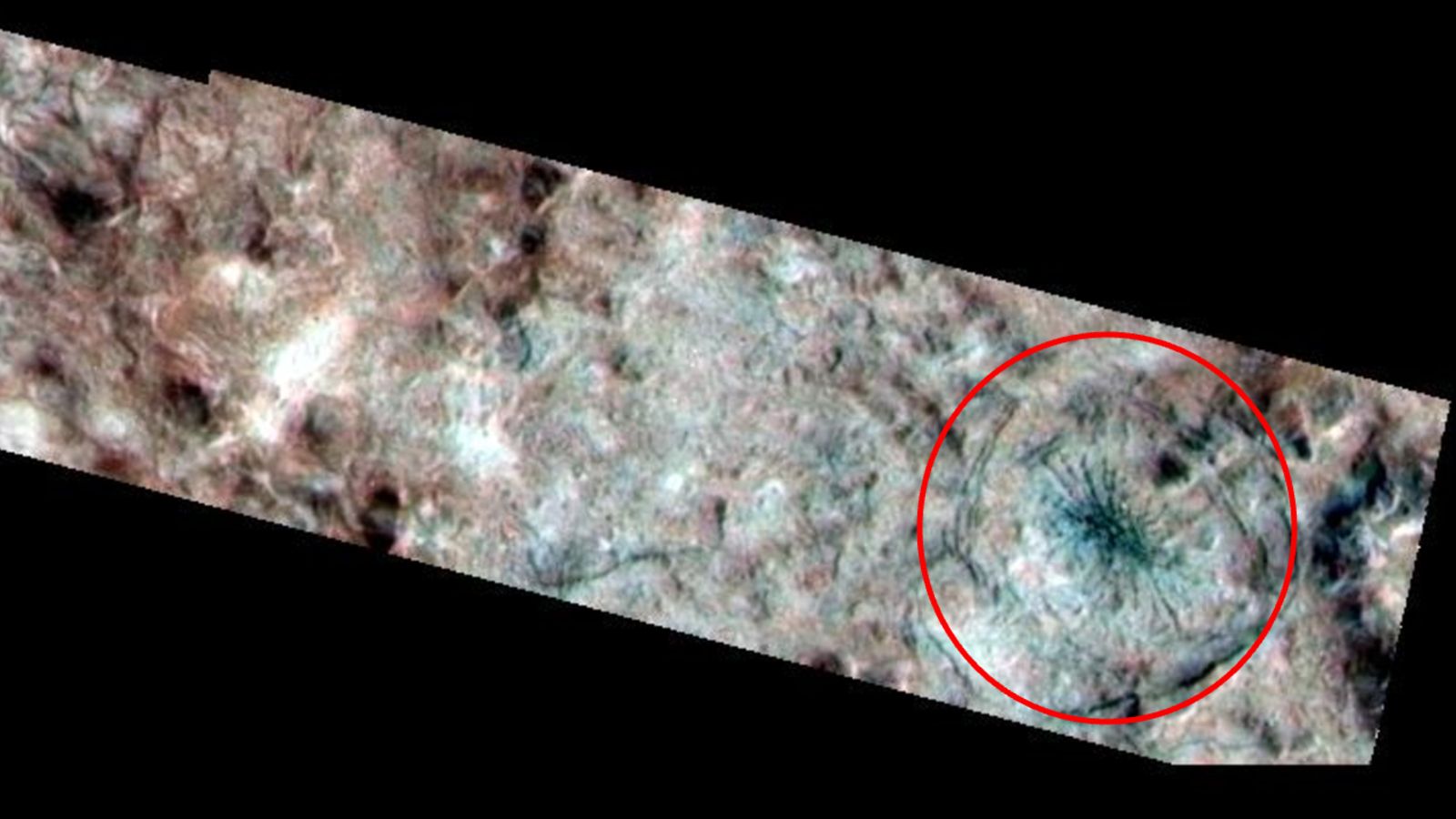
A mysterious, spider-like structure lurking on Jupiter’s fourth-largest moon, Europa, may finally have a proper explanation nearly 30 years after it was discovered. The arachnid imposter has also been given a demonic new name.
In March 1998, NASA’s Galileo spacecraft — which studied Jupiter and its major moons between 1995 and 2003 — made a close flyby of Europa, a frozen ocean moon often considered one of the most likely places for extraterrestrial life to exist in the solar system. During this flyby, the probe mapped out a roughly 13.7-mile-wide (22 kilometers) impact structure, dubbed Manannán Crater, on the moon’s icy surface, and found something strange lurking within it.
But in a new study, published Dec. 2 in The Planetary Science Journal, researchers proposed an alternative explanation: that the Jovian spider formed in a similar way to how dark dendritic patterns on Earth, known as “lake stars,” typically do. These features form when snow falls on frozen lakes and water seeps up through tiny holes in the ice.
With this in mind, the researchers used a similar technique to partially recreate the Manannán Crater’s mysterious shape in the lab. The study team also finally named Europa’s arachnid-like asterisk Damhán Alla, meaning “spider” or “wall demon” in Irish. (Manannán is a Celtic god from Irish mythology, which partly inspired the new name.)
“Lake stars are really beautiful, and they are pretty common on snow or slush-covered frozen lakes and ponds,” study lead-author Laura Mc Keown, a planetary scientist at the University of Central Florida, said in a statement. “It is wonderful to think that they may give us a glimpse into processes occurring on Europa and maybe even other icy ocean worlds in our solar system.”
However, rather than water rising through tiny holes, as happens when lake stars form on Earth, Damhán Alla was likely birthed by an asteroid impact — which created a small crack in Europa’s icy shell that enabled salty water to seep upward and paint the spider-like pattern on the surface. (This asteroid impact likely happened after the Manannán Crater was already formed.)
The researchers also noted similarities between Damhán Alla and the infamous “spiders on Mars,” which are dusty deposits on the Martian surface that look like swarming spiders when viewed from above. These fake arachnids, known as araneiform terrain, form when submerged carbon dioxide ice sublimates, or turns directly into a gas. Mc Keown’s team has previously recreated these features on Earth too.
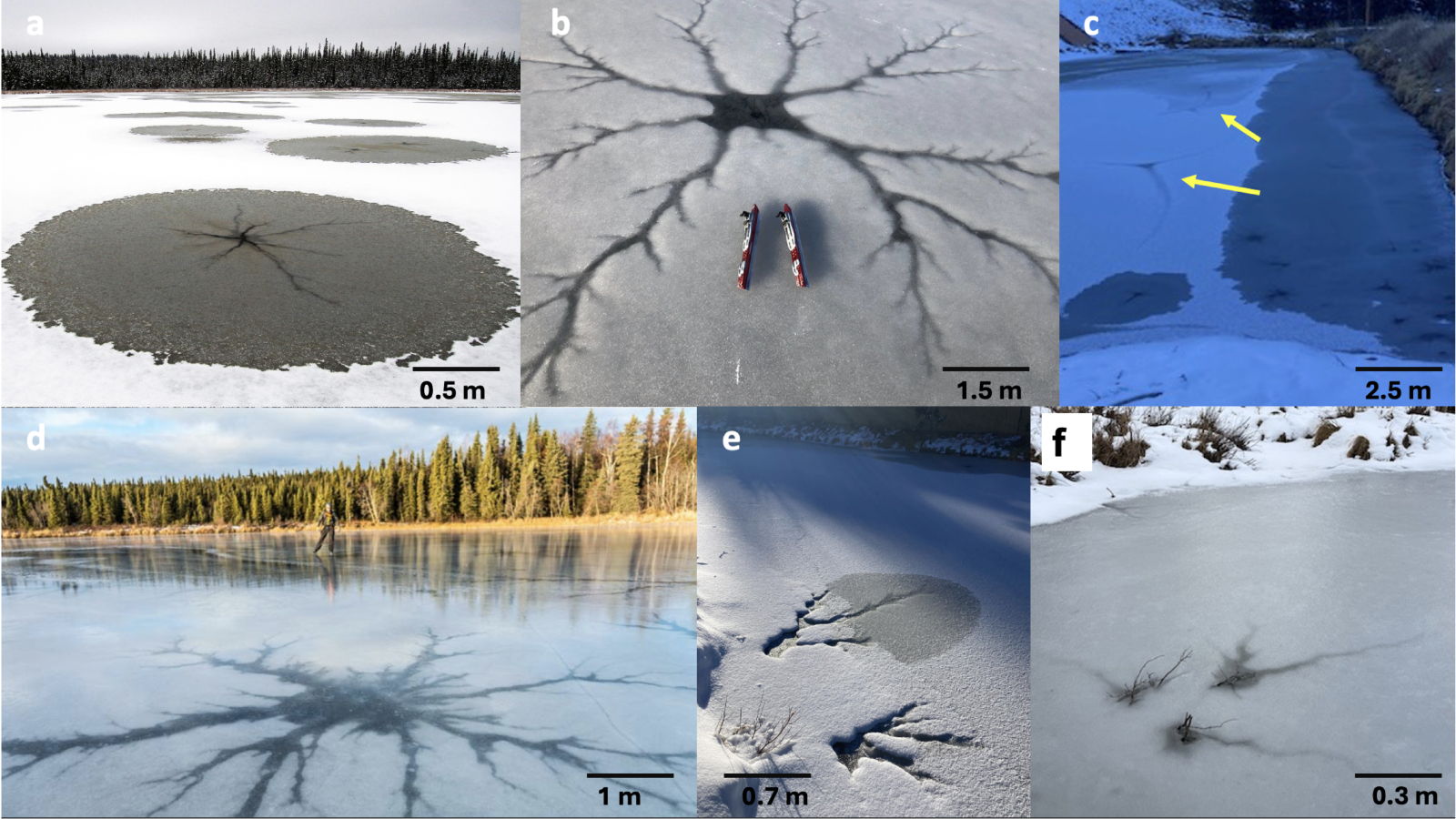

The similarities in shape between Damhán Alla and the spiders on Mars are due to how “fluid flows through porous surfaces,” Mc Keown said. In theory, similar spider features could also form on other frozen ocean worlds, such as Saturn’s moon Enceladus, Jupiter’s other moon Ganymede and the dwarf planet Ceres, which resides in the asteroid belt beyond Mars.
Mc Keown is now setting up a new laboratory, which will focus on studying how these various spider-like features may form on different solar system moons. She hopes to be able to provide valuable insight that could help inform NASA’s Europa Clipper mission, which launched in October 2024 and will arrive to extensively study Jupiter’s watery moon in 2030.
“The significance of our research is really exciting,” Mc Keown said. “Surface features like these can tell us a lot about what’s happening beneath the ice. If we see more of them with Europa Clipper, they could point to local brine pools below the surface,” she added.
And these pools could be a good place to start looking for signs of extraterrestrial life.