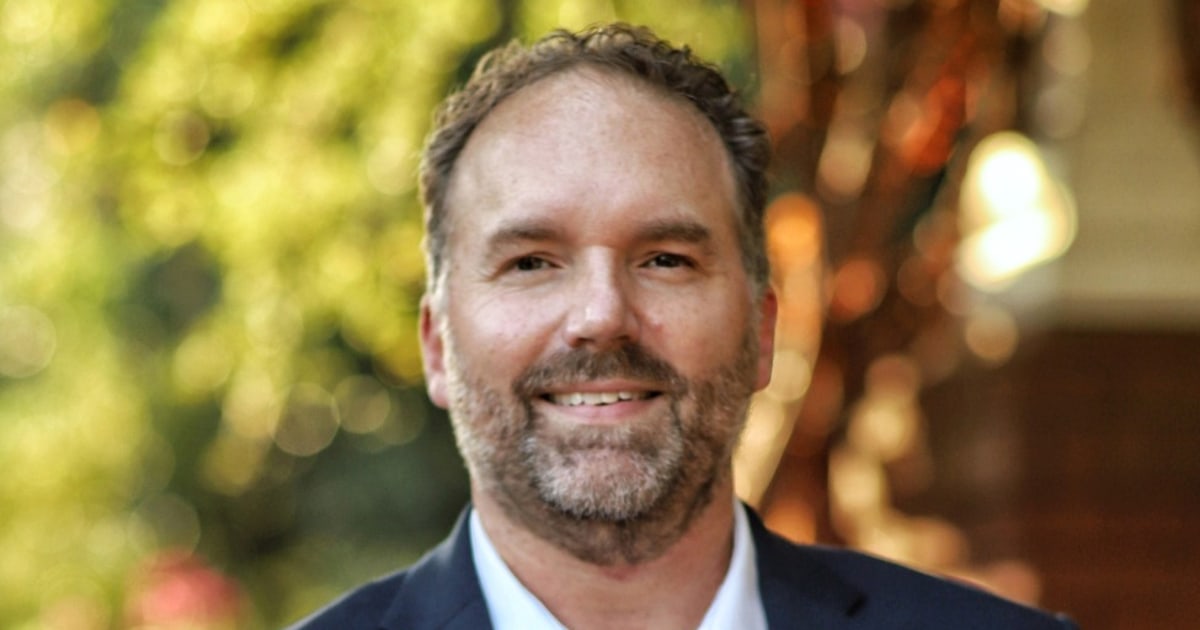
Abigail Swetz had served as executive director of Fair Wisconsin, the only statewide LGBTQ+ civil rights and political advocacy group, just four months before the panicked emails started flooding in: Will I be flagged in a database? Can I safely change my name? Should my family move somewhere safer?
The deluge of emails coincided with the results of the 2024 presidential elections, following months of anti-trans ads from Donald Trump’s campaign vowing to protect children from “gender ideology.” For many families with LGBTQ+ loved ones, including children, the election of Trump only ratcheted up fears that a safe, normal life would be out of reach.
Since then, neither the fearful emails to Swetz nor the anti-LGBTQ+ rhetoric from the Trump administration has eased.
Abigail Swetz, executive director of Fair Wisconsin, pictured with a sign stating “Trans kids belong” on Nov. 22, 2024, in Green Bay, Wis.
Now, a new survey from Movement Advancement Project, offers a snapshot into some of the more dramatic changes in LGBTQ+ adults since November 2024, and it confirms the personal and professional conversations Swetz has been having. The survey, published Oct. 8, shows that a quarter of LGBTQ+ adults, and more than half of transgender and nonbinary adults, have taken steps to become less visible, less “out” as LGBTQ+ people in their communities.
“I’m thankful the data exists, but it’s just so stark. I’ve known this has been happening, but when you see it at scale, it adds a different weight,” Swetz said.
The Movement Advancement Project is an independent, national nonprofit think tank focused on equality and opportunity for all, according to its website. In partnership with the National Opinion Research Center at the University of Chicago, The Movement Advancement Project surveyed 1,055 LGBTQ+ adults, including 111 transgender and nonbinary adults, across the United States.
Survey respondents described living through an overwhelmingly difficult and stressful political climate in which they have taken drastic steps like moving out of state, subduing the full expression of their gender identity, and traveling across state lines to access medical care.
As a purple state, Wisconsin straddles the ideological line. Gov. Tony Evers, a Democrat, has been a defender of LGBTQ+ rights, making good on promises to veto anti-LGBTQ+ bills targeting transgender youth that come to his desk and becoming the first Wisconsin governor to raise the LGBTQ+ Pride Progress flag.
The Republican-controlled Legislature repeatedly introduces bills aimed at limiting gender-affirming medical care among trans and nonbinary youth, and blocking trans youth from playing sports that don’t align with their sex assigned at birth.
“Especially in purple states, where they’re not fighting hard to push back but aren’t lining up to implement the president’s agenda, there’s opportunity to move forward,” said Naomi Goldberg, executive director of the Movement Advancement Project. “But there’s also opportunities to backslide.”
More than 8 in 10 transgender adults have altered life decisions since Trump’s election
The survey asked whether adults had become less or more visible, considered ― or actually did ― move out of state, contemplated ― or actually did ― change a career or place of work, and traveled out of state to obtain medical care.
Respondents also had the opportunity to say whether the election inspired them to get more involved in LGBTQ+ advocacy, activism and recreation in the community.
More than half of transgender and nonbinary people said they’ve faced discrimination and mistreatment from individuals due to their gender identity. Nearly 30% of all LGBTQ+ said they’ve been discriminated against and mistreated.
That doesn’t simply impact LGBTQ+ people. Top of mind for Goldberg is the Marriage Equality Act, which depended on visibility campaigns from same-sex couples across the country. That they kept showing up and sharing stories of meeting and falling in love, concepts so universally understood, pushed landmark court rulings, state legislature and federal laws to recognize and protect same-sex marriage.
“When 55% of trans people are saying they’re less visible, there’s a loss around the community around them to see trans people and not the dangerous rhetoric about trans people,” Goldberg said.
Even if bills don’t become law, they send a message
Even though 92% of anti-LGBTQ bills don’t become law, survey respondents said they still do harm.
Anti-LGBTQ+ rhetoric and policies have led 44% of transgender and nonbinary people and 20% of all LGBTQ+ people to feel “very negative.” Another 40% of transgender and nonbinary people and 41% of all LGBTQ+ people said they felt “somewhat negative.”
Six out of 10 transgender and nonbinary people said Trump’s anti-LGBTQ actions have left them “very worried” for themselves or their families.
That said, state and local politics also play a role. For 28% of transgender and nonbinary people, state politics have negatively impacted their well-being “a lot” and 56% said it negatively impacted their well-being “sometimes.”
Swetz said she still has a lot of hope in Wisconsin that change is possible. Earlier this year, LGBTQ+ people, advocates and allies overflowed the state Capitol to speak against four anti-LGBTQ+ bills during a March hearing.
Fair Wisconsin presented 18,000 pages of written testimony from constituents and spoke for hours on the Assembly floor. The bills are still being weighed in committee after Assembly members voted in favor of them.
“This administration is going after our most vulnerable neighbors because they think they can get away with it,” Swetz said. “Our trans loved ones deserve our support. we have to stop it because if we don’t stop it now, more people won’t be safe from further attacks.”
This article originally appeared on Milwaukee Journal Sentinel: LGBTQ+ adults lowering visibility, living in some fear, survey finds