



Indigenous Andeans in Peru may be able to digest potatoes and other starches more easily than anyone in the world, a new study finds.
Scientists discovered that Indigenous Andeans have more copies of the gene for saliva-based starch digestion enzymes — called amylase — than any other population worldwide. Natural selection drove the surge in amylase genes following the local domestication of potatoes around 10,000 years ago, according to the study published May 5 in the journal Nature Communications.
Amylase in humans’ saliva breaks complex starch down into simple sugars, making the starch easier to digest. Populations worldwide differ in the number of gene copies that encode for amylase, but more copies means more amylase production and presumably, improved starch digestion.
On average, people around the world have seven copies of the amylase gene, but Indigenous Andeans in Peru possess an average of 10 copies. People with a higher number of amylase genes had a 1.24% higher chance of surviving and reproducing than those with fewer copies, the researchers wrote in the study.
While that number seems small, this is an “insanely high” adaptive advantage that would have compounded over each successive generation, study co-author Omer Gokcumen, a professor of biological sciences at the University of Buffalo, told Live Science.
Being able to digest amylase effectively was more than just passing gas when eating potatoes, Gokcumen said. The strong survival and reproductive advantage suggests either a substantial number of babies did not survive because the pregnancies were not successful, or people with more gene copies have more babies, he said. “It’s actually a life or death kind of situation.”
Variation in starch digestion
Beginning around 12,000 years ago, the ancient people living in the Andes had developed a slew of new adaptations, including the ability to live at high altitudes and digest new foods.
Get the world’s most fascinating discoveries delivered straight to your inbox.
Previous analysis of the genomes of Peruvians of Indigenous South American ancestry revealed signs of selection for an intestinal starch digestion enzyme. That adaptation was likely the result of Indigenous Andean populations having domesticated potatoes as early as 10,000 years ago.
In 2024, Gokcumen and his team identified variation in the structure of salivary amylase genes across global populations. But the cause of that variation was unclear.
To figure out what caused the difference, in the new study, Gokcumen and his team created a map of salivary amylase gene copy numbers using genome data from 3,723 individuals from 85 global populations. They found that Peruvian Andeans and Akimel O’odham people in southern Arizona and northern Mexico had the highest average number of salivary amylase genes out of the populations they studied.
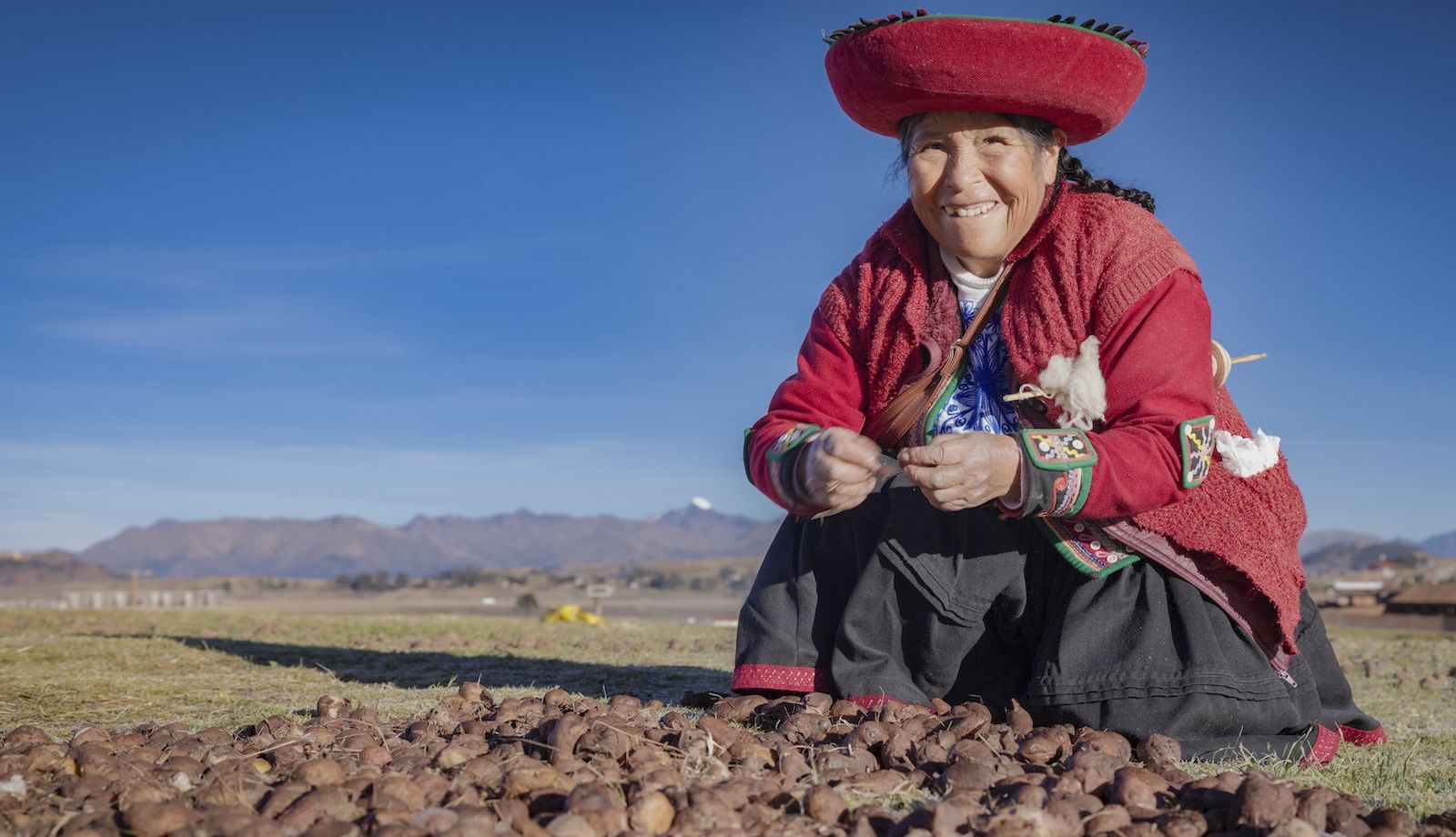
Indigenous populations in the Andes domesticated the potato around 6,000 to 10,000 years ago.
(Image credit: Tuul & Bruno Morandi via Getty images)
The researchers found that, beginning around 10,000 years ago, Indigenous Andean individuals with 10 or more copies of the salivary amylase gene had a 1.24% higher chance of surviving and reproducing than those with fewer copies — evidence that natural selection caused the elevated copy number in the Indigenous Andeans in their sample.
The Akimel O’odham samples also showed high copy numbers, but the researchers could not perform tests looking for signs of natural selection in this population as too few Akimel O’odham individuals were included in their sample.
The functional advantage of having more salivary amylase copies is unknown. Gokcumen said it could have something to do with the microbiome, metabolism and immune system. For instance, people with more copies of the gene may get more calories from cooked potatoes. He and his team are now running experiments to clarify these potential relationships, he said.
This is an “exciting and important study,” Charles Lee, a human genomics expert at The Jackson Laboratory for Genomic Medicine in Connecticut who was not involved in the new study, told Live Science in an email.
The high copy numbers in the Akimel O’odham samples suggests that “different Indigenous American groups may have developed high amylase copy numbers in different ways, depending on their diets,” Lee said.
Salivary amylase gene copy number variation is unlikely to be the only example of adaptive variation in gene structure, Lee added. “It is simply one of the best examples we currently have of how complex copy number variation can intersect with diet, culture and human evolution,” he said.
Scheer, K., Landau, L. J. B., Jorgensen, K., Karageorgiou, C., Siao, L., Alkan, C., Rivera, A. M. M., Osborne, C., Garcia, O. A., Pearson, L., Kiyamu, M., Rivera-Ch, M., León-Velarde, F., Lee, F. S., Brutsaert, T., Bigham, A. W., & Gokcumen, O. (2026). Rapid adaptive increase of amylase gene copy number in Indigenous Andeans. Nature Communications, 17(1). https://doi.org/10.1038/s41467-026-71450-8
Do you know where pumpkins and blueberries come from? Find out with our fruits and vegetables quiz!