QUICK FACTS
Name: Tumaco-Tolita Seated Elder
What it is: A ceramic figurine
Where it is from: Near the Colombia-Ecuador border
When it was made: Between 200 B.C. and A.D. 300
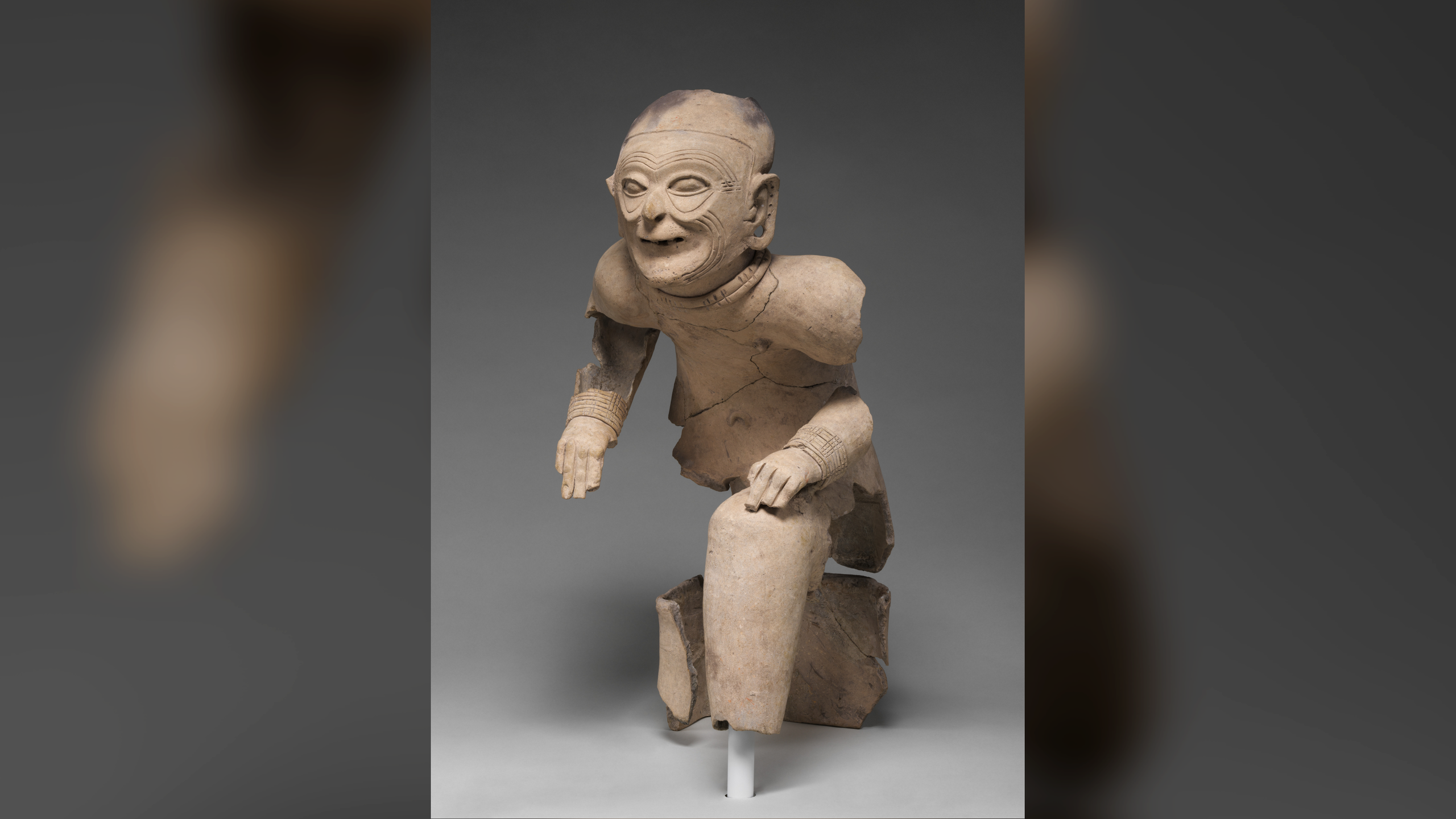
Around two millennia ago, Tumaco-Tolita potters living in what is now Colombia and Ecuador began crafting hyperrealistic sculptures of their revered elders. This figurine of an older man, on display at the Metropolitan Museum of Art in New York City, may have been a religious specialist, shaman or other leader in his community.
The statue has small holes in the nose, ears and nipples, suggesting that gold adornments once decorated the figurine. (Marked nipples were more commonly used to depict women in Tumaco-Tolita art, Ikehara-Tsukayama noted, but the statue is not wearing a long skirt typical of depictions of women, so the gender is unclear.)
The figurine was crafted from gray clay paste that was commonly used by the Tumaco-Tolita people (also spelled Tumaco-La Tolita and Tolita-Tumaco), and it would have taken several days to complete due to the complexity of the design. It was likely polished and painted in antiquity, but the colors have worn away over time.
This elderly man was depicted sitting on a stool, which was a symbol of authority in the ancient Americas. He also may have been a shaman who helped connect people with supernatural beings. The old man’s prominent spine and dry, wrinkled skin evoke those of an iguana, according to Ikehara-Tsukayama, and this animal connection could have been one key to the shaman’s power.
This sculpture is one of the earliest known depictions of a seated leader from this area of Ecuador and Colombia, according to the Met. Male leaders who held religious and secular power in ancient American societies were sometimes called caciques.
The statue of the cacique was likely displayed or carried in important ritual ceremonies, Florencio Delgado Espinoza, an archaeologist at San Francisco University in Quito, Ecuador, explained in an audio interview posted on the Met’s website, but the figurine’s exact function is unknown.
MORE ASTONISHING ARTIFACTS
“People love these caciques, but also they really were scared of them because they have the power — so it’s love and fear,” he said.
The Tumaco-Tolita were also well known for their metalworking. They lived in an area rich in natural gold and crafted impressive figurines out of the precious metal. But the group disappeared from their coastal homeland by A.D. 500, likely dispersing to other parts of South America.
For more stunning archaeological discoveries, check out our Astonishing Artifacts archives.