




Donald Trump has threatened to sue the BBC for libel. He estimates his damages as anywhere from $1 billion to $5 billion.
He claims the BBC made “false, defamatory, disparaging and inflammatory statements” about him in a documentary published solely in Britain just before the November 2024 presidential election.
Any knowledgeable lawyer will tell you that it is dangerous to bring a liable action. Publicity surrounding the suit republishes the alleged defamation. The truth is a complete defense.
Oscar Wilde and Alger Hiss brought libel actions, and they both wound up in prison.
Trump’s mentor, the disgraced lawyer Roy Cohn, cautioned his clients not to sue for libel. In his book “How to Stand up for Your Rights and Win,” Cohn reflected that “a libel suit can be very messy. If they’ve got a shot at proving the case, you may get hurt.”
Trump may bring any eventual litigation in Florida, where he has legal residency, rather than in the United Kingdom. The U.K. has a one-year statute of limitations on libel actions. Florida is more generous with a two-year statute.
The brouhaha focused on the way the BBC edited Trump’s speech on the Mall on Jan. 6, 2021, the day of the U.S. Capitol riot in Washington.
It appears that the BBC married parts of Trump’s speech, so he appeared to explicitly encourage a putsch. The controversy focused on roughly 20 seconds of extracts of Trump’s speech.
During that address, he told supporters: “We’re going to walk down [to the Capitol] and I’ll be there with you.” Nearly an hour later, after a rambling list of grievances, he said: “And we fight. We fight like hell. And if you don’t fight like hell, you’re not going to have a country anymore.”
Minutes later, over 2,000 of his supporters breached the U.S. Capitol.
The BBC’s wound was self-inflicted. Its chairman Samir Shah wore the hair shirt over an “error of judgment”. Tim Davie, the BBC director general threw himself upon his sword, saying: “I think we did make a mistake, and there was an editorial breach.”
Sensing weakness, Trump threatened legal action. His lawyer wrote the BBC that the organization had caused the president “overwhelming financial and reputational harm.”
This assertion is more easily stated than proven. After the segment aired, Trump was elected president of the United States and reaped billions from his crypto business that benefits him and his family.
Trump will encounter several significant barriers to succeeding in his lawsuit, some legal and some factual.
It appears that the BBC segment was never published in the United States. The court in Florida may well rule that the proper jurisdiction is England as that is the center of gravity where most viewers saw the broadcast. And it is hard to see how Trump suffered any proprietary loss in Florida.
Then there is the doctrine of New York Times v. Sullivan, which states that public figures suing for defamation have the burden of proving “by clear and convincing evidence” that there was “actual malice,” meaning “the statement was made with knowledge of its falsity or with reckless disregard of whether it was true or false.”
Beyond the BBC’s actions, Trump would also need to demonstrate that the editing of the film substantially altered the way people viewed the events of Jan. 6, 2021, which began with the president rallying supporters in front of the White House and ended with crowds rampaging on Capitol Hill.
Multiple accounts of Jan. 6 preceding the BBC segment indicated that Trump incited the crowd to attack the Capitol, a conclusion endorsed by the House of Representatives when it voted to impeach the president on a count of “incitement of insurrection.”
The BBC may well argue that Trump inspired, energized and then celebrated a violent attempt to thwart an election. On discovery, the BBC lawyers will take Trump through every minute of his life between the conclusion of his speech and the moment when he told the mob to go home.
He will also need to establish the segment was available in Florida. There is no evidence so far to suggest that it has been shown in the United States. A court’s determination on whether it has jurisdiction over the case could hinge on whether anyone in Florida saw the documentary.
Trump has previously sued several U.S. news organizations for large sums of money, and in a few instances secured large settlements. The BBC may also choose to settle for purely commercial or political reasons.
In July 2025, Paramount, parent company of CBS News, agreed to pay Trump $16 million, after he sued over a 60 Minutes interview with then-presidential candidate Kamala Harris. At the time, Paramount and Skydance were seeking federal regulatory approval for a merger — approval that came later that month.
ABC News paid Trump $15 million after anchor, George Stephanopoulos, falsely claimed that Trump had been found liable for rape. In fact, it was sexual abuse.
Seth Stern, advocacy director for the Freedom of the Press Foundation, sees it this way, “He doesn’t care if he wins or not. The point is to intimidate and punish those he views as critical to him.”
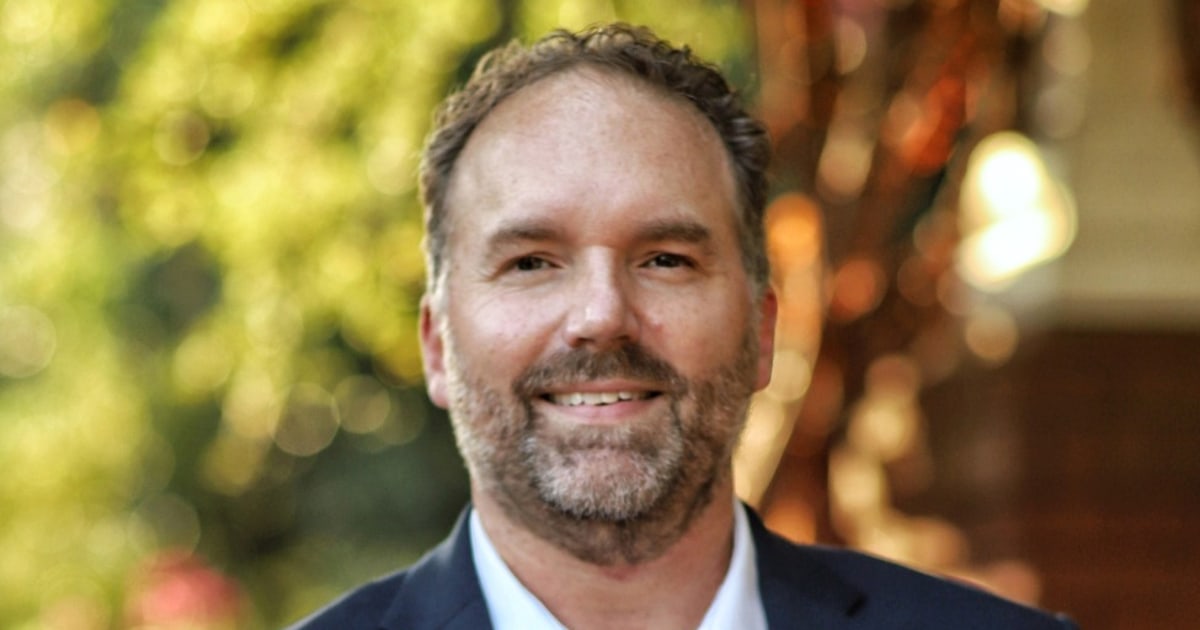
James D. Zirin is a former federal prosecutor in the Southern District of New York and a published legal analyst.
Copyright 2025 Nexstar Media, Inc. All rights reserved. This material may not be published, broadcast, rewritten, or redistributed.
For the latest news, weather, sports, and streaming video, head to The Hill.