




Follow us
Add us as a preferred source on Google
Subscribe to our newsletter
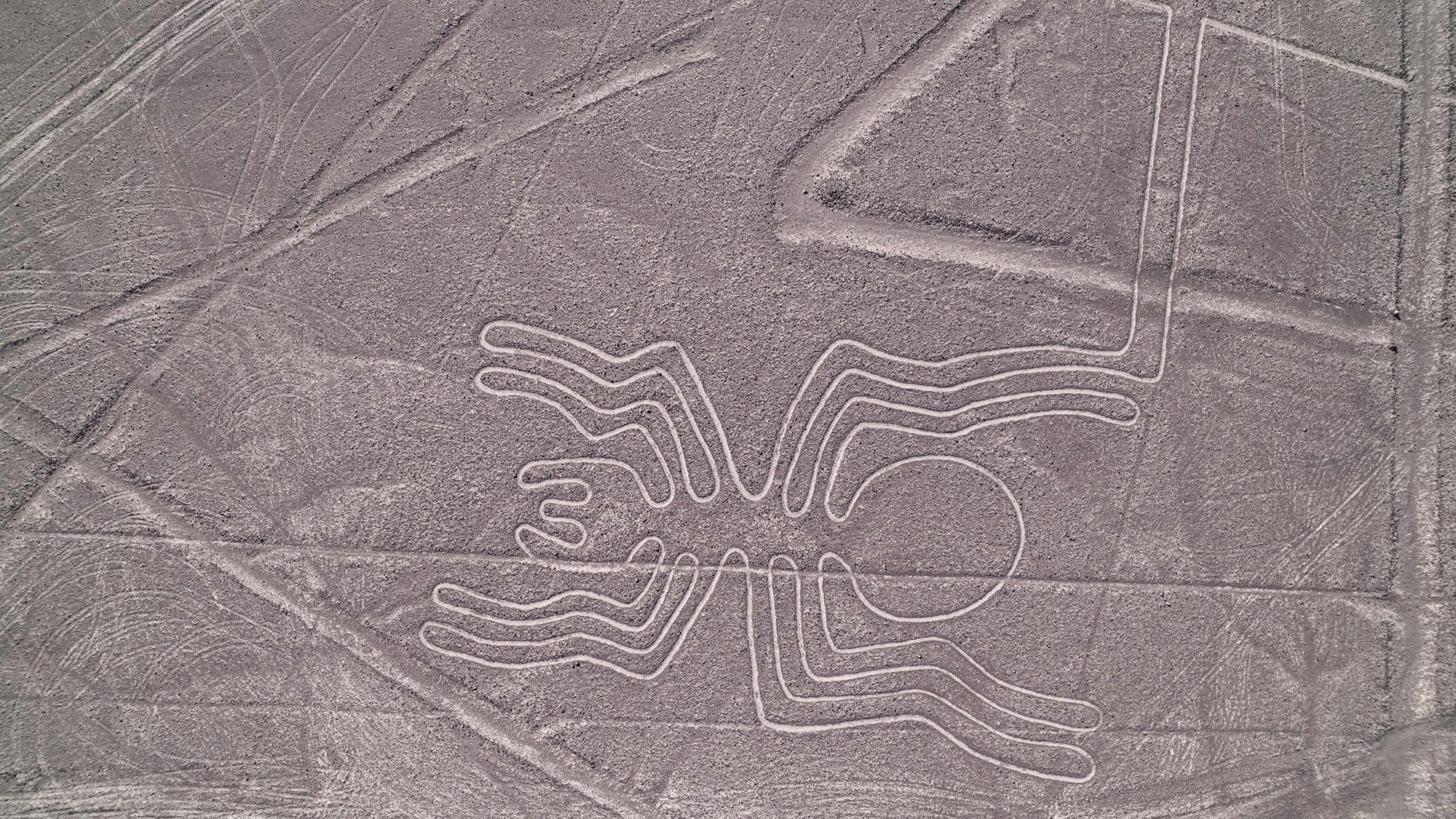
The Nazca Lines are the most famous geoglyphs in the world. Dating back around 2,000 years and reaching a combined length of more than 800 miles (1,300 kilometers), they depict a variety of motifs, including humans, animals, geometric shapes, plants and flowers. These designs were constructed on the arid hills and valleys of coastal Peru by the Nazca people between 200 B.C. and A.D. 500, long before writing was used in the region.
It’s not clear exactly how many Nazca Lines there are, but they number in the thousands, with new geoglyphs continuing to be discovered with the help of AI.
But why were the Nazca Lines built?
Latest Videos FromLive Science
Scientists have been debating this question since the lines were first formally investigated in the early 20th century. Although the definite answer remains unknown, experts have proposed various reasons for the famous geoglyphs.
There “are many ideas out there about their function and meaning,” Ana Nieves, a professor of art history at Northeastern Illinois University, told Live Science in an email. “If you look at the area’s geoglyphs closely, though, there are different styles of geoglyphs, some are relatively larger and some smaller, some are on hillsides while some are on the pampas. It is not likely that a single explanation would apply to all.”
More Nazca Lines, including one that looks a bit like a person.
(Image credit: Jim Dyson via Getty Images)
Different perspectives
A vast array of theories for the lines’ uses have been proposed over the years, with the most outlandish of these suggesting that they were sites for aliens to land spaceships.
More grounded theories link the lines to cultural and religious practices.
Feed your curiosity with an exclusive mystery every week, solved with science and delivered direct to your inbox before it’s seen anywhere else.
“The question of why the geoglyphs exist is difficult to answer, given that we lack any type of preserved oral or written testimony,” Karsten Lambers, an art history professor at the University of Augsburg in Germany, wrote in an essay published in the book “Los geoglifos: imágenes y escenarios en el desierto de Nazca y Palpa [The Geoglyphs: images and settings in the desert of Nazca and Palpa]” (University of Augsburg, 2017). It’s possible that the uses for the geoglyphs changed over time, he added.
One suggestion is that they were initially used to mark routes for travelers and caravans and later became places for gathering and feasting.
In a 2026 study, researchers noted that some of the earlier Nazca geoglyphs were constructed on hillsides, seem to be located on trails, and “were visible from considerable distances.” This means the geoglyphs may have been used to mark travel routes and indicate areas that were good for temporary camps. The team suggested that the markings became places for gathering and feasting.

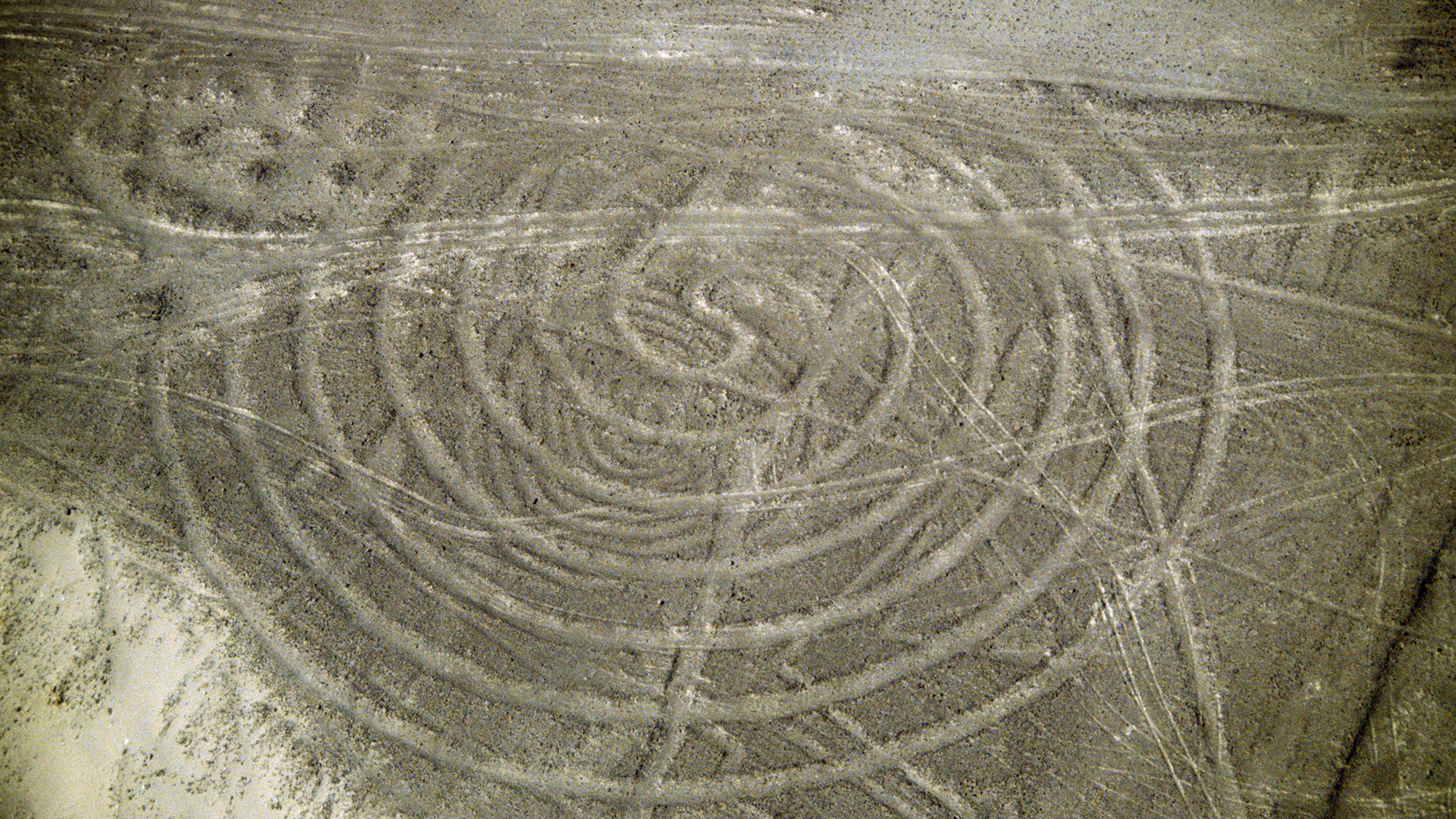
A geometric-shaped geoglyph from Nazca; the geoglyphs vary in size and shape and may have had different purposes.
(Image credit: UCG via Getty Images)
Another idea is that the geoglyphs were used to match astronomical alignments to serve as a kind of calendar. In December 1941, historian Paul Kosok examined the lines and determined that they had astronomical alignments. Mathematician Maria Reiche followed up on Kosok’s work, examining the Nazca Lines for more than 40 years to identify many geoglyphs she believed have an astronomical relationship to various celestial bodies, a research team noted in a 2021 paper. Yet after analyzing the geoglyphs, the modern-day team found that only a relatively small number had a possible alignment to a star or solar event such as a solstice.
“The results suggest that the geoglyphs, as a whole, certainly cannot be interpreted as a calendar system,” the team wrote. However, this doesn’t discredit the idea that the Nazca Lines had an astronomical significance, Christiane Richter, a researcher at the University of Applied Sciences in Germany and first author of the 2021 paper, told Live Science in an email.
Since the paper’s publication, Richter and her team’s research has indicated that around 8% of the geoglyphs have some form of lunar alignment. It is “highly probable that celestial bodies played a role in the creation of the drawings,” Richter said in an email.
Offerings such as ceramics, crabs, corn and earrings made from Spondylus shells (a genus of bivalves known as thorny oysters) were also placed on low rock platforms near some of the geoglyphs, especially those shaped like trapezoids, Lambers noted in his paper. Spondylus shells are normally found farther north, in Ecuador, but during El Niño events, they can appear farther south, in Peru. These shells, alongside crabs and corn, tend to be associated with water and fertility, Lambers noted.
Another idea is that the geoglyphs themselves may have been used for ritual processions. Some of the geoglyphs are made with a single, uninterrupted line,” Nieves said. “Those are the ones that would lend themselves for processions since people could walk them in a single file.”
Some of the activities at the Nazca Lines may have helped foster a sense of community and equality, said Darryl Wilkinson, a professor of religion at Dartmouth University who has written about the geoglyphs. For instance, “walking the lines was a group activity, and participating in such processions would have likely created a feeling of community among those involved,” Wilkinson told Live Science in an email. “I interpret the Nasca lines as geared towards the realization of a relatively more equal expression of community.”
Whatever the reasons for their construction the Nazca Lines are awe inspiring today. Lambers wrote in his essay that the Nazca people who built them “succeeded in transforming one of the driest deserts in the world, over the course of many centuries, to serve the region’s inhabitants as an expression of their cultural ideas and a setting for their social activities.”
TOPICS