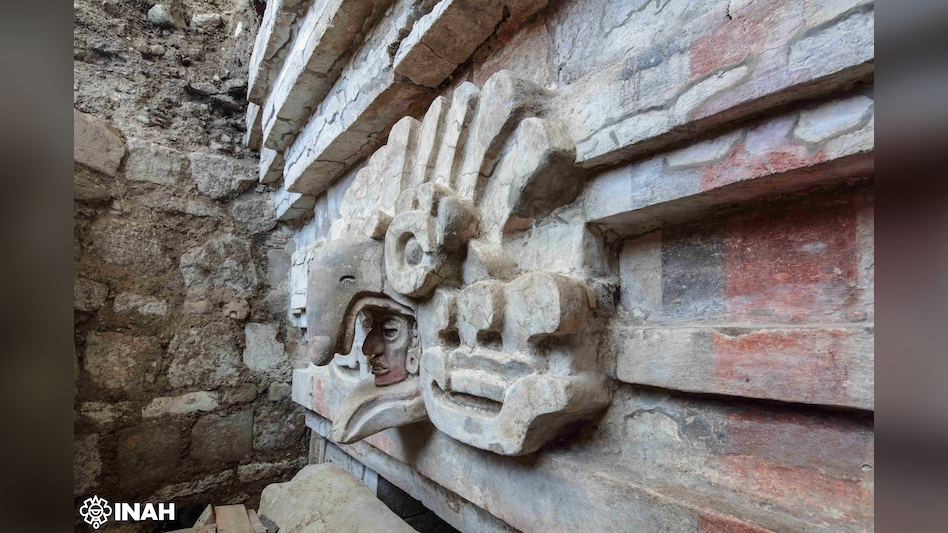
Archaeologists in Mexico have discovered a 1,400-year-old tomb from the Zapotec culture that features well-preserved details, including a sculpture of a wide-eyed owl with a man in its beak, multicolored murals and calendrical carvings.
Officials found the tomb after following up on an anonymous report of looting at the site. Their investigation revealed the “most significant archaeological discovery in a decade in Mexico,” Mexico’s president, Claudia Sheinbaum Pardo, announced at a Jan. 23 news conference in Spanish.
The tomb was discovered in San Pablo Huitzo, a municipality in Oaxaca in southern Mexico, in 2025. It dates to about A.D. 600, when the Indigenous Zapotecs — also known as the “Cloud People” — flourished in the area. The Zapotec civilization was established around 700 B.C. and collapsed due to the Spanish conquest in 1521. However, hundreds of thousands of Zapotec-speaking people still live in Mexico today.
At the entrance to the newly announced tomb, archaeologists found a large carved owl whose beak opens to reveal the painted face of a Zapotec lord. In ancient Zapotec culture, the owl represented death and power, suggesting it held in its mouth a portrait of the ancestor the tomb honors, according to a translated statement from Mexico’s National Institute of Anthropology and History (INAH).
Inside the tomb, a threshold between two chambers boasts an elaborately carved doorway. The top has a horizontal beam made of stone slabs engraved with “calendrical names” — a naming system in which deities and important people were given a specific symbol associated with their birth date. Flanking the doorway were engraved figures of a man and a woman, perhaps representing ancestors buried in the tomb or guardians of the palace, according to the INAH statement.
The walls of the burial chamber preserved multicolored murals in white, green, red and blue. They depict a funeral procession of people carrying bags of “copal,” a tree resin that was burned as incense during ceremonies in pre-Hispanic Mesoamerica.
The highly decorated tomb is an “exceptional discovery due to its level of preservation and what it reveals about Zapotec culture: its social organization, its funerary rituals, and its worldview, preserved in its architecture and mural paintings,” Claudia Curiel de Icaza, Mexico’s secretary of culture, said in the statement.
An interdisciplinary team from the INAH is currently working to conserve and protect the tomb, and further research will address the ceramic evidence, the iconography, and the handful of human bones recovered from the tomb.
The Huitzo tomb joins a dozen other ancient Zapotec tombs discovered in Oaxaca in the past decade, many of which had been looted before archaeologists could study them. But even though some information about the ancient Zapotec civilization has been lost to looting, the Huitzo tomb is “a source of pride for Mexicans; a testament to the greatness of Mexico,” Sheinbaum said.