Archaeologists in Germany have discovered four Roman marching camps, dating to 1,700 years ago, along with a multitude of artifacts, including coins and old shoe parts.
During the third century A.D., the Roman Empire conducted several military campaigns into what is now Germany. Their goal was to expand Roman territory north along the Elbe River, which flows into the North Sea. But Germanic tribes resisted Roman occupation and contributed to an imperial crisis in the third century. Archaeologists have discovered evidence of Roman occupation in the form of military camps.
They noted that a “characteristic feature of marching camps is the so-called titulum — a segment of ditch with a rampart [defensive wall] located in front of the gate passages.”
Two of the camps are located near the town of Aken; another camp is located near the town of Deersheim; and a fourth is located in the municipality of Trabitz, the statement said. The camps were discovered by amateur and professional archaeologists who used a combination of aerial and satellite imagery, as well as ground surveys and excavations to find and investigate the sites.
Metal detectors were used to help survey the camps, which led to the detection of more than 1,500 metal artifacts, many of them nails; some of them may have fallen off of sandals that Roman legionaries wore. Such nails, known as hobnails, likely provided traction for marching Roman legionary soldiers and auxiliaries.
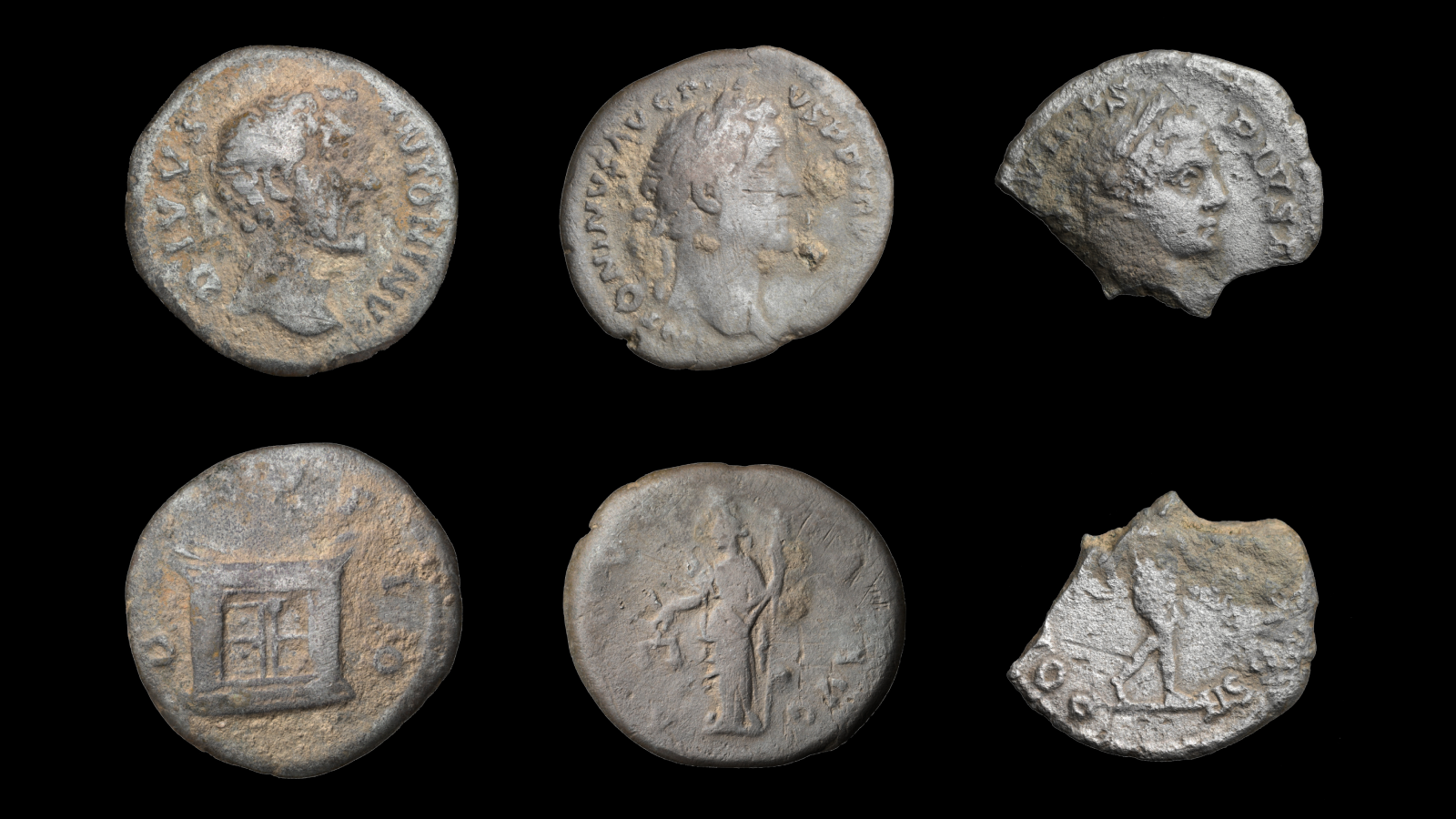
The excavators also found coins that date to the second half of the second century and the early third century, discoveries that helped date the marching camps, the statement said. A number of radiocarbon dates confirmed this.
“Among the coin finds from Trabitz, a Caracalla denarius is the most recent discovery. It is therefore conceivable that the camp was established in connection with a campaign under [Roman emperor] Caracalla in 213 AD,” the statement said. Historical records indicate that Caracalla’s campaign in Germany was focused against a group referred to as the “Albanians” who may have lived along the Elbe River, the statement said.
Research into the marching camps is ongoing and may shed light on Caracalla’s military campaign in Germany, the statement said.