A unique “sacrificial complex” discovered between two burial mounds in Russia has revealed new information about the funerary rituals of nomadic people in the south Ural Mountains nearly 2,400 years ago.
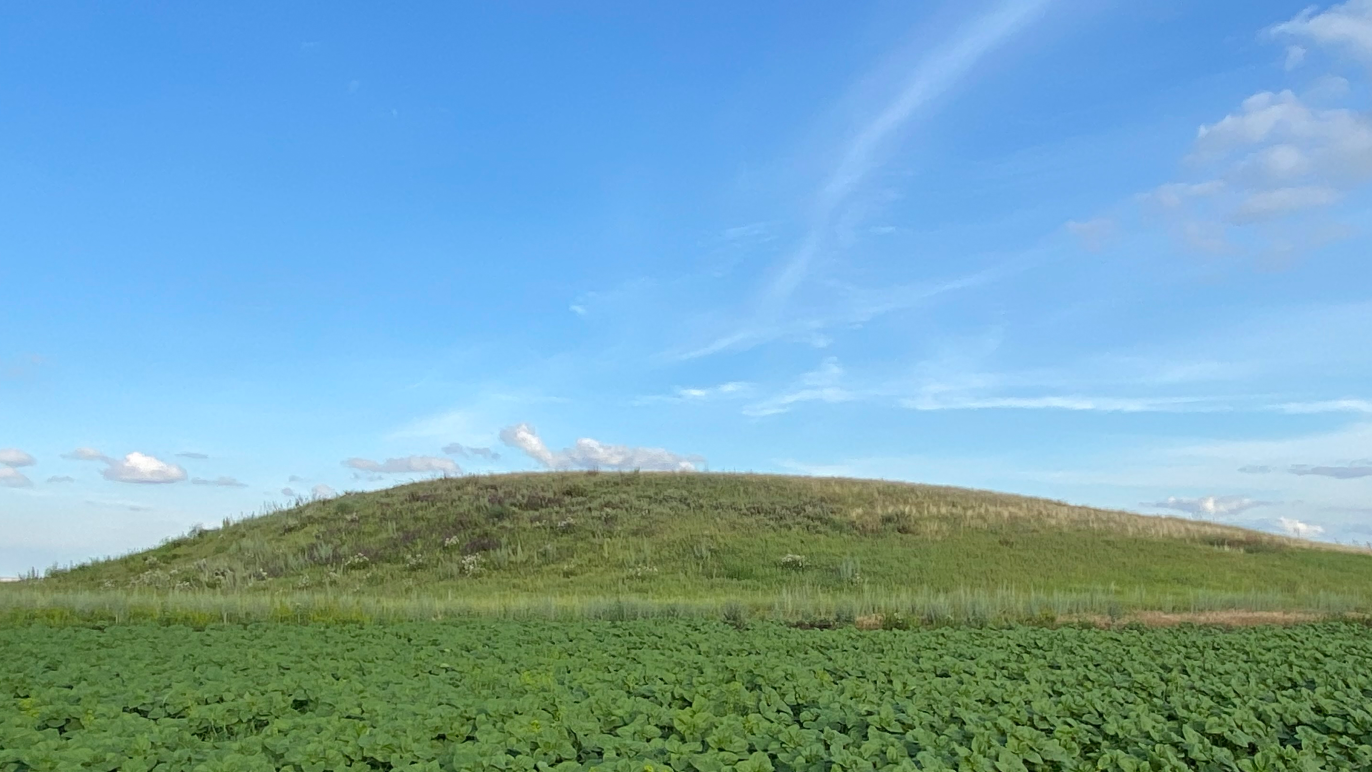
This past summer, researchers from the Institute of Archaeology of the Russia Academic of Sciences excavated the space between burial mounds at the archaeological site of Vysokaya Mogila, a necropolis with a series of high-status burial mounds scattered across 3.7 miles (6 kilometers). The necropolis was in use between the fourth and third centuries B.C., and a number of artifacts have been discovered both in the burial mounds and outside them.
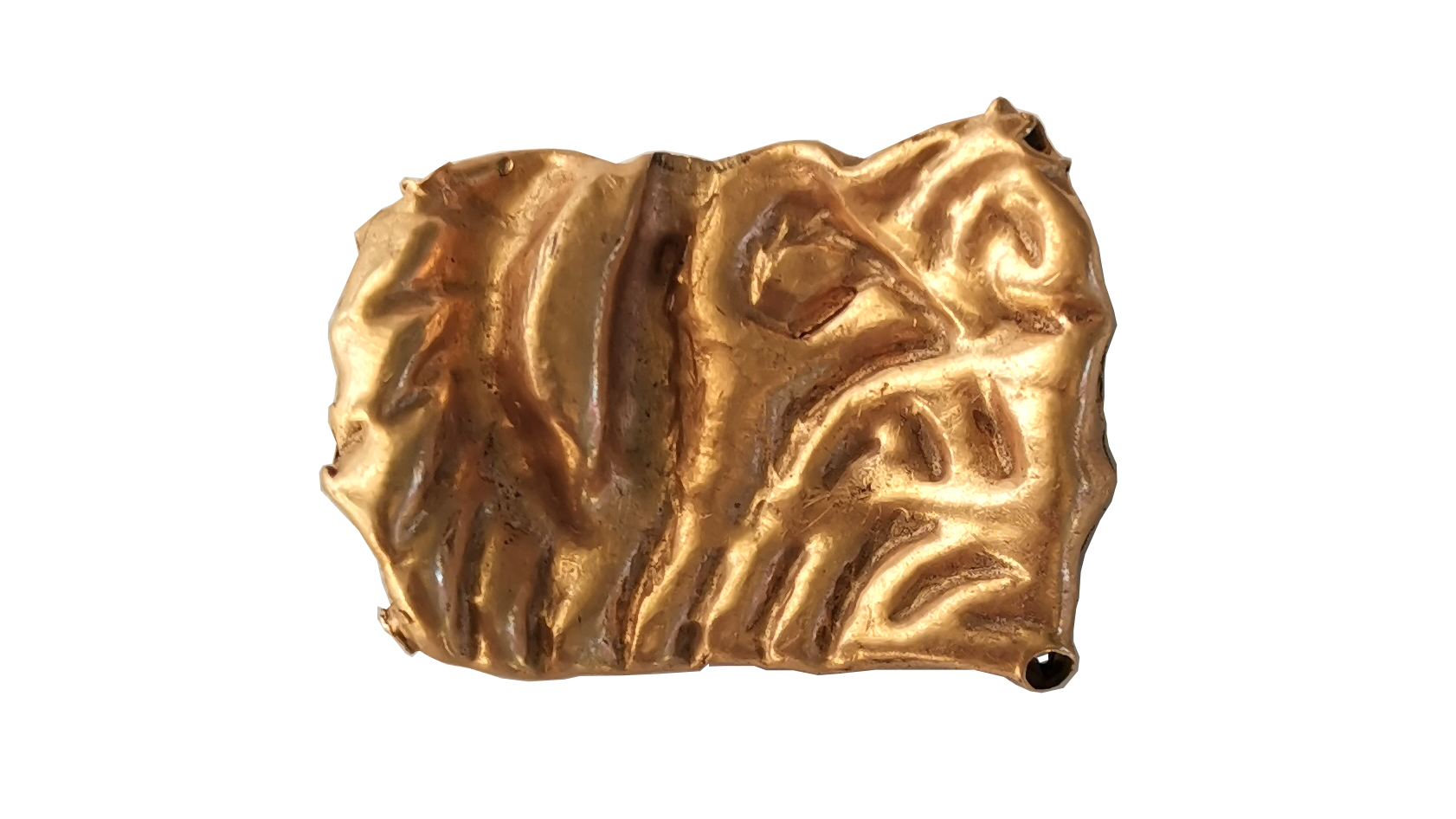
In one cache, located to the southeast of the mound, excavators found a gold applique plaque depicting the head and forepaw of a tiger. To the west of the mound, they found a cache containing fragments of both a bronze ladle and a cauldron.
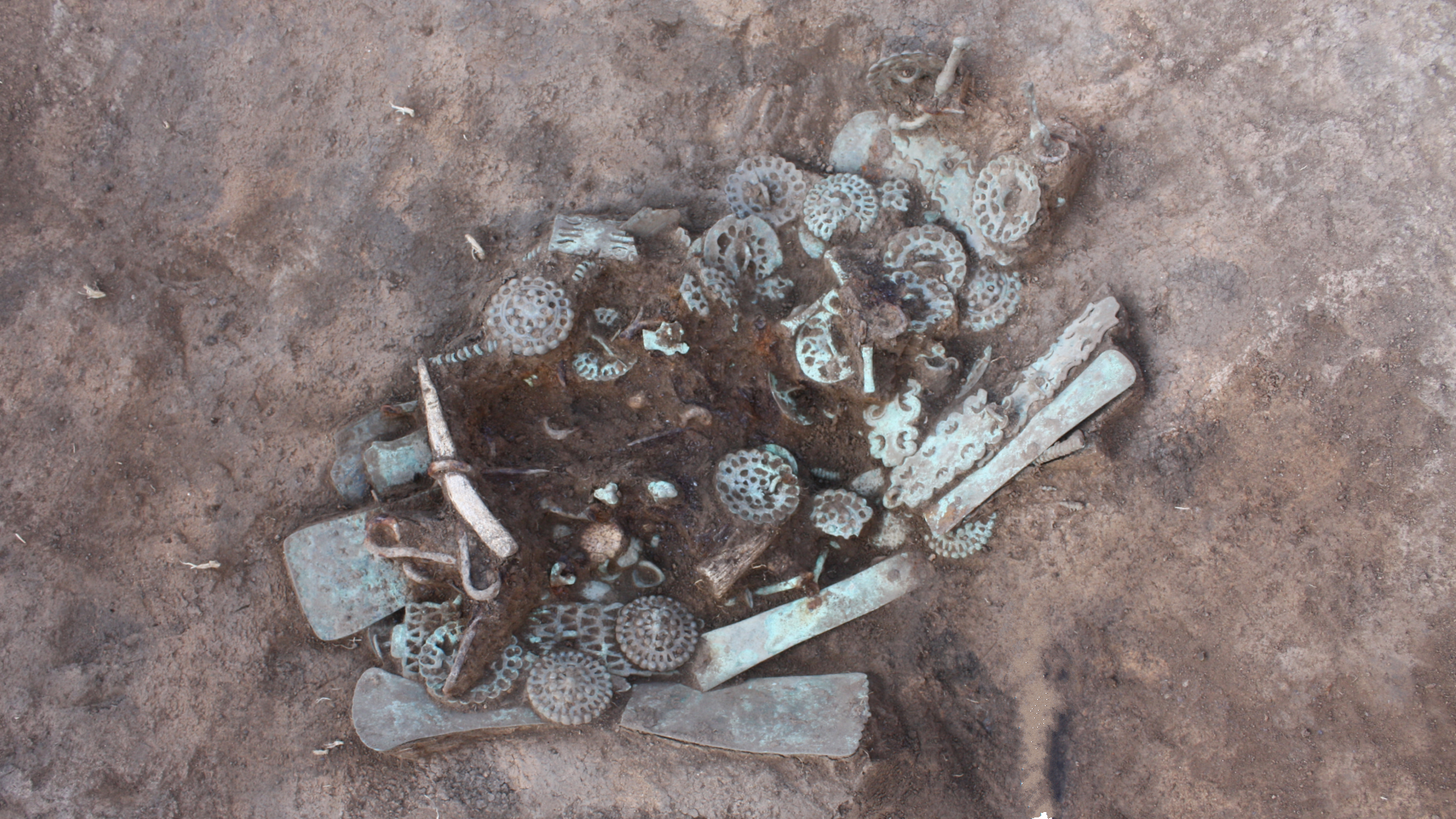
But most of the recovered artifacts were part of a “rich sacrificial complex” that had been hidden in a shallow, round pit to the west of one of the burial mounds.
Among the hundreds of objects found in this sacrificial complex were bronze horse browbands, cheek pieces and iron bits representing at least a dozen ancient bridles. The browband of a bridle runs across the horse’s face between the eyes and the ears, while the cheek pieces run perpendicular to the browband, below and to the side of the eye.
The bridles were decorated with flat, round metal circles, some of which represented birds and mythical animals, while others had geometric patterns or human faces. The sacrificial complex also contained a wooden bowl with silver overlays of animal motifs, as well as the jaws of a boar laid out as a sacrificial animal.
Image 1 of 5
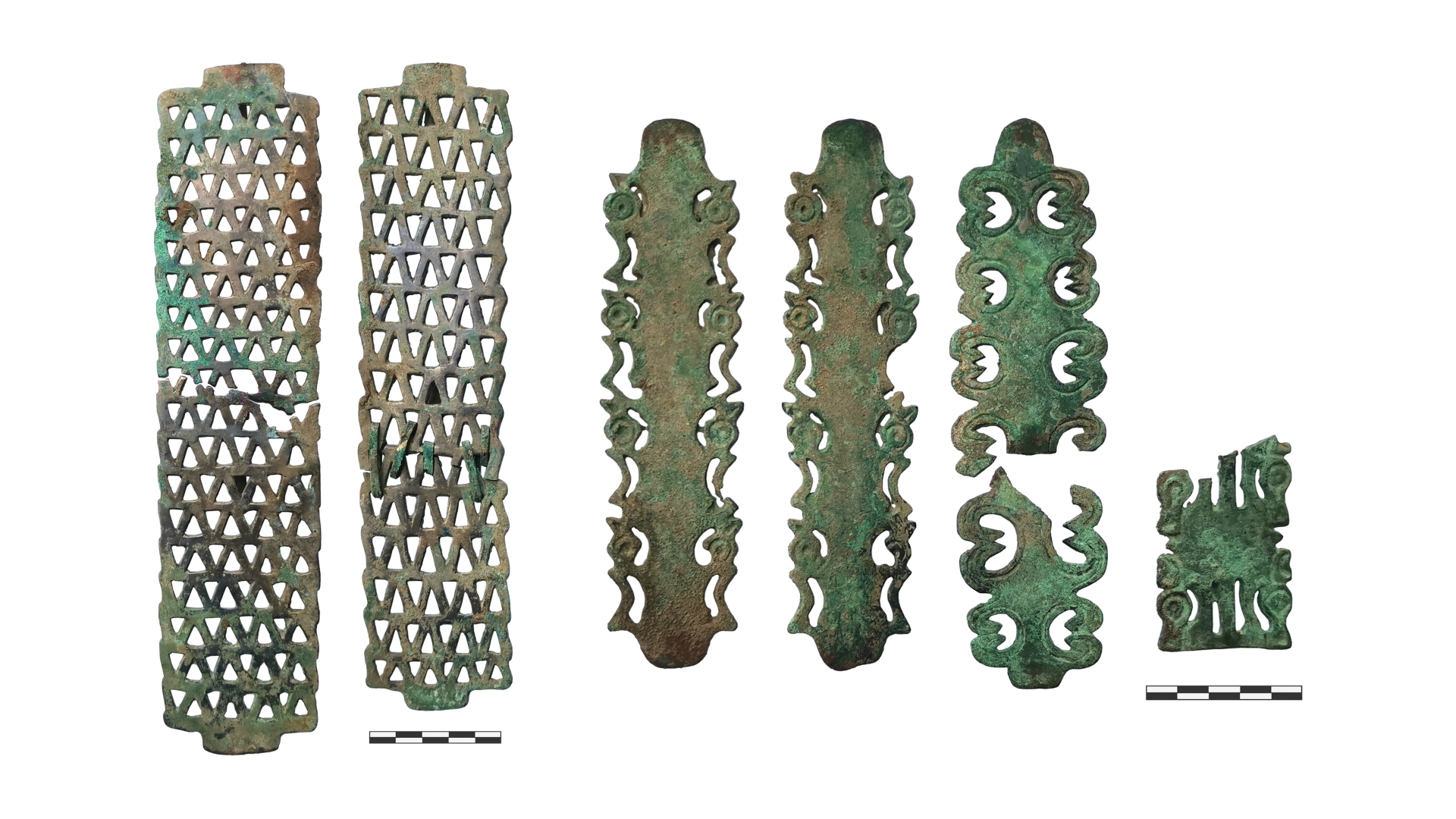
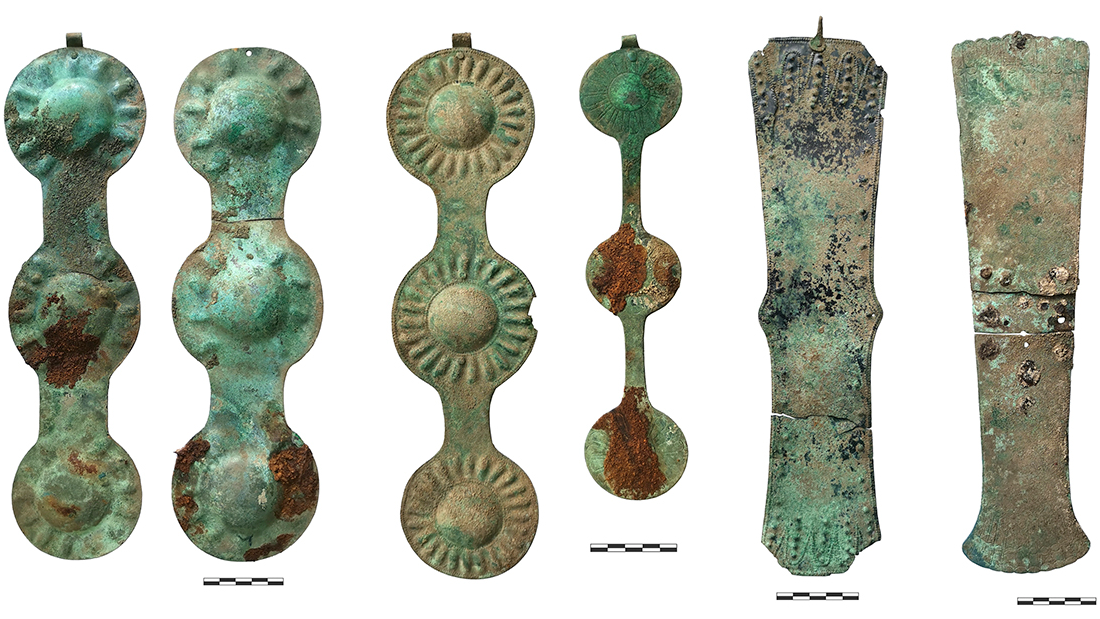
This sacrificial complex is the richest ever found, according to the statement, in terms of the sheer number of artifacts and the origin of the items, as many were likely imported from the northern Caucasus and northern Black Sea regions and had never before been found in this area of the world.
Both the silver-lined wooden bowl and the boar jaws suggest that the sacrificial complex was part of a funeral ritual, the archaeologists noted in the statement. The post-funeral ritual activities were probably performed by nomadic nobles in the space between the burial mounds.
The new findings suggest that these cemeteries in the southern Urals were not just places to bury the dead but also sites that people returned to time and again to carry out ritual activities.