Archaeologists have discovered the 3,300-year-old cremated remains of at least eight people who were buried in five urns in Scotland. While it’s unknown how they died, it was likely during some sort of catastrophic event.
The finding is unusual because, although many Bronze Age burial spots in Scotland were reused over the years, the newfound cremations “tell a different story,” the researchers wrote in a new study, published recently in the journal Archaeology Reports Online. In this case, the urns were “tightly arranged, giving the impression of being buried collectively, and then remaining undisturbed except for modern plough damage,” the team wrote.
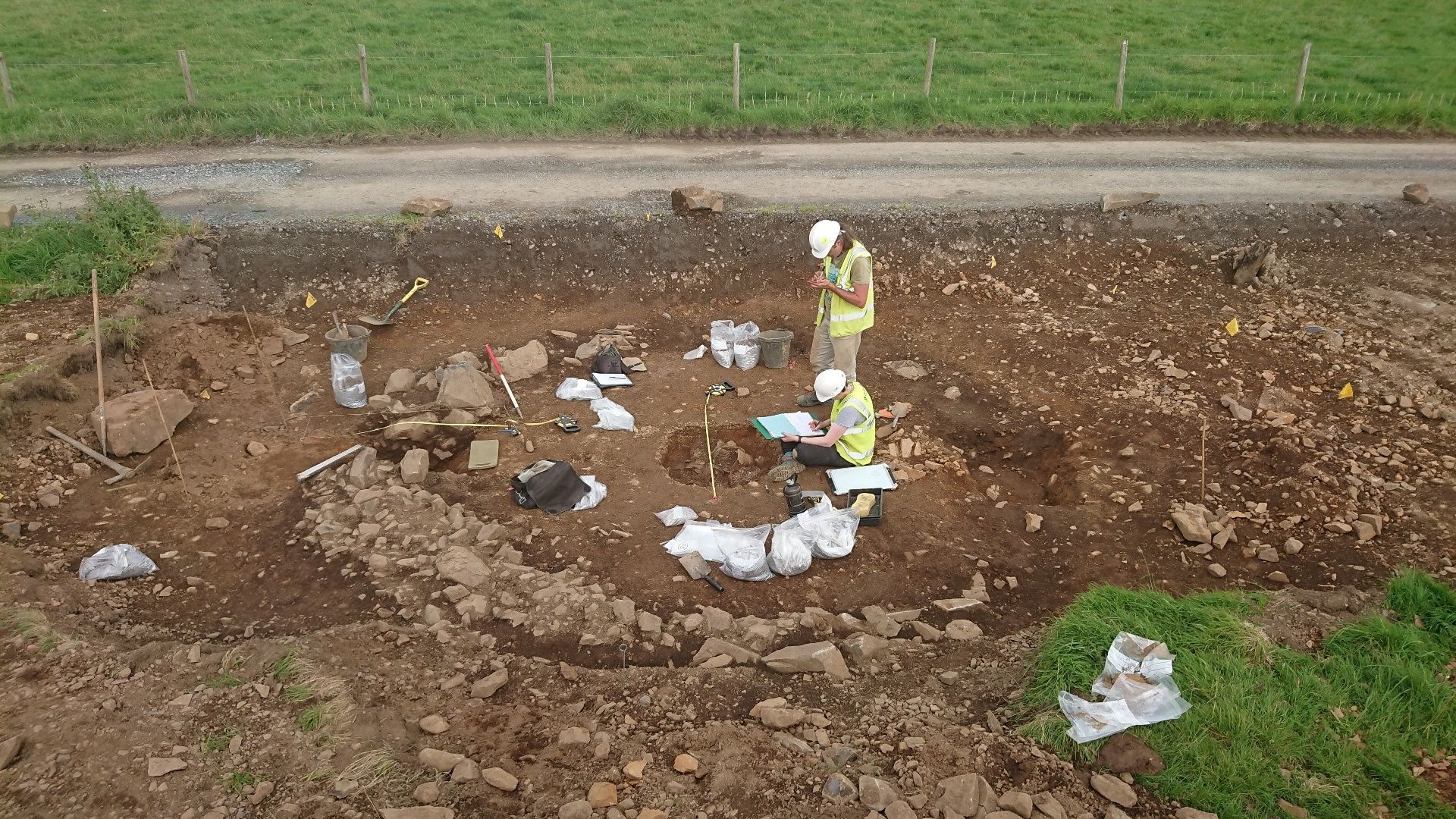
Three of the urns each contain the remains of an adult and a juvenile, while the other two each contain only one adult. The burial was found at Twentyshilling Hill, which is near Twentyshilling Hill Wind Farm in southwest Scotland, during excavations conducted in 2020 and 2021 while an access road to the wind farm was being built. The excavations were conducted by a team from Guard Archaeology, a company that undertakes archaeological excavations during or before construction.
“The discovery of five urns tightly packed together at the same time in one mass burial event is very rare and distinguishes the Twentyshilling Barrow from other barrows in Scotland,” the researchers wrote in the report.
The team suspects these eight individuals likely died around the same time, during a terrible event. It’s unclear what that event was, but it could have been a famine, disease or war, Ronan Toolis, CEO of Guard Archaeology, told Live Science in an email.
They suspect the individuals died around the same time because the urns appear to have been made by the same craftsperson, Toolis said. Also, during that time, it was common for deceased people in this region to be left out long enough for their flesh to decompose before they were cremated. In this instance, however, the team found that the individuals still had some of their flesh when the cremation was done, which indicates that they had to be cremated in a hurry, the team noted.

These people would have been farmers, Toolis said. He noted that they likely lived near the burial spot, although their settlement has not been found.
This is “an area of Scotland where few such archaeological remains have so far been discovered, so future research may reveal much more about the context of this barrow,” Toolis said.