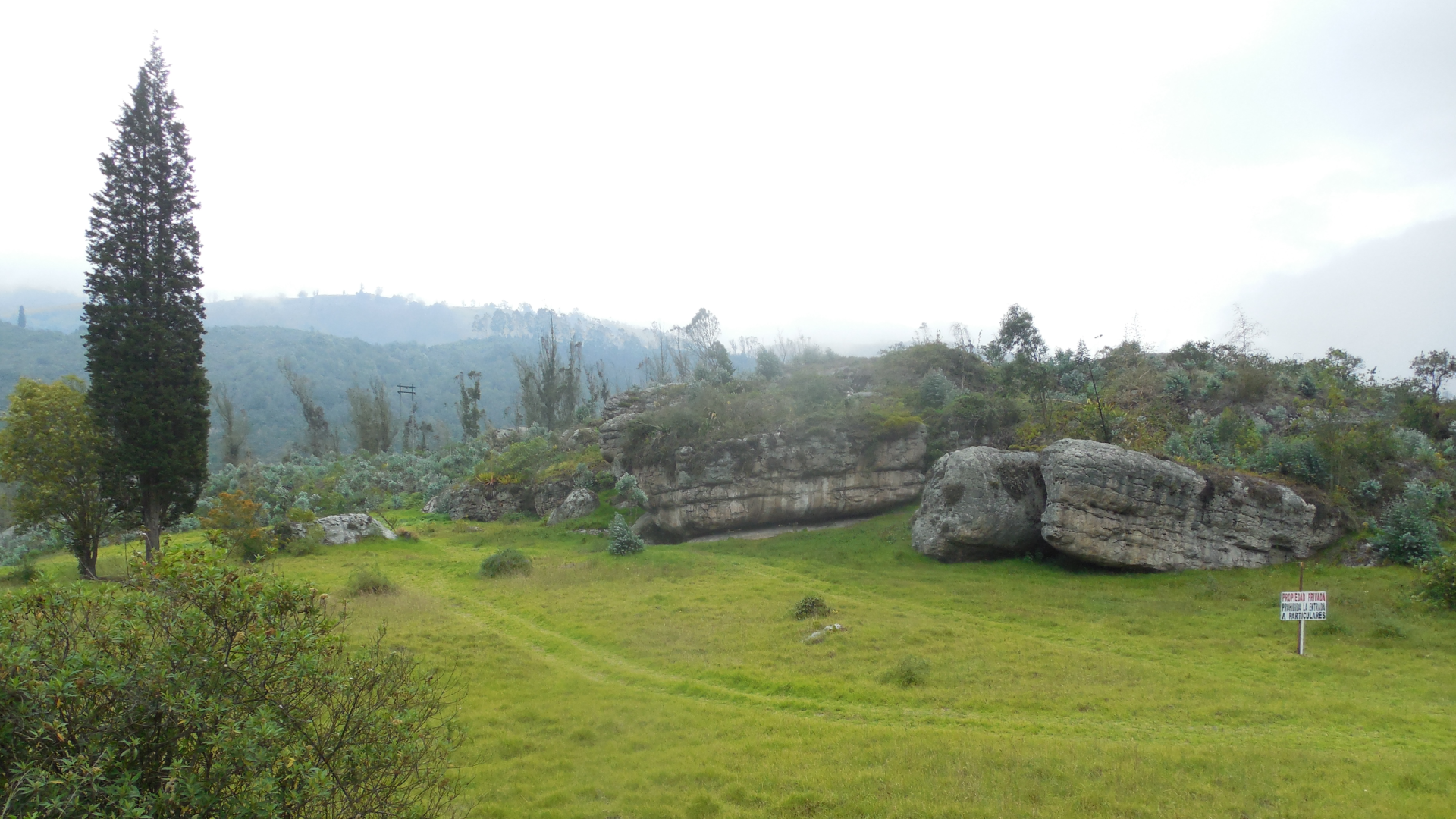
The world’s oldest evidence of Treponema pallidum, the bacterium that causes syphilis and several chronic skin infections, has been found in a 5,500-year-old skeleton buried in a rock shelter in Colombia. But the genetic evidence suggests that the person was infected with a previously unknown strain of T. pallidum, adding to an already-complicated picture of the evolution of syphilis.
Researchers have debated the geographical origin and spread of the treponemal diseases — syphilis, bejel, yaws and pinta, all of which are caused by bacteria in the genus Treponema — for centuries. Because the best-documented epidemics of syphilis occurred in Europe in the 15th century, early theories suggested that Christopher Columbus brought syphilis to the Americas or, conversely, that Indigenous people in the Americas transmitted syphilis to Columbus and his crew.
In a study published Thursday (Jan. 22) in the journal Science, researchers isolated the oldest T. pallidum genome yet, from the skeleton of a middle-aged hunter-gatherer who was buried in Colombia 5,500 years ago.
“Our results push back the association of T. pallidum with humans by thousands of years,” study lead author Davide Bozzi, a computational biologist at the University of Lausanne in Switzerland, said in a statement.
Ancient genomes of Treponema are exceptionally difficult to recover and are usually found in skeletons with bony evidence of treponemal disease lesions, such as holes that make the bone appear moth-eaten, which are often associated with the later stages of infection. Surprisingly, the 5,500-year-old skeleton containing evidence of T. pallidum did not have any obvious skeletal lesions, although other skeletons in the area did.
While investigating the new T. pallidum genome, which they named TE1-3, the researchers found that it was a different lineage than all other subspecies of T. pallidum identified to date. Based on a statistical analysis of the differences among the genomes, the researchers estimated that TE1-3 diverged from today’s lineages around 13,700 years ago. This suggests that Treponema began circulating in the Americas thousands of years earlier than experts previously thought.
But the new genome does not clarify whether early Treponema lineages like TE1-3 were capable of sexual transmission like venereal syphilis.
“Current genomic evidence, along with our genome presented here, does not resolve the long-standing debate about where the disease syndromes themselves originated, but it does show there’s this long evolutionary history of treponemal pathogens that was already diversifying in the Americas thousands of years earlier than previously known,” study co-author Elizabeth Nelson, a molecular anthropologist at Southern Methodist University in Dallas, said in the statement.
In a related perspective published in Science, Molly Zuckerman and Lydia Bailey, anthropologists at Mississippi State University who were not involved in the study, wrote that the new finding “points to an origin for syphilis in the Americas rather than Europe.” Comparing progressively ancient genomes of Treponema with modern genetic data could help inform infection control strategies for syphilis, which has rebounded globally over the past decade, they wrote, as well as help researchers understand the history of infectious disease.
“It is possible that 15th century syphilis was the first globalized emerging infectious disease and a harbinger of all subsequent ones, from HIV/AIDS to COVID-19,” Zuckerman and Bailey wrote.
The new discovery shows “the unique potential of paleogenomics to contribute to our understanding of the evolution of species, and potential health risks for past and present communities,” study co-author Lars Fehren-Schmitz, a geneticist at the University of California, Santa Cruz, said in the statement.