With the 2025 election season now wrapping up and 2026 midterms approaching, Democrats are searching for ways to reconnect with voters after their 2024 defeats. Policy ideas abound, but the real challenge isn’t policy or even messaging—it’s media. Democrats and their allies must build a media infrastructure of their own to start winning again.
Over a decade ago, I wrote in The Economist that democracy was losing momentum because of the collapse of traditional news. Mass media once created a shared “commons of public opinion,” moderated by professional journalists. Today, that commons has splintered into a chaotic environment where misinformation thrives and common facts are elusive.
Republicans have spent decades building a sprawling integrated right-wing media ecosystem consisting of talk radio, “pink slime” newspapers, Fox News and numerous other TV and online news sites. The leading source of news for Americans is now social media, where platforms such as Facebook, X, YouTube and Truth Social have reduced moderation of their outrage-rewarding algorithms, amplifying falsehoods by conspiracy-driven influencers and expanding far-right messaging dominance. The pending sale of TikTok, a key news source for younger Americans, to a group of Trump-allied tech investors may soon shift that platform’s content rightward, In addition, the appointment of conservative-friendly columnist Bari Weiss as editor in chief of CBS News may soon be reflected in the network’s news coverage. Meanwhile, more than a third of U.S. newspapers have disappeared, leaving half of American counties with little or no reliable local news. Streaming has surpassed broadcast and cable viewing, eroding traditional TV news audiences. In these “news deserts,” MAGA narratives flourish, elevating partisan podcasters and paid content creators over trained reporters and editors.
This disintegration of professional journalism is leading to a collapse of democratic norms. The new media ecosystem delivers a nonstop onslaught of brain rot-inducing short videos, AI-generated content, “breaking news” alerts, texts, emails, photos and meme warfare, mostly consumed on dopamine-stimulating smartphones that hijack attention and erode focus.
The White House itself is now a nonstop rapid-response influencer machine, employing Trump’s “flood the zone” strategy by overwhelming voters with distractions and falsehoods causing many to vote against their own interests unwittingly and incoherently. Administration advisors and cabinet members now routinely spread disinformation as official policy. As a result, Trump’s approval rating remains stable with nine out of 10 G.O.P. voters approving of his performance, according to a recent Siena survey. Historian Allan Lichtman, who correctly predicted nine of the last ten elections but missed in 2024, has suggested that the notion of a “rational, pragmatic electorate” may no longer hold in a misinformation-saturated age.
Can Democrats adapt?
Democrats have struggled to adapt. They campaign as if governing, offering complex policy papers, while Republicans govern as if campaigning — hammering simple slogans across multiple platforms. Yet Democrats don’t actually have a messaging problem. Their positions on health care, the economy, immigration and the environment generally poll positively — even among some Republicans, so long as the proposals aren’t branded as “Democratic.”
Zohran Mamdani speaks during a watch party for his primary election, which includes his bid to become the Democratic candidate for New York City mayor in the upcoming November 2025 election, in New York City, June 25, 2025.
It’s not the message, it’s the medium.
Democrats’ communications are routinely distorted and weaponized by the right’s 24/7 dominant media machine. Progressive podcasts and MSNBC (whose recent spinoff from NBC News may eventually weaken its progressive focus) are overwhelmed by the scale, coordination and reach of right-wing media, with whom they cannot compete. As former “Meet The Press” host Chuck Todd has said, “Our information ecosystem is broken — the equivalent of our drinking water and sewage sharing the same pipe.”
The lesson is clear: Democrats can’t win by piggybacking on collapsing traditional media outlets or polluted social platforms. They must build their own media infrastructure — permanent, coordinated and scaled for the digital age.
The case for a Democracy Media Fund
To do this, Democrats and their allies must establish a Democracy Media Fund, financed with hundreds of millions of dollars (an amount they successfully raised in 2024) to support the establishment of:
-
The US News Network (USN): A nonprofit 24-hour digital/TV news network. Unlike current right-wing news networks, USN can remain professional and fact-based while presenting a progressive perspective. It would also serve as a video production hub for cross-platform content.
-
An ongoing branding campaign highlighting how Democratic policies — like Social Security, Medicare, unemployment benefits, consumer protection, reproductive rights, NATO voting rights, environmental protection — have improved lives for decades.
-
A content exchange for aggregating and syndicating audio content from progressive media outlets as Pod Save America, Crooked Media, Meidas Touch and others to extend their messaging widely and consistently.
-
Buyer’s remorse ads showing how Democrats’ 2024 warnings about Project 2025’s drastic cuts have proven accurate.
-
A central messaging desk — a 24/7 hub to counter disinformation and highlight Democratic achievements in values-based language.
-
A speakers bureau deploying trusted communicators like Pete Buttigieg alongside rising Democratic leaders as Gov. Gretchen Whitmer, Sen. Ruben Gallego and Gov. J.B. Pritzker.
-
An “info warrior” academy to train Democrats and activists to counter lies, tell persuasive stories and grow grassroots influence.
-
An AI research lab to expose deepfakes, fact-check in real time and develop and amplify pro-democracy content.
There are regulatory for fixes for tech, too
But building a media infrastructure alone isn’t enough. Once in office, Democrats must enact tech industry regulatory fixes to prevent pollution of the information environment, just like clean air and water are protected. Priorities should include:
-
Modifying Section 230 to hold social platforms accountable for harmful content.
-
Labeling AI-generated material and banning bots posing as humans.
-
Adapting California’s new laws regulating the development of AI nationally.
-
Restricting social media for children under 16, as Australia has done.
-
Restoring and updating the Fairness Doctrine to curb extreme broadcast bias.
-
Banning school cell phone usage, as New York state has done, to protect children’s cognitive development.
-
Regulating programmatic advertising technologies that reward disinformation.
-
Re-funding the Corporation for Public Broadcasting to expand local news programming.
-
Including news literacy in school curricula.
Some Democrats recoil at mirroring Republican tactics. But this isn’t about spreading disinformation; it’s about competing on equal footing. As strategist James Carville has said, “The only purpose of a political party is to win elections, not to advocate for unpopular things because we think they’re the right thing to do.”

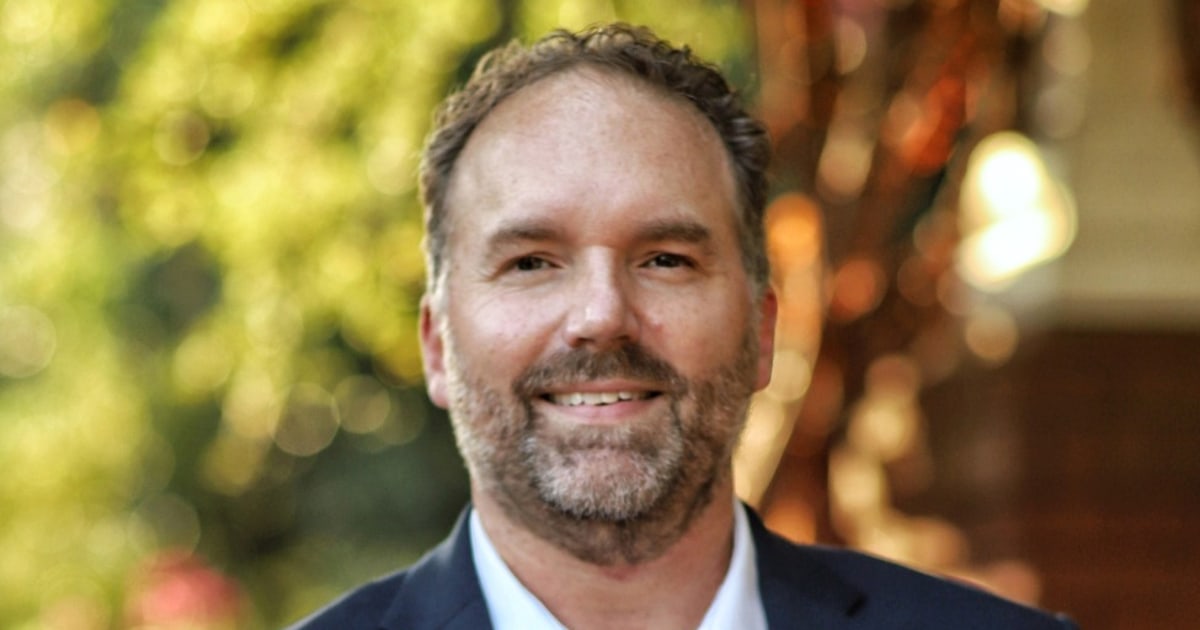
Lloyd Trufelman
Building a Democratic media ecosystem doesn’t mean abandoning ethics; it means telling the truth with clarity, consistency and urgency via channels that reach people directly.
The right’s machine won’t be matched overnight, but Democrats must start now. Without a strong proprietary media infrastructure policy achievements will be negated, elections lost, and American democracy itself may vanish with them.
Lloyd P. Trufelman is the founder and former president/CEO of Trylon SMR, a strategic marketing communications firm exclusively serving clients in the technology, media and telecom industries, established in 1990 and acquired in 2015. In addition, Trufelman has served as a press aide for the Democratic political campaigns of New York City mayor Edward Koch, presidential candidate Bruce Babbitt and U.S. Senate candidate Mark Green. He has also served as a campaign media advisor for New York State Senate, Assembly and Westchester County Legislature races.
This article originally appeared on Rockland/Westchester Journal News: Democratic Party messaging system needed | Opinion