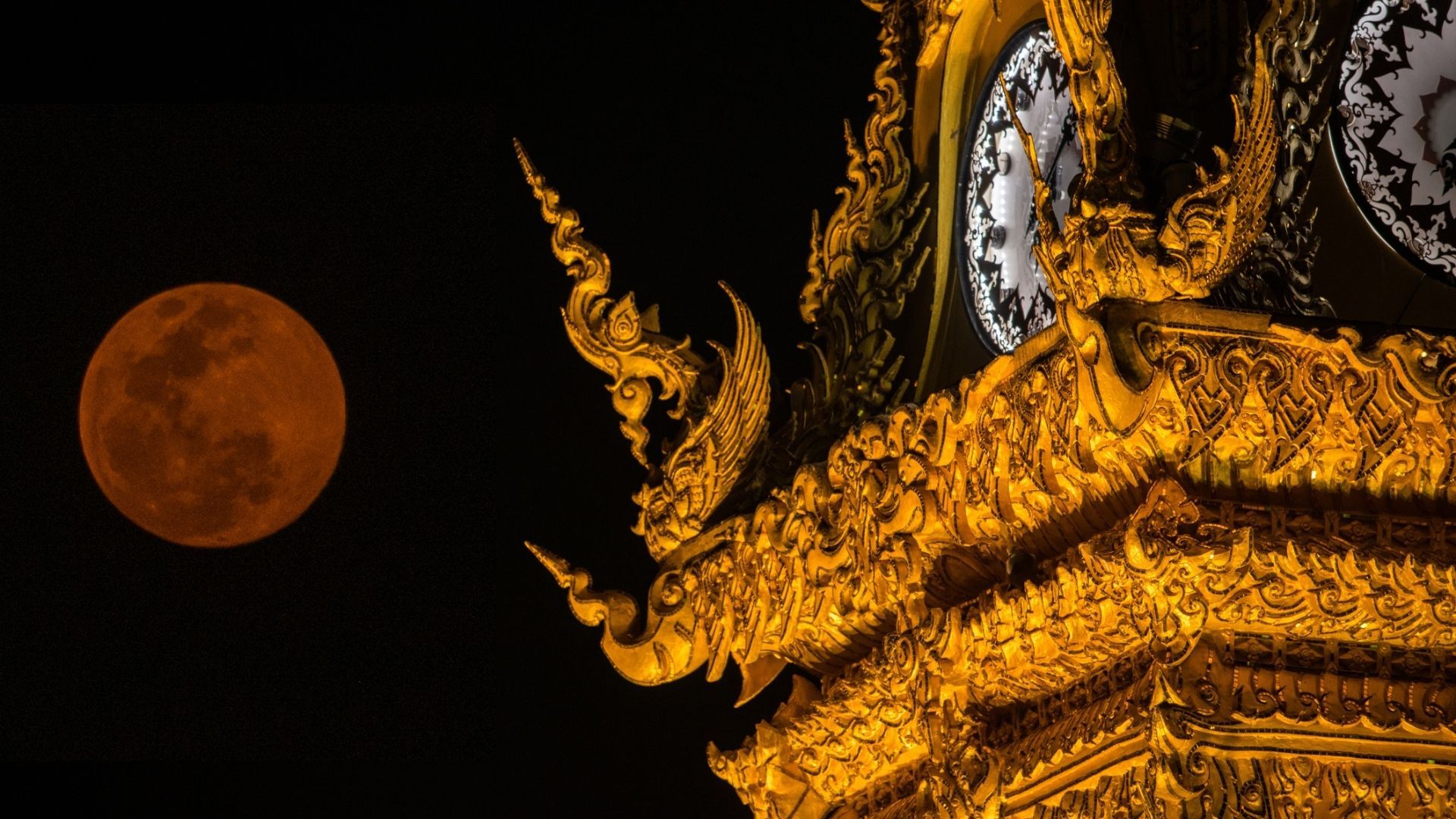





The biggest and brightest full moon of 2025 is coming up this week.
November’s Beaver Moon will not only be a supermoon, but it will be the biggest supermoon of the year. It’s the biggest moon because it will be at its nearest point to the Earth, 221,817 miles away.
A supermoon appears “bigger and brighter” than typical full moons according to the Old Farmer’s Almanac online.
This will be the second in a string of three supermoons. The next will be the December full moon.
The moonrise also coincides with peak of southern Taurids meteor shower, as well as the ongoing northern Taurids shower and start of the Leonid meteor shower.
Here’s when you can see it.
When will the Beaver Moon be on the rise?
Stargazers can see the Beaver Moon on the evenings of Nov. 4 and 5, 2025, with peak illumination on Nov. 5, according to the Old Farmer’s Almanac.
How much brighter and bigger is a supermoon?
There isn’t a scientific definition of a supermoon, but they appear about 14% bigger that a typical full moon and shine about 30% brighter, according to the Natural History Museum.
The reason is happens is because the moon’s orbit of the Earth isn’t a perfect circle, which means that sometimes during it’s orbit it’s a little bit father away, called apogee, it created an effect called a micromoon and when it’s at its closest point, called perigee, it creates a supermoon.
What are the meteor showers happening?
The southern Taurids meteor shower will peak on Nov. 5 according to Eartsky.com and last until Nov. 12.
The show is known for “slow-moving, long-lasting meteors, are linked to comet Encke, which has a nucleus approximately 2.98 miles,” Space.com said.
The northern Taurids meteor shower started on Oct. 20 and lasts until Dec. 2, according to the American Meteor Society. It peaks peaking Nov. 9-12.
On top of those two, the full moon will happen during the early days of the Leonids, which run from Nov. 3 until Dec. 2, peaking on Nov. 17, 2025, according to EarthSky online.
Why is this upcoming full moon called the Beaver Moon?
The Old Farmer’s Almanac online explains that November is typically the month when beavers start to take shelter in their habitats, previously having shored up their food stores for the winter.
“During the fur trade in North America, it was also the season to trap beavers for their thick, winter-ready pelts,” according to the Almanac.
A shot of last year’s Beaver Moon in November. This year’s Beaver Moon, a supermoon, will be on the rise in early November.
What’s the best way to see the Beaver Moon?
You don’t need any special equipment to see the next full moon.
But a telescope can come in handy.
In a past interview with USA Today Network, Tim Brothers, Massachusetts Institute of Technology technical Instructor and observatory manager, said with any case of stargazing, it’s much better if you’re using a good telescope or a pair of binoculars.
What are some other names for the November full moon?
There are other names for November full moon, that originate from different tribes.
“Deer Rutting Moon (Dakota, Lakota) refers to the mating season. Digging/Scratching Moon is a Tlingit term for when bears dig their winter dens. Whitefish Moon (Algonquin) describes the spawning time for this fish,” the Old Farmer’s Almanac said. “Names that allude to the cold and snow include Drift Clearing Moon (Cree), Frost Exploding Trees Moon (Cree), Moon of the Popping Trees (Oglala), Hoar Frost Moon (Cree), Snow Moon (Haida, Cherokee), and Winter Maker Moon (Western Abenaki).”
When is the December full moon? What is it called?
According to Time and Date, it’s called the Cold Moon, and it will rise Dec. 4, 2025.
This article originally appeared on The Providence Journal: November’s special full moon coincides with 3 meteor showers. When it is