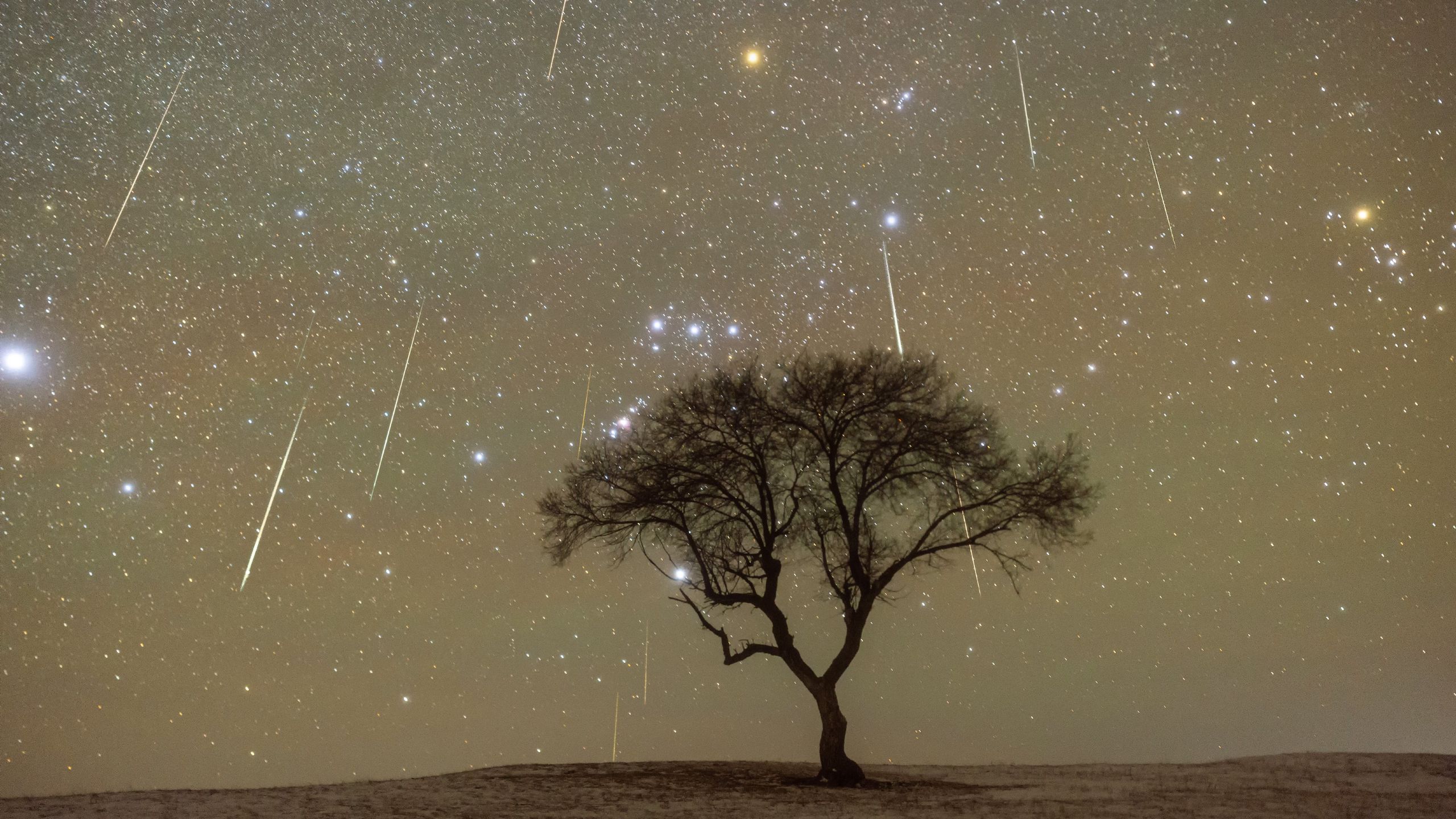
The most prolific meteor shower of the year is about to deliver more “shooting stars” than any other in near-perfect conditions for skywatchers.
The annual Geminid meteor shower starts Thursday (Dec. 4), and remains active for the next two weeks. But this year’s peak will be the night to watch. During the peak of the Geminids, on Saturday, Dec. 13 through Sunday, Dec. 14, as many as 150 meteors per hour may be visible in the night sky, and the best views will be from the Northern Hemisphere.
This year, the show will be extra special because the peak night will take place in a dark, mostly moonless sky. A 28%-illuminated waning crescent moon will rise in the east at about 2:30 a.m. local time across the Northern Hemisphere. That’s about the same time the radiant point of the Geminids — near the bright stars Castor and Pollux, in the constellation Gemini — rises highest in the sky.
For the best views, get as far from artificial lights as possible, and allow about 20 minutes for your eyes to adjust to the darkness. Avoid looking at phone screens, or use red-light mode to preserve your night vision. You don’t need to look directly at the radiant point to see meteors; they can appear anywhere overhead. Meteor showers are best viewed with the naked eye; no skywatching binoculars or backyard telescopes are necessary, though they will help you get the best views of the year’s last supermoon.
Although the rates of “shooting stars” from the Geminids will quickly reduce after the peak night, the meteor shower will be active through Dec. 17. That same night marks the beginning of the less-impressive Ursid meteor shower, which will produce around 10 meteors per hour on its peak night of Dec. 21-22.
Although they’re not as strong as the Geminids, the Ursids will occur in the completely dark skies of a new moon. These back-to-back meteor showers are a fine way to round out the year’s stargazing.