A Stone Age person buried 12,000 years ago in a cave in Italy had a rare genetic disorder that shortened her arms and legs, a new study finds.
A DNA analysis of her skeleton revealed that she was a teenage girl who had a rare form of dwarfism. The finding is the earliest DNA diagnosis of a genetic disease in an anatomically modern human, the researchers said.
“As this is the earliest DNA confirmed genetic diagnosis ever made in humans, the earliest diagnosis of a rare disease, and the earliest familial genetic case, it is a real breakthrough for medical science,” study co-author Adrian Daly, a physician and researcher in endocrinology at the University Hospital of Liège in Belgium, told Live Science in an email. “Identifying with near certainty a single base change in a gene in a person that died between 12,000 and 13,000 years ago is the earliest such diagnosis by about 10 millennia.”
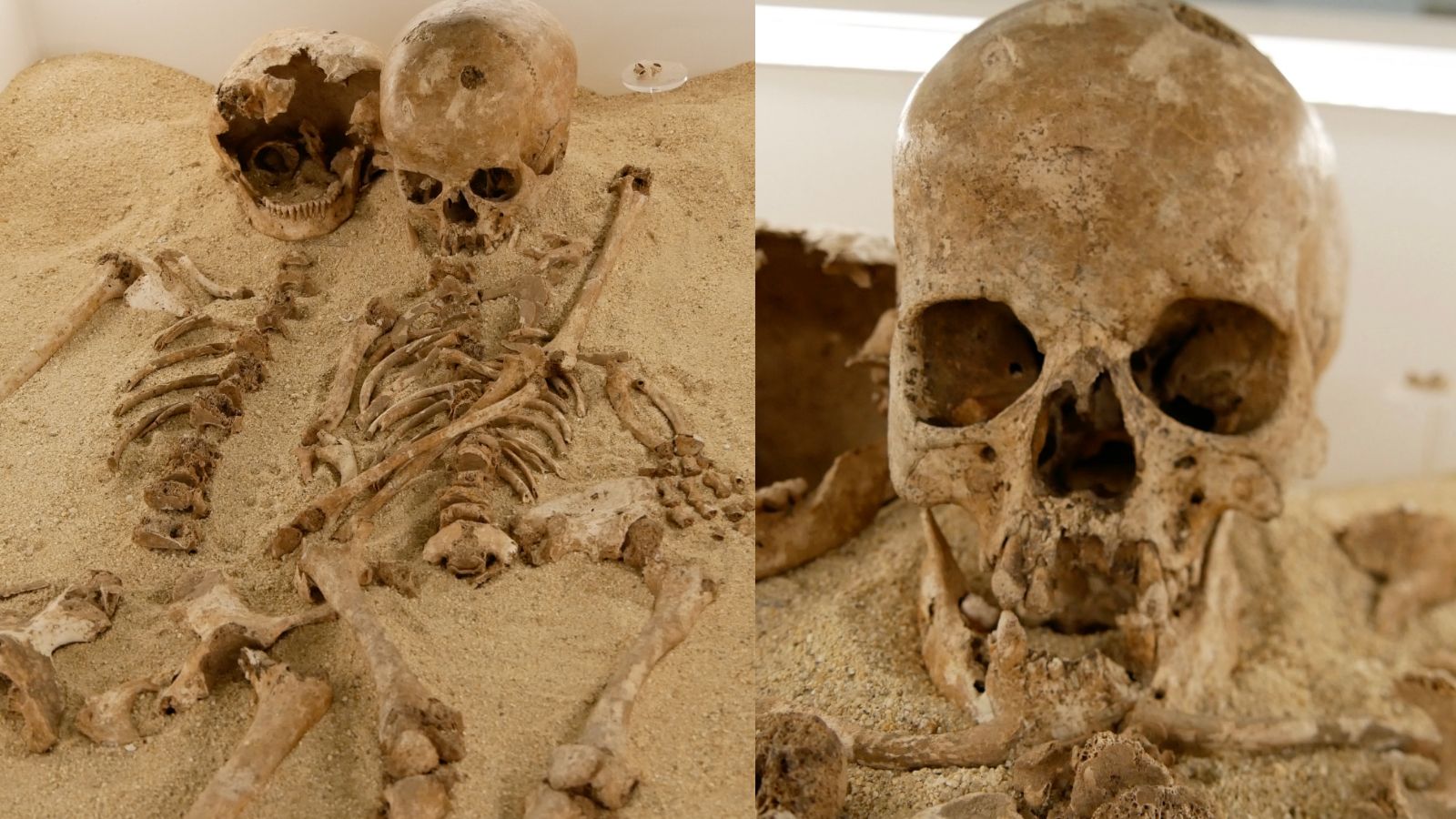
Researchers found that the teenager — nicknamed “Romito 2,” after the cave where her remains and those of eight other prehistoric hunter-gatherers were discovered in 1963 — had a rare genetic disorder called acromesomelic dysplasia, Maroteaux type (AMDM). This condition results in an extreme shortening of the limbs, particularly the forearms, forelegs, hands and feet.
AMDM is caused by mutations on both chromosomes of the NPR2 gene, which plays a key role in bone growth. As a result of her condition, Romito 2 “would have faced challenges in displacement over distances and terrain, while movement limitations at the elbow and hands would have affected her daily activities,” Daly and his colleagues wrote in the study, which was published Wednesday (Jan. 28) in The New England Journal of Medicine.
Romito 2 was around 3 feet, 7 inches (110 centimeters) tall. Contrary to previous research that proposed the skeleton was male, DNA testing using material collected from the left inner ear revealed Romito 2 was female. She was buried in an embraced position with an adult nicknamed “Romito 1,” who was also interred in the limestone Romito Cave in southern Italy.
DNA testing also showed that Romito 1 was female and a first-degree relative of Romito 2, meaning they were mother and daughter, or potentially sisters. Intriguingly, Romito 1 was shorter than average for adults at the time, measuring 4 feet, 9 inches (145 cm) tall.
The analysis revealed that Romito 1 carried one abnormal copy of the NPR2 gene, which may have limited her growth somewhat — but not to the same extent as Romito 2, who carried two abnormal copies of the gene and, therefore, showed more pronounced dwarfism.
Genetic material from the skeletons confirmed that Romito 1 and Romito 2 were from the Villabruna genetic cluster, a population of hunter-gatherers that expanded from Southern Europe into Central and Western Europe roughly 14,000 years ago. The researchers did not find evidence of close inbreeding, but the population that lived near Romito Cave was probably small, according to the study.
It’s still unclear how Romito 1 and Romito 2 died, as their remains show no signs of trauma. Romito 2’s diet and nutritional condition were similar to those of the other people buried in Romito Cave, suggesting that her community looked after her.
“The challenges she faced were met by the provision of care in her family group,” the researchers wrote in the study.
Fernandes, D. M., Llanos-Lizcano, A., Brück, F., Oberreiter, V., Özdoğan, K. T., Cheronet, O., Lucci, M., Beckers, A., Pétrossians, P., Coppa, A., Pinhasi, R. & Daly, A. F. (2026). A 12,000-year-old case of NPR2-related acromesomelic dysplasia. The New England Journal of Medicine. https://doi.org/10.1056/NEJMc2513616