Same-sex sexual behavior among primates could be shaped partly by specific environmental and social conditions, according to a new study comparing 59 species.
Same-sex sexual behavior (SSB) in animals is increasingly recognized in the scientific community as widespread, as it’s documented across the animal kingdom in about 1,500 species. Untangling how and why it emerged across so many diverse species is challenging, however. The new study, published Jan. 12 in the journal Nature Ecology & Evolution, found SSB may be beneficial — at least for primates — when ecological conditions are harsh and social conditions are complex.
“[The findings] do suggest that the orientation toward individuals of the same sex has a very strong evolutionary history, and it’s nothing bizarre or derived or unnatural,” said Durham University primatologist Zanna Clay, who was not involved with the new study. “In fact, it’s likely part of the evolutionary fabric of our societies.”
Primate same-sex bonding to navigate harsh conditions
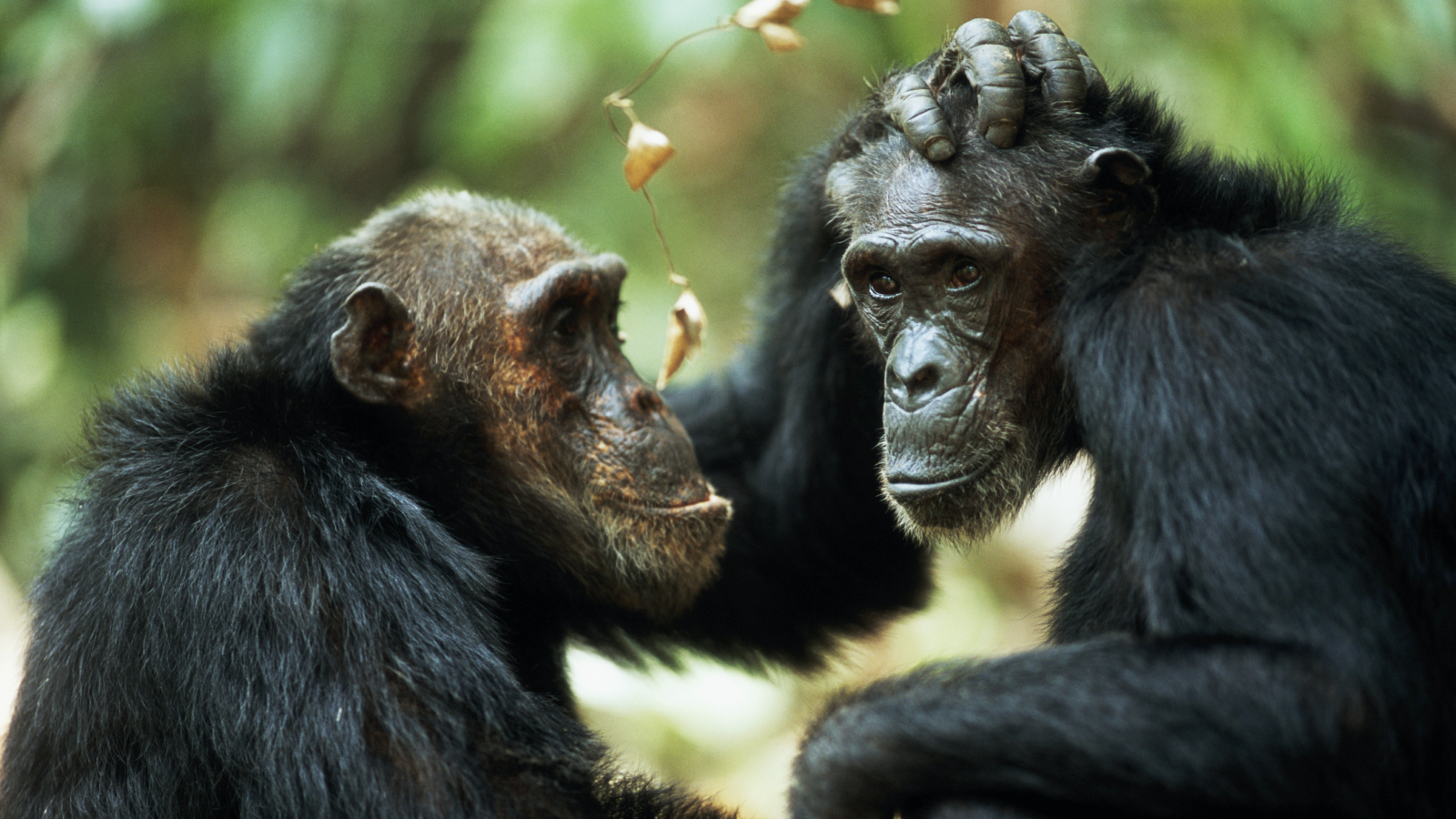
Research suggests SSB facilitates bonding in socially complex animals. In bonobos (Pan paniscus) and chimpanzees (Pan troglodytes), it is associated with reduced tension, conflict resolution and the strengthening of alliances. For golden snub-nosed monkeys (Rhinopithecus roxellana), SSB and grooming strengthen social bonds in harsh, cold climates with scarce resources.
Genes also seem to play a role. In a 2023 study of rhesus macaques (Macaca mulatta), Vincent Savolainen, a biologist at Imperial College London, found SSB to be about 6.4% heritable, meaning the tendency toward this behavior can be passed down genetically from parents to offspring. But such a small percentage leaves a lot of uncertainty around what else might cause it to arise.
To explore the ecological and social context, Savolainen and colleagues conducted a meta-analysis of SSB studies across primates. Of the 491 species, they found the behavior documented and prevalent in 59 species. SSB is more likely to occur when species face a drier environment, scarcer resources, and a lot of predators, according to the study. It is also more common in species with complex social systems, greater size differences between males and females, and longer lifespans.
These trends suggest SSB might serve as a social strategy to reinforce bonds, manage conflict or build alliances, driven by the ecological and social pressures a group faces. “Species that have particularly challenging environmental and social pressures have evolved, independently of common ancestry, same-sex sexual behavior as a way to manage the pressure and navigate the social dynamic,” Savolainen said, “forming coalitions, bonding, helping them deal with the challenges they face.”
If predators are especially abundant, for example, having a socially close group that can trust each other’s alarm calls is beneficial, Savolainen said; SSB offers one way to form or maintain relationships.
Chimpanzees and bonobos are known to engage in SSB when navigating ecological challenges, said Clay. “In a resource-poor situation, you need to cooperate and learn to tolerate each other,” Clay said. “If there’s food scarcity, having techniques to maintain and keep social bonds going is important.”
However, while the trends are notable, it’s not so simple to draw parallels across species that display SSB. “It points to some common explanations that might cut across deep taxonomic divisions, but there is a risk you’re obscuring some of the nuance in individual lineages,” said Nathan Bailey, an evolutionary biologist at the University of St Andrews who was not involved with the new study. “Does this behavior emerge for different functional reasons, under different selective pressures, in different lineages? They’re starting to scratch the surface of that.”
Savolainen said SSB has been traditionally underreported, so the new findings highlight its significance in a broader understanding of primate behavior. “Same-sex behavior is as important as feeding, fighting, or looking after young,” he said.
The research could help paint a more complete picture of social and sexual behavior in primates. “People tend to separate reproductive sex and social sex, whereas actually I think the social element of both is very important and should be integrated,” Clay said.
But can these findings shed any light on human behavior? Our early hominin ancestors likely experienced various ecological and social pressures, including those linked to SSB for the primates in this study, the study authors pointed out –– but it’s unclear whether these pressures would have contributed to the evolution of same-sex sexual orientation in hominin species in a similar way.
Generalizing the results to humans is tricky, according to the researchers and experts, without behavioral data from our hominin ancestors, and considering modern human culture and identity is so complex.
“I don’t think this tells us much about what’s going on in humans,” Bailey said. “There seems to be a huge diversity of explanations [of SSB] across animals, even in closely related lineages, so it doesn’t stand to reason to me that any one particular explanation in animals would map onto human beings.”
The study also points to a key reason primates, including humans, have succeeded so well across the globe: adaptability. “We’re not fixed to one mating system, one behavioral system,” Clay said. “To me, the fact that sexual behaviors can expand [under different conditions] reflects that behavioral flexibility which is really important for primate success.”