QUICK FACTS
Name: Sandals of Tutankhamun
What it is: A decorated pair of leather sandals
Where it is from: King Tut’s tomb, Valley of the Kings, Egypt
When it was made: Circa 1330 B.C.
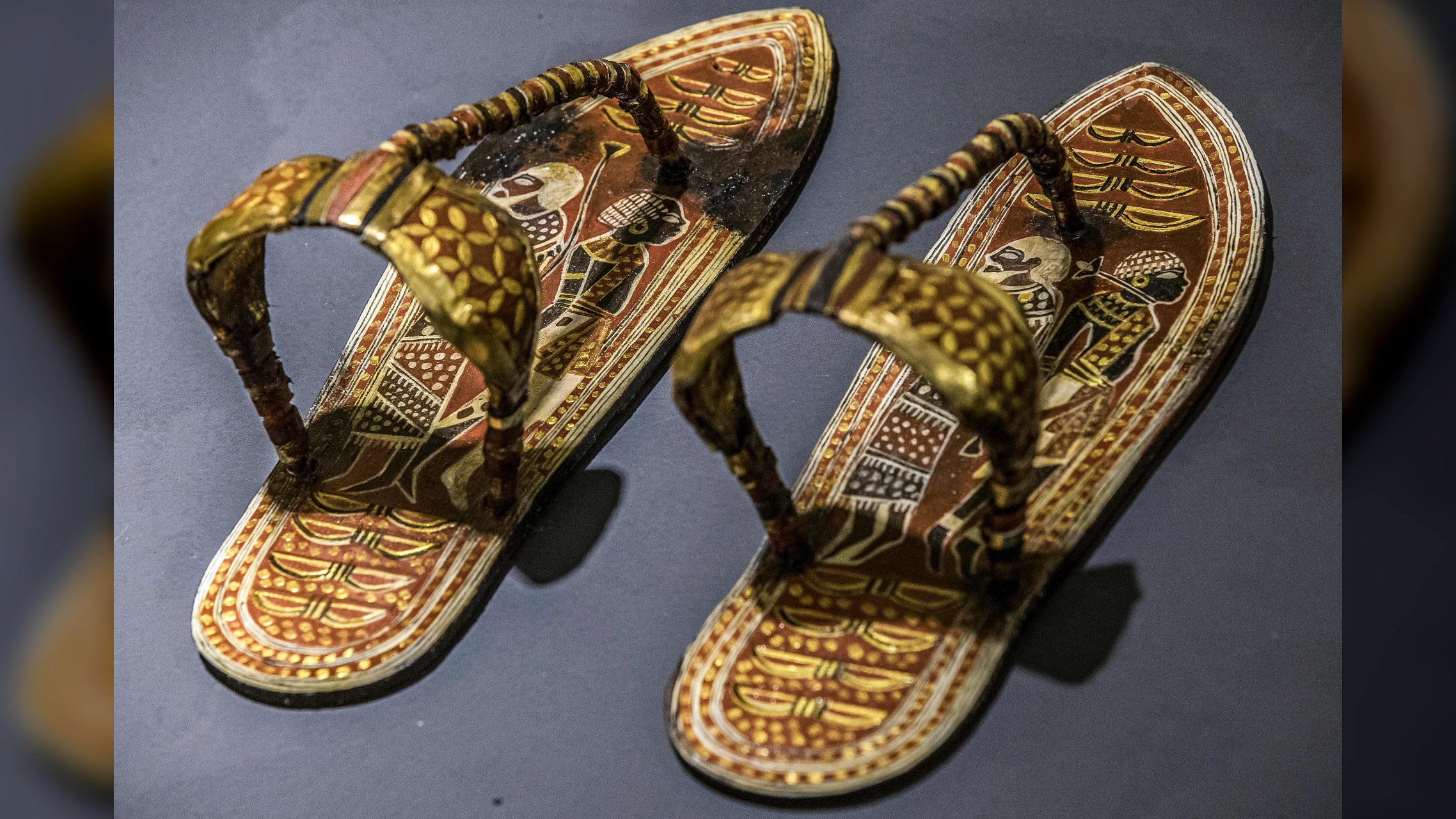
When British archaeologist Howard Carter and local Egyptians excavated the tomb of King Tutankhamun in 1922, they found thousands of artifacts buried with the young pharaoh. These sandals were one of the dozens of pairs of footwear that carried Tut to the afterlife, but the depiction of defeated enemies on their insoles makes them unique.
The sandals were made of wood and covered with a veneer of bark, green leather and pieces of gold foil on top of a layer of white paint. In the arch area of each sandal, there are depictions of two people bound with lotus and papyrus. Each sandal also has eight bow weapons — four near the toes and four at the heel — as well as a strap in the shape of a bow. Together, these made up the Nine Bows, the collective symbol for the enemies of Egypt.
MORE ASTONISHING ARTIFACTS
The sandals are on display in the Egyptian Museum in Cairo. An information card notes that the bound captives refer to King Tut’s power and that the Nine Bows are “situated so that the king’s feet step on them, reifying the trampling of Egypt’s enemies by the monarch.”
When his mummy was discovered, Tut was found to be wearing gleaming gold sandals and gold toe covers. It is unknown, though, whether King Tut ever wore any of the sandals discovered in his tomb during his life or if they were made specifically for his afterlife attire.
For more stunning archaeological discoveries, check out our Astonishing Artifacts archives.