March is a great month to step outside and look up. As winter gives way to spring, the night sky offers a mix of bright planets, seasonal star patterns and easy-to-spot deep-sky targets — ideal whether you’re a casual observer or are hoping to capture some stunning astro images. The standout event is the total lunar eclipse on March 3, when the full moon passes through Earth’s shadow and turns a deep red, creating one of the most photogenic sights of the year.
It’s also a month that highlights how the right gear can transform your view. Big astronomy binoculars reveal surprising lunar and star field detail, the best telescopes bring planets and nebulas into focus, and the best astrophotography cameras make it easier than ever to capture wide-field nightscapes or eclipse close-ups.
March 2: Moon/Regulus occultation
In the hours before sunrise on March 2, the moon — just ahead of full phase and about 99% illuminated — passes close to Regulus, the brightest star in Leo. From some locations, it will briefly occult as the star slips behind the lunar edge before reappearing minutes later. Because the nearly full moon brightens up the sky, binoculars or a small telescope will help separate Regulus from the glare and make the event easier to observe.
March 3: Total lunar eclipse

On March 3, the full moon will undergo a total lunar eclipse visible across much of the U.S.. As it passes through Earth’s shadow, the moon will gradually darken and take on a deep red hue, with totality occurring around 4:04 to 5:03 AM EST, peaking at 4:33 AM EST. The eclipse is safe to watch without any specialist equipment, but binoculars or a telescope enhance the view, and it’s also a fantastic photographic opportunity.
Best seen with:
Binoculars: For quick, handheld glimpses of the eclipse, a pair of 8×42 or 10x50s will do the job nicely. If you want a bigger, tripod-mounted setup, you’ll want something like the Celestron SkyMaster 15×70, where the moon fills more of the frame.
Telescope: For the best views, a 6- or 8-inch Dobsonian is your best bet — the Celestron NexStar range is fantastic. You can get a decent view with a beginner telescope, like a 4- or 5-inch, but you won’t be able to see as much detail. Although the eclipse is in the middle of the night, the full moon is still a great target for kids to admire with one of the best telescopes for kids.
Camera: For moon photography, the lens matters more than the camera. You’ll want a long telephoto lens to zoom in on the moon, and you can get really creative by using the buildings and landmarks around you to add context and scale. As far as cameras go, the best astrophotography cameras perform the best in low-light conditions — the Nikon Z8 and Sony A7 IV are favorites of ours.
March 8: Saturn makes a close approach to Venus

Just after sunset on March 8, at around 18:11 EST, you’ll see Saturn conjunct with Venus in the early evening sky. While this is probably best seen with the naked eye due to both planets’ brightness, a telescope will provide you with a more detailed view of Saturn and its rings. That said, due to its placement in the sky, it won’t be the best seeing conditions.
March 18: New moon

The new moon on March 18 brings the darkest skies of the month, making this week the ideal time for astrophotography and deep sky observation. As we’re now at the start of galaxy season, you can get a great view of the Leo Triplet, the Needle Galaxy, the Pinwheel Galaxy and more.
Best seen with:
Telescope: The best telescopes for viewing galaxies are large-aperture Dobsonian reflectors — 8 inches and above is your best bet to capture the “faint fuzzies”.
Binoculars: Binoculars won’t give outstanding views of galaxies, but the week of the new moon is a great time to view all the usual suspects without the light of the moon. 10x50s are good for handheld observations, but something beefier, like 20×80, will be fantastic for a variety of celestial objects.
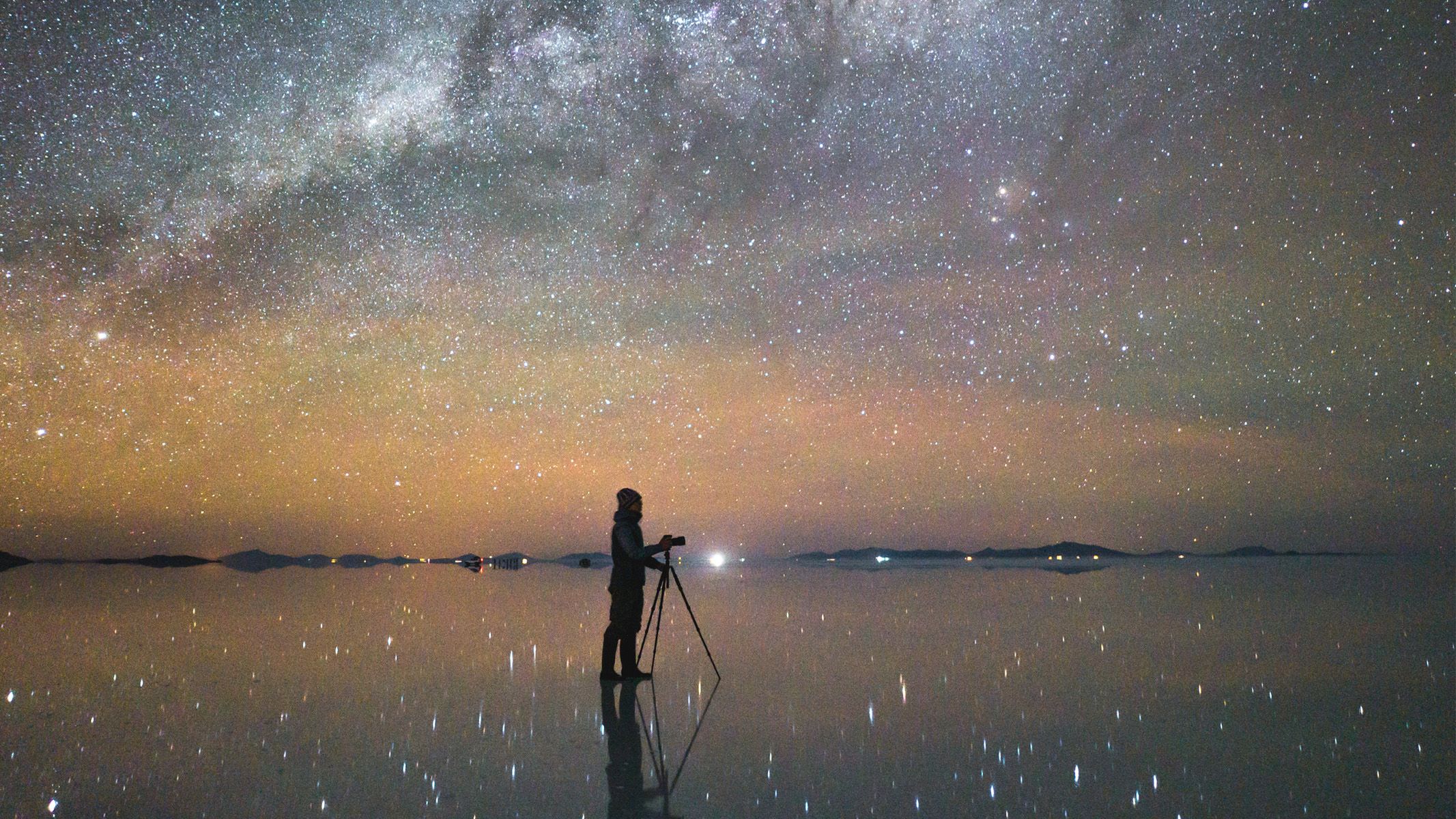
Camera: To photograph galaxies, you can either mount your camera to your telescope or use one of the best smart telescopes to do all the heavy lifting for you. The Vaonis Vespera II is incredible for this purpose, and is a lot more beginner-friendly than a telescope/camera setup. If you’re more of a beginner astrophotographer and are still learning the techniques, new moon week is a great time to get out with your camera and wide-angle astro lenses to shoot the Milky Way.
March 20: Crescent moon close to venus

On the evening of March 20, a slim, 5% crescent moon will hang just above the bright planet Venus in the western sky. Binoculars or a telescope won’t resolve much detail on Venus, but the crescent moon will be a great target for viewing contrast and detail in its craters during this phase — and you might even see some Earthshine.
Best seen with:
Telescope: A small, beginner scope will be sufficient for basic observations, although apertures of 4 inches and above are best for lunar detail, especially given its slim profile.
Binoculars: Bigger binoculars are better here, to detect the finer details on the moon’s surface — look for something with at least 15x magnification.
March 26: Moon close to Jupiter/Castor/Pollux

On the late evening of March 26, the waxing gibbous moon will appear near Jupiter, Castor and Pollux in the constellation Gemini. The moon will be around 57% illuminated, making it a good target for binoculars and telescopes. You’ll be able to spot Jupiter’s moons with a pair of 15x70s (and bigger), and a telescope will be able to resolve its cloud bands and Great Red Spot.
Best seen with:
Telescope: To make out Jupiter’s moons, a 50-90mm aperture telescope is needed, at minimum. To make out better detail on the planet’s surface, you’ll need at least 6-8 inches of aperture.
Binoculars: A pair with at least 15x is needed to spot Jupiter’s Galilean moons. If you want the best view, opt for a pair of binoculars with ED glass to eliminate chromatic aberration. Binoculars won’t give you any planetary detail, however — you’ll need a telescope if that’s what you’re looking for.
March 27: Moon/Beehive Cluster occultation

If you’re happy to stay up late, the moon will conjunct with the Beehive Cluster at around 23:03 PM EST. The moon will be 69% illuminated, so there’s lots of detail to see. As the Beehive Cluster isn’t visible to the naked eye, you’ll need binoculars or a telescope to see it.
Best seen with:
Telescope: You don’t need a huge scope here — a small 4-inch will be more than enough, but if you want more detail, you’ll need to use a larger aperture.
Binoculars: You can see the Beehive Cluster best through a pair of binoculars with 8x or 10x magnification due to the wider field of view. If you want more detailed moon views, level up to a pair of 15x or 20x.