Archaeologists in Vietnam have made a discovery that could rewrite scientists’ understanding of where syphilis originated.
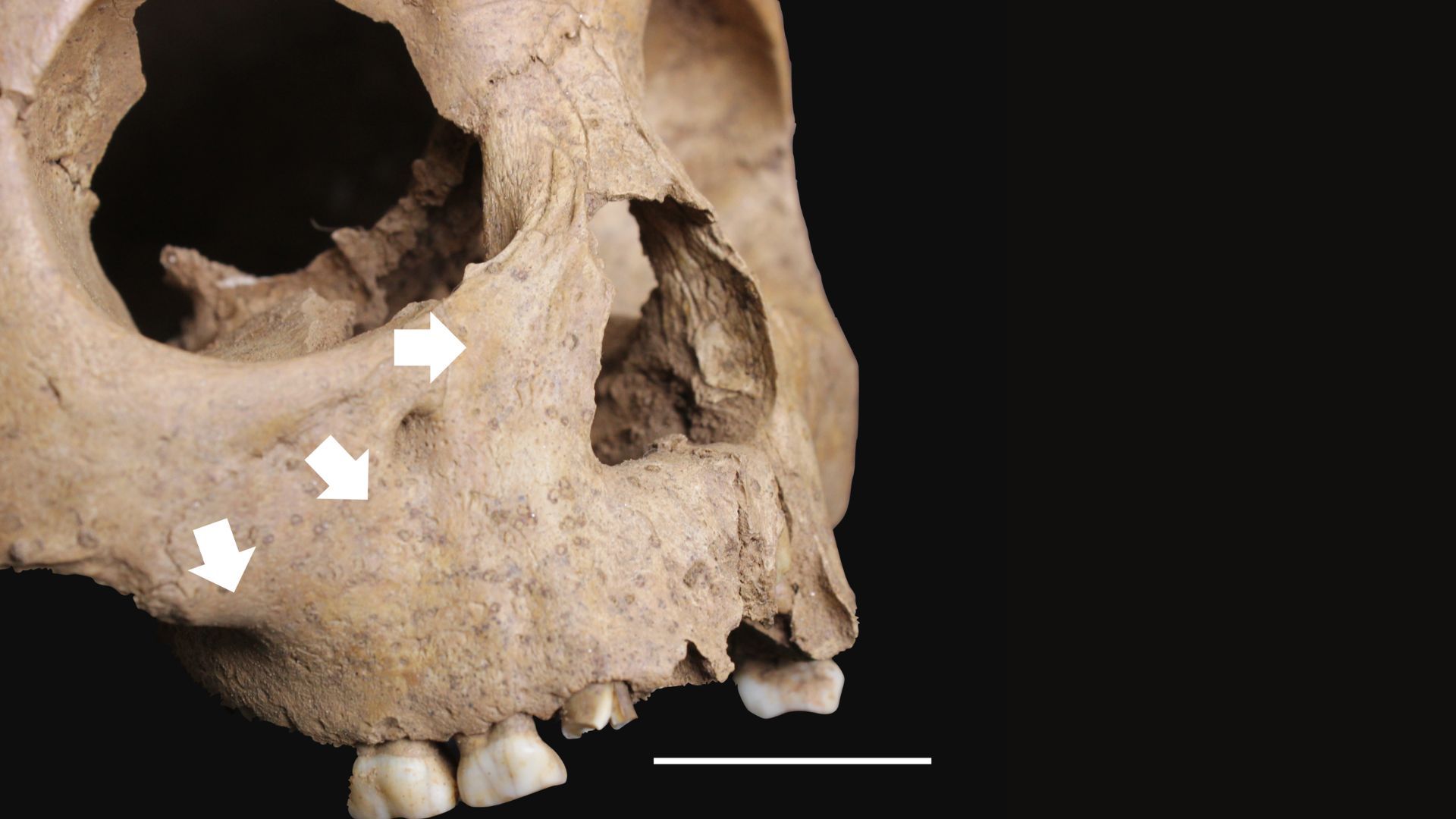
The team found the Stone Age skeletons of three people who had a debilitating bacterial disease that left marks on their bones and teeth. This disease is in the same family as syphilis, and the discovery of it in prehistoric Vietnam could challenge the idea that syphilis-like diseases originated in the Americas.
For decades, researchers believed that of these diseases, only syphilis could be spread through congenital transmission, meaning from parent to child during pregnancy, study first author Melandrie Vlok, a lecturer in anatomy and physiology at the Charles Sturt University, told Live Science in an email. The assumption has been used to back the claim that syphilis originated in the Americas, after previous research found that 5,500-year-old remains of children carried bacteria related to syphilis alongside signs of congenital infection, Vlok said.
But importantly, “none of this DNA is actually syphilis,” she noted. This distinction matters as evidence of congenital infection by the bacteria has long been seen as evidence of syphilis itself.
“Our new research flips the script,” Nicola Czaplinski, a doctoral candidate in health sciences at the University of Notre Dame Australia, said in an email to Live Science. According to their findings, “congenital transmission isn’t unique to syphilis.”
Three children from neolithic Vietnam
While scientists have long debated where treponemal diseases originated, only one other study had investigated the question in Vietnam.
That study included cases that dated to the early agricultural transition, around 4,000 to 3,500 years ago. It focused on Man Bac, a site dating to around 4,100 to 3,300 years ago in northern Vietnam, and found that over 10% of the buried people examined had markings on their bones and teeth consistent with treponematosis. Most of those affected were young children and adolescents.
The new study looked at 16 sites across Vietnam, including Man Bac, and examined a total of 304 individuals dating from 10,000 to 1,000 years ago. It found evidence of congenital treponematosis in three children. Two individuals, aged 18 months and 5 years old, were identified at Man Bac, and a third individual from An Son, dating between 3,900 and 3300 years ago, in southern Vietnam and was around 2.5 years old.

The children’s teeth bore the most telling signs of congenital treponematosis, with some appearing stunted, malformed, or as though they were “worm-eaten.”
The researchers noted that because most of the individuals with treponematosis across both studies were children and adolescents, the disease was likely not transmitted sexually. But the existence of congenital cases complicates the assumption that mother-to-child transmission was exclusive to syphilis, a cornerstone to the “Columbus hypothesis” that leans on the idea that syphilis originated in the Americas.
“This discovery challenges one of the key pillars of the ‘Columbus brought syphilis [to Europe from the New World]’ theory and shows that … we’re still a long way from solving the mystery of where syphilis really began,” Czaplinski said.
Treponemal disease has been studied for decades by palaeopathologists, often with controversial outcomes.
Charlotte Roberts, Durham University
But despite this breakthrough, many challenges remain in determining exactly where syphilis originated. Vlok explained that in tropical regions like Southeast Asia, DNA doesn’t preserve well.
“Recovering it often requires taking large amounts of bone, and that raises serious ethical concerns,” she said. “Human remains are not just scientific samples; they are the ancestors of living communities and must be treated with care and respect.” Similarly, Africa is understudied in regards to the origins of treponemal disease, she added.
Charlotte Roberts, professor emeritus of bioarchaeology at Durham University in the U.K. who wasn’t involved with the new study, noted that the research adds to scientists’ knowledge of this disease group.
“Treponemal disease has been studied for decades by palaeopathologists, often with controversial outcomes,” Roberts told Live Science in an email. “This is, therefore, a welcome study of an area of the world which has not seen much evidence to date.”
Additionally, the study suggests that early migrations of people from China may have been responsible for the spread of the disease in Vietnam. Both sites featured in the study were established as the result of early migrations of farmers into mainland Southeast Asia and their subsequent interactions with local foragers.
“Of particular interest,” Roberts said, “is the suggestion that migration of people in the region may be directly linked to the occurrence of this infection.”
Vlok, M., Minh, T. T., Czaplinski, N., Buckley, H., Domett, K., Trinh, H. H., Huong, N. T. M., Huu, N. T., Dung, D. T. K., Sau, N. T., Thao, N. P., Lan, D. T., An, P. T. K., Phuoc, L. H., Matsumura, H., & Oxenham, M. (2026). Dental Stigmata and Skeletal Lesions of Congenital Treponematosis in Early Agricultural Vietnam (4000–3500 bp ). International Journal of Osteoarchaeology. https://doi.org/10.1002/oa.70096