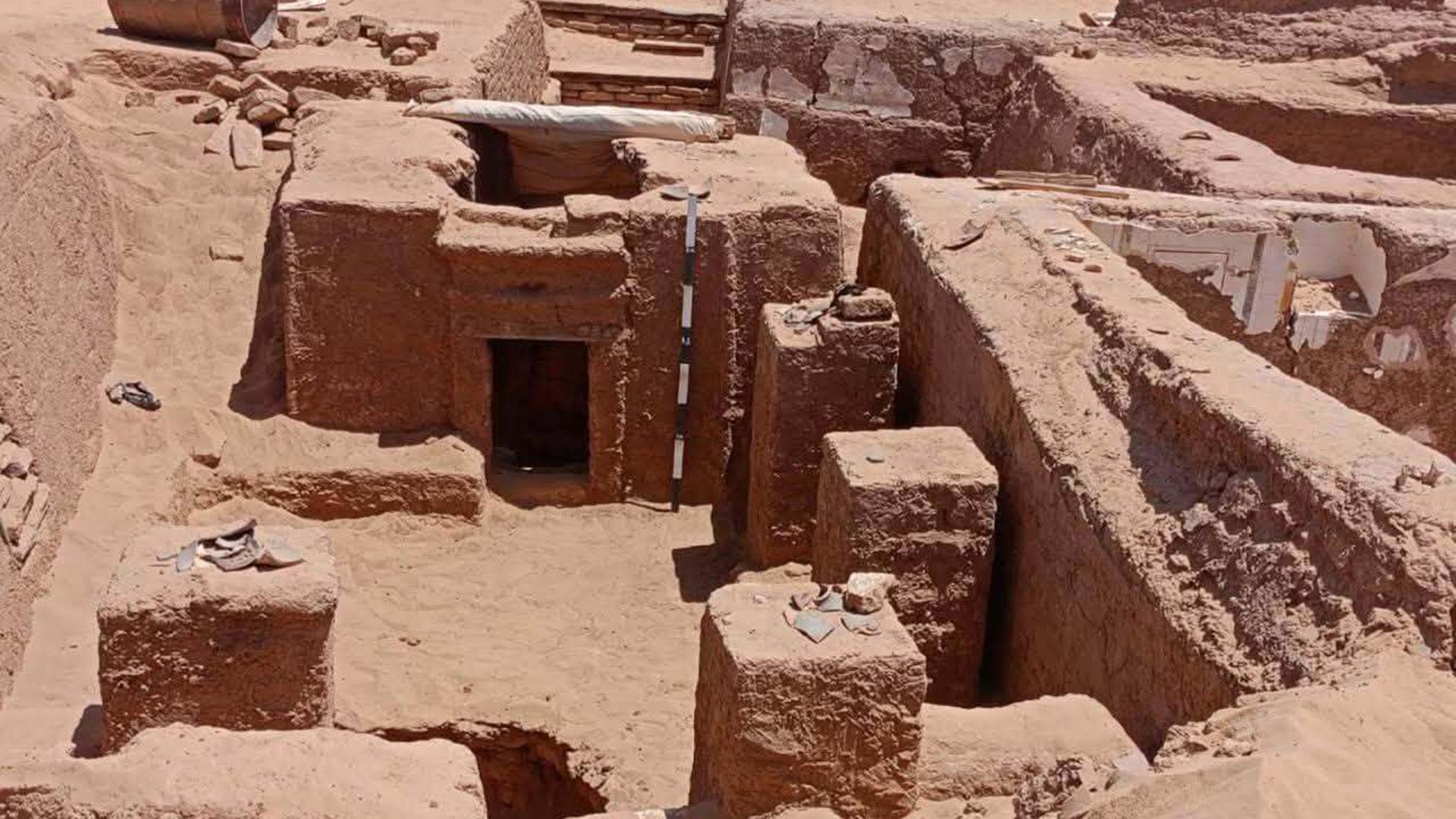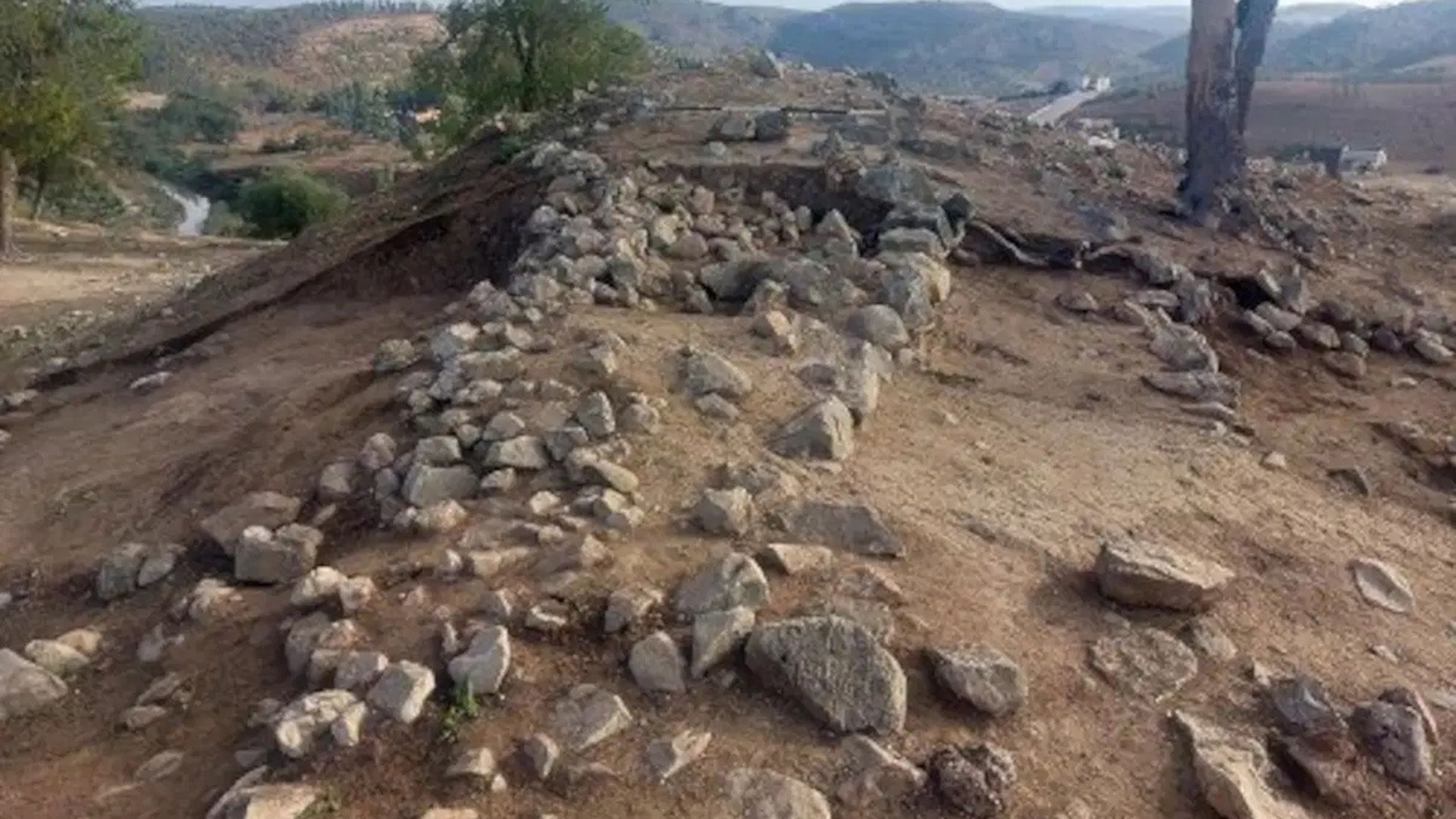


The largest defensive wall at Oued Beht. Archaeologists think its base was constructed about 4,000 years ago.
(Image credit: G. Lucarini, Oued Beht Archaeological Project)
Archaeologists have unearthed 4,000-year-old defensive walls in Morocco that are the oldest structures of their kind in North Africa outside the Nile Valley.
The discovery expands what’s known about the human development of this region of northwestern Mediterranean Africa, known as the Maghreb, particularly about the adoption of agriculture.
“For more than a century, the Maghreb was treated as a blank space in the story of Mediterranean later prehistory,” Giulio Lucarini, an archaeologist at Italy’s National Research Council, told Live Science in an email.
Latest Videos FromLive Science
But the new research shows that the gap resulted from a lack of scientific knowledge about the region. (“Maghreb” is Arabic for “the West” and refers to Morocco, Mauritania, Algeria, Tunisia and Libya.) For instance, only recently did ancient DNA research reveal that hunter-gatherers from Europe may have voyaged across the Mediterranean to the Maghreb around 8,500 years ago.
“Four thousand years ago, communities here were reshaping their landscape and building defences on a scale never documented before in the region, at a time when societies across the Strait of Gibraltar were also changing,” he said. “We are only beginning to understand how these developments on the two shores [the Maghreb and Europe] relate to each other.”

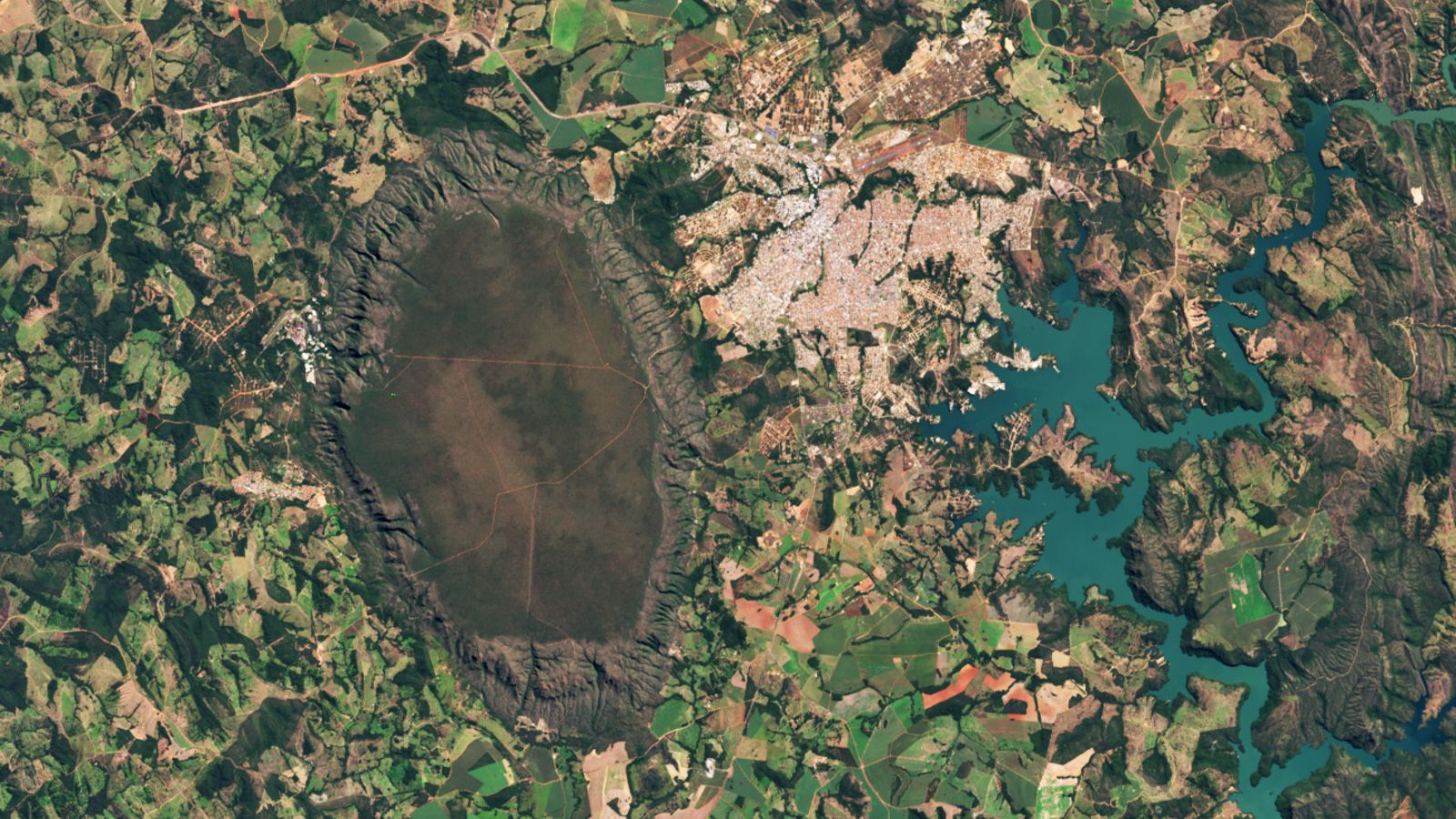
The Oued Beht archaeological site surrounded by defensive structures, with the modern Moroccan village of Aït Siberne in the background.
(Image credit: A. Garcia-Molsosa and T. Wilkinson, Oued Beht Archaeological Project)
Lucarini is the first author of the new research, which describes the latest discoveries at Oued Beht in Morocco, in a river valley about 50 miles (80 kilometers) east of the capital, Rabat.
Many of the same researchers were involved in last year’s discovery of the remains of a prehistoric village at Kach Kouch, about 120 miles (190 km) north, in Morocco’s Rif Mountains near the Strait of Gibraltar.
Get the world’s most fascinating discoveries delivered straight to your inbox.
“A work like this is not improvised”
The study, published Sept. 7 in the journal Libyan Studies, describes the discovery of an ancient defensive system of ditches and ramparts at Oued Beht by archaeologists from Italy, Morocco and England.
Key to the system are several defensive walls — in particular, a heavily fortified wall on the southern side of the site. The archaeologists think the base of the wall was built between 3,500 and 4,000 years ago, from clay, ash, silt and stones, to defend a settlement there from attacks.
The defenses imply the settlement was worth defending, and the archaeologists suggested it was an early farming hub with livestock, cultivated crops and large storage facilities. Their discoveries at the site include dozens of bell-shaped pits that the team thinks were used to store grain.
“A work like this is not improvised,” Lucarini said. “It requires planning, choosing the right spot in the topography, and mobilising and coordinating labour over time.”

The region is an ancient river valley that connected inland areas with the Atlantic Ocean.
(Image credit: A. Garcia-Molsosa and T. Wilkinson, Oued Beht Archaeological Project)
The number of pits indicate that the site’s storage capacity was much larger than the needs of the people living there. “These facilities may have served a much wider community, perhaps drawing on a whole surrounding territory,” he said.
But who might have attacked the site is unclear. “We don’t know exactly what they were protecting themselves from,” Lucarini said. “Rather than ‘invaders,’ it may reflect growing competition over land and resources, control of movement through the landscape, and perhaps more formalised leadership.”
Links between North Africa and Europe
The discoveries at Oued Beht are important for the reconstruction of prehistory in this part of the world, representatives from Italy’s National Research Council said in a statement.
They show that “the communities of the north-western Maghreb in the second millennium BC were … capable of conceiving and carrying out major construction works on a scale that had not previously been documented,” Lucarini said in the statement.
The recent archaeological discoveries in Morocco reflect finds from prehistoric Iberia, on the northern side of the Strait of Gibraltar: “There, African ivory and ostrich eggshell have long pointed to contacts with North Africa, and now we are beginning to see the African side of that relationship,” Lucarini told Live Science.
Yet there were differences. Contemporary sites in Iberia are large, fortified hilltop settlements with planned architecture, abundant bronze metalwork and rich burials that reveal marked social hierarchies. But the defensive system at Oued Beht seems to have been much smaller.
“What the discovery shows is not that the two shores looked alike,” Lucarini said. “It shows that communities in the north-western Maghreb were also investing in large collective works and in the control of strategic places at a time when the western Mediterranean was changing.”
The discoveries at Oued Beht are important because they demonstrate the complexities and capabilities of early North African peoples, said Iman Nagy, a northeast African landscape archaeologist at UCLA who was not involved in the study.
“Oued Beht is especially interesting because it challenges us to reconsider the Maghreb’s place in Mediterranean prehistory,” Nagy told Live Science in an email. “Discoveries like this challenge diffusionist models that assume substantial architecture or social complexity must have arrived from elsewhere.”
Lucarini, G., Bokbot, Y., Wilkinson, T., Benattia, H., Bigoulimen, A., Brucato, A., Cygan, M., Farr, L., Hachami, H., Kiriatzi, E., Laoutari, R., Lombardi, L., Marsilio, A., Sánchez, R. M., Mazzini, I., Morales, J., Muti, G., Pelegrin, J., Radi, M., . . . Broodbank, C. (2026). Expanding Oued Beht: Final Neolithic, Bronze Age, medieval and later discoveries from excavation and survey in 2023. Libyan Studies, 1–42. https://doi.org/10.1017/lis.2026.10037