The immune system has several ways of remembering threats it’s encountered and then mounting stronger defenses in the future. Now, a new study unpacks how cells keep one type of immune memory from fading, and the findings might matter for treating diseases like cancer and Alzheimer’s disease.
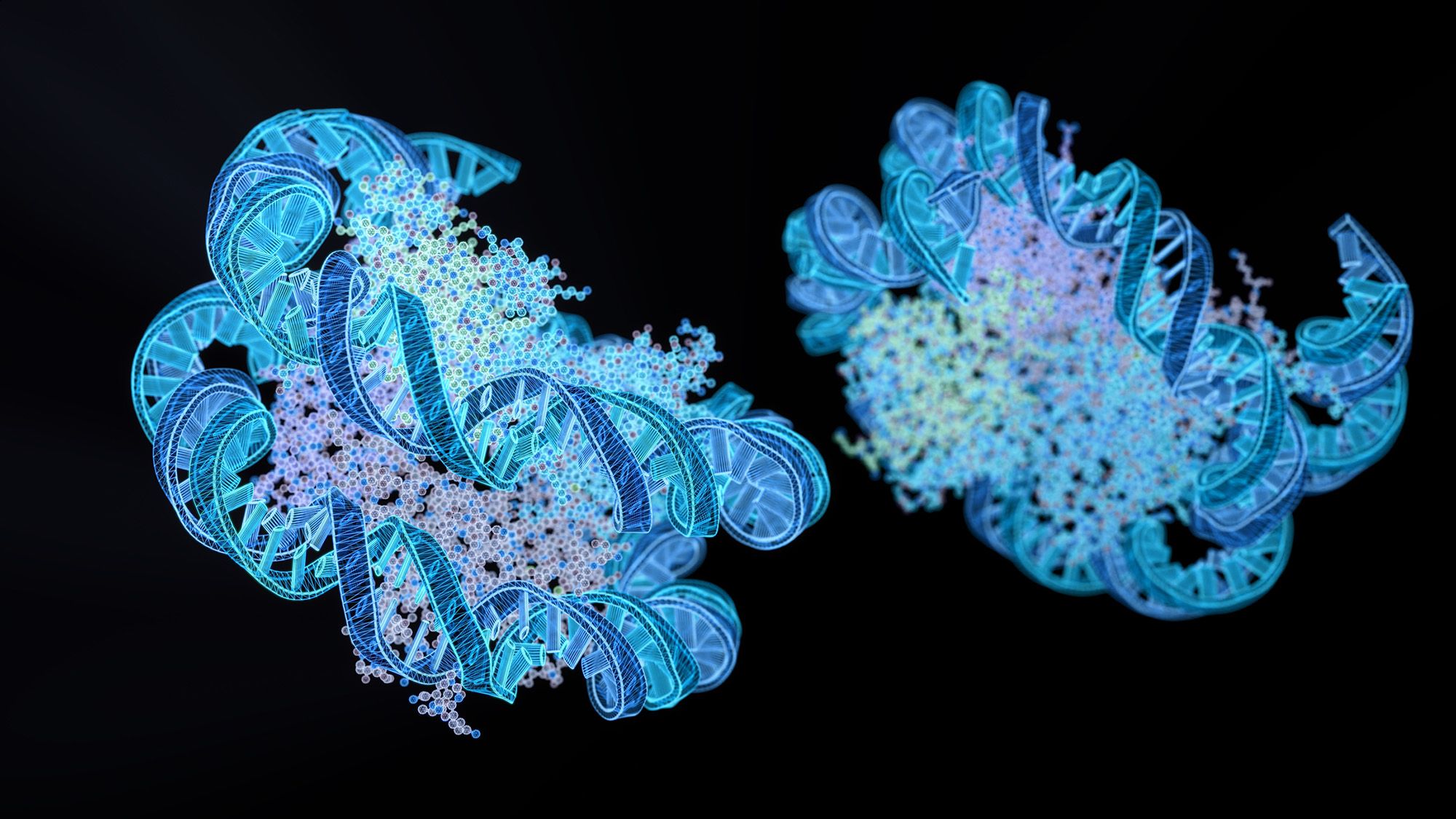
The research zoomed in on immune cells’ epigenetics — the methods that cells use to control genes without changing their underlying DNA codes. This can involve changing how DNA is packaged inside cells, for example. DNA molecules are typically wound around tiny spools inside cells, and their gene activity depends on how tightly or loosely they’re wound. Molecules called epigenetic markers can grab hold of the spool to tweak how the DNA is wound and thus activate or silence certain genes.
Past research found epigenetic changes can prime immune cells against threats. The immune system’s first line of defense — innate immune cells — can be switched into an activated state so they’re ready to go if they encounter a germ. This form of immune memory, known as “trained immunity,” broadly enhances the cells’ defenses, enabling them to respond to threats more quickly and powerfully than “untrained” cells would.
Latest Videos FromLive Science
To flip that switch in the cells, a molecule latches onto the spool that DNA is wound around, specifically near genes involved in sparking inflammation. That subtle molecular tweak “holds those genes poised for rapid activation,” said Musa Mhlanga, a cell biologist and molecular geneticist at the Radboud Institute for Molecular Life Sciences in the Netherlands who wasn’t involved in the new study.
However, scientists didn’t know how that change was maintained over time.
The immune memory should have been destroyed soon after it was made, given that “the cell has enzymes whose entire job is to strip that mark off,” Mhlanga told Live Science in an email. But somehow, the memory stuck. “So the obvious question was never really answered: how does a mark survive weeks or months against machinery actively removing it?” Mhlanga said.
The research focused on cells of the innate immune system, including macrophages (pictured), which gobble up germs, dead cells and cellular debris.
(Image credit: ARTUR PLAWGO / SCIENCE PHOTO LIBRARY via Getty Images)
The new study, published Oct. 30 in the journal Science Immunology, may answer that question.
Get the world’s most fascinating discoveries delivered straight to your inbox.
The research investigated the phenomenon in mouse immune cells and live lab mice, as well as some human cells in lab dishes. Past studies hinted that, when immune cells switch into their “primed” state, their metabolism changes. This, in turn, drives up the production of a molecule called nicotinamide adenine dinucleotide (NAD+), which has long been known to help regulate how DNA gets packaged in cells.
In this case, though, the molecule took on a surprising role, Mhlanga said. NAD+ usually gets used up when enzymes orchestrate chemical reactions. But when it comes to the enzymes that normally erase immune cells’ memory, called KDM5a, that wasn’t the case.
NAD+ latches onto that epigenetic eraser but doesn’t get used up in the process; instead, it shuts down KDM5a, as if it were pushing an “off” button. By restraining its memory eraser, the immune cell remains in a primed and activated state, ready to ignite inflammation when triggered.
In experiments with mice, the researchers found that reducing or eliminating NAD+ from immune cells prevented them from entering this primed state. In mice with cancer, this hobbled the immune system’s ability to attack tumor cells.
Additionally, in aging mice, the team observed that NAD+ levels dwindle in concert with the innate immune system’s ability to respond to threats. The research builds a convincing “molecular bridge” between those two facts, Mhlanga said, raising a hypothesis for why immunity gets worse with age.
Broadly, the research adds to scientists’ understanding of how innate immune cells enter this primed, inflammatory state. This line of research may help scientists understand “why some vaccines protect against diseases they were never designed for,” Mhlanga said.
For example, a tuberculosis vaccine called Bacille Calmette-Guérin (BDG) is thought to mount a broad immune response that may help stave off many conditions, from viral infections to Alzheimer’s disease. (Some scientists think that Alzheimer’s stems from a dysregulated immune response that BCG may help to normalize.)
While this line of research could have wide-ranging applications, the new study has some limitations. The researchers did a few experiments with human cells and backed up some of their findings in mice with data from human cancer patients. However, “the human data are thin by comparison with the mouse work,” Mhlanga noted, so they bear further confirmation.
In the future, he’d be interested in studies exploring NAD+ in the context of the aging immune system, cancer and Alzheimer’s disease. The recent research hints that pushing NAD+ to optimal levels could help counter each of these conditions.
But especially in cancer, where the disease’s biology varies by the tumour type and stage, “it is not a simple ‘more NAD+ is better’ story,” he cautioned, “and I’d resist it being written as one.”
This article is for informational purposes only and is not meant to offer medical advice.