A single day of attacks on four Iranian oil refineries produced as much sulfur dioxide (SO2) as a volcanic eruption, a new analysis finds.
Remote sensing from Chinese and European meteorological satellites has revealed that fires caused by Israeli airstrikes launched on Iranian refineries and storage facilities on March 7 emitted a total of around 33,000 tons (29,800 metric tons) of SO2 by March 8. The toxic gas cloud had traveled roughly 1,240 miles (2,000 kilometers) by March 9, reaching as far as East Asia, according to a study published Tuesday (May 26) in the journal Advances in Atmospheric Sciences.
Although the cloud had largely dissipated by the end of March 9, the impact of the “major emission event” should not be neglected because of its relatively short duration, the authors wrote in the study.
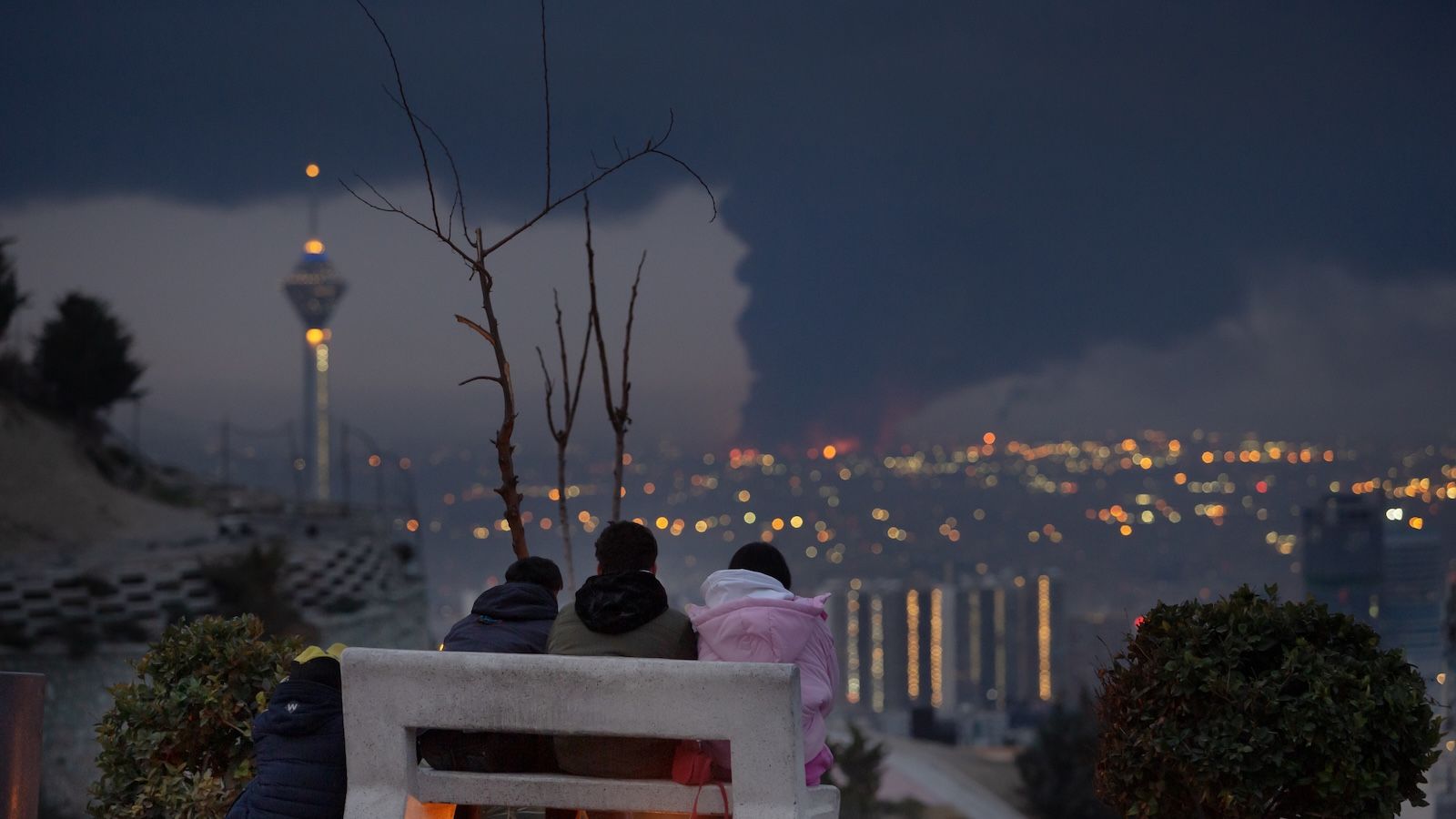
The pollutants mixed with precipitation to produce potentially corrosive “black rain” loaded with toxic particles such as hydrocarbons, and “some residents [in Tehran] experienced headaches, a bitter taste in the mouth, eye and skin irritation, and breathing difficulties,” the authors wrote in the study.
The ongoing war between the U.S., Israel and Iran is already known to be releasing an extraordinary amount of carbon dioxide (CO2) alongside other greenhouse gases. A recent analysis found that, between Feb. 28 and March 14, the war contributed more CO2 than Iceland emitted across the whole of 2024.
Now, researchers have mapped the size and trajectory of the SO2 plume emitted following the March 7 attacks on the Fardis, Shahran, and Aghdasieh oil depots, and the Tehran Oil Refinery. To track the cloud, the scientists analyzed ultraviolet and infrared hyperspectral imaging data — which combines information about particular locations alongside spectral data — obtained by China’s FengYun 3 satellites and the European Space Agency’s Sentinel-5 Precursor satellite.
The scientists found that the amount of SO2 in the atmosphere in Tehran rose sharply on March 8. The affected area spanned roughly 185,000 square miles (300,000 km2) with northeasterly winds sending the giant plume as far as East Asia.
By comparison, Iceland’s 2010 Eyjafjallajökull volcano eruption spewed roughly 22,000 tons (20,000 metric tons) of SO2 in total over a three day period. The ash plume was so vast that it grounded flights in Europe for almost a month after a series of eruptions, and caused various health repercussions, with exposed individuals experiencing breathing difficulties in the following months.
SO2 is a major precursor of acid rain, which has profound environmental impacts, such as removing nutrients from soil and polluting waterways. Pollution, including from sulfur dioxide, is also linked to depression, anxiety and other mental health problems. Research is needed to determine the specific public health impacts of the attacks on the Iranian oil refineries.