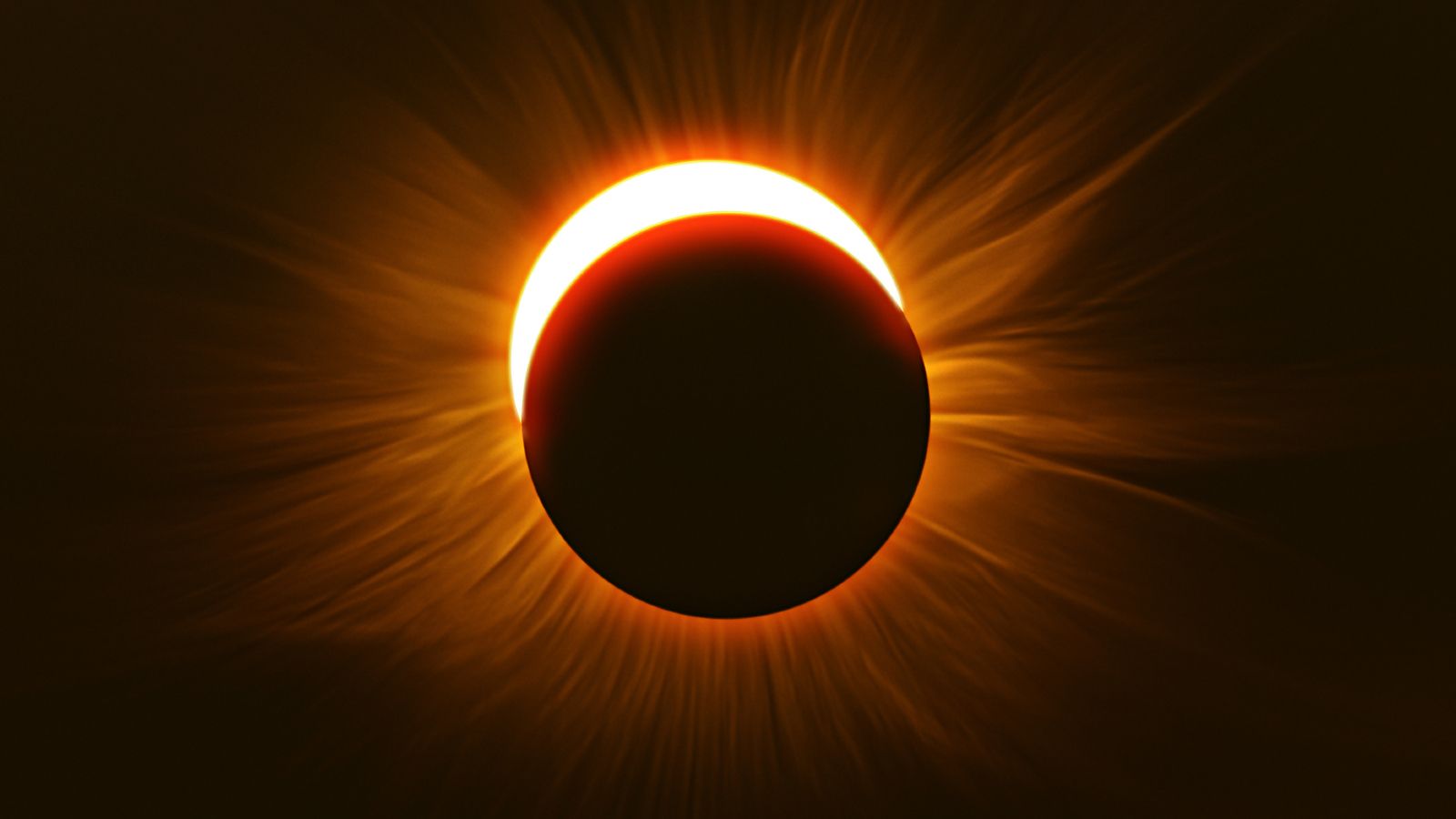
On Wednesday (Aug. 12), the new moon will swoop in front of the sun, casting its dark shadow across a stretch of Earth from Iceland and Greenland to northern Spain. Viewers in the path of the shadow, known as the path of totality, will see a stunning total solar eclipse.
Meanwhile, millions of skywatchers in North America and Europe will be treated to a partial eclipse, with the moon covering more than 90% of the sun’s visible surface in some areas.
Here’s everything you need to know about how to watch the eclipse in person and online.
Latest Videos FromLive Science
Where is the Aug. 12 total solar eclipse visible?
The path of totality for the Aug. 12 eclipse runs in a perplexing arc from far northern Siberia near the North Pole down to Greenland, western Iceland and, finally, southern Spain. Prime locations to catch the total phase of the eclipse include Scoresby Sund, Greenland; Reykjavik, Iceland; and León, Spain.
Here’s when totality will occur in various locations, and for how long:
- Scoresby Sund, Greenland: 4:35 p.m. WGST (up to 2 minutes, 17 seconds)
- Reykjavik, Iceland: 5:48 p.m. GMT (60 seconds)
- León, Spain: 8:28 p.m. CEST (1 minute, 45 seconds)
- Soria, Spain: 8:29 p.m. CEST (1 minute, 43 seconds)
- S’Arenal, Mallorca, Spain: 8:31 p.m. CEST (1 minute, 36 seconds)
Totality is the only time when it’s safe to view the eclipse without a pair of certified solar eclipse glasses, which you can still buy online. Protective eyewear must be worn at all times during the partial phases of the eclipse — meaning everyone outside the path of totality must wear their glasses at all times while viewing.
You can also use a pair of binoculars or a telescope with a solar filter to enjoy the partial phases safely.
Where is the Aug. 12 partial eclipse visible?
Skywatchers in North America won’t have the best view of this eclipse, but some cities in the Northeast will have a chance to bust out their eclipse glasses and see the moon blocking part of the sun in the afternoon.
Here are the best places to catch the partial eclipse from North America:
- Iqaluit, Nunavut: 1:24 p.m. EDT (61% eclipse)
- St. John’s, Newfoundland and Labrador: 3:00 p.m. NDT (53%)
- Fairbanks, Alaska: 8:27 a.m. AKDT (37%)
- Anchorage, Alaska: 8:21 a.m. AKDT (28%)
- Quebec City: 1:46 p.m. EDT (24%)
- Bangor, Maine: 1:53 p.m. EDT (23%)
- Montreal: 1:45 p.m. EDT (18%)
- Boston: 1:55 p.m. EDT (16%)
- New York: 1:54 p.m. EDT (9%)
Viewers in Europe will experience a much more complete eclipse, with the sky dimming somewhat and the air feeling a bit cooler than normal. However, eclipse glasses must still be worn at all times, even in places seeing a 99% eclipse. These are the best spots to see the partial eclipse in Europe:
- Madrid: 8:32 p.m. CEST (99.9%)
- Lisbon, Portugal: 7:36 p.m. WEST (94%)
- Dublin, Ireland: 7:10 p.m. BST (94%)
- Cardiff, Wales: 7:13 p.m. BST (93%)
- Belfast, Northern Ireland: 7:08 p.m. BST (93%)
- Paris: 8:17 p.m. CEST (92%)
- London: 7:13 p.m. BST (91%)
- Edinburgh, Scotland: 7:05 p.m. BST (91% eclipse)
Where to stream the Aug. 12 eclipse online
Many news networks and space agencies will be livestreaming the eclipse, including CNN, NASA and the European Space Agency (ESA). For viewers in North America, this will be the best way to experience the eclipse without having to leave home.
NASA will stream the eclipse with views of totality from Iceland and Spain starting at 1:15 pm EDT. You can watch it on the agency’s website, YouTube page or right here:
ESA will stream the eclipse from the Astrophysical Observatory of Javalambre in Teruel, Spain. CNN will also stream totality from Spain, starting at 1 p.m. EDT Wednesday.
When is the next eclipse?
If you don’t have a prime spot for the Aug. 12 eclipse, you’ll get another opportunity soon; more skywatching spectacles are just around the corner.As is always the case, this solar eclipse will be paired with a lunar eclipse. Two weeks later, on Aug. 27-28, a deep partial lunar eclipse will be visible across most of North and South America, starting around midnight EDT.
Then, next year, the longest total solar eclipse of the century will be visible from southern Spain and northern Africa. Mark your calendars for Aug. 2, 2027.
See how much you know about the sun with our sun quiz!