


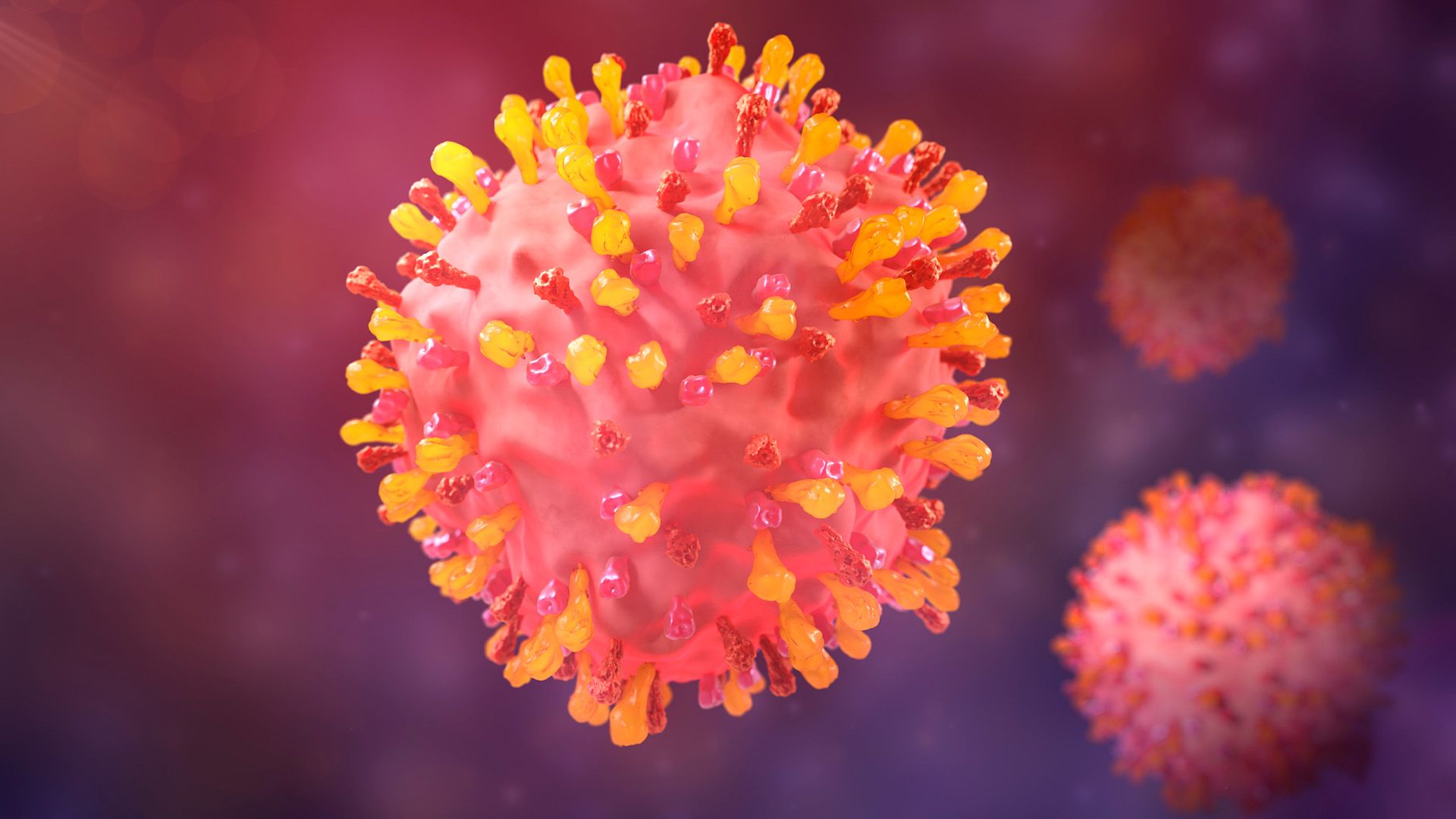
A cheap, widely available painkiller used to treat conditions like arthritis can significantly reduce RSV in the human respiratory tract, an early-stage laboratory study suggests.
Respiratory syncytial virus (RSV) is the number one reason infants end up in the hospital in the U.S., with babies under 6 months old facing the highest risk of severe disease and death from RSV. It’s also a serious health risk for adults over 65.
Currently, there are vaccines approved for pregnant people and older adults, as well as antibody-based drugs for children that can help prevent RSV infection. But there’s no specific antiviral drug to treat the disease once someone is infected.
In the new study, published May 7 in the journal Virus Research, researchers found that the antiinflammatory drug indomethacin interferes with a key protein that RSV needs to invade human cells and spread. The finding hints that the drug could help treat RSV infections, but experts cautioned that laboratory findings don’t always translate into real-world results.
“The way something behaves in a lab can sometimes be wildly different from how it behaves in real life,” said Dr. Amy Edwards, a physician in the division of pediatric infectious diseases at University Hospitals in Ohio, who was not involved in the study. “Studies like this are very important first steps in understanding which therapeutics might be a target for future clinical trials but they are not sufficient to push for immediate use in clinical settings,” she told Live Science in an email.
Dr. Aaron Glatt, the chief of infectious diseases at Mount Sinai South Nassau in New York, agreed that the findings are interesting but won’t impact treatments in the short term. “It’s a very preliminary paper suggesting something that is of potential great interest, but certainly is not something that’s going to change one iota the practical care of patients with RSV tomorrow,” said Glatt, who wasn’t involved in the study.
One drug, different effects
Laboratory and clinical studies had previously shown that indomethacin has antiviral effects against a number of viruses, including herpesvirus, rotavirus and the coronaviruses behind SARS and COVID-19. In a small clinical trial, COVID-19 patients who received indomethacin got better faster than those taking acetaminophen, with most symptoms disappearing in half the time. To date, though, the drug has not been approved as an antiviral for any infections.
Get the world’s most fascinating discoveries delivered straight to your inbox.
To test indomethacin’s effects against RSV, the researchers infected cells from the human larynx (voicebox), bronchus (airway) and lungs with RSV and then treated the cells with indomethacin at various doses. The drug reduced the virus’s ability to make copies of itself in all cell types and at very low doses, without harming the cells themselves.
The researchers found that indomethacin worked only when given after the virus had already entered cells. Giving it beforehand or during the brief window when the virus first attaches to cells had no antiviral effect.
The team also tested aspirin, which works in a very similar way to indomethacin as a painkiller; both drugs are nonsteroidal anti-inflammatory drugs, known as NSAIDs. Aspirin had no effect on RSV at all, suggesting that indomethacin’s antiviral effect is separate from its pain-killing properties.
Indomethacin is already used in premature babies to help treat patent ductus arteriosus (PDA), a heart condition where a blood vessel that should close after birth fails to do so, Edwards said. (In that context, indomethacin is given intravenously.)
“There is a long history of it being used relatively safely in infants,” Edwards said.
For short-term use, indomethacin is generally very safe, Glatt said. However, with higher doses and prolonged treatment, it can carry a risk of side effects, including kidney issues and bloody stool.
More research is needed to determine whether indomethacin benefits people with RSV. The researchers also point out that more work is needed to understand the exact mechanism whereby the drug stops the virus from multiplying and spreading.
This article is for informational purposes only and is not meant to offer medical advice.
Tramontozzi, C., Riccio, A., La Frazia, S., Svicher, V., & Santoro, M. G. (2026). Antiviral activity of the non-steroidal anti-inflammatory drug indomethacin against Respiratory Syncytial Virus. Virus Research, 199743. https://doi.org/10.1016/j.virusres.2026.199743