QUICK FACTS
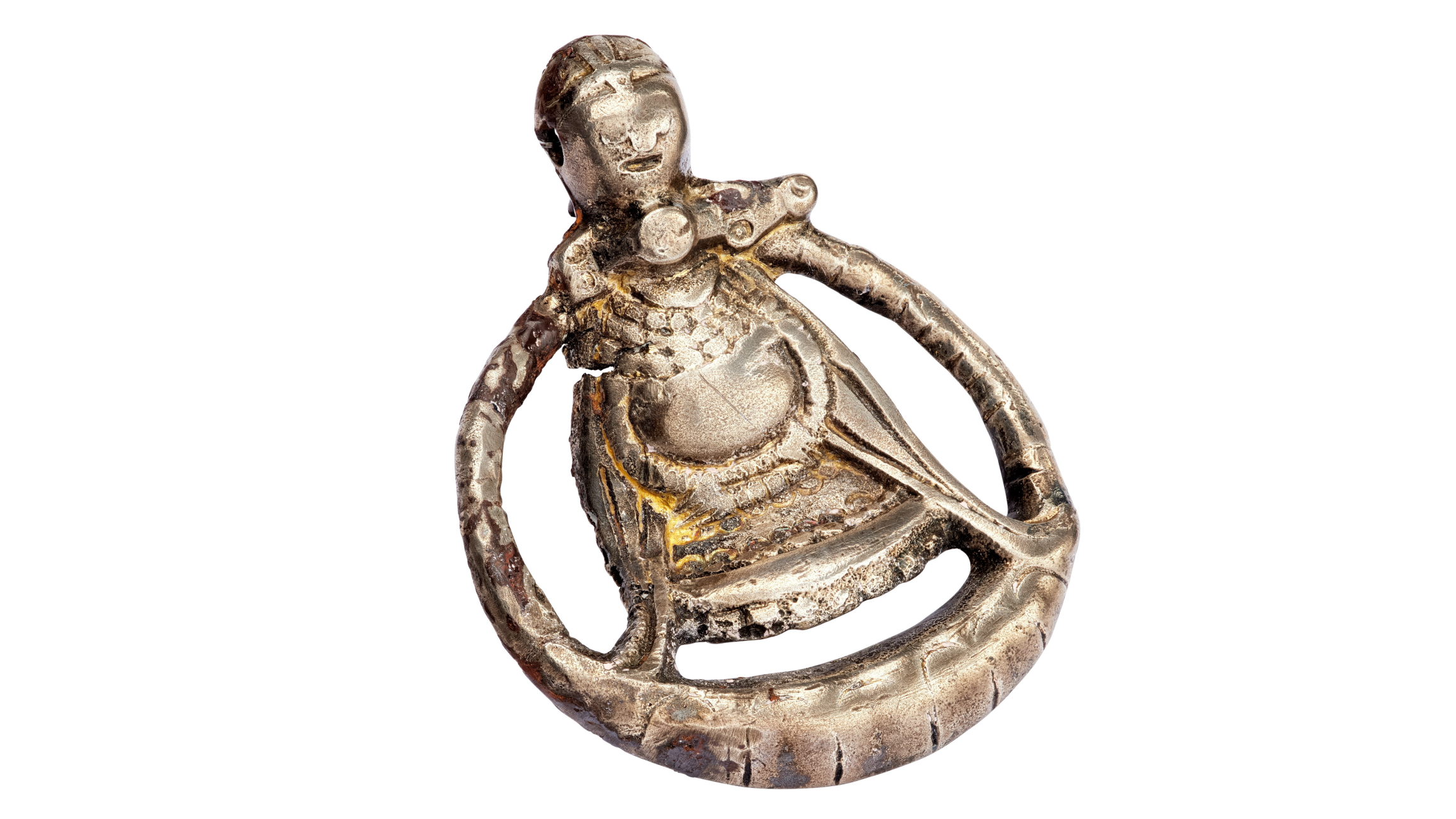
Name: Ash Pendant
What it is: A silver pendant with a female figure
Where it is from: Aska hamlet, in southern Sweden
When it was made: Circa 800 to 975
This round, silver pendant was found in a 10th-century elite woman’s burial in Sweden in 1920 and is the only known depiction of a pregnant Viking.
The pendant was discovered by Swedish archaeologist T.J. Arne in his 1920 excavation of several burial mounds at the site of Aska. Dozens of artifacts were found in the grave, including eight other pendants, four silver rings, a bone game board and an Islamic silver coin. Based on the presence of rivets and nails, the excavators suspected the woman was buried in a wooden casket that decomposed over time, and her bones suggest she was a young or middle-aged adult. It’s unknown if she was pregnant or giving birth when she died.
There is some disagreement about what the unique Ash Pendant may signify about the deceased Viking woman.
According to the Swedish History Museum, the pendant may depict the Norse goddess Freyja, who was associated with pregnancy and childbirth. Freyja wore a special necklace called the Brísingamen, the descriptions of which closely match the button clasp and rows of beads on the Ash Pendant. The pendant may therefore have been a talisman for the woman in the grave.
MORE ASTONISHING ARTIFACTS
But the Aska site also features a large, flat-topped mound that might have been the foundation for a “royal hall,” according to archaeologist Martin Rundkvist, meaning the people buried in the graves were “petty royalty.” They appear to have passed down the silver pendants, including the Ash Pendant, as heirlooms over several generations.
Given the range of artifacts discovered in the woman’s grave, including a wolf-headed iron staff and the series of heirloom pendants, the woman may have held a prominent role as a practitioner of magic or ritual, archaeologist Neil Price has argued.
And because later graves in the Aska area lack similar ritual objects, according to a study by archaeologist Hide Gustafsson, this may mean that the Viking woman buried in the mound was the last pagan practitioner of her kind before the introduction of Christianity to the region, and that her Freyja pendant was buried with her.
For more stunning archaeological discoveries, check out our Astonishing Artifacts archives.