The U.S. federal government just released a new version of the food pyramid, along with a recommendation that Americans eat more protein than previously advised.
The previously recommended daily intake of protein was around 0.8 grams for each kilogram of body weight. That recommendation aimed at meeting the nutritional needs of an average, sedentary adult. Now, the new dietary guidelines suggest people should consume between 1.2 and 1.6 grams of protein per kg of body weight per day.
“It is unclear why the [Dietary Guidelines for Americans] increased the recommendation by 50% to 100%,” Alice Lichtenstein, an American Heart Association fellow and nutrition science professor at Tufts University, told Live Science in an email.
Notably, scientists previously estimated that the average U.S. adult’s protein consumption generally exceeded the old guideline. A 2013 study estimated it at 1.2 to 1.4 grams per kg of body weight per day, while a 2021 dietary data brief noted men and women were consuming 97 grams and 69 grams on a given day, respectively.
Nonetheless, the shift in guidance raises some questions: Are there benefits to upping your protein intake? And is there an upper limit you shouldn’t cross?
Experts told Live Science that there’s no single, agreed-upon maximum amount of protein you can eat in a day. That said, if you’re not particularly active, pushing your protein intake beyond what the old recommendation suggested is unlikely to be very beneficial, they said. Additionally, it would be harmful to boost your protein intake at the expense of eating other macronutrients, like fat and carbs.
Why is protein important?
Proteins are the body’s building blocks, forming everything from muscles and hormones to digestive enzymes and the hemoglobin that carries oxygen in the blood.
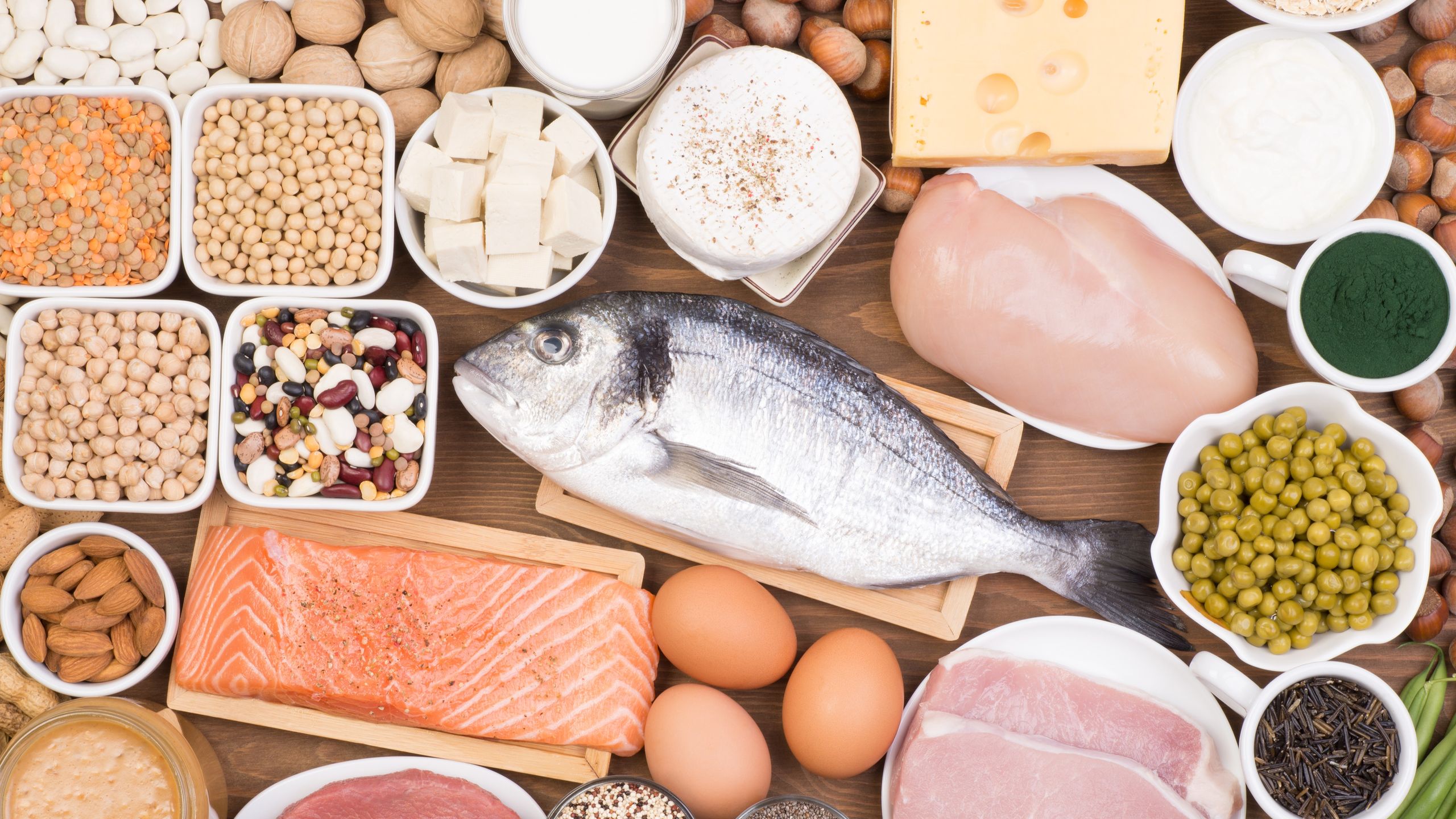
Protein-rich foods include meat, fish and eggs, as well as tofu, beans and nuts. The proteins in these foods get broken down by our bodies into their component parts — amino acids — which cells can use to produce the proteins we need. While the body can produce some amino acids on its own, there are nine, called essential amino acids, that we can get only through our diet.
A given person’s protein requirements vary depending on a number of factors, with one of the more crucial ones being how much they exercise. So generally, increases in protein intake should be accompanied by increases in activity levels, Lichtenstein told Live Science.
“Most of the studies that I am aware of have not demonstrated that increasing protein intake above current recommendations increases lean muscle mass,” she said. “If it does, it needs to be coupled with certain types of physical activity, not a strong point for most people.” Those types of activity might include strength and endurance training, for instance.
Historically, it’s been recommended that people who regularly exercise get about 1.1 to 1.5 grams per kg per day, while people training for athletic events might eat up to 1.7 grams per kg per day.
Notably, active people still need to take in adequate energy from carbs and fats. If they don’t, the body may resort to using amino acids as fuel, effectively increasing the amount of protein they need to make up for the loss of protein building blocks in the body.
Another factor that influences our protein requirements is age. As you get older, the body’s ability to build new muscle proteins gets disrupted, leading to muscle loss and frailty. Studies suggest that eating more protein — about 1 to 1.2 grams per kg of body weight a day — could help mitigate these effects seen in middle-aged and older people.
Effects of high-protein diets
Research has tied high-protein diets, typically considered around 1.2 to 2 grams per kg of body weight per day, to both positive and negative health outcomes.
In one review of studies on the topic, researchers compared high- and low-protein diets and found that the former was tied to greater weight loss and thus lower BMI. However, another review tied high-protein consumption to a higher risk of bone-density loss and kidney stones.
An overconsumption of protein may increase levels of the amino acid leucine, which can then interfere with how immune cells clear plaque from blood vessels, one study of humans and lab mice found. This could boost the risk of heart attack or stroke. Based on this finding, the study authors suggested that getting more than 22% of your daily calories from protein — around 1.6 grams per kg of body weight — could do more harm than good.
Leucine is found in a variety of animal- and plant-based protein sources. Additionally, protein sources that are high in purine — such as red meat, organs like kidney, and certain types of seafood — can lead to gout and kidney stones if consumed in excess.
“It’s important to note that there is no single, official upper limit,” Bridget Cassady, a registered dietitian nutritionist (RDN) at Abbott, told Live Science in an email. “An amount that is considered ‘excessive’ will be different based on your needs varying with age, body weight, activity level, health status.”
Broadly speaking, though, Cassady said that healthy individuals can safely consume “moderately high” amounts of protein — around 2 grams per kg per day — as long as it’s part of a balanced diet. Protein consumption should not come at the expense of other nutrients; if it starts crowding out fiber-rich plants, healthy fats, or whole-food carbohydrates, that’s when protein intake could start becoming a concern, she said.
At the extreme, a super high-protein diet could put strain on the kidneys, which can filter only so much urea — a protein waste product — from the blood at a given time. That’s why people with existing kidney problems are advised to avoid high-protein diets, according to Cleveland Clinic. If your urine turns bubbly or foamy, that can mean there’s a high level of protein in the urine, which could signal kidney damage.
This article is for informational purposes only and is not meant to offer medical or dietary advice.