QUICK FACTS
Name: Cadena Volcánica de los Coconucos (Coconucos volcanic chain)
Location: Puracé National Park, Colombia
Coordinates: 2.2964, -76.4110
Why it’s incredible: The volcanic chain comprises at least 14 volcanoes, including one that is active.
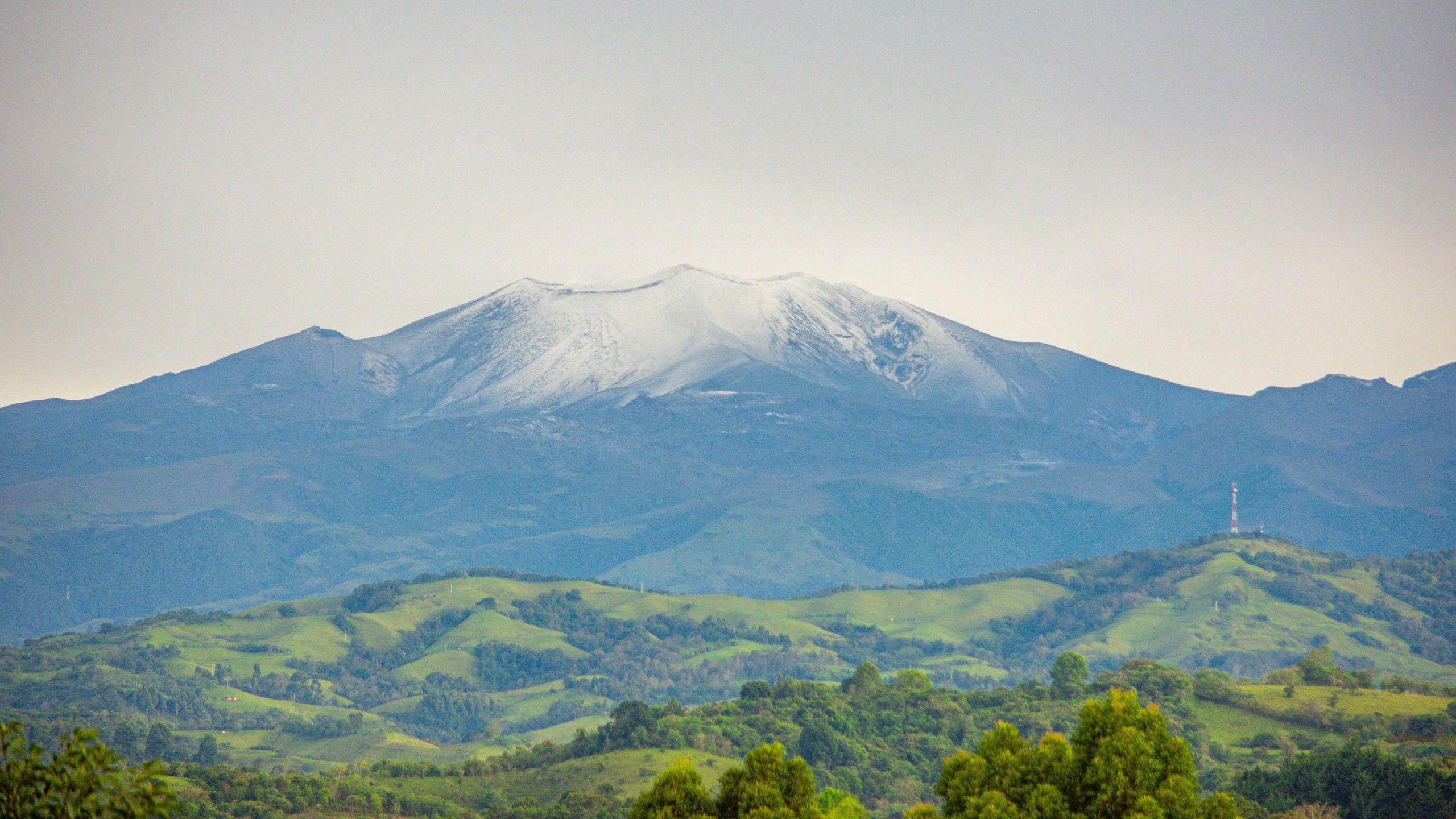
Colombia’s Coconucos volcanic chain is a high mountain ridge pockmarked with at least 14 volcano craters. These craters form a line that runs northwest-to-southeast, offering striking aerial views and images.
Twelve volcanoes in the Coconucos volcanic chain have summits higher than 13,000 feet (4,000 meters) above sea level. The tallest volcano, at about 15,400 feet (4,700 m) above sea level, is the Pan de Azúcar, which until a few decades ago was permanently covered in snow.
The second-tallest volcano in the chain, known as Puracé, is Coconucos’s only active volcano and one of the most active volcanoes in Colombia. Puracé, meaning “fire mountain” in the Quechua family of languages, stands 15,260 feet (4,650 m) high and sits at the northwesternmost end of the chain. Its last eruption was in early December 2025, when the volcano spewed gas and ash up to 3,000 feet (900 m) into the sky and showered nearby areas with fine debris. Colombian authorities issued an alert on Nov. 29 and the outburst continued Monday (Dec. 15).
Puracé showed signs of activity in 2022 and 2023, but the volcano’s last recorded eruption before the most recent one was in 1977. The last measurements before the 2025 eruption showed that Puracé’s crater has a diameter of 1,640 feet (500 m).
The Coconucos volcanic chain is located in Puracé National Park in the Andes mountains. The region is a misty grassland ecosystem known as páramo, with temperatures ranging between 37 and 65 degrees Fahrenheit (3 to 18 degrees Celsius). Snow was widespread on mountain tops in Puracé National Park until a century ago, but this is rare nowadays, according to Colombia’s national parks website.
Several of Colombia’s most important rivers originate in Puracé National Park, including the Cauca, Magdalena, Patía and Caquetá. The national park is peppered with sulfur springs and clear lagoons, attracting tourists and hikers.
The Coconuco people have traditionally inhabited, and continue to live in, the region.
Discover more incredible places, where we highlight the fantastic history and science behind some of the most dramatic landscapes on Earth.